 Skip to content

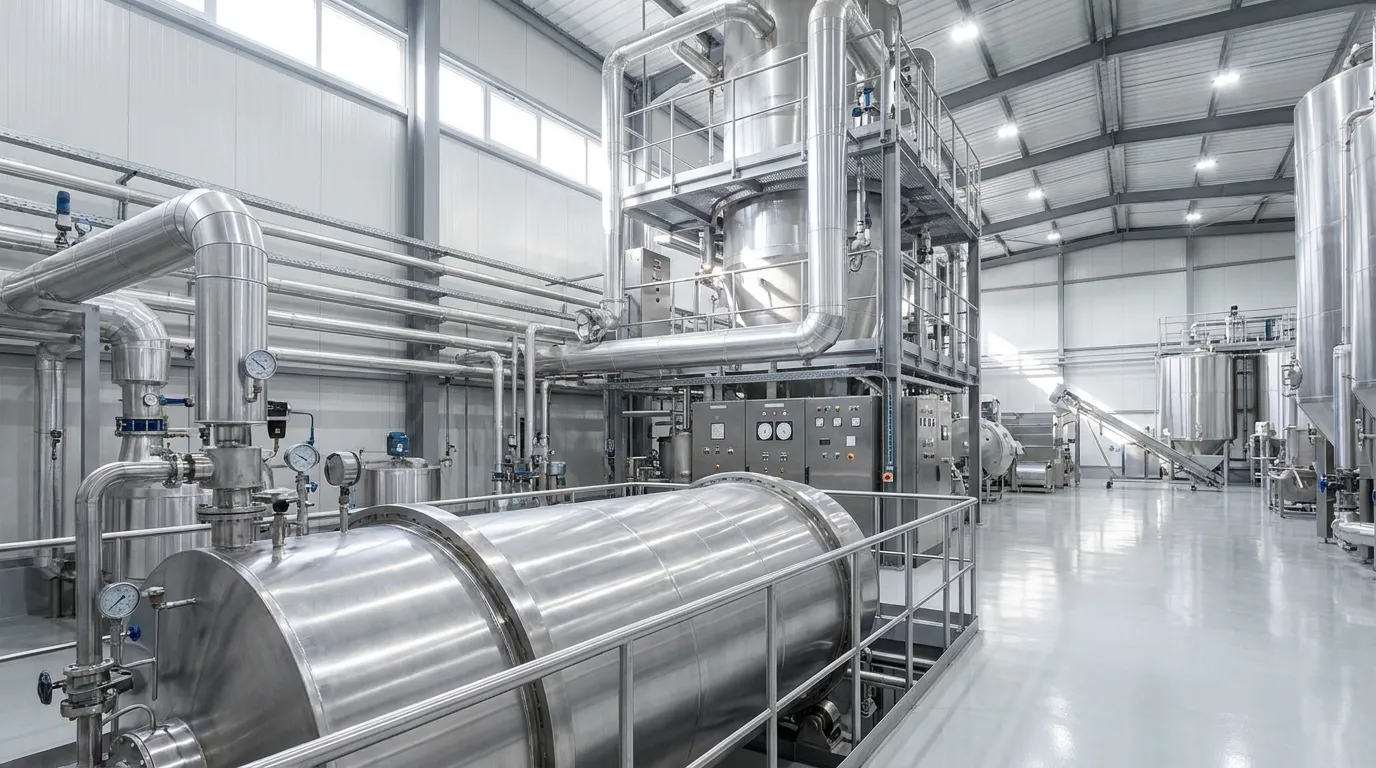
Rotary dryer system showing the rotating drum and internal lifting flights for material processing.
How rotary dryers handle bulk solids processing
When process engineers ask what is a rotary dryer, they are looking at one of the most versatile thermal processing units in manufacturing. International Process Plants (IPP) has supplied rotary dryers for 47+ years, with hundreds of units in inventory across 20 global sites. A rotary dryer uses a rotating drum and hot gas stream to remove moisture from bulk solids, handling everything from chemicals to minerals. Learn about our process equipment overview to see available rotary dryers.
Rotary dryers are essential in chemical, mineral processing, and food manufacturing where consistent moisture removal is critical. Unlike static dryers, the rotating action provides excellent material mixing and heat transfer, ensuring uniform drying across particle sizes. For buyers, IPP offers immediate access to rotary dryers in carbon steel, stainless steel, and specialty alloys. For sellers, our global network creates competitive offers for surplus drying equipment. Browse our rotary dryer inventory to see units available today.
Operating principles and design variations
Rotary dryers consist of a rotating cylindrical shell supported by trunnion rings and driven by a gear motor. Hot air or gas flows through the drum, contacting the material as it cascades through internal lifting flights. Key variations include:
- Direct-fired vs. indirect-heated designs
- Counter-current or co-current airflow
- Steam tube bundles for heat-sensitive materials
- Kiln-style units for high-temperature calcining
- Vacuum operation for solvent recovery
IPP stocks rotary dryers from 2 to 15+ feet diameter, ready for immediate shipment and recommissioning.
Applications across process industries
In chemical manufacturing, rotary dryers handle pigments, catalysts, and polymer resins. The mineral industry uses them for drying sand, limestone, and ore concentrates. Food processors rely on rotary dryers for everything from protein powders to starches. The ability to handle high throughput rates—up to 100+ tons per hour—makes rotary dryers economical for large-scale operations. IPP’s inventory includes units previously operated in cGMP pharmaceutical environments.
See how IPP repositions process equipment globally and explore our 47+ years of drying expertise.
Advantages of used rotary dryers
Purchasing used rotary dryers from IPP cuts capital costs by 50-70% and eliminates 6-12 month OEM lead times. Our used units are fully inspected for shell integrity, bearing condition, and drive system performance. For immediate capacity expansion, used rotary dryers provide proven performance without the new equipment premium. IPP’s turnkey relocation services handle rigging, transport, and field erection. Learn about IPP’s used dryer marketplace and read about North Cedar Crest redevelopment where IPP supplied process equipment.
Frequently asked questions about rotary dryers
What is a rotary dryer used for?
Drying bulk solids in chemical, mineral, and food processing where high throughput is needed.
How hot do rotary dryers operate?
150°F to 2,000°F depending on design; IPP’s inventory covers the full range.
Can rotary dryers handle abrasive materials?
Yes. Replaceable liners and hardened flights extend life in abrasive service.
What maintenance is required?
Trunnion alignment, bearing lubrication, and seal replacement; IPP inspects all units.
For more answers, visit our FAQs page.

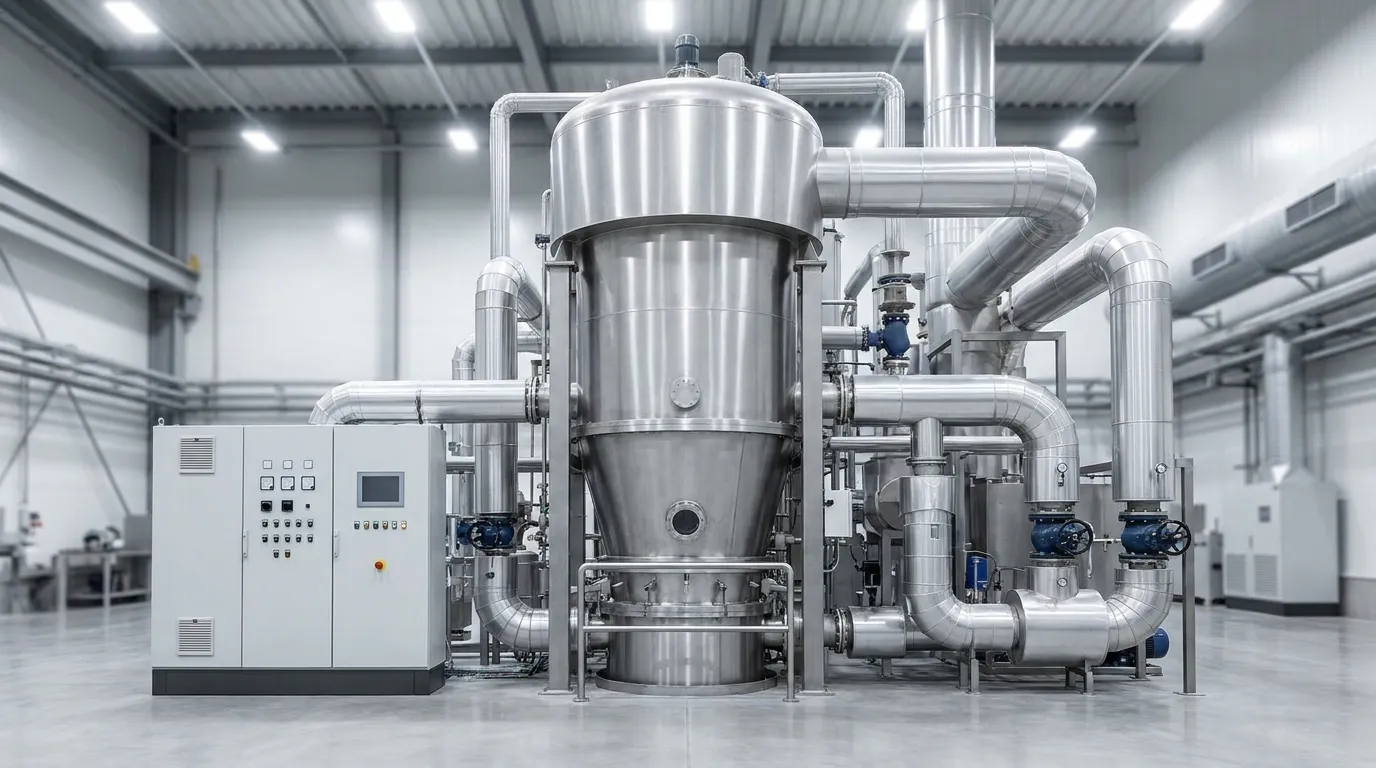
Rotary dryer system ready for chemical or mineral processing applications.

 EN
EN  ES
ES  FR
FR  PL
PL  DE
DE  AR
AR  UR
UR  HI
HI  NL
NL  TR
TR  IT
IT  UK
UK  RU
RU  JA
JA  PT
PT  ZH
ZH