 Skip to content

Centrifuge separator showing the rotating bowl and solids discharge mechanism for industrial processing.
How centrifuge separators enable liquid-solid separation
When process engineers ask what is a centrifuge separator, they’re exploring one of the most efficient ways to separate immiscible phases. International Process Plants (IPP) has supplied industrial centrifuges for 47+ years, with hundreds of units in inventory across 20 global sites. A centrifuge separator uses high-speed rotation to generate centrifugal forces 3,000-10,000 times gravity, separating solids from liquids based on density differences. Learn about our process equipment overview to see available centrifuges.
Centrifuge separators are critical in chemical, pharmaceutical, and food manufacturing where continuous separation is required. Unlike filtration, centrifugation handles high solids loading without blinding, making it ideal for processes with variable feed streams. For buyers, IPP offers immediate access to decanter, basket, and disc-stack centrifuges. For sellers, our global network creates competitive offers for surplus separation equipment. Browse our centrifuge inventory to see units available today.
Types of centrifuge separators
IPP’s inventory includes several centrifuge separator designs:
>Decanter centrifuges: Continuous two-phase separation, handles high solids
>Basket centrifuges: Batch operation for crystal recovery and dewatering
>Disc-stack centrifuges: High-speed separation for fine particles and liquid-liquid
>Peeler centrifuges: For pharmaceutical and fine chemical applications
>Pusher centrifuges: Continuous solids discharge for bulk chemicals
Each type is selected based on feed characteristics, capacity, and required separation efficiency. IPP helps match the right centrifuge separator to your process requirements.
Operating principles and performance factors
A centrifuge separator’s performance depends on bowl speed (RPM), feed rate, and temperature. The g-force generated determines separation efficiency—higher speeds capture finer particles. Key operating parameters include:
• Bowl speed: 1,500-5,000 RPM for decanters, up to 10,000 RPM for disc-stack
• Feed solids concentration: Typically 1-40% by weight
• Temperature control for viscous feeds
• Differential speed between bowl and conveyor
IPP’s used centrifuge separators are tested for vibration, bearing condition, and drive performance before shipment.
Cost and timeline advantages
Purchasing a used centrifuge separator from IPP reduces capital costs by 50-70% compared to new units. Our inventory eliminates 4-8 month OEM lead times, enabling immediate process improvements. For capacity expansions or pilot-scale testing, used centrifuges provide proven performance without new equipment premiums. IPP’s turnkey relocation includes installation supervision and startup support. See how IPP supports global equipment sales and explore our 47+ years of separation expertise.
Frequently asked questions about centrifuge separators
What is a centrifuge separator used for?
Separating solids from liquids or immiscible liquids in chemical, pharma, and food processing.
How much does a used centrifuge cost?
40-70% less than new; IPP provides quotes based on size and condition.
What maintenance is required?
Bearing lubrication, seal replacement, and periodic bowl balancing; IPP inspects all units.
Can centrifuges handle abrasive materials?
Yes. Hard-faced conveyors and replaceable liners extend life in abrasive service.
For more answers, visit our FAQs page.
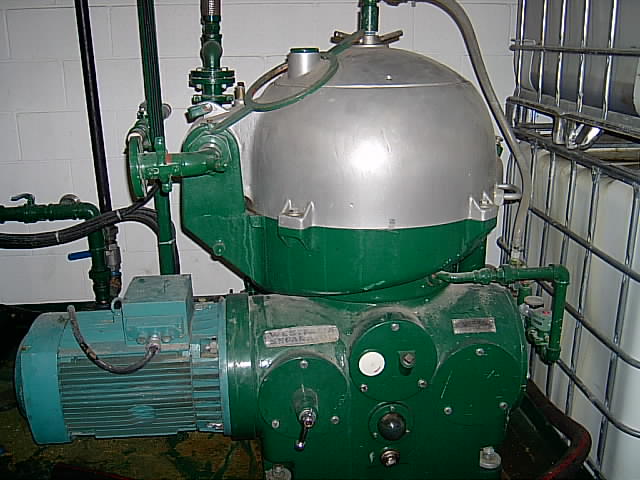
Decanter centrifuge ready for chemical or wastewater separation service.

 EN
EN  ES
ES  FR
FR  PL
PL  DE
DE  AR
AR  UR
UR  HI
HI  NL
NL  TR
TR  IT
IT  UK
UK  RU
RU  JA
JA  PT
PT  ZH
ZH