 Перейти к содержанию
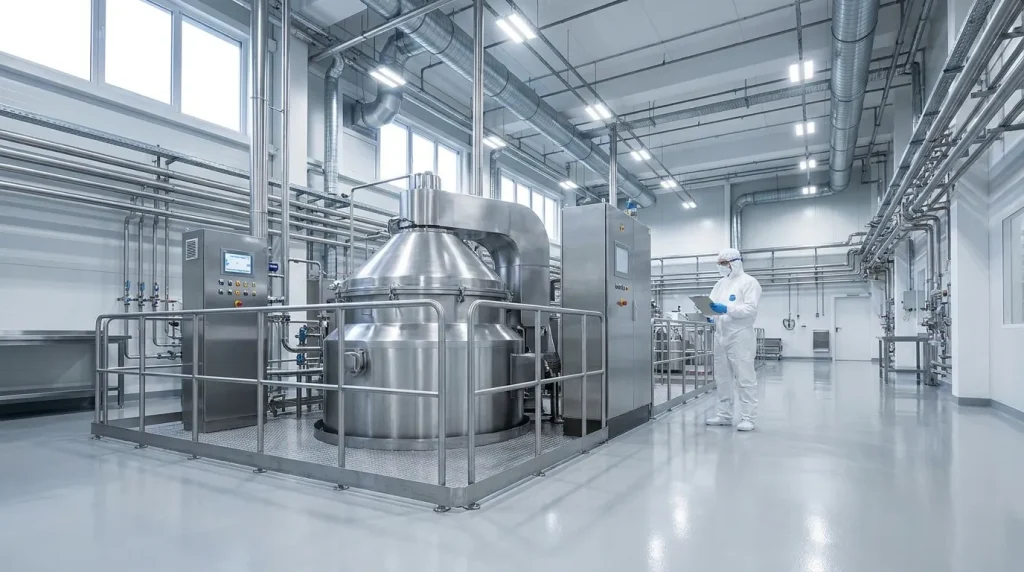
Centrifuge commissioning is a quality control procedure that verifies all mechanical, electrical, and control systems function correctly before process materials enter rotating equipment. Proper commissioning protects both personnel and capital investment while establishing the baseline parameters that guide ongoing maintenance.
This guide covers the importance of commissioning for safety and equipment longevity, pre-start-up preparations and inspections, the step-by-step commissioning procedure itself, safety protocols during operation, parameter monitoring and troubleshooting, and long-term maintenance practices.
Commissioning failures create measurable risks. It is widely reported in pump reliability literature that most mechanical seal failures are not caused by wear-out, but by installation issues and commissioning errors, operating conditions, or system-related factors as primary causes. Case studies document foreign objects lodged in impellers, undetected misalignments, and temperature-related incidents that proper verification would have prevented.
Sequential testing through dry runs and wet runs identifies mechanical issues before hazardous materials are introduced. Vibration monitoring against ISO 10816 thresholds of 2.8 mm/s (0.11 in/s) for alert and 4.5 mm/s (0.18 in/s) for danger conditions protects equipment integrity throughout the process.
Safety protocols during start-up require verified PPE, functional emergency shutdown systems meeting IEC 60204-1 stop category 0 requirements, and tested interlocks before rotation begins. ATEX Zone 1 compliance applies to European Economic Area countries, with applicable equivalent frameworks for other jurisdictions when processing flammable solvents.
Ongoing reliability depends on documented commissioning data. Integrated predictive maintenance platforms can reduce unplanned downtime significantly, but rely on accurate baseline measurements that exist from properly executed commissioning procedures.
Why Is Proper Commissioning Important for Centrifuge Operation Safety?
Proper commissioning is important for centrifuge operation safety because it verifies that all mechanical, electrical, and control systems function correctly before process materials enter the equipment. The commissioning process documents and confirms that the facility meets operational requirements, culminating in a formal recommendation for acceptance. The following subsections examine the specific risks of skipping commissioning steps and the direct impact on equipment longevity and performance.
What Risks Can Occur If the Commissioning Process Is Not Followed?
The risks that can occur if the commissioning process is not followed include mechanical seal failures, undetected imbalances, and catastrophic equipment damage. According to Flexachem’s technical guide, an estimated 90% of mechanical seals in typical industrial plants fail due to factors other than normal wear, with improper installation or commissioning errors as primary causes. Skipped verification steps can allow foreign objects, misalignments, and calibration errors to remain undetected until operation begins.
Common risks associated with insufficient commissioning include:
- Bearing failures from undetected misalignment or contamination
- Excessive vibration exceeding ISO 10816 limits of 4.5 mm/s (0.18 in/s)
- Electrical faults from improper wiring or grounding
- Process containment failures in hazardous atmospheres
- Operator injury from untested emergency shutdown systems
Documented cases highlight the importance of proper commissioning, for example with one such case revealing a mild steel plate stuck in a centrifugal machine’s first-stage impeller during commissioning, a fault that would have caused catastrophic unbalance during full-speed operation.
How Does Commissioning Impact Centrifuge Longevity and Performance?
Commissioning impacts centrifuge longevity and performance by establishing verified baseline parameters that guide ongoing maintenance and operation. Equipment commissioned with documented vibration baselines, alignment records, and calibrated instrumentation maintains higher reliability throughout its service life. Mordor Intelligence reports that integrated automation and predictive maintenance platforms can reduce unplanned downtime for industrial centrifuges by as much as 30%.
Proper commissioning delivers measurable performance benefits:
- Establish vibration baselines during commissioning and verify that measured vibration levels comply with the centrifuge manufacturer’s acceptance criteria or applicable ISO vibration standards.
- Verifies bearing housing velocity and shaft displacement per ISO 10816-7 acceptance criteria
- Documents utility connections and instrumentation calibration for future reference
- Identifies critical speeds (resonance frequencies) and establishes Variable Frequency Drive skip-speed ranges to prevent sustained operation at resonant frequencies.
Reliability-based maintenance programs targeting 85% to 95% equipment availability depend on accurate commissioning data. Without verified starting conditions, maintenance intervals become guesswork rather than optimized planning based on actual equipment behavior.
What Preparations Are Needed Before Centrifuge Start-Up?
Preparations before centrifuge start-up include pre-commissioning inspections, utility and instrumentation verification, and thorough review of manufacturer documentation. The following subsections detail each preparation category.
What Pre-Commissioning Inspections Should Be Completed?
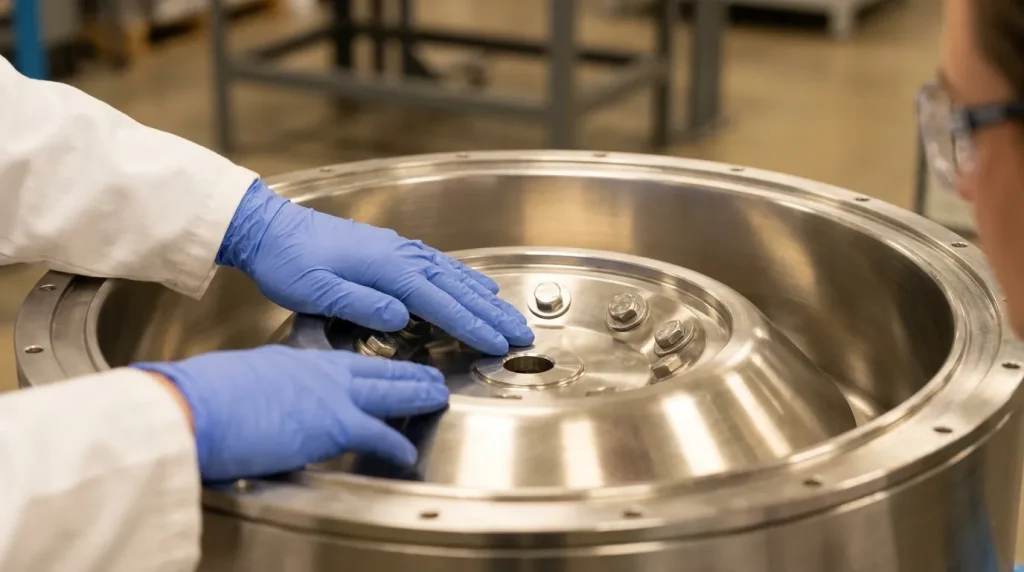
Pre-commissioning inspections should include visual examination of all rotating components, verification of rotor balance, and confirmation that all guards and safety interlocks function correctly. Inspectors must check for shipping damage, loose fasteners, and foreign objects inside the bowl or housing. A case study in Introduction to Process Safety for Undergraduates and Engineers describes a batch centrifuge explosion in which a crystalline product was centrifuged after cooling to 19°F (-7°C). The investigation attributed the explosion to the formation of a flammable atmosphere in the absence of nitrogen inerting, with friction or static discharge as likely ignition sources. The incident highlights the importance of verifying inerting systems, material compatibility, and operating conditions during pre-commissioning. Critical inspection points include:
- Rotor and bowl condition (cracks, corrosion, wear)
- Drive belt or coupling alignment
- Seal integrity and lubrication levels
- Safety interlock operation
- Grounding and bonding connections
How Should Utility Connections and Instrumentation Be Checked?
Utility connections and instrumentation should be checked by confirming that each specified utility was installed correctly, verifying physical connection integrity, and completing functionality checkout with calibration. This three-step verification ensures cooling water, nitrogen purge, electrical supply, and drainage lines meet design specifications before the centrifuge spins. Instrumentation calibration covers vibration sensors, temperature probes, and pressure transmitters. Verify that Variable Frequency Drives (VFDs) are programmed with appropriate speed limits to avoid resonance frequencies during acceleration and deceleration cycles.
Why Is Reviewing Manufacturer Documentation Essential?
Reviewing manufacturer documentation is essential because it establishes the baseline operating parameters, torque specifications, lubrication requirements, and safety limits unique to each centrifuge model. Where applicable, vibration acceptance criteria may reference ISO 10816 or ISO 20816; however, industrial centrifuges are commonly commissioned using manufacturer-specific vibration limits because acceptable thresholds vary by machine design and operating speed. Skipping this step risks improper assembly, voided warranties, and undetected deviations from design intent. Operators should cross-reference installation drawings, electrical schematics, and spare parts lists before energizing any system.
With inspections, utilities, and documentation verified, the commissioning procedure can proceed to mechanical and electrical integrity checks.
What Are the Key Steps in the Centrifuge Commissioning Procedure?
The key steps in the centrifuge commissioning procedure are mechanical and electrical integrity verification, dry and wet run testing, and performance issue documentation. Each phase builds on the previous to confirm safe operational readiness.
How Should You Verify Mechanical and Electrical Integrity?
You should verify mechanical and electrical integrity by systematically inspecting all physical components and electrical systems before any rotation occurs. Start with a visual inspection of the bowl, basket, and drive assembly for shipping damage or misalignment. Check all fasteners for proper torque specifications per manufacturer guidelines.
Electrical verification requires confirming:
- Motor connections match nameplate voltage and phase requirements
- Verify protective earth (ground) continuity to ensure a low-resistance path in accordance with IEC 60204-1 and the manufacturer’s commissioning requirements
- Control panel wiring follows IEC 60204-1 safety standards
- Emergency stop circuits function correctly (stop category 0 removes power immediately)
According to IEC 60204-1, stop category 0 enacts immediate emergency stopping of power to machine actuators to prevent hazardous conditions. Verify all interlocks, including lid switches and imbalance sensors, activate properly before proceeding to dynamic testing.
What Is the Correct Way to Perform Dry and Wet Runs?
The correct way to perform dry and wet runs is to execute them sequentially, starting with unloaded operation before introducing process materials. Dry runs confirm mechanical function without product risk.
During dry runs:
- Operate at incremental speeds (25%, 50%, 75%, 100% of rated RPM)
- Monitor vibration velocity at each increment
- Verify bearing temperatures stabilize within specifications
- Confirm brake engagement and deceleration rates
Manufacturers specify vibration velocity limits for danger thresholds on centrifugal equipment, which can vary slightly from manufacturer to manufacturer. Wet runs use water or a non-hazardous surrogate fluid to validate separation performance, drainage, and seal integrity under realistic hydraulic loads. Document all readings at each stage before advancing.
How Do You Address and Document Initial Performance Issues?
You address and document initial performance issues by establishing baseline measurements, identifying deviations, and recording all corrective actions in a formal commissioning log. Systematic documentation supports both immediate troubleshooting and long-term reliability analysis.
An estimated 90% of mechanical seals fail due to factors other than normal wear, including improper installation or commissioning errors, according to Flexachem industry analysis. When issues arise, compare actual vibration, temperature, and throughput values against manufacturer acceptance criteria. Track corrections using a structured format that captures the deviation, root cause, corrective action, and verification result.
This documentation satisfies quality control requirements and creates reference data for predictive maintenance planning. With performance baselines established, the next critical phase addresses safety protocols during full operational start-up.
What Safety Protocols Must Be Observed During Start-Up?
Some safety protocols during centrifuge start-up include mandatory PPE requirements and verified emergency shutdown procedures. The following subsections detail specific protective measures and shutdown testing methods.
What PPE and Safety Measures Are Required?
The PPE and safety measures required for centrifuge start-up include protective eyewear, chemical-resistant gloves, lab coats, and closed-toe shoes. These items mitigate risks from rotating equipment, chemical exposure, and mechanical hazards during commissioning operations.
Additional safety measures include:
- Verified lockout/tagout procedures before any adjustments
- Clear exclusion zones around the centrifuge during initial rotation
- Hearing protection when noise exceeds occupational exposure limits, typically around 85 dB
- Face shields for solvent-handling applications
For units processing flammable solvents, ATEX Zone 1 compliance is required to prevent ignition in potentially explosive atmospheres. Operators should confirm all safety interlocks are functional before initiating rotation sequences.

How Should Emergency Shutdown Procedures Be Tested?
Emergency shutdown procedures should be tested by verifying that stop commands achieve immediate power removal to all rotating components. IEC 60204-1 specifies stop category 0, which enacts instant shutoff of power to machine actuators to prevent hazardous conditions during centrifuge operation.
Testing protocol includes:
- Activating each emergency stop station to confirm response time
- Verifying brake engagement stops the bowl within manufacturer specifications
- Confirming control system registers and logs each shutdown event
- Testing automatic shutdown triggers for vibration, temperature, and imbalance
Document all test results with timestamps and operator signatures. Repeat shutdown testing after any maintenance that affects electrical or mechanical systems. With safety protocols verified, operators can focus on establishing correct operational parameters during initial production runs.
How Should Operation Parameters Be Set and Monitored After Start-Up?
Operation parameters should be set according to manufacturer specifications and monitored continuously using calibrated instrumentation. The following subsections cover essential data collection during initial operation and adjustment procedures for optimal performance.
What Data Should Be Collected During Initial Operation?
The data collected during initial operation includes vibration readings, temperature measurements, motor current draw, feed rate, and separation efficiency metrics. Vibration velocity is a key condition indicator; ISO 10816-3 classifies values around 4.5 mm/s RMS as entering the unsatisfactory range for certain machine classes, indicating the need for increased monitoring or corrective action. Record these parameters at around 15-minute intervals during the first four hours of operation.
Essential data points include:
- Bearing temperature trends (°F and °C)
- Bowl speed (RPM) and acceleration time
- Differential speed between bowl and conveyor
- Torque readings on the main drive
- Discharge clarity or solids content
- Inlet pressure, measured in PSI and bar
Document all readings in a commissioning log with timestamps. This baseline data enables predictive maintenance platforms to identify deviations early; integrated automation systems can reduce unplanned downtime by as much as 30%, according to Mordor Intelligence’s 2026 industrial centrifuges market analysis.

How Do You Adjust Settings for Optimal Performance and Safety?
Settings for optimal performance and safety are adjusted incrementally based on the data collected, never exceeding one variable change per test cycle. Start with conservative parameters at around 70% to 80% of rated capacity, then increase gradually while monitoring vibration and temperature responses.
Key adjustment considerations:
- Reduce feed rate if discharge solids exceed target specifications
- Increase differential speed to improve cake dryness
- Lower bowl speed if vibration approaches the alert threshold specified by the manufacturer
- Adjust weir plates or dam settings to optimize liquid clarification
Always allow the centrifuge to stabilize for 10 to 15 minutes after each adjustment before recording new baseline data. If vibration velocity reaches around 4.5 mm/s (0.18 in/s), initiate controlled shutdown and investigate root cause before resuming operation. Excessive vibration is treated as a hazardous condition; where thresholds are defined in the machine protection system, they may initiate controlled shutdown and corrective investigation consistent with ISO 12100 general safety and risk reduction principles.
What Troubleshooting Procedures Should Be Followed If Issues Arise?
Troubleshooting procedures should follow a systematic approach: identify symptoms, isolate root causes, implement corrections, and document outcomes. The subsections below cover common commissioning problems and when to escalate to technical support.
What Are Common Centrifuge Commissioning Problems and Their Solutions?
Common centrifuge commissioning problems include excessive vibration, seal leakage, bearing overheating, and control system faults. Each requires targeted diagnostic steps and corrective actions.
Excessive Vibration
Vibration issues often stem from improper installation or foreign object contamination. During one such documented example, a mild steel plate was found lodged in a centrifugal machine’s first-stage impeller, a hazard that would have caused severe unbalance. Solutions for correcting excessive vibration in addition to proper inspection before commissioning that can help prevent it from occurring in the first place include rebalancing rotors, verifying foundation bolt torque, and confirming vibration levels within acceptable ISO 10816 severity zones for the applicable machine class, typically below unsatisfactory levels around 4.5 mm/s (0.18 in/s) RMS.
Seal and Bearing Failures
Approximately 90% of mechanical seals fail due to factors other than normal wear, such as improper installation or commissioning errors, per Flexachem technical documentation. Verify seal face alignment, flush system operation, and lubricant levels before restart.
Electrical and Control Faults
Check VFD programming, interlock sequences, and sensor calibration against manufacturer specifications.
When Should You Involve Technical Support or the Equipment Supplier?
You should involve technical support or the equipment supplier when troubleshooting exceeds documented procedures, safety systems malfunction, or repeated failures occur despite corrective actions.
Escalation triggers include:
- Vibration exceeding limits, typically around 4.5 mm/s (0.18 in/s), after rebalancing attempts
- Persistent seal leakage despite proper installation verification
- Control system errors not resolved through standard reset procedures
- Any condition requiring disassembly of critical rotating components
- Warranty-covered equipment showing premature wear
For suppliers of new surplus and quality used centrifuges, original equipment documentation and commissioning support are often available. Technical support teams can provide remote diagnostics, replacement part identification, and on-site assistance for complex issues.
Early supplier engagement typically reduces unplanned downtime by improving equipment selection, installation quality, and commissioning readiness. Integrated digital support platforms can also improve coordination efficiency and reduce operational delays in industrial workflows, as noted in market analyses by Mordor Intelligence. In addition, documenting troubleshooting steps prior to escalation helps technical teams diagnose and resolve issues more efficiently.
How Can You Ensure Ongoing Safe Operation After Commissioning?
You can ensure ongoing safe operation after commissioning by implementing scheduled preventive maintenance and comprehensive operator training programs. The subsections below cover maintenance intervals and certification requirements.
What Preventive Maintenance Practices Should Be Scheduled?
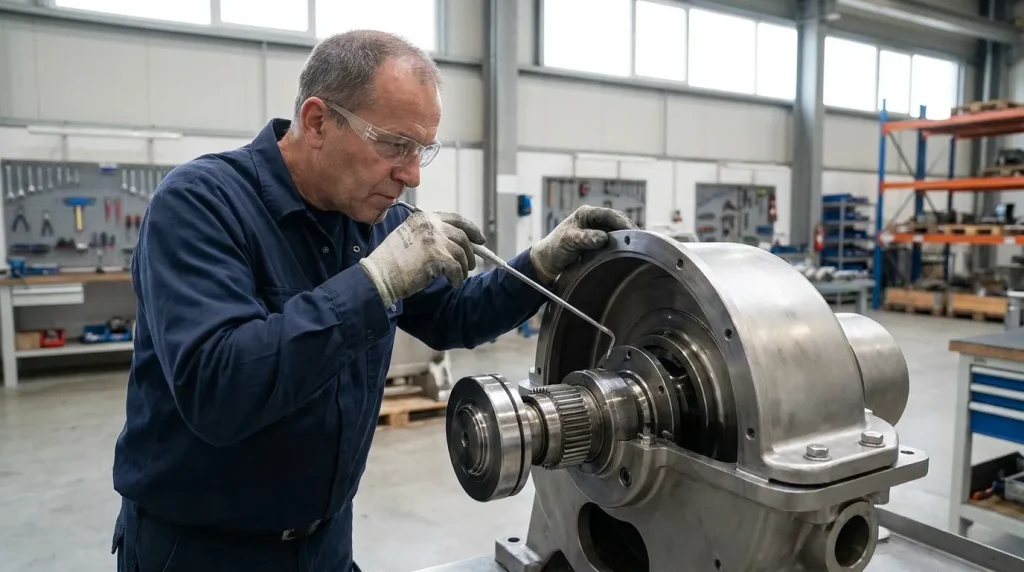
Preventive maintenance practices that should be scheduled include regular rotor inspections, bearing assessments, vibration monitoring, and seal integrity checks. Essential scheduled maintenance tasks include:
- Visual inspections of seals, gaskets, and mounting hardware, typically weekly or biweekly
- Monthly vibration measurements against ISO 10816/20816 severity zones and machine-specific commissioning baselines, with indicative zone boundaries (e.g., ~2.8 mm/s and ~4.5 mm/s RMS for certain machine classes) used as guidance for escalating monitoring and corrective action
- Quarterly lubrication of bearings per manufacturer specifications
- Semi-annual alignment verification and drive belt inspection
- Annual comprehensive overhauls including rotor balancing
Reliability-based maintenance typically targets around 85% to 95% reliability levels to optimize intervals between tasks. Integrated predictive maintenance platforms can reduce unplanned downtime, making condition monitoring investments worthwhile for critical centrifuge applications.
How Should Operators Be Trained and Certified Post-Startup?
Operators should be trained and certified post-startup through formal competency programs that combine classroom instruction with supervised hands-on evaluation. Industry regulations require employers to ensure each equipment operator is trained, certified or licensed, and evaluated before operating machinery independently.
Effective post-startup training programs include:
- Equipment-specific operation procedures and safety protocols
- Vibration monitoring interpretation and threshold recognition
- Emergency shutdown execution and lockout/tagout procedures
- Routine inspection techniques and documentation requirements
- Troubleshooting common operational anomalies
Recertification intervals maintain competency as procedures evolve. From experience, operators who understand the “why” behind each protocol respond faster during upsets and catch developing problems earlier.
With maintenance schedules and trained operators in place, facilities can leverage expert support when specialized needs arise.
How Can International Process Plants Support Your Centrifuge Commissioning and Start-Up Needs?
International Process Plants supports centrifuge commissioning and start-up needs by supplying quality used and new surplus centrifuges with verified documentation, reducing procurement lead times and simplifying equipment integration. The following sections explain how sourcing from IPP streamlines commissioning and summarize the key takeaways from this guide.
Can Sourcing Used or Refurbished Centrifuges from International Process Plants Streamline the Commissioning Process?
Yes, sourcing used or new surplus centrifuges from International Process Plants can streamline the commissioning process. IPP’s inventory of 15,000+ pieces currently available includes centrifuges from multiple OEMs, allowing procurement teams to match specifications to existing plant utilities and control systems. This compatibility minimizes integration adjustments during dry and wet run testing. Faster equipment availability compared to new OEM lead times accelerates project timelines while maintaining the documentation standards that commissioning protocols require.
What Are the Key Takeaways About Centrifuge Commissioning and Start-Up Procedure: Step-by-Step Guide for Safe Operation We Covered?
The key takeaways about centrifuge commissioning and start-up procedure are:
- Pre-commissioning verification prevents failures: Instrumentation calibration, utility connection checks, and manufacturer documentation review must precede any equipment operation
- Dry and wet runs establish baseline performance: Sequential testing identifies mechanical issues before process materials are introduced
- Vibration monitoring is critical: ISO 10816/20816 defines machine-class-dependent severity zones, with values around 2.8 mm/s RMS and 4.5 mm/s RMS commonly used as guidance for escalating monitoring and corrective action rather than fixed universal alert or danger limits.
- PPE requirements are non-negotiable: Safety eyewear, gloves, lab coats, and closed-toe shoes mitigate operator exposure risks
- Emergency shutdown testing validates safety systems: Stop functions consistent with IEC 60204-1 (including immediate power removal stopping, commonly referred to as Stop Category 0) are tested to confirm safe system response prior to routine operation.
- Documentation enables ongoing reliability: Documentation enables predictive maintenance by establishing baseline operating parameters that support condition monitoring strategies aimed at achieving 85–90% equipment availability and reduced unplanned downtime.
Proper commissioning transforms equipment installation into verified operational readiness, protecting both personnel and capital investment.

 RU
RU  EN
EN  ES
ES  FR
FR  PL
PL  DE
DE  AR
AR  UR
UR  HI
HI  NL
NL  TR
TR  IT
IT  UK
UK  JA
JA  PT
PT  ZH
ZH 