
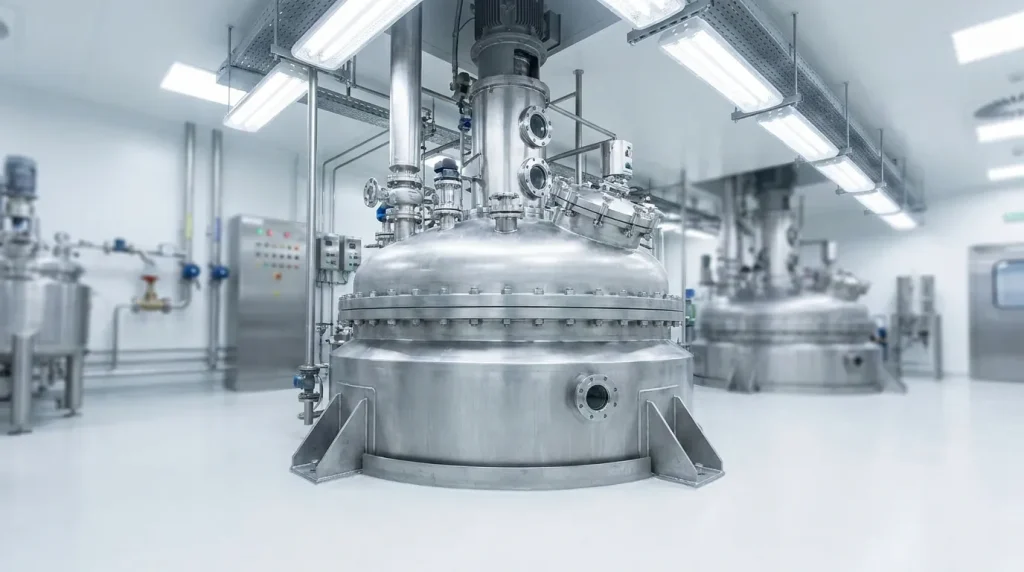
Baffles in glass-lined reactors are internal flow-disrupting components that prevent vortex formation, maximize agitation power transfer, and enhance heat exchange during batch processing. Selecting the correct baffle type directly affects mixing efficiency, cleaning validation, and batch cycle times in pharmaceutical and chemical applications.
This guide covers baffle fundamentals and mixing performance, beavertail baffle design and applications, fin baffle characteristics and selection criteria, comparative performance factors, and maintenance requirements for glass-lined configurations.
Without proper baffling, reactors lose agitation power as fluid simply rotates with the impeller. Baffling degree ranges from 0 in unbaffled vessels to 1.0 in fully baffled configurations with four wall baffles at 90 degrees. Wall-mounted designs reduce mixing times through improved heat transfer, solids suspension, and gas dispersion.
Beavertail baffles mount through a single nozzle and achieve roughly 0.5 baffling efficiency. Their streamlined profile simplifies cleaning validation in multi-product facilities, making them suitable for pharmaceutical intermediates and crystallization processes requiring frequent changeovers.
Fin baffles project radially with flat blade geometry that maximizes vortex suppression and turbulence. They excel in applications demanding gas dispersion.
Proper installation and inspection prevent costly enamel damage. Baffles require padded rigging, controlled vertical lowering, and torque-limited fastening. Spark testing after installation and following any mechanical disturbance catches coating defects before they propagate.
Why Are Baffles Important in Glass-Lined Reactors?
Baffles are important in glass-lined reactors because they disrupt fluid rotation, maximize agitation power transfer, and enhance heat exchange. The following sections examine how baffles improve mixing efficiency and what problems occur when proper baffling is absent.
How Do Baffles Improve Mixing and Heat Transfer Efficiency?
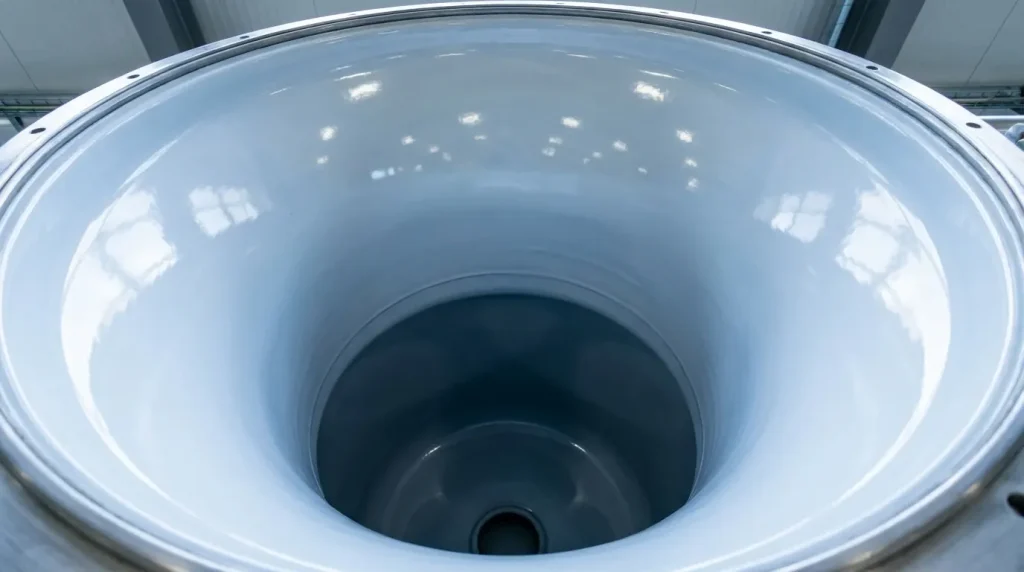
Baffles improve mixing and heat transfer efficiency by breaking up vortex formation and redirecting fluid flow patterns. Without baffles, liquid simply rotates with the agitator, creating a central vortex that wastes energy. Baffles interrupt this rotation and force radial and axial mixing currents throughout the vessel.
According to De Dietrich Process Systems, wall-mounted baffles using the OptiMix design reduce mixing times by approximately one-third through improvements in heat and mass transfer, solids suspension and distribution, and gas dispersion rates. This faster mixing directly translates to shorter batch cycles and more consistent product quality.
Heat transfer coefficients vary significantly based on baffle configuration. Glass-lined heat exchangers used as baffles, such as the PowerBaffle design, achieve heat transfer coefficients ranging from 350 to 1,400 W/m²K (62 to 247 BTU/hr·ft²·°F). For comparison, standard jacketed vessels typically achieve 453 to 456 W/m²K (80 to 80.4 BTU/hr·ft²·°F). Process engineers should factor these differences when specifying temperature-sensitive reactions.
What Problems Can Arise Without Proper Baffling in Reactor Design?
Problems that can arise without proper baffling in reactor design include vortex formation, poor mixing uniformity, reduced heat transfer, and extended batch times. When fluid simply rotates with the agitator, stratification occurs and temperature gradients develop across the vessel volume. Reactions requiring uniform temperature control suffer from hot spots near heated walls and cool zones in the vessel center.
Additional problems without proper baffling include:
- Incomplete solids suspension, causing settled product or uneven reactions
- Reduced mass transfer rates
- Inconsistent product quality from batch to batch
- Longer cycle times that reduce throughput capacity
For pharmaceutical and fine chemical applications where batch consistency is critical, these problems directly impact product specifications and regulatory compliance.
What Is a Beavertail Baffle and How Does It Work in Glass-Lined Reactors?
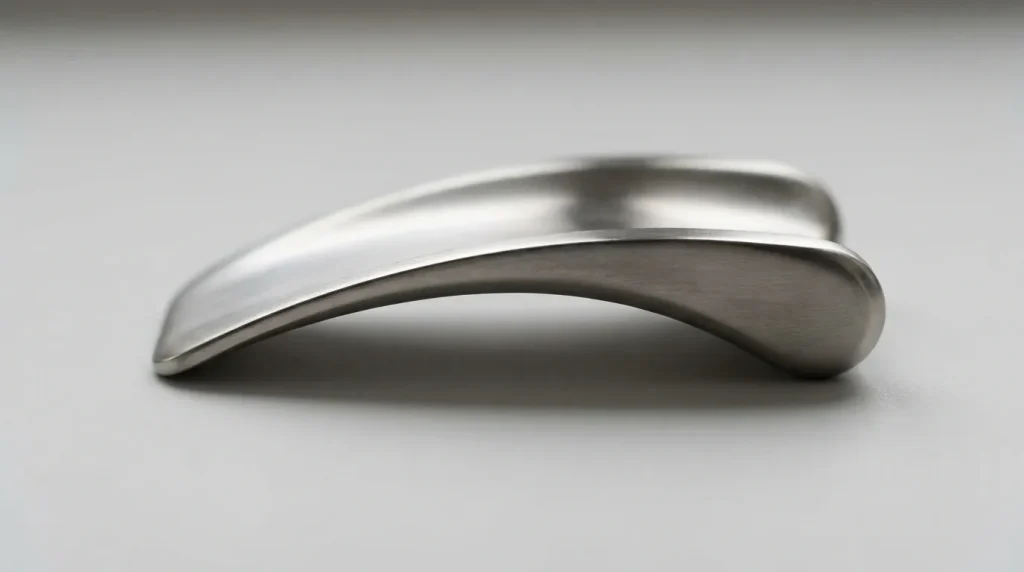
A beavertail baffle is a single, curved glass-lined plate that mounts through the reactor nozzle and extends into the vessel to disrupt vortex formation. The sections below cover its advantages, disadvantages, and ideal applications.
What Are the Advantages and Disadvantages of Beavertail Baffles?
The advantages and disadvantages of beavertail baffles reflect their design as a compromise between no baffling and full wall-mounted configurations.
Zalety:
- Simple installation through a single nozzle opening
- Reduced risk of glass damage compared to wall-mounted designs
- Easy removal for cleaning and inspection
- Lower cost than multi-baffle systems
Disadvantages:
- Achieves only partial mixing efficiency; according to GMM Pfaudler, a single beavertail baffle reaches approximately 0.5 baffling efficiency compared to 1.0 for a fully baffled four-wall configuration
- Creates potential shadow zones during Clean-In-Place cycles
For processes requiring moderate mixing intensity without maximum power input, the beavertail design often provides adequate performance at reduced complexity.
In What Applications Are Beavertail Baffles Most Effective?
Beavertail baffles are most effective in low-to-moderate viscosity applications where partial vortex suppression meets process requirements.
Ideal applications include:
- Pharmaceutical intermediates requiring frequent product changeovers
- Fine chemical synthesis with cleaning-sensitive formulations
- Crystallization processes where gentle mixing prevents crystal damage
- Batch operations where full baffling adds unnecessary cost
These baffles suit processes that need improved mixing over unbaffled vessels but cannot tolerate the installation complexity or potential contamination risks of permanent wall-mounted systems. Glass-lined reactors in multi-product facilities particularly benefit, since beavertail removal simplifies validation between campaigns.
With beavertail fundamentals established, fin baffles offer an alternative approach for different mixing demands.
What Is a Fin Baffle and How Is It Utilized in Glass-Lined Reactors?
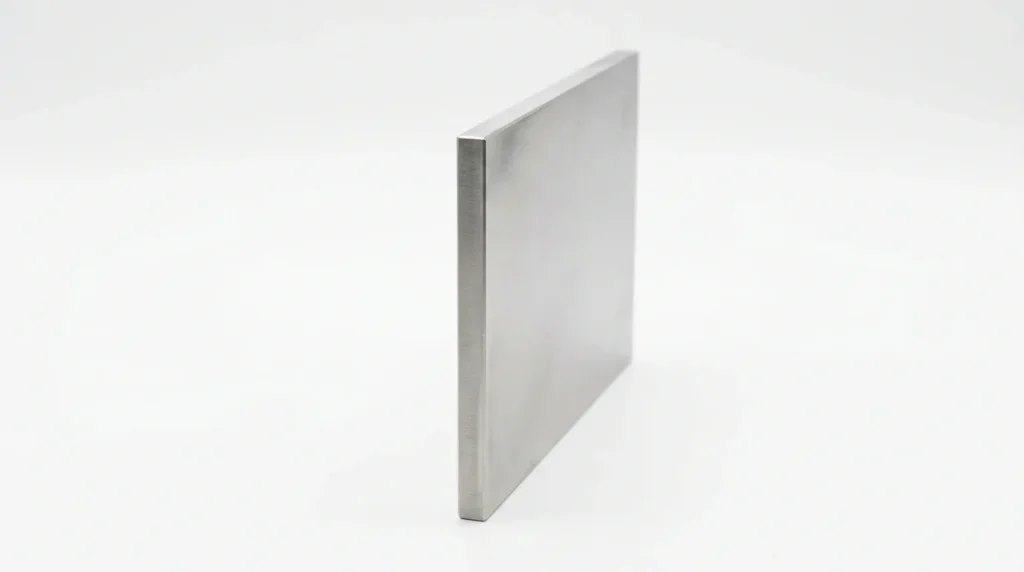
A fin baffle is a flat, blade-like internal component mounted inside a glass-lined reactor to disrupt rotational flow and enhance mixing efficiency. The following sections examine their benefits, limitations, and optimal application scenarios.
What Are the Key Benefits and Limitations of Fin Baffles?
The key benefits of fin baffles include high baffling efficiency, improved axial mixing, and effective vortex suppression. Their flat profile maximizes flow disruption per unit surface area, which translates to stronger top-to-bottom circulation compared to streamlined designs.
Benefits of fin baffles:
- Strong vortex elimination increases agitator power transfer to the fluid
- Effective solids suspension in slurry and crystallization processes
Limitations of fin baffles:
- Sharp edges create cleaning challenges in viscous or sticky media
- Higher shear zones may damage shear-sensitive products
- Glass lining at corners requires careful inspection for stress cracks
For pharmaceutical crystallization or pigment dispersion where aggressive mixing outweighs cleaning concerns, fin baffles deliver measurable performance gains. However, their geometry demands rigorous spark testing at glass-lined edges during scheduled inspections.
When Should Fin Baffles Be Preferred over Other Types?
Fin baffles should be preferred when maximum baffling degree and aggressive mixing are required. Processes involving rapid blending, gas dispersion, or solids suspension benefit most from fin geometry.
Select fin baffles for these conditions:
- Low-viscosity liquids requiring strong turbulence
- Reactions needing rapid temperature equilibration across the batch
- Gas-liquid contact applications where bubble breakup improves mass transfer
- Crystallization processes demanding uniform supersaturation
Beavertail baffles suit applications prioritizing cleanability and gentle mixing. Fin baffles excel where mixing intensity takes precedence. When evaluating reactor purchases, consider both the process chemistry and the cleaning validation requirements for your facility.
How Do Beavertail and Fin Baffles Compare in Terms of Performance and Suitability?
Beavertail and fin baffles compare in terms of performance and suitability based on mixing intensity, cleanability, and process requirements. The following sections outline selection criteria and alternative baffle configurations.
What Factors Should Guide the Selection Between Beavertail and Fin Baffles?
The factors that should guide the selection between beavertail and fin baffles include process viscosity, cleaning requirements, and required baffling efficiency. Beavertail baffles achieve approximately 0.5 baffling efficiency compared to fully baffled configurations, according to GMM Pfaudler. This moderate efficiency suits applications prioritizing cleanability over maximum mixing intensity.
Key selection criteria include:
- Viscosity range: Fin baffles perform better in low-viscosity fluids; beavertail designs handle moderate viscosities
- Cleaning frequency: Beavertail profiles allow easier CIP validation due to their streamlined shape
- Mixing intensity: Fin baffles deliver higher turbulence for demanding reactions
- Batch changeover: Beavertail designs reduce cross-contamination risk in multi-product facilities
For most pharmaceutical and fine chemical applications, prioritizing cleanability often outweighs marginal gains in mixing efficiency.
Are There Other Baffle Types Used in Glass-Lined Reactors?
Yes, there are other baffle types used in glass-lined reactors beyond beavertail and fin designs. Wall-mounted baffles, tubular baffles, and heat exchanger baffles each serve distinct purposes.
Common alternative configurations include:
- Wall-mounted baffles: Permanently bonded to vessel walls
- Tubular baffles: Attenuate recirculation patterns while reducing power consumption
- PowerBaffle heat exchangers: Achieve heat transfer coefficients of 350 to 1,400 W/m²K (62 to 247 BTU/hr·ft²·°F)
- Retrievable finger baffles: Allow removal for inspection without vessel entry
OptiMix wall-mounted designs can be retrofitted during reglassing at roughly half the cost of a new reactor, according to De Dietrich Process Systems. This retrofit option makes baffle upgrades practical when vessels require scheduled maintenance.
With performance criteria established, proper installation and maintenance practices ensure these baffles deliver expected results throughout their service life.
What Maintenance, Inspection, and Installation Challenges Are Unique to Baffles in Glass-Lined Reactors?
Baffles in glass-lined reactors require specialized handling because the vitreous enamel coating is brittle and cannot tolerate impact, thermal shock, or improper fastening. The sections below cover installation procedures that prevent damage and inspection practices that extend baffle service life.
How Should Baffles Be Installed in Glass-Lined Equipment to Prevent Damage?
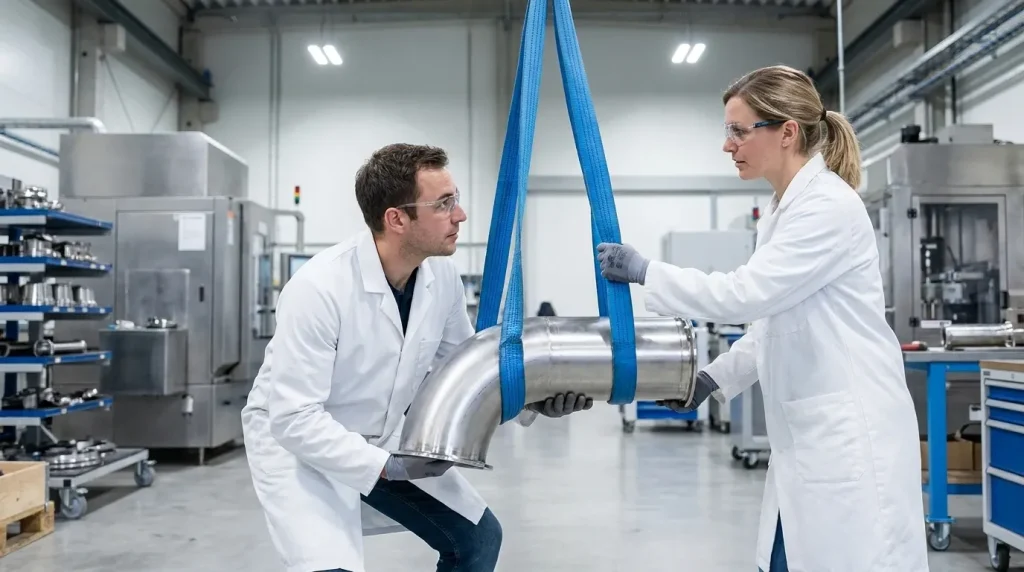
Baffles should be installed in glass-lined equipment using soft rigging, controlled lowering, and torque-limited fastening to prevent chipping or cracking the enamel surface. Key installation practices include:
- Use padded slings or nylon straps; never allow metal chains to contact glass-lined surfaces
- Lower baffles vertically through nozzle openings, avoiding lateral movement that could scrape vessel walls
- Torque mounting hardware in incremental stages per manufacturer specifications to distribute clamping force evenly
- Verify gasket seating before final tightening to prevent point-loading on the enamel
According to GMM Pfaudler, a single beavertail baffle achieves a baffling efficiency of approximately 0.5 compared to a fully baffled configuration with four wall baffles at 90 degrees. This efficiency differential makes correct positioning during installation critical for achieving target mixing performance.
What Inspection and Maintenance Practices Are Recommended for Glass-Lined Baffles?
The inspection and maintenance practices recommended for glass-lined baffles include regular spark testing, visual examination for crazing or chips, and documentation of coating thickness over time. According to De Dietrich Process Systems, DC spark testers detect defects with a visible spark, red light alarm, and audible signal, while AC spark testers generate a bright white spark when passed over a defect.
Recommended inspection intervals and methods:
- Perform spark testing after installation and following any mechanical disturbance
- Conduct visual inspections quarterly for signs of wear at mounting points and areas of fluid impingement
- Document any coating anomalies with photographs and thickness measurements for trend analysis
- Schedule professional inspection annually or per DIN 28721 requirements for glass-lined equipment in process plants
Proactive inspection catches minor enamel damage before it propagates, reducing the risk of costly unplanned shutdowns.
How Should You Approach Selecting and Sourcing Glass-Lined Reactors with Specific Baffle Types Through International Process Plants?
You should approach selecting and sourcing glass-lined reactors with specific baffle types through International Process Plants by specifying your process requirements, baffle configuration, and quality standards upfront. The sections below cover our sourcing capabilities and key takeaways from this guide.
Can International Process Plants Help with Glass-Lined Reactors Featuring Beavertail or Fin Baffles?
Yes, International Process Plants can help with glass-lined reactors featuring beavertail or fin baffles. Our inventory of 15,000+ pieces of equipment includes glass-lined batch reactors with various baffle configurations sourced from chemical and pharmaceutical facilities worldwide.
When you specify your baffle requirements, we match available units against your process parameters. All glass-lined equipment undergoes spark testing before sale; according to De Dietrich Process Systems, DC spark testers detect defects with visible sparks, red light alarms, and audible signals, while AC testers generate bright white sparks when passed over compromised areas.
For buyers considering upgrades, OptiMix wall-mounted baffles can be retrofitted during reglassing at approximately half the cost of a new reactor. This makes good used reactors from our inventory an attractive starting point for customization. Contact our technical team with your vessel capacity, operating pressure, temperature range, and preferred baffle type to receive matched options from our current stock.
What Are the Key Takeaways About Baffle Types for Glass-Lined Reactors Addressed Here?
The key takeaways about baffle types for glass-lined reactors addressed here center on matching baffle design to process demands:
- Beavertail baffles achieve approximately 0.5 baffling efficiency versus 1.0 for four wall baffles, making them suitable for moderate mixing with easier cleanability
- Tubular baffles cut power consumption by up to 64% compared to conventional flat baffles, depending on impeller type
- All glass-lined baffles require spark testing and CIP validation to confirm coating integrity
- Good used glass-lined reactors cost approximately 50% of new, while reglassed units run around 70% of new pricing
International Process Plants maintains glass-lined batch reactors with multiple baffle configurations across our warehouses in the United States, Germany, and the United Kingdom. We source equipment meeting DIN 28721, ASME Section VIII, and PED standards for global deployment.

 PL
PL  EN
EN  ES
ES  FR
FR  DE
DE  AR
AR  UR
UR  HI
HI  NL
NL  TR
TR  IT
IT  UK
UK  RU
RU  JA
JA  PT
PT  ZH
ZH