 Przejdź do treści
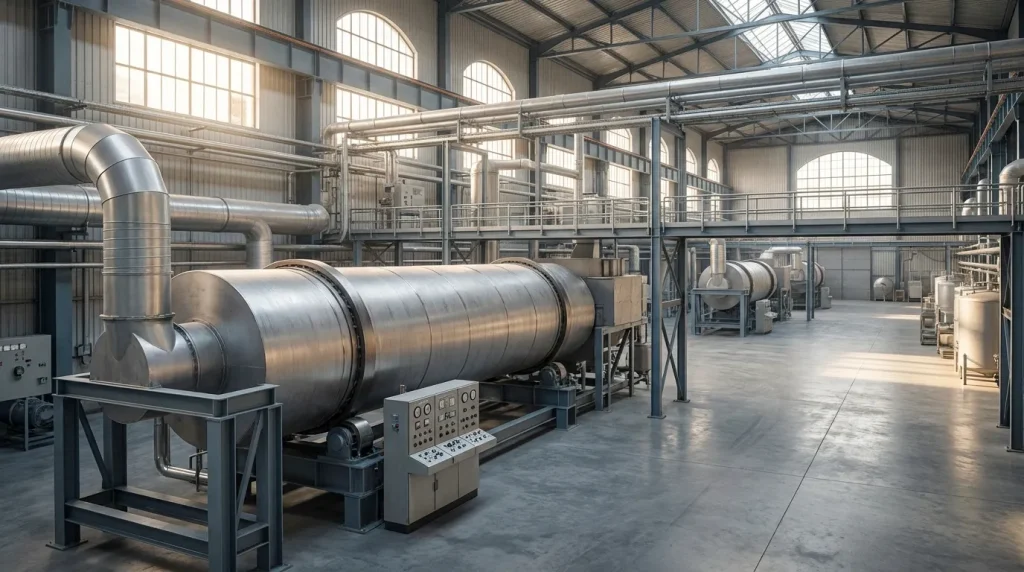
Sizing an industrial dryer means matching equipment capacity, heat load, and residence time to the material, moisture, and throughput of a specific process. Correct sizing prevents undersizing, which leaves product above moisture specification, and oversizing, which wastes capital and energy at partial load.
This guide covers the factors that drive dryer sizing, the dryer types worth considering, the process and production constraints that shape selection, the step-by-step sizing methodology, the mistakes that derail equipment decisions, and the compliance standards that vary by region.
The core sizing factors are material type, moisture content, throughput rate, and inlet and outlet temperatures. Material properties such as bulk density, particle size, stickiness, and heat sensitivity control heat transfer, while moisture content sets the evaporation load that drives heat input and dryer size.
Dryer selection spans rotary, fluid bed, spray, vacuum, and freeze dryers, plus batch and continuous configurations. Each technology sizes around a different variable, from drum volume to shelf area, and the batch-versus-continuous choice balances changeover flexibility against steady throughput.
Process and production requirements add operational limits, footprint constraints, and energy targets. Available floor space, ceiling height, and specific energy consumption often narrow the options before throughput calculations begin.
The sizing methodology moves from gathering feed and moisture data to calculating evaporation load and validating results through pilot testing. Common errors include capacity mismatches, ignoring future application changes, and overlooking maintenance margins.
Compliance requirements differ by market: NFPA standards govern combustible dust in the United States, ATEX (Directive 2014/34/EU) governs explosive atmospheres in the EU and UK, and GMP validation applies to pharmaceutical dryers worldwide.
What Key Factors Influence the Sizing of an Industrial Dryer?
The key factors that influence industrial dryer sizing are material type, moisture content, throughput rate, and inlet and outlet temperatures. The following sub-sections explain how each factor shapes capacity, heat load, and dryer selection.
How Does Material Type Affect Dryer Sizing?
Material type affects dryer sizing by determining heat load, residence time, and the suitable drying method. Drying transfers heat to a wet feedstock to vaporize its liquid, and material properties control how fast that transfer happens.
The following material properties drive dryer selection:
- Bulk density sets the mass loaded per unit volume and the required dryer capacity.
- Stickiness affects fouling and the choice between agitated and static designs.
- Abrasion influences material selection and wear allowances.
- Heat sensitivity restricts inlet temperature and may require vacuum or low-temperature drying.
Powders and granules suit fluidized beds, slurries suit spray dryers, and heat-sensitive products suit freeze or vacuum dryers. Matching material behavior to the dryer type prevents oversizing and product degradation.

Why Is Moisture Content Important in Dryer Selection?
Moisture content is important in dryer selection because it sets the evaporation load, the largest driver of heat input and dryer size. A higher initial moisture content means more water to remove per unit of dry product, which directly increases the required heat duty and residence time.
Moisture is reported on two bases that buyers must distinguish:
- Wet basis: water mass divided by total wet mass.
- Dry basis: water mass divided by dry solid mass.
Specifying the wrong basis can misstate the evaporation load and lead to an undersized dryer.
How Do Desired Throughput Rates Impact Dryer Size?
Desired throughput rates impact dryer size by setting the mass of product and water processed per hour, which fixes the required capacity. Production capacities span a wide range, from 0.10 kg/h (0.22 lb/h) to 100 tons/h (90,718 kg/h), so throughput is the primary scaling variable.
Throughput combines with moisture content to define the evaporation load. We recommend sizing to working capacity rather than peak design capacity, because real feed rates and downtime rarely match theoretical maximums, and working capacity reflects what the dryer delivers in practice.
What Role Do Inlet and Outlet Temperatures Play in Sizing?
Inlet and outlet temperatures play a central role in sizing by setting the available driving force for heat transfer and the evaporation rate. A larger temperature difference between the hot inlet medium and the cooler outlet raises the evaporation rate and reduces the dryer size needed for a given duty.
Inlet temperature is limited by product heat sensitivity, while outlet temperature controls final moisture and energy efficiency. According to Arun S. Mujumdar of the National University of Singapore, “drying temperatures range from below the triple point to above the critical point of the liquid,” giving designers a wide operating window to match each product. Balancing both temperatures against material limits gives the most compact, efficient dryer for the duty. With these four factors defined, the next step is matching them to the right dryer type.
Which Types of Industrial Dryers Should You Consider for Your Application?
The types of industrial dryers to consider include rotary, fluid bed, spray, vacuum, and freeze dryers, plus batch and continuous configurations. This section compares how dryer types differ in sizing requirements, weighs batch against continuous operation, and explains when specialty dryers fit unique applications.
How Do Common Industrial Dryer Types Differ in Sizing Requirements?
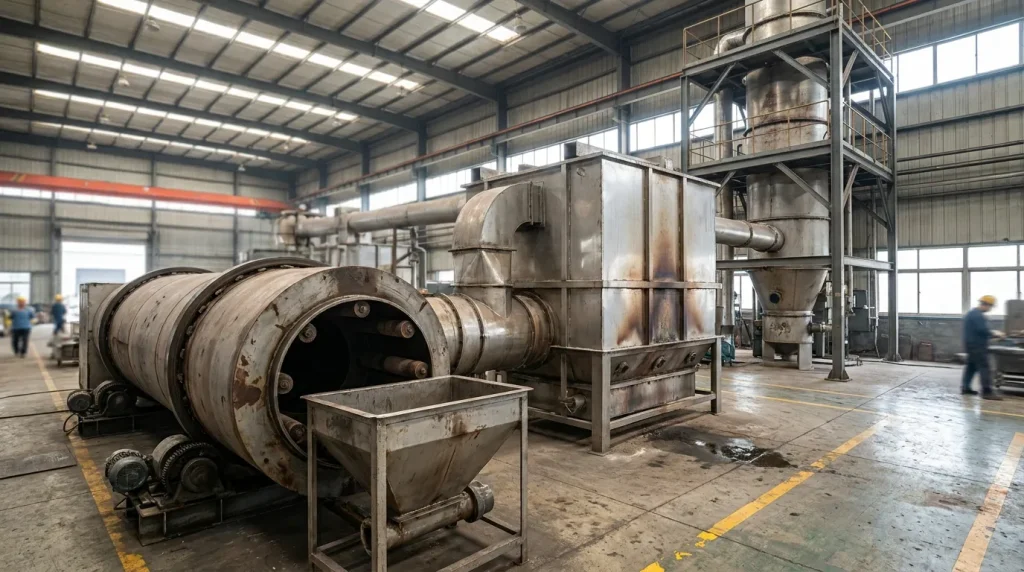
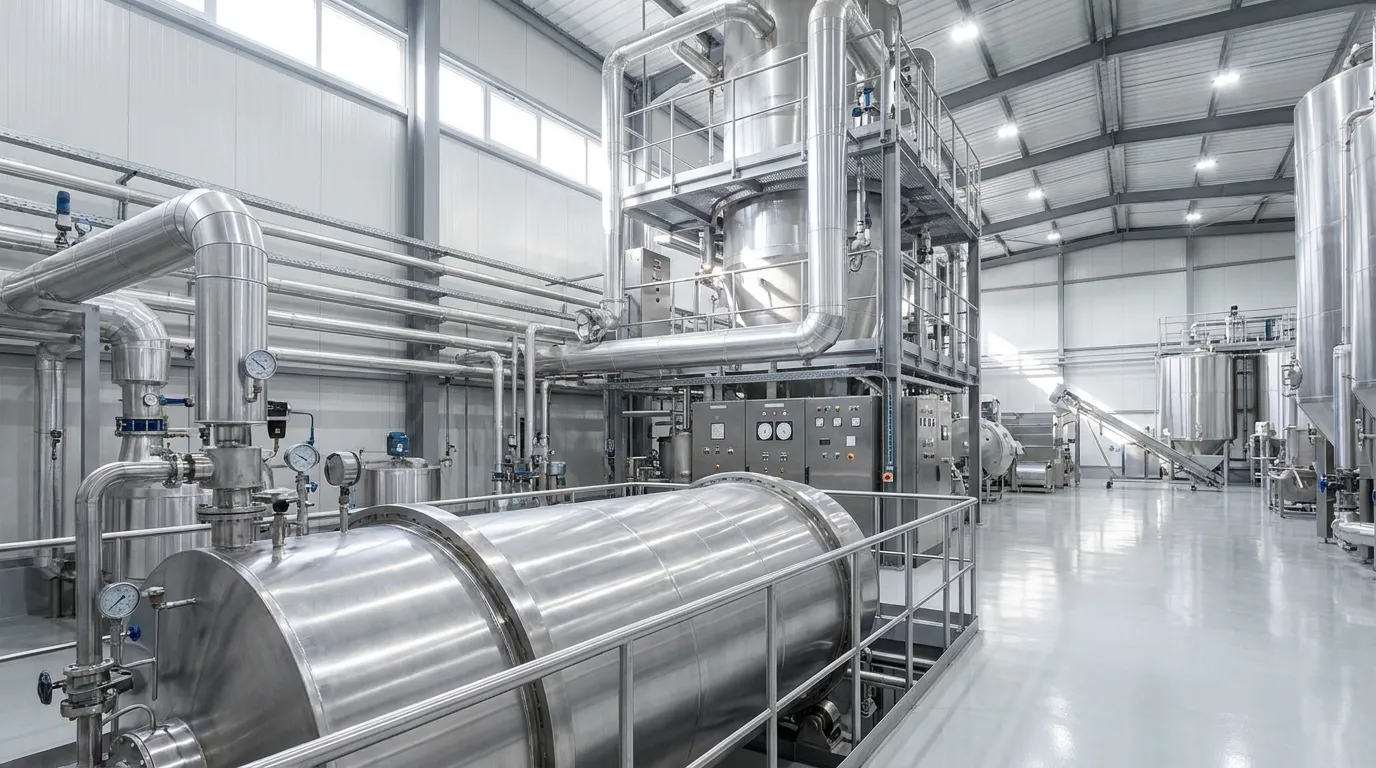
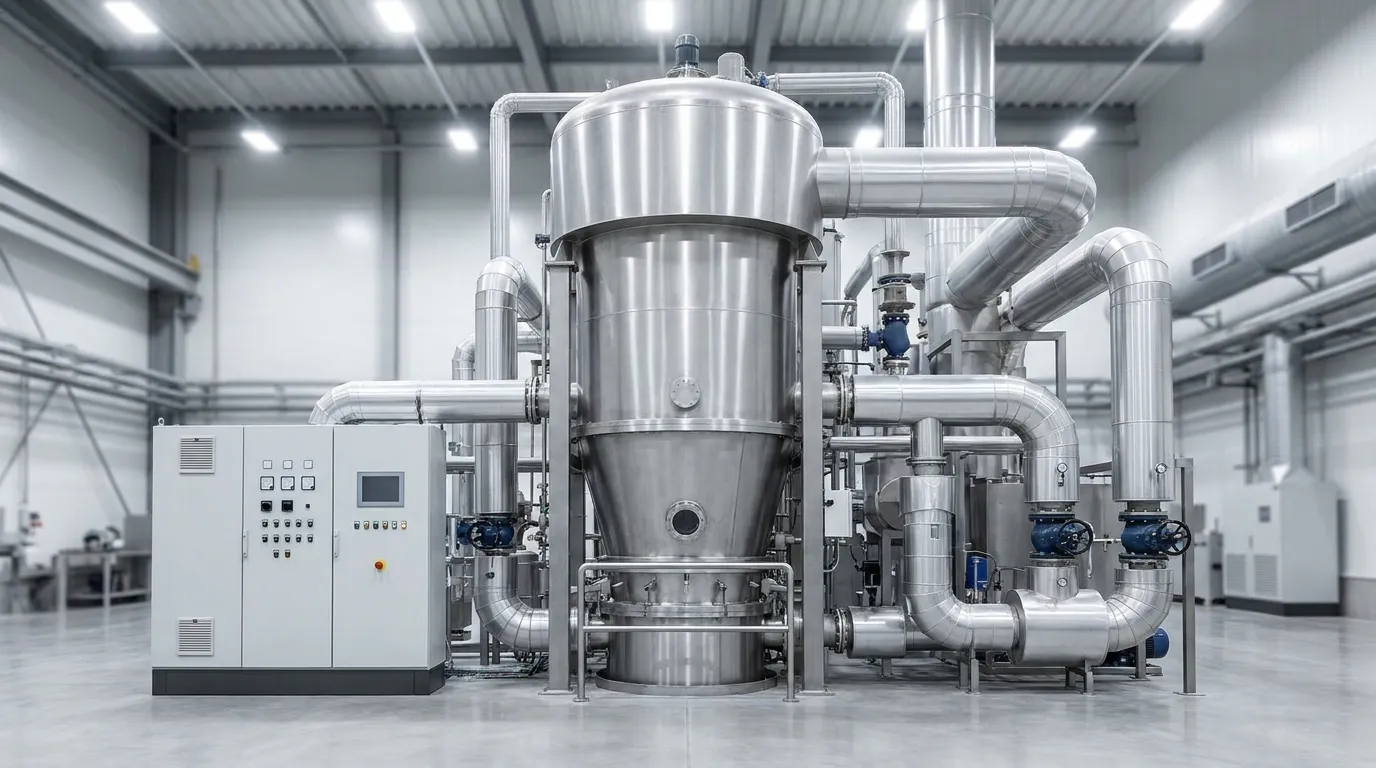
Common industrial dryer types differ in sizing requirements because each technology controls heat transfer, residence time, and evaporation load differently. Rotary dryers size around drum volume and feed retention. Fluid bed dryers size around airflow and bed area. Spray dryers size around chamber volume and atomization rate. Vacuum dryers size around heated surface area. Freeze dryers size around shelf area and condenser capacity.
Demand for these technologies continues to expand. According to Mordor Intelligence, the industrial dryers market is estimated at USD 7.58 billion in 2025 and is expected to reach USD 10.08 billion by 2030, at a CAGR of 5.87 percent. Matching dryer type to material behavior remains the most reliable way to right-size a system.
What Are the Pros and Cons of Batch vs. Continuous Dryers?
The pros and cons of batch versus continuous dryers center on flexibility against throughput. Batch dryers suit small volumes, frequent product changes, and validated pharmaceutical processes. Continuous dryers suit high, steady throughput with consistent feed. The key trade-offs are:
- Batch dryer advantages: flexible product changeover, easier cleaning and validation, lower capital cost for small runs.
- Batch dryer drawbacks: lower throughput, longer cycle time, more operator handling per batch.
- Continuous dryer advantages: high steady output, lower labor per unit, stable product quality.
- Continuous dryer drawbacks: higher capital cost, less changeover flexibility, harder to clean between products.
When Should Specialty Dryers Be Used for Unique Applications?
Specialty dryers should be used when standard convective or conductive drying would damage the product or fail to meet quality targets. Freeze dryers preserve perishable, heat-sensitive materials by removing moisture below the freezing point. Vacuum dryers protect oxygen-sensitive or low-temperature products by lowering the boiling point of water. Spray dryers convert slurries and solutions directly into fine powders in a single step.
Heat-sensitive pharmaceuticals, biologics, fine chemicals, and high-value foods most often justify specialty equipment. In these applications, product quality and stability outweigh energy cost, making the higher capital investment worthwhile. With dryer types and configurations defined, process and production requirements further shape the final sizing decision.
How Do Process and Production Requirements Affect Dryer Sizing?
Process and production requirements affect dryer sizing by setting the operational limits, footprint constraints, and energy targets the equipment must meet. The sections below cover operational constraints, space availability, and energy efficiency considerations.
What Operational Constraints Must Be Accounted for in Sizing?
The operational constraints accounted for in sizing include batch schedules, uptime targets, feed variability, cleaning cycles, and product changeover frequency. Each constraint shapes the required working capacity.
Key operational constraints include:
- Production schedule: Continuous operation favors larger continuous dryers, while intermittent runs suit batch units.
- Uptime targets: Higher availability requirements demand spare capacity to absorb cleaning and maintenance downtime.
- Feed variability: Seasonal or batch-to-batch moisture changes require sizing margins.
- Changeover frequency: Frequent product switches favor flexible, easily cleaned equipment.
- Residence time: Heat-sensitive products limit throughput per unit volume.
We recommend sizing to working capacity rather than design capacity, because real production rarely runs at theoretical maximum.
How Does Space Availability Limit Dryer Selection?
Space availability limits dryer selection by capping the footprint, height, and access clearances the equipment can occupy. Vertical and horizontal constraints often eliminate otherwise suitable dryer types.
Common space-driven selection factors include:
- Floor footprint: Rotary dryers need long horizontal runs.
- Ceiling height: Spray dryers require significant vertical clearance for the drying chamber.
- Access clearance: Maintenance, loading, and cleaning need surrounding open space.
- Utility routing: Steam, electrical, and exhaust connections must reach the installed position.
For facilities with fixed building dimensions, the available envelope frequently dictates dryer type before throughput calculations begin.
Why Is Energy Efficiency Important When Sizing a Dryer?
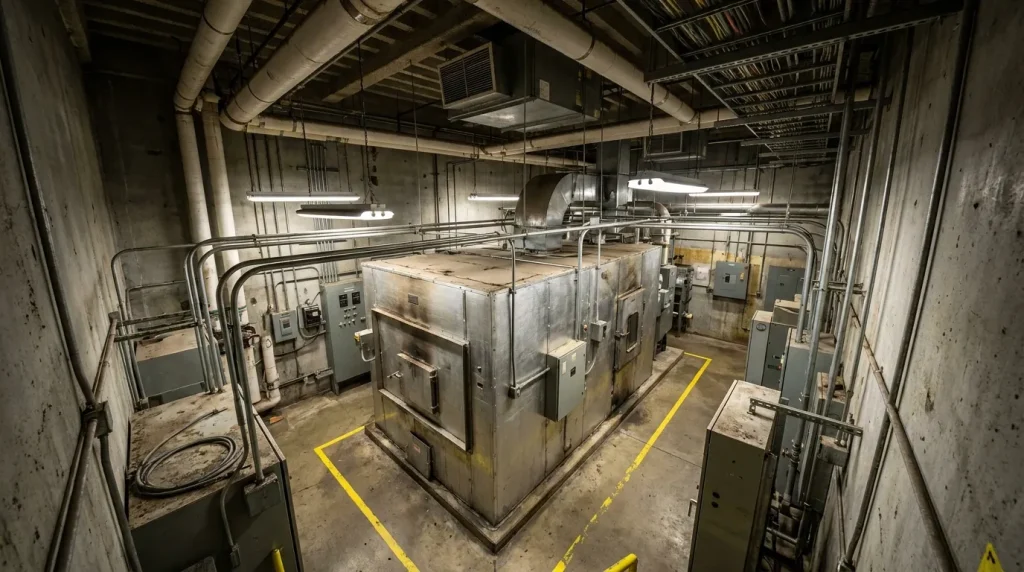
Energy efficiency is important when sizing a dryer because drying consumes large amounts of thermal energy, and efficiency directly controls operating cost and carbon footprint.
A related metric, specific energy consumption (Es), measures heat input to the dryer per unit mass of evaporated water. Lower specific energy consumption signals a more efficient design and lower operating expense. Matching heat-recovery streams to the dryer’s temperature levels further reduces energy use.
Sizing decisions should weigh CAPEX against lifetime OPEX. An oversized dryer wastes energy at partial load, so right-sizing to working capacity delivers the best lifecycle cost. With energy targets defined, the next step is documenting a structured sizing methodology.
What Are the Steps for Correctly Sizing an Industrial Dryer?
The steps for correctly sizing an industrial dryer are gathering process data, calculating required capacity, and validating the result through pilot testing. These three stages move from raw inputs to a verified equipment specification. The sections below cover what data to collect, how to calculate capacity, and why trial runs matter.
What Information Should Be Gathered Before Sizing?
The information you should gather before sizing covers feed properties, moisture targets, and production requirements. Accurate inputs prevent undersizing and oversizing, both of which carry cost and performance penalties.
Collect the following data before specifying any dryer:
- Feed material properties: bulk density in kg/m³ and lb/ft³, particle size in mm and inches, stickiness, abrasiveness, and heat sensitivity.
- Moisture data: inlet moisture and outlet moisture content, defined on a wet basis or dry basis.
- Throughput target: required production rate, ranging anywhere from small batch volumes to continuous tonnage.
- Temperature constraints: maximum product temperature in C and F that the material tolerates without degradation.
- Utility availability: steam, electricity, or waste heat, in kW and HP.
Document feed variability as well. Seasonal or batch-to-batch moisture swings directly change the evaporation load and must inform the final specification.

What Are Common Mistakes to Avoid When Sizing an Industrial Dryer?
The common mistakes to avoid when sizing an industrial dryer include undersizing or oversizing capacity, ignoring future application changes, and overlooking maintenance margins. The following subsections explain how each error affects performance, cost, and uptime.
How Can Undersizing or Oversizing Impact Performance?
Undersizing or oversizing impacts performance by creating opposite but equally costly problems. An undersized dryer fails to meet throughput targets, leaving product above moisture specification and forcing reprocessing. An oversized dryer wastes capital and energy, since heat input scales poorly at partial loads.
The performance consequences of each error are:
- Undersizing: insufficient residence time, off-specification moisture, and production bottlenecks.
- Oversizing: excessive capital expenditure, low energy efficiency at partial load, and higher idle heat losses.
- Both: reduced product quality and unpredictable operating cost per unit.
For most buyers, the best long-term economics come from sizing the dryer around verified operating capacity while ensuring sufficient margin to accommodate expected peak loads and worst-case operating conditions.
What Problems Occur If Application Needs Change Over Time?
The problems that occur if application needs change over time include capacity shortfalls, off-specification output, and stranded capital when a fixed dryer no longer matches the feed. Seasonal feed variability, new product lines, and shifting moisture targets can all push a correctly sized dryer outside its effective range.
To protect against changing requirements, build a sizing margin that accounts for:
- Seasonal feed variability and higher inlet moisture peaks.
- New product grades with different drying curves.
- Spare capacity for future throughput growth.
- Verified availability targets that confirm real uptime.
Specifying modest spare capacity at the design stage costs far less than retrofitting or replacing an undersized dryer once demand shifts.
How Does Maintenance Planning Factor Into Sizing Decisions?
Maintenance planning factors into sizing decisions by reducing the effective capacity a dryer delivers across its working life. Fouling, filter pressure drop, cleaning downtime, and wear all lower real availability below the nameplate rating, so the design must include a maintenance margin.
A lifecycle-cost view connects sizing to these recurring drivers:
| Cost Driver | Sizing Impact |
| Energy per kg water evaporated | Sets specific energy consumption and fuel cost in USD, EUR, or GBP. |
| Annual operating hours | Determines required throughput margin. |
| Maintenance labor and consumables | Reduces available uptime, raising required capacity. |
| Emissions controls and validation | Adds downtime and recurring compliance cost. |
Buyers who size for realistic availability, rather than ideal nameplate output, consistently achieve lower total cost of ownership across the equipment lifecycle.
What Compliance, Safety, and Industry Standards Affect Dryer Sizing?
Compliance, safety, and industry standards affect dryer sizing through explosion protection, machinery-safety design, and validation requirements that vary by region. The sections below cover industry-specific regulations, safety-driven sizing impacts, and required documentation.
Which Industry-Specific Regulations are Critical for Dryer Sizing?
Industry-specific regulations that may be applicable when considering dryer procurement and sizing include ATEX, NFPA standards, ISO 12100, and GMP requirements, applied differently across US, EU, and UK markets. NFPA standards govern the US market, while ATEX governs the EU and UK markets for explosive atmospheres.
The core regulations by region are:
| Standard | Region | Scope |
| NFPA 652 | Stany Zjednoczone | Combustible dust fire and explosion hazards |
| NFPA 86 | Stany Zjednoczone | Ovens and furnaces |
| ATEX (2014/34/EU) | EU and UK | Equipment for explosive atmospheres |
| ISO 12100 | Global | Machinery safety design principles |
| GMP (ICH Q7) | Global pharma | Active pharmaceutical ingredient manufacturing |
Według the EU directive 2014/34/EU on EUR-Lex, equipment intended for use in potentially explosive atmospheres must meet harmonised member-state requirements.
How Do Safety Considerations Impact Equipment Sizing?
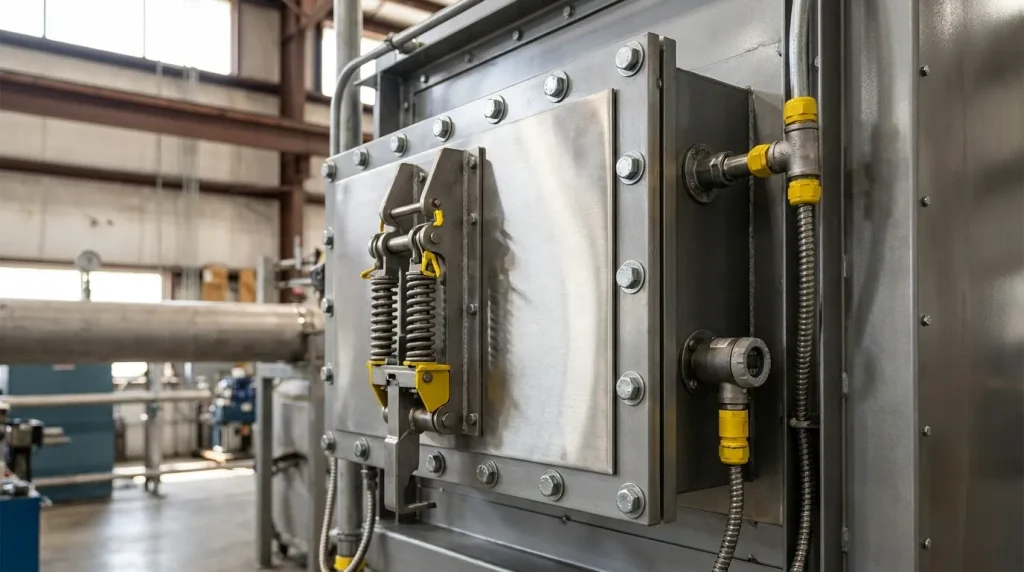
Safety considerations impact equipment sizing by adding combustible dust controls, explosion venting, and machinery-safety margins that increase enclosure volume and structural requirements. Combustible dust and explosive atmospheres are the primary safety drivers for dryers handling fine powders.
The main safety factors affecting sizing are:
- Explosion venting area, which scales with the enclosed dryer volume
- Combustible dust suppression and isolation systems
- Inerting provisions for oxygen-sensitive materials
- Machinery-safety clearances under ISO 12100
According to ISO 12100 from the International Organization for Standardization, machinery design must follow defined principles and methodology for achieving safety.
What Documentation and Validation Are Required?
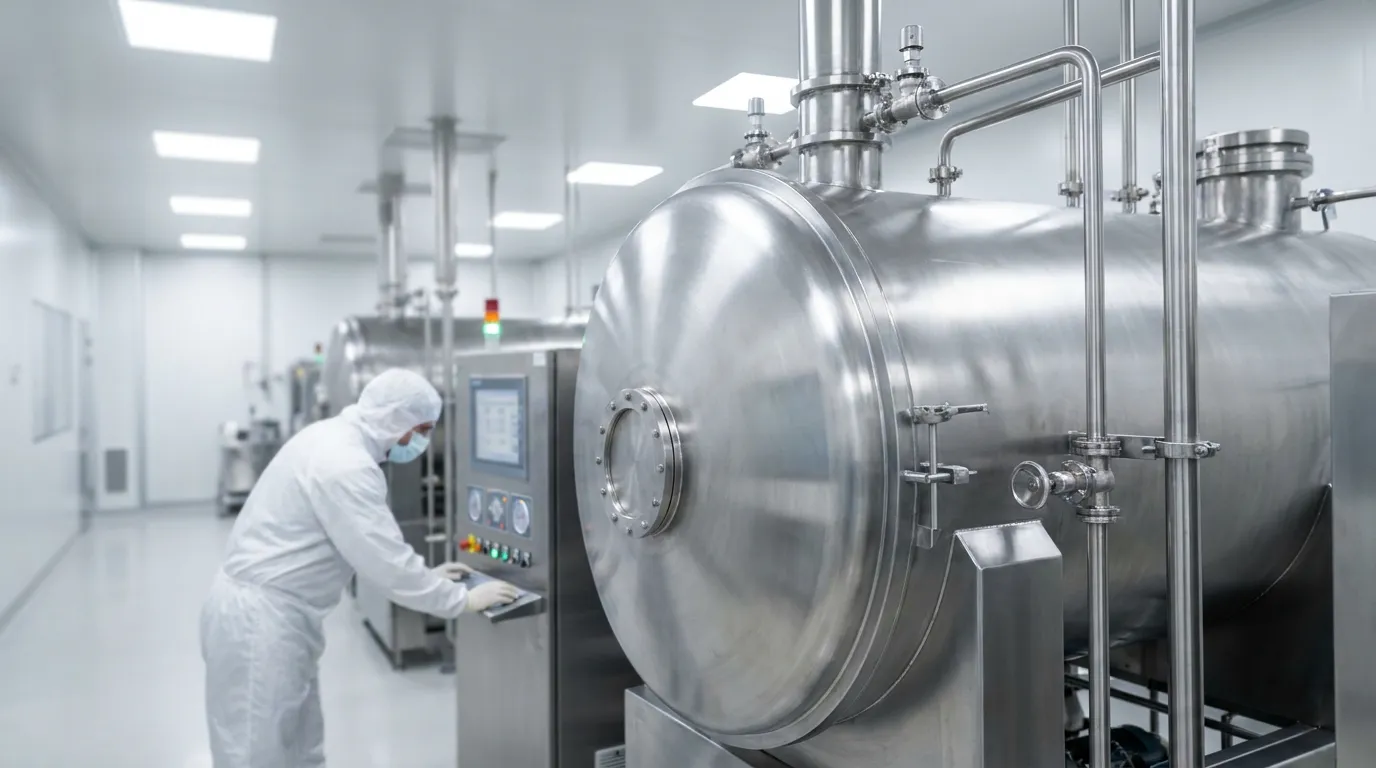
The documentation and validation required are GMP validation records, IQ/OQ/PQ protocols, and compliance certificates matched to the destination market. Pharmaceutical dryers require formal validation under GMP, while explosive-atmosphere equipment requires conformity documentation.
The required documentation typically includes:
- Installation Qualification (IQ), verifying correct installation
- Operational Qualification (OQ), verifying performance across operating ranges
- Performance Qualification (PQ), verifying consistent output under production conditions
- ATEX or NFPA conformity certificates for the relevant market
Zgodnie z World Health Organization, validation is an essential part of good manufacturing practices and good clinical practices. With compliance and documentation defined, the next step is matching these requirements to available equipment.
How Should You Approach Industrial Dryer Sizing with Equipment from International Process Plants?
Industrial dryer sizing with equipment from International Process Plants combines proven sizing methodology with access to a global inventory of used, new, and good used dryers. The sections below explain how we help you select and size the right dryer and recap the key takeaways from this guide.
Can International Process Plants Help You Select and Size Used, New, or Refurbished Industrial Dryers?
Yes, International Process Plants can help you select and size used, new, and good used industrial dryers across a wide range of applications. We supply moisture-removal equipment for chemical, pharmaceutical, and process industries, supporting feed types from slurries to heat-sensitive solids that require freeze-drying for preservation and transport.
We currently stock multiple dryer technologies, allowing buyers to match equipment to verified throughput, moisture, and product-quality targets. The global industrial dryers market reached USD 6.0 billion in 2025, according to the IMARC Group, reflecting strong demand for reliable drying systems.
For most buyers, sourcing good used dryers from inventory delivers proven performance at a lower cost than new equipment.
What Are the Key Takeaways About How to Size an Industrial Dryer for Your Application We Covered?
The key takeaways about how to size an industrial dryer center on matching equipment to your specific material, moisture, throughput, and compliance requirements. Accurate sizing protects performance, energy efficiency, and product quality across the full equipment lifecycle.
The most actionable conclusions from this guide are:
- Define material properties, inlet and outlet moisture, and throughput before selecting a dryer.
- Match dryer type to feed behavior, whether powders, granules, slurries, or heat-sensitive solids.
- Account for energy use, lifecycle cost, and maintenance margins, not capital cost alone.
- Confirm regional compliance, including ATEX in the EU and UK and NFPA standards in the US.
For procurement engineers, treating sizing as a complete lifecycle decision rather than a single capacity calculation yields the most reliable, cost-effective drying system. Contact International Process Plants to match these requirements to currently available inventory.

 PL
PL  EN
EN  ES
ES  FR
FR  DE
DE  AR
AR  UR
UR  HI
HI  NL
NL  TR
TR  IT
IT  UK
UK  RU
RU  JA
JA  PT
PT  ZH
ZH