 Saltar al contenido
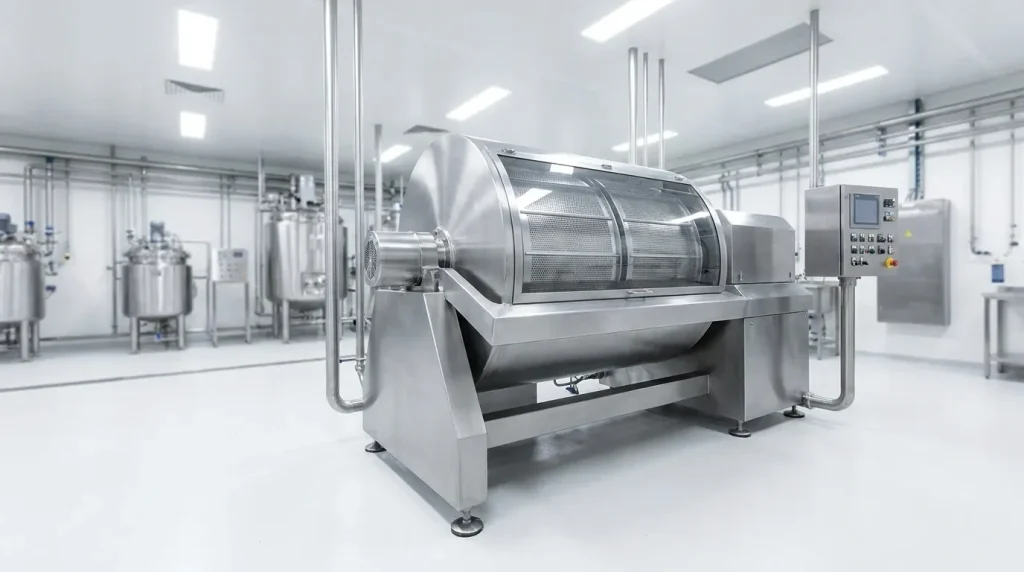
An inverting filter centrifuge is a horizontal filtering centrifuge that uses a cloth-inversion mechanism to achieve complete, heel-free solids discharge without mechanical scraping. This design eliminates the residual product heel that can contaminate batches and reduces yield in conventional scraper or peeler centrifuges.
This guide covers the operating principles and components of inverting filter centrifuges, the industries and processes where they deliver the greatest advantage, their operational benefits and limitations compared to other centrifuge types, and the selection factors that determine whether this technology fits your application.
The inversion mechanism works by pulling the filter cloth out of the rotating basket via an axially movable bowl-insert, turning it inside-out to release the entire filter cake in one continuous motion. This gentle discharge preserves crystal integrity for fragile particles while enabling thin cake filtration below 13 mm (0.5 in.), a capability that can provide advantages over many conventional horizontal filtering centrifuge designs.
Industries including pharmaceuticals, specialty chemicals, food additives, and cellulose derivatives manufacturing rely on inverting filter centrifuges for applications requiring high purity and contamination-free processing. The hermetically sealed design supports high-containment operation for highly potent APIs and hazardous compounds when integrated with appropriate containment systems and validated engineering controls.
While inverting filter centrifuges may carry higher capital costs than simpler designs like vertical basket centrifuges, the heel-free operation often justifies the investment when processing high-value materials where yield losses can compound across production campaigns. Selection depends on particle size distribution, crystal fragility, cake thickness requirements, and whether your process demands the complete discharge and containment these machines provide, or a different kind of centrifuge.
What Is an Inverting Filter Centrifuge and How Does It Work?
An inverting filter centrifuge is a horizontal filtering centrifuge that uses a unique cloth-inversion mechanism to achieve complete, heel-free solids discharge. The sections below explain how the inversion process improves efficiency and identify the main components that make this design effective.
How Does the Inverting Mechanism Improve Filtration Efficiency?
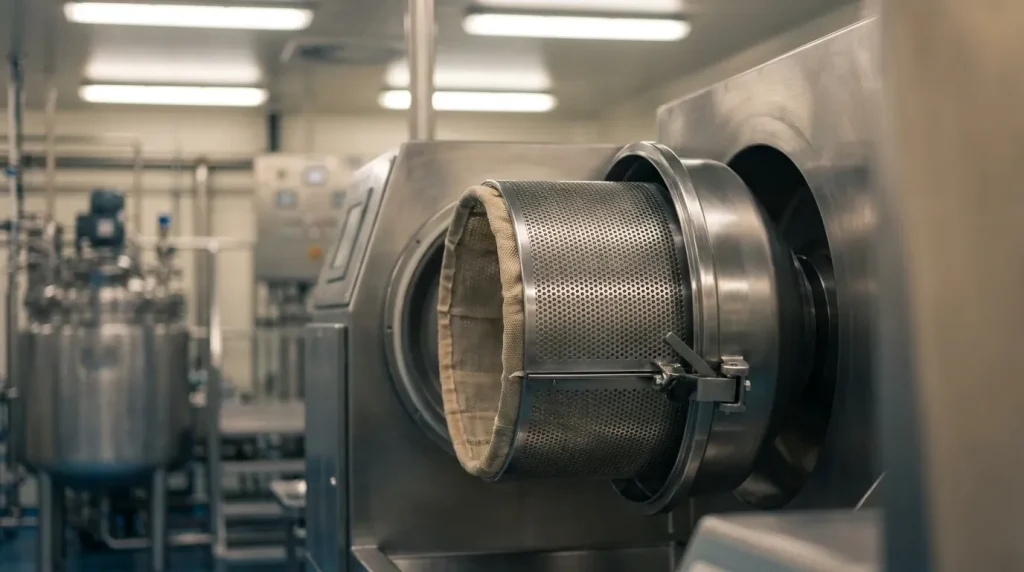
The inverting mechanism improves filtration efficiency by eliminating residual product heel and enabling complete cake discharge without mechanical scraping. During operation, an axially movable bowl-insert pulls the filter cloth out of the rotating basket, turning it inside-out. This action peels the entire filter cake away from the cloth surface in one continuous motion.
This inversion, enabling gentle, complete product removal including the heel without scraping, preserves particle integrity and improves cleanability. Traditional scraper or plow centrifuges typically leave behind a residual heel that increases the risk of cross-contamination between subsequent batches and can reduce yield. The inverting design essentially eliminates this problem.
The heel-free discharge delivers several measurable benefits:
- Higher product yield per batch
- Reduced cross-contamination between batches
- Faster cleaning cycles due to fully exposed filter cloth
- Preserved crystal structure for fragile particles
- Reduced operator handling of the processed material, improving containment and minimizing exposure risk
For pharmaceutical and fine chemical processors, this mechanism can be a meaningful choice for ensuring batch purity.
What Are the Main Components of an Inverting Filter Centrifuge?
The main components of an inverting filter centrifuge are the rotating basket, filter cloth, axially movable bowl-insert, drive system, frame, and bearing assembly. Each component serves a specific function in the separation and discharge cycle.
| Component | Function | Typical Specification |
| Rotating basket | Contains slurry during centrifugation | 300 mm to 1,300 mm (12 in to 51 in) diameter |
| Filter cloth | Retains solids while allowing filtrate passage | Synthetic or metal mesh media |
| Bowl-insert | Inverts cloth for discharge | Hydraulic or pneumatic actuation |
| Drive system | Provides rotational force | Up to 2,984 x g centrifugal force |
| Frame and bearings | Supports rotating assembly | Vibration-dampened design |
The HF 1300.1 model was the world’s largest inverting filter centrifuge when put into operation in 2003, with a basket diameter of 1,300 mm (51 in) and a nominal volume of 350 L (92 gal). At the smaller end, a typical 600 mm (24 in) diameter unit like the HF 600.1 provides approximately 0.41 m² (4.4 ft²) of filter area and handles a maximum load of 65 kg (143 lb).
Understanding these components helps procurement engineers match equipment specifications to process requirements to find the centrifuge best suited to their particular process.
In What Applications or Industries Are Inverting Filter Centrifuges Most Beneficial?
Inverting filter centrifuges are most beneficial in applications requiring high purity, complete product recovery, and contained processing of valuable or hazardous materials. The sections below cover specific processes and industries where these machines deliver the greatest operational advantage.
Which Processes or Products Benefit Most from Inverting Filter Centrifuge Use?
The processes that typically benefit most from inverting filter centrifuge use are those involving high-value solids, difficult-to-filter substances, and products requiring that no heel is left behind. The heel-free design ensures all filter cake is discharged, which became the primary reason for adoption in the late 1970s for high-value chemical processing.
Products and processes that gain the most advantage include:
- Active pharmaceutical ingredients (APIs) requiring integrated washing steps for high purity
- Specialty chemicals where batch-to-batch contamination must be eliminated
- Thin cake filtration below 0.5 in (12.7 mm), thinner than most horizontal filtering centrifuges achieve
- Fragile crystals needing gentle discharge without mechanical scraping
- Explosives manufacturing, where HEINKEL introduced the first-generation HF centrifuge in 1978
Modern units integrate inverting filter technology with thin cake filtering and PAC (Pressure Added Centrifugation) direct contact drying. This combination delivers purer, drier products in a single contained machine.
What Are Examples of Industries That Regularly Use Inverting Filter Centrifuges?
Examples of industries that regularly use inverting filter centrifuges include pharmaceuticals, specialty chemicals, food processing, and cellulose derivatives manufacturing. The hermetically closed design minimizes operator exposure to hazardous or potent compounds, supporting compliance with stringent safety requirements for toxic product applications.
Key industry applications include:
- Farmacéutico: High-potency API production, where OEB 4-5 containment is required
- Productos químicos especiales: Fine chemical synthesis demanding heel-free discharge
- Food additives: Processing where automated, contamination-free discharge ensures consistent quality
- Cellulose derivatives: Filtration of slow-filtering, compressible cakes
With selection factors clarified, the next section examines the operational advantages and limitations that affect day-to-day performance.
What Are the Advantages of Inverting Filter Centrifuges?
Inverting filter centrifuges deliver significant operational benefits for many processing applications. The following sections examine specific advantages to help you evaluate whether this technology fits your process requirements.
What Operational Advantages Do Inverting Filter Centrifuges Offer?
The operational advantages of inverting filter centrifuges center on complete product discharge, containment, and reduced maintenance burden.
Key operational benefits include:
- Heel-free discharge: The inverting mechanism eliminates residual heel, preventing batch-to-batch contamination and maximizing yield
- Thin cake capability: These units can process cake thicknesses less than 13 mm (0.5 in.), enabling filtration of fine or difficult-to-filter substances
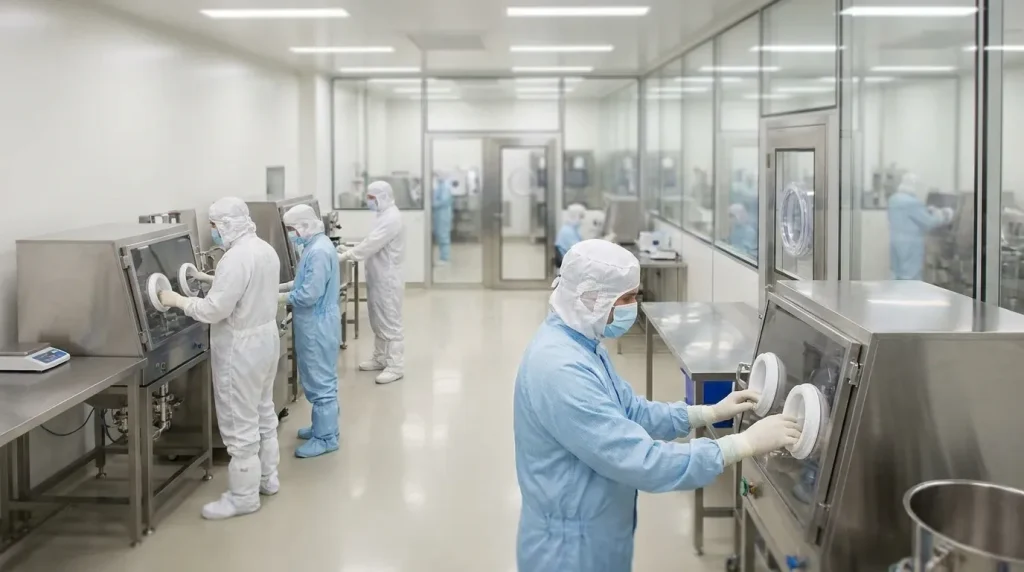
- Hermetic containment: Fully enclosed designs protect operators from hazardous compounds and can support compliance with OEB 4-5 requirements for highly potent APIs
- Reduced maintenance parts: The HEINKEL F Series design reduced component count by 50%, lowering long-term ownership costs and spare parts inventory
- Automated CIP: Modern units feature 20% less product contact area, reducing wash liquid consumption and cleaning cycle time
These advantages make inverting filter centrifuges particularly valuable for high-purity pharmaceutical and specialty chemical applications where product integrity and operator safety are paramount. The right choice depends on whether your process demands the complete discharge and containment that justify the premium investment.
How Do Inverting Filter Centrifuges Compare to Other Types of Centrifuges?
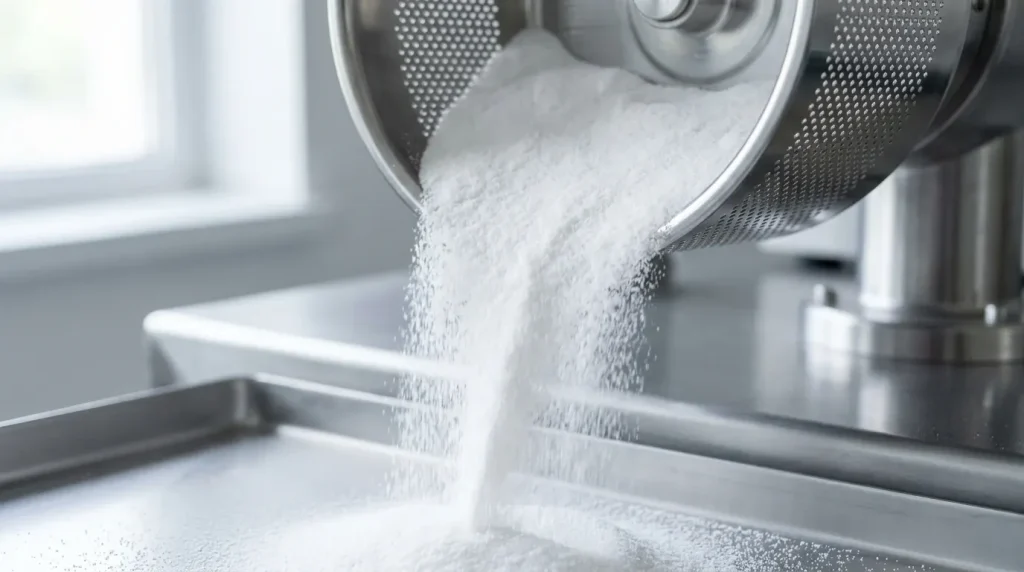
Inverting filter centrifuges compare to other centrifuge types by offering heel-free discharge, superior containment, and thin cake capability that conventional scraper and peeler designs cannot match. The following subsections examine when to choose inverting technology and how it differs from non-inverting alternatives.
When Should You Choose an Inverting Filter Centrifuge Over Alternatives?
You should choose an inverting filter centrifuge over alternatives when processing high-value, potent compounds where maximum product recovery and contamination prevention are non-negotiable. The inverting design eliminates the residual heel common in other centrifuge configurations like pusher, peeler, and basket centrifuges, which would otherwise cause potential batch-to-batch contamination, buildup, and reduced yield.
Key selection criteria favoring inverting technology:
- Particle sizes down to less than 5 μm requiring gentle handling
- Crystal-fragile products that scraper blades would damage
- OEB 4 and 5 compounds requiring hermetically sealed processing
- Thin cake filtration under 0.5 in (12.7 mm)
A common case where inverting filter centrifuges are selected over peeler or other centrifuges are when processing high-value APIs where highest possible product yield is paramount, and where minimal housing installations are critical for cleaning validation. For standard bulk chemicals with thicker cakes, simpler vertical basket centrifuges can remain cost-effective alternatives.
What Are the Key Differences Between Inverting and Non-Inverting Filter Centrifuges?
The key differences between inverting and non-inverting filter centrifuges center on discharge method, heel elimination, and containment capability.
| Feature | Inverting Filter | Scraper/Peeler (Non-Inverting) |
| Discharge Method | Cloth inverts, releasing cake by gravity | Mechanical scraper or plow removes cake |
| Residual Heel | None (complete discharge) | 3-10% heel remains per cycle |
| Minimum Cake Thickness | Less than 0.5 in (12.7 mm) | 1-3 in (25-76 mm) typical |
| Containment Rating | OEB 4-5 capable | OEB 1-3 typical |
| Costo de capital | Higher (complex mechanism) | Lower (simpler design) |
Non-inverting centrifuges use mechanical scraping mechanisms that can increase the risk of damaging fragile crystals and may leave residual product on the filter surface, potentially increasing cleaning requirements between batches. Inverting filter centrifuges still require cleaning between batches when required by the process, but reduce residual heel through filter inversion, which can improve product recovery and simplify cleaning procedures.
While inverting technology costs more upfront, the heel-free operation often justifies the investment for pharmaceutical and specialty chemical applications where yield losses compound across production campaigns.
What Factors Should Be Considered When Selecting an Inverting Filter Centrifuge?
Factors to consider when selecting an inverting filter centrifuge include product characteristics, maintenance requirements, and operational demands. The following subsections address how slurry properties and long-term upkeep influence equipment choice.
How Do Product Characteristics Influence Centrifuge Selection?
Product characteristics influence centrifuge selection by determining whether the inverting mechanism suits your specific slurry. Key factors include:
- Particle size distribution (inverting designs can handle materials down to less than 5 μm, though finer particles extend cycle times)
- Crystal fragility, since the gentle inversion discharge preserves particle integrity better than scraper or plow mechanisms
- Cake thickness requirements, as inverting units can process cakes less than 12.7 mm (0.5 in.) effectively
- Residual heel tolerance, which matters for products such as high-value APIs where batch-to-batch contamination risks yield loss
Selection factors for inverting filter centrifuges include particle size distribution, crystal fragility, and the requirement for residual-heel-free discharge. Small-scale centrifugal testing on your specific slurry can confirm whether an inverting unit outperforms more traditional alternatives like peeler or vertical basket centrifuges.

What Maintenance or Operational Considerations Should Be Evaluated?
Maintenance and operational considerations to evaluate include parts complexity, cleaning validation, and containment ratings. The HEINKEL F Series design inverting filter centrifuge reduced the number of parts by 50%, lowering long-term ownership costs and spare parts inventory requirements.
For facilities processing HPAPIs or toxic materials, the hermetically sealed design simplifies cleaning validation by reducing internal surfaces, crevices, and areas where product residue can accumulate. This containment capability justifies the higher capital cost when operator safety and regulatory compliance are non-negotiable.
How Can International Process Plants Help With Inverting Filter Centrifuge Needs?
International Process Plants can help with inverting filter centrifuge needs by providing access to quality used and new surplus equipment from our global inventory. The following sections explain how purchasing from IPP supports your filtration processes and summarize the key decision factors for inverting filter centrifuge selection.
Can Purchasing Used or Refurbished Equipment from IPP Support Your Filtration Processes?
Yes, purchasing good used equipment from International Process Plants can support your filtration processes by reducing capital expenditure while maintaining process capability. Our inventory includes inverting filter centrifuges across multiple size ranges, including production-scale equipment with larger basket diameters.
Quality used equipment offers particular value given current industry trends. Sourcing good used inverting filter centrifuges, typically priced at approximately 40% to 60% of new equipment cost, supports an efficiency focus without compromising on the containment and heel-free discharge capabilities these machines provide.
International Process Plants maintains warehouses in Eastover, South Carolina (US), Germany, and the United Kingdom, enabling efficient delivery across global markets.
What Are the Key Takeaways About When and Why to Use an Inverting Filter Centrifuge?
The key takeaways about when and why to use an inverting filter centrifuge center on three decision factors:
- Product value and purity requirements: Choose inverting filter centrifuges for high-value APIs, specialty chemicals, and products requiring heel-free discharge to maximize yield
- Containment needs: Select this technology for processing potent or hazardous compounds where integration into validated OEB 4–5 containment systems is required
- Cake characteristics: Opt for inverting designs when handling thin cakes under 13 mm (0.5 in.), fragile crystals, or fine particles
Inverting filter centrifuges are highly suitable when product value, contamination risk, or regulatory compliance demands complete discharge and hermetic containment. For operations where these factors may be less critical, simpler centrifuge designs may prove more economical while delivering strong performance.
International Process Plants offers procurement support, technical guidance, and access to equipment that meets regulatory and jurisdiction-specific requirements, such as ASME, PED, and CE marking requirements across pharmaceutical, chemical, and specialty processing applications.

 ES
ES  EN
EN  FR
FR  PL
PL  DE
DE  AR
AR  UR
UR  HI
HI  NL
NL  TR
TR  IT
IT  UK
UK  RU
RU  JA
JA  PT
PT  ZH
ZH