
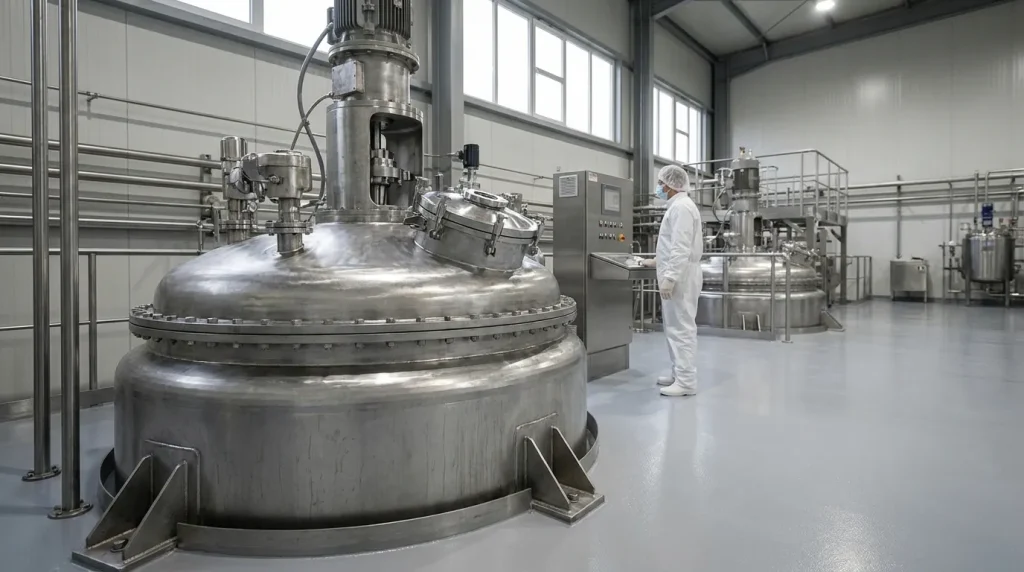
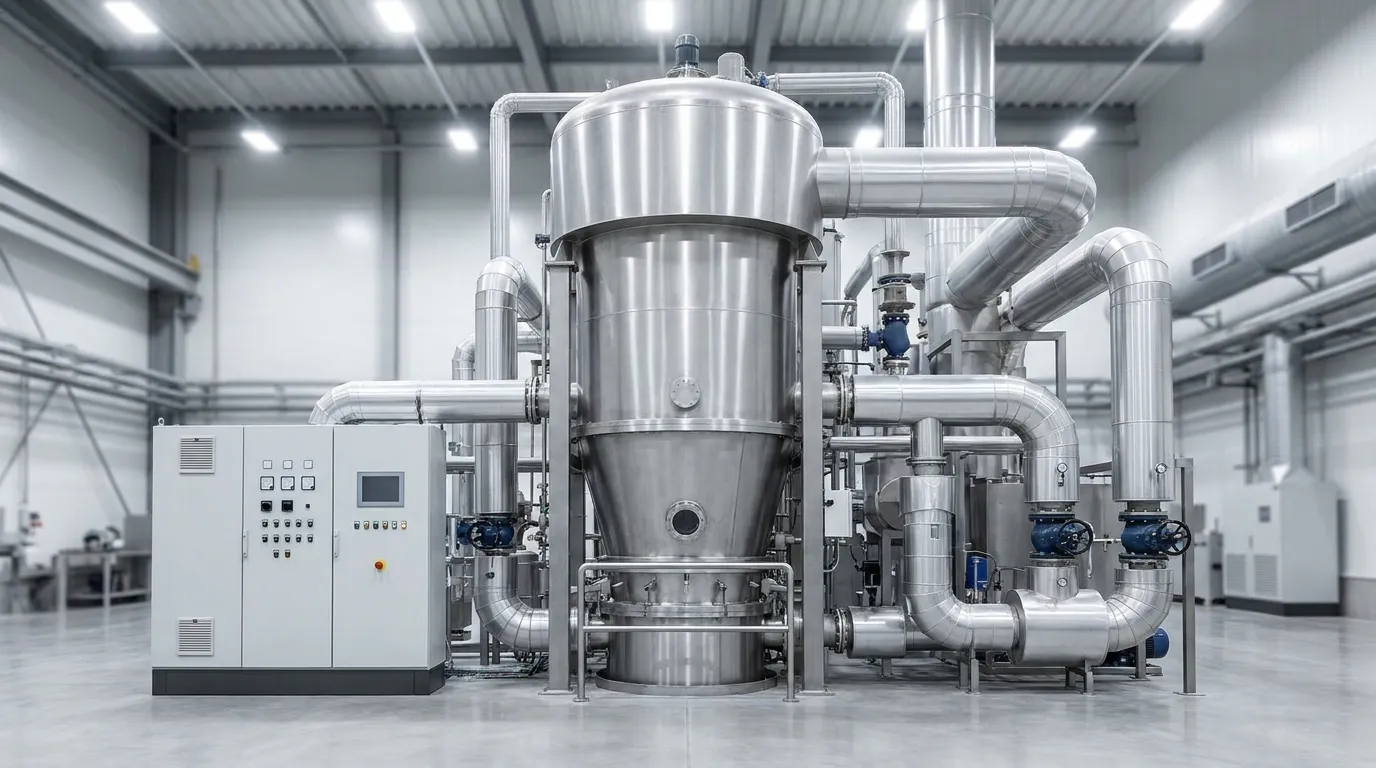
A Nutsche filter is a closed batch vessel that performs solid-liquid separation by driving slurry through a filter plate under vacuum or pressure, retaining solids as a filter cake while allowing filtrate to pass through. An agitated Nutsche filter dryer (ANFD) extends this concept by adding mechanical agitation and heated jackets, consolidating filtration, washing, and drying into a single enclosed unit.
This guide covers ANFD construction and design principles, step-by-step process operation, industrial applications across regulated sectors, performance comparisons with alternative filtration systems, and equipment selection strategies for plant upgrades.
Nutsche filters and ANFDs are fabricated from corrosion-resistant materials such as 316L stainless steel and Hastelloy C-276, with filter plates offering multiple porosity options to match particle characteristics. Standard ANFD models operate at pressures up to around 30 PSI (2.07 bar) with vacuum capability down to around 15 mbar (0.22 PSI), enabling both pressure-driven filtration and contact drying within the same vessel.
The filtration process follows a defined sequence: slurry charging, vacuum or pressure filtration, cake washing with fresh solvent, agitated drying via heated jacket, and contained product discharge. Bidirectional agitator rotation plays a critical role throughout, with clockwise passes smoothing the cake during filtration and anticlockwise sweeps breaking solids apart during drying to maximize heat transfer surface area.
Pharmaceutical and fine chemical producers rely on ANFDs for API crystallization, intermediate purification, and catalyst recovery, where closed-system operation prevents contamination and protects operators from potent compounds. Food processing, petrochemical, and specialty chemical facilities use these units for similar reasons: process containment, solvent recovery, and consistent batch-to-batch quality.
ANFDs offer high containment and energy savings upwards of around 20 to 40% compared to conventional drying strategies like double cone dryers, though pressure filtration generates lower driving force than centrifugal systems. For facilities implementing or upgrading Nutsche filtration, sourcing quality used equipment from suppliers like International Process Plants can reduce capital costs while meeting ASME, PED, and other industry and country-specific compliance requirements.
What is a Nutsche filter and how is it typically constructed?
A Nutsche filter is a closed vessel designed for batch filtration, washing, and drying of solid-liquid slurries. The sections below cover the main construction materials and how agitated Nutsche filter dryer (ANFD) design differs from other filtration equipment.
What are the main components and materials used in Nutsche filter construction?
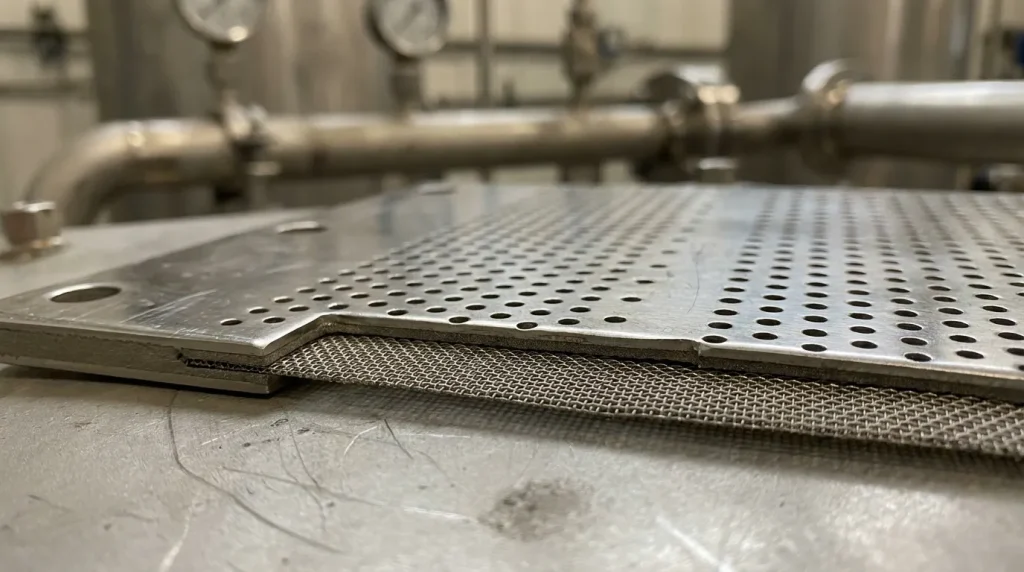
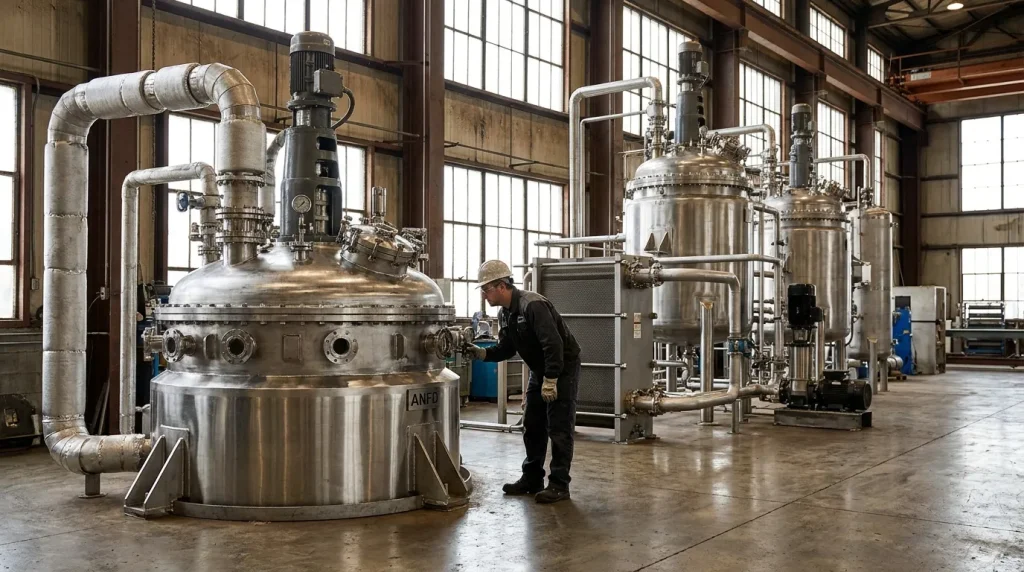
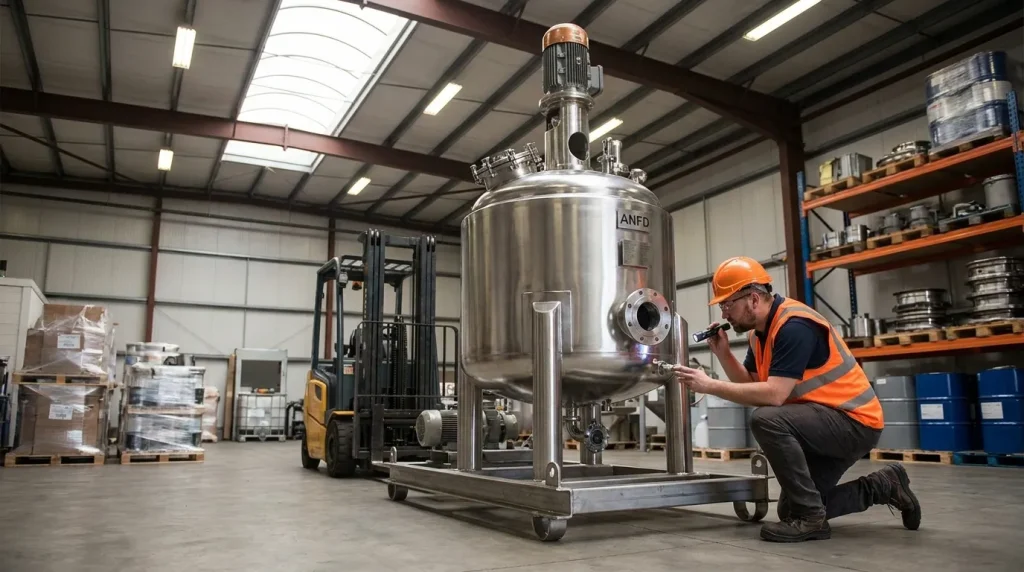
The main components used in Nutsche filter construction are the vessel shell, filter plate, agitator assembly, and discharge valve. The vessel shell contains the slurry and provides structural support under pressure or vacuum conditions. Below the slurry sits the filter plate, which supports the filter media and allows filtrate to pass through while retaining solids.
Manufacturers fabricate Nutsche filter plates using high-quality materials such as stainless steel SS 316L and Hastelloy C-22, with multiple porosity options to match specific filtration requirements. Common filter media options include:
- Cloth media for fine particle retention
- Single-layer metal screens for durability
- Multi-layer sintered metal for high-purity applications
The agitator assembly mounts through the vessel lid and includes a motor, shaft, and blade. Jacketed walls circulate heating or cooling media to control process temperature. These construction features enable Nutsche filters to handle demanding applications such as many pharmaceutical and biochemical applications, including downstream recovery of Vitamin B12, where the equipment is used to isolate, wash, and dry crystalline product intermediates.
How does the design of an agitated Nutsche filter dryer (ANFD) differ from other filtration equipment?
The design of an agitated Nutsche filter dryer (ANFD) differs from other filtration equipment by consolidating filtration, washing, and drying into a single enclosed vessel. Standard models feature a Maximum Working Pressure of around 30 PSI (2.07 bar) with an ASME U-Stamp, enabling both pressure and vacuum operations. This dual capability distinguishes ANFDs from simple gravity or vacuum-only filters.
According to Cleanroom Technology, ANFD technology has been widely used in commercial manufacturing of advanced drugs globally for over 20 years. The enclosed design also supports inert gas blanketing through the dust filter, protecting products from oxidation and moisture exposure during processing.
Key design differences include:
- Integrated agitator for cake manipulation and heat transfer enhancement
- Heated jacket for contact drying at typical conditions of around 15 to 200 mbar (0.22 to 2.9 PSI) and around 45°C (113°F)
- Side or bottom discharge valves for contained product removal
One limitation worth noting is that pressure filtration generates a lower driving force than centrifugal filtration systems, which may extend processing time for certain applications. However, consolidating multiple process steps into one vessel can in many situations dramatically improve overall efficiency and reduce batch processing times.
How does the Nutsche filtration process operate step-by-step?
The Nutsche filtration process operates through a defined sequence: slurry charging, vacuum or pressure-driven filtration, cake washing, agitated drying, and product discharge. The following subsections detail each stage, the role of agitation, and critical safety considerations.
What are the key stages in the solid-liquid separation process within an ANFD?
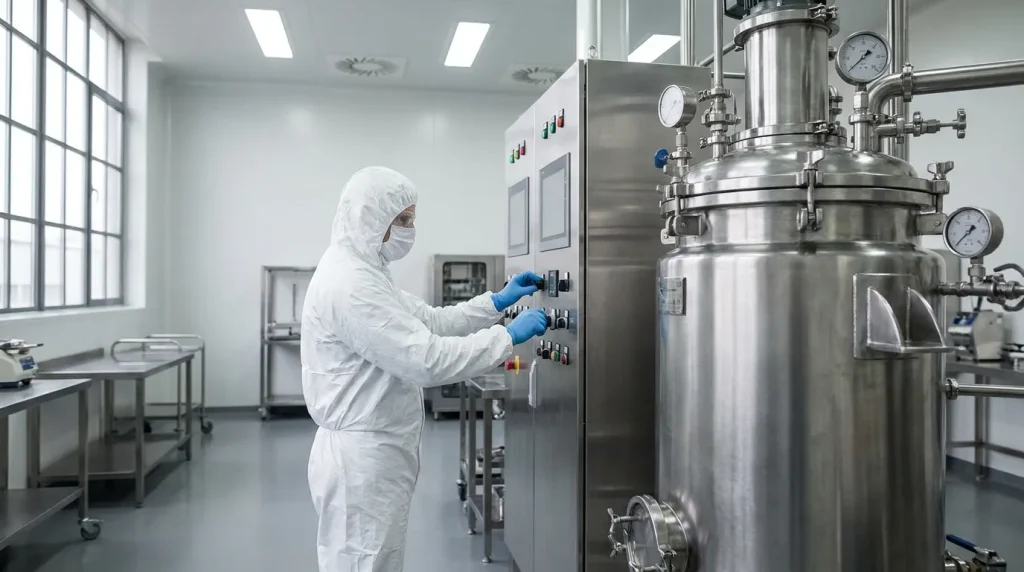
The key stages in the solid-liquid separation process within an ANFD are:
- Slurry charging: The slurry enters the vessel through a top inlet while the agitator remains stationary or slowly rotates to distribute solids evenly across the filter plate.
- Filtration: Vacuum (around 15–200 mbar / 0.2–2.9 psi) or pressure (up to around 30 PSI / 2.1 bar) drives the mother liquor through the filter medium, leaving a wet cake on the plate.
- Cake washing: Fresh solvent floods the cake; the agitator lifts and redistributes solids to ensure thorough impurity removal.
- Drying: Heat from the heated jacket medium and vacuum work together to evaporate residual solvent while the agitator continuously exposes new cake surfaces.
- Discharge: A side or bottom valve opens, and the agitator sweeps dried product toward the outlet for collection.
How is agitation used during Nutsche filtration and why is it important?
Agitation is used during Nutsche filtration to optimize cake structure, heat transfer, and discharge efficiency. The direction of rotation determines the effect: clockwise rotation smooths and compacts the cake surface during filtration, while anticlockwise rotation is employed for reslurring while washing, drying, and discharge.
Variable-speed motors typically run the full-diameter angled blade impeller at around 0–50 RPM. Slow clockwise passes level the cake and eliminate channels that would allow wash solvent to bypass solids. During drying, anticlockwise sweeps break the cake into smaller particles, dramatically increasing the surface area exposed to heat. This dual-direction capability is what makes ANFDs far more efficient than static Nutsche filters.
What safety and operational considerations are involved in running an ANFD?
The safety and operational considerations involved in running an ANFD include hazard containment, explosion prevention, and procedural controls:
- Containment: Closed vessels with side discharge valves or isolation systems prevent operator exposure to hazardous compounds classified OEB 4–5.
- Inert gas blanketing: Nitrogen introduced through the dust filter protects oxygen-sensitive products and reduces ignition risk when processing low-flash-point solvents.
- Explosion protection: Equipment handling flammable vapors requires ATEX (EU), IECEx (global) certification, or other jurisdiction-dependent certification. Periodic inspections and audits are recommended as part of site safety management practices.
- Pressure and vacuum monitoring: Operators must verify that working pressure stays within the rated limits (typically around 30 PSI / 2.1 bar) to prevent seal failures.
- Temperature control: Jacket fluid temperature and product temperature require independent monitoring to avoid thermal degradation.
Well-designed SOPs that address each consideration keep both personnel and product safe throughout the batch cycle.
In which industries are Nutsche filters and ANFDs most commonly applied?
Nutsche filters and ANFDs are most commonly applied in industries requiring contained solid-liquid separation under strict purity and safety standards. The subsections below detail pharmaceutical and fine chemical applications, followed by food processing, petrochemical, and other industrial uses.
How are Nutsche filters utilized in the pharmaceutical and fine chemical sectors?
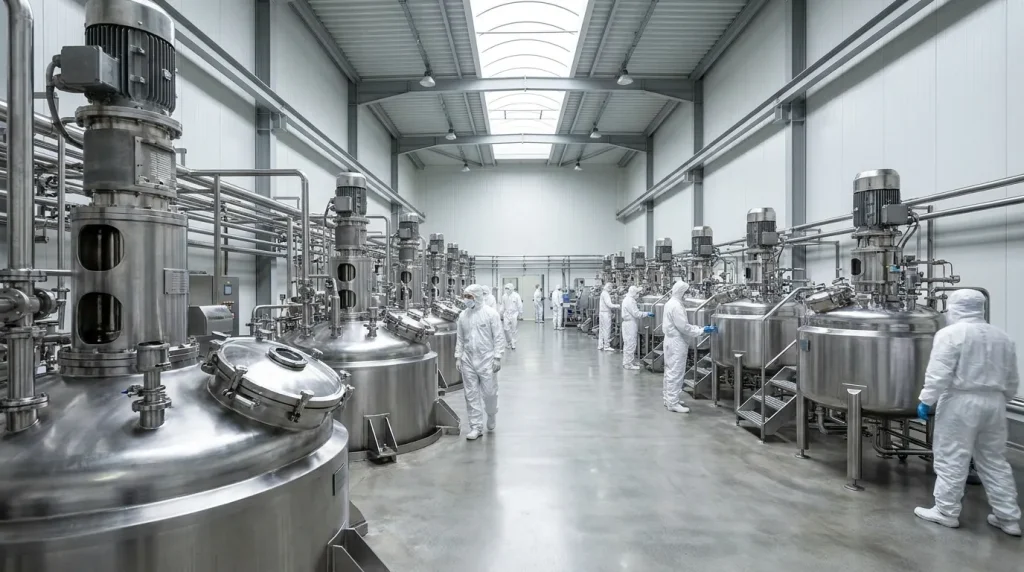
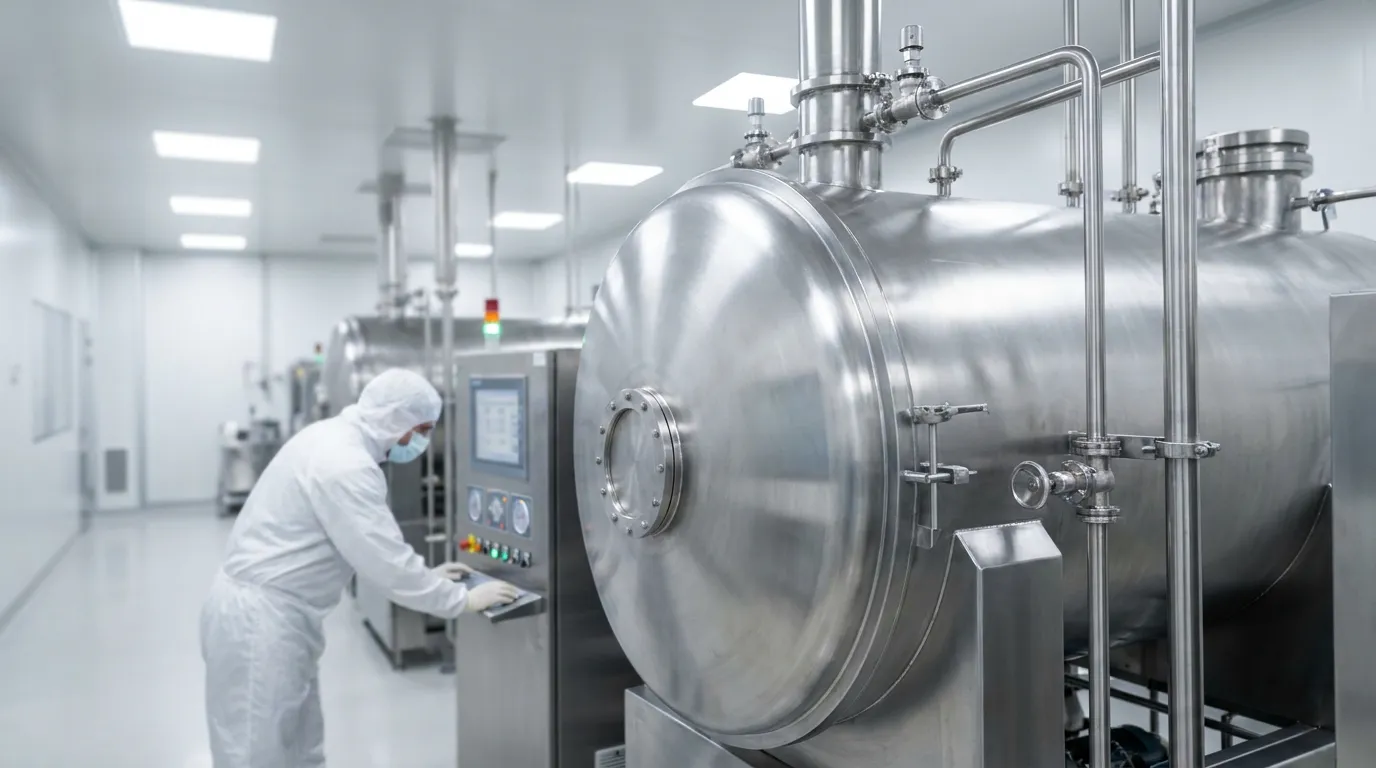
Nutsche filters are utilized in the pharmaceutical and fine chemical sectors as enclosed, multi-function units that handle filtration, washing, and drying of active pharmaceutical ingredients (APIs) and intermediates within a single vessel. This closed-system approach prevents product contamination and operator exposure to potent compounds. Pharmaceutical facilities rely on ANFDs for batch processing of crystallized APIs, where the equipment may need to be installed within an ISO-classified cleanroom environment classified under ISO 14644-1:2015 air cleanliness standards.
Fine chemical producers use ANFDs for similar reasons: process containment, solvent recovery, and consistent product quality across batches. Common applications include:
- API crystallization and isolation
- Intermediate compound purification
- Catalyst recovery and recycling
- Specialty chemical drying
The pharmaceutical industry remains one of the larger sectors predominantly using batch processes, and ANFDs align well with this production model while supporting GMP compliance.
What role do Nutsche filters play in food processing, petrochemical, and other industries?
Nutsche filters play a critical role in food processing, petrochemical, and other industries wherever batch solid-liquid separation and product drying are required under controlled conditions. In food processing, these units handle ingredient purification, vitamin production (such as Vitamin B12 crystallization processing), and flavor compound isolation where contamination must be avoided.
Petrochemical and specialty chemical operations use ANFDs for:
- Catalyst filtration and recovery
- Polymer intermediate separation
- Wax and additive processing
- Solvent recovery from slurries
Additional industries employing Nutsche filtration include agrochemical manufacturing, dye and pigment production, and battery materials processing. The equipment’s ability to handle corrosive solvents, maintain inert atmospheres, and operate under vacuum or pressure makes it versatile across these applications.
With ANFD technology proven globally for over two decades, facilities seeking reliable filtration and drying equipment can explore both new and quality used options to meet production requirements.
What are the main advantages and limitations of using a Nutsche filter?
The main advantages of Nutsche filters include consolidated operations, high containment, and energy efficiency. The main limitations involve lower filtration driving force compared to centrifuges and generally longer cycle times for certain applications. The following sections compare Nutsche filters to alternative systems and examine factors affecting ANFD performance.
How do Nutsche filters compare to other industrial filtration systems?
Nutsche filters compare to other industrial filtration systems by offering distinct trade-offs in containment, driving force, and operational flexibility. ANFDs consolidate filtration, washing, and drying in a single vessel, which reduces transfer steps and contamination risk. According to De Dietrich Process Systems, filter dryers reduce both maintenance and operational costs compared to centrifuges because they have no high-speed rotating components and require lower motor horsepower.
Key comparison points:
- Driving force: Pressure filtration in ANFDs generates lower driving force than centrifugal systems, which can extend cycle times for fine particles
- Containment: ANFDs provide high containment levels that comply with GMP standards, making them preferred over centrifuges for processing solvents with low flash points
- Energy use: ANFDs can achieve around 20 to 40% energy savings compared to some traditional methods like double cone dryers
- Throughput: Filter presses operate in batch mode with longer cycle times but can achieve drier cake, whereas centrifuges are often used in continuous production trains
For pharmaceutical manufacturers processing potent compounds, the containment advantage often outweighs the lower filtration speed.
What factors affect performance and product quality when using an ANFD?
The factors affecting performance and product quality when using an ANFD include filter media selection, agitator design, operating pressure, and thermal parameters. Matching these variables to the specific slurry characteristics determines filtration rate, cake moisture, and final product purity.
Critical performance factors:
- Filter media porosity: Multi-layer sintered metal or cloth selection must match particle size distribution to prevent blinding or product loss
- Agitator configuration: Rosenmund S-shaped agitators are often recommended to help promote uniform cake treatment by improving cake turnover and surface renewal, which can enhance overall heat and mass transfer during drying, depending on process conditions and equipment design.
- Pressure and vacuum range: Vacuum contact drying typically operates within around 15 to 200 mbar (0.22 to 2.9 PSI) at temperatures around 45°C (113°F)
- Heel discharge efficiency: Gas-assisted discharge delivers bursts of gas such as nitrogen into the filter media that can achieve high discharge efficiency, minimizing batch-to-batch contamination
Process engineers should validate each parameter against the product’s thermal sensitivity and crystal structure requirements. Small adjustments in agitation speed or vacuum level can significantly impact final moisture content and particle integrity.
With performance variables optimized, selecting the right equipment source becomes the next consideration for cost-effective implementation.
How should you approach Nutsche filter selection or plant upgrades with refurbished or used process equipment?
Nutsche filter selection requires matching equipment specifications to process demands, safety classifications, and budget constraints. The following subsections cover how used equipment reduces costs and summarize key ANFD principles.
Can acquiring used or re-glassed process equipment from International Process Plants (IPP) help reduce costs and downtime when implementing or upgrading Nutsche filtration systems?
Yes, acquiring used process equipment from International Process Plants can help reduce costs and downtime when implementing Nutsche filtration systems. Good used ANFDs typically cost approximately 50% of new equipment pricing, while re-glassed units can run around 70% of new. IPP maintains an inventory of over 15,000 pieces of equipment across warehouses in Eastover, South Carolina (US), Germany, and the United Kingdom, enabling faster delivery than new OEM lead times.
Pharmaceutical manufacturing has traditionally been dominated by batch processing; however, recent literature highlights a growing interest in continuous manufacturing approaches due to advantages in process efficiency, product quality, and scalability, with regulatory and academic efforts increasingly supporting this transition. In this context, batch-based operations such as filtration and drying systems, including ANFDs which are widely used for API isolation and crystallization-based workflows, are still used during this ongoing transition.
International Processing Plants provides equipment inspection and documentation services to support qualification activities in regulated environments, helping procurement teams justify capital expenditure. FMECA is used as part of risk and containment assessments for OEB-classified applications and can inform engineering and capital planning decisions.
What are the key takeaways about how a Nutsche filter works in terms of ANFD design, process steps, and industrial applications?
The key takeaways about how a Nutsche filter works center on its integrated design, sequential batch processing, and versatility across regulated industries. ANFDs consolidate filtration, washing, and drying into a single enclosed vessel, eliminating material transfers that introduce contamination risk and product loss.
Critical design and operational points include:
- Construction from materials such as 316L stainless steel or Hastelloy C-276 for corrosion resistance
- Operating pressures up to around 30 PSI (2.1 bar) with vacuum capability down to around 15 mbar (0.4 inHg)
- Bidirectional agitator rotation for different steps such as cake smoothing versus discharge
- High containment for OEB 4-5 compounds when integrated with isolation systems
For facilities evaluating equipment options, International Process Plants offers new surplus and quality used ANFDs that meet ASME, PED, and other jurisdiction-specific and industry-specific requirements. Contact IPP to discuss your filtration system needs and explore currently available inventory.

 ES
ES  EN
EN  FR
FR  PL
PL  DE
DE  AR
AR  UR
UR  HI
HI  NL
NL  TR
TR  IT
IT  UK
UK  RU
RU  JA
JA  PT
PT  ZH
ZH