 Перейти до вмісту
Dryer selection is the process of matching a drying technology to a product’s physical form, moisture profile, thermal limits, and throughput requirement. The right choice protects product quality while controlling energy use and total cost of ownership.
This guide covers the core selection factors, product-specific dryer matching for powders, pastes, slurries, and crystals, energy efficiency and compliance, total cost and reliability, and equipment sourcing.
Four factors drive every dryer decision: particle size, moisture content, temperature sensitivity, and throughput. Particle size governs gas velocity and attrition risk, moisture content sets the evaporation load and energy budget, temperature sensitivity dictates residence time, and throughput defines the required capacity range.
Each product form demands a different approach. Spray dryers and fluid bed dryers suit powders, while vacuum paddle, thin-film, and drum dryers handle viscous pastes without fouling. Slurry drying depends on solids content, since removing water dominates the energy budget. Crystalline materials need low-agitation or fast-kinetics designs to prevent attrition and polymorphic transformation.
Energy efficiency shapes long-term cost, because drying accounts for 10 to 20 percent of industrial energy use in most developed countries. Heat pump assisted and microwave-assisted systems reduce this load, and standards such as ISO 50001 support sustainable, compliant operation.
Equipment source affects cost and lead time. Good used dryers typically cost around 50 percent of new, ship faster, and carry documented performance history when specifications match the process requirement.
What Factors Influence Dryer Selection for Different Product Types?
Dryer selection depends on four core factors: particle size, moisture content, temperature sensitivity, and throughput requirement. Each factor narrows the suitable technology range for a given product. The sub-sections below examine how these variables shape the right choice for powders, pastes, slurries, and crystals.

How Does Particle Size Affect the Choice of Dryer?
Particle size affects the choice of dryer by determining gas velocity limits, residence time, and the risk of entrainment or attrition. Coarse solids tolerate higher velocities. According to the U.S. Geological Survey Wentworth grade scale, gravel-sized particles measure 2 mm (0.08 in), sand spans <2 mm to >62.5 µm, silt spans <62.5 µm to >4 µm, and clay falls below 4 µm. Sub-sieve materials between 50 µm and below 1 µm introduce measurement variability, which complicates dryer sizing. For engineers, accurate particle size data is the most overlooked input in dryer specification, yet it directly governs whether a fluid bed, spray, or flash dryer will perform reliably.
Why Is Moisture Content Critical When Choosing a Dryer?
Moisture content is critical when choosing a dryer because it determines the evaporation load, energy demand, and the risk of product sticking to chamber walls. Higher initial moisture requires more thermal energy and longer residence time. In spray drying, the main challenge is maximizing production while minimizing energy use, keeping residual moisture below a defined limit, and preventing powder from adhering to chamber walls. A study at the Technical University of Denmark found that model predictive control strategies reduced residual moisture by up to 3.37% and specific energy consumption by up to 6.72%. Buyers should map both feed moisture and target residual moisture before sizing any dryer, because these two values determine the required heat input and dryer capacity.
What Role Do Temperature Sensitivities Play in Dryer Selection?
Temperature sensitivities play a decisive role in dryer selection because heat-sensitive products require low operating temperatures and short residence times to avoid degradation. Thermally stable materials allow higher inlet temperatures and faster throughput. Residence time classifications guide this match across three ranges:
- Short residence time: under 1 minute, suited to heat-sensitive feeds in spray and flash dryers.
- Medium residence time: 1 to 60 minutes, typical of fluid bed and rotary dryers.
- Long residence time: over 60 minutes, used for robust solids in tray and conveyor dryers.
The chemical sector has achieved a 40% reduction in specific energy consumption since 1990, according to Cefic, which reflects how temperature control and dryer efficiency now drive selection. Matching thermal limits to residence time is the single most reliable way to protect product quality.
In What Ways Does Throughput Requirement Impact the Selection Process?
Throughput requirement impacts the selection process by setting the minimum dryer capacity, footprint, and operating mode needed to meet production targets. Low-volume or specialty production favors batch dryers, while high-volume continuous output favors spray, fluid bed, or rotary systems. Throughput also influences whether a single large unit or multiple smaller units delivers the best reliability and turndown flexibility. For most procurement decisions, throughput should be defined as a working capacity range rather than a single peak figure, because real production rarely runs at maximum continuously. Sizing for the realistic operating window prevents both overcapacity and bottlenecks. With these four selection factors established, the next step is matching specific dryer technologies to each product type.
Which Types of Dryers Are Best Suited for Powders?
The dryers best suited for powders are spray dryers and fluid bed dryers, with selection driven by feed state, throughput, and heat sensitivity. The sections below identify the most common powder drying technologies and weigh the advantages and limitations of each type.
What Are the Most Common Dryer Technologies for Powder Processing?
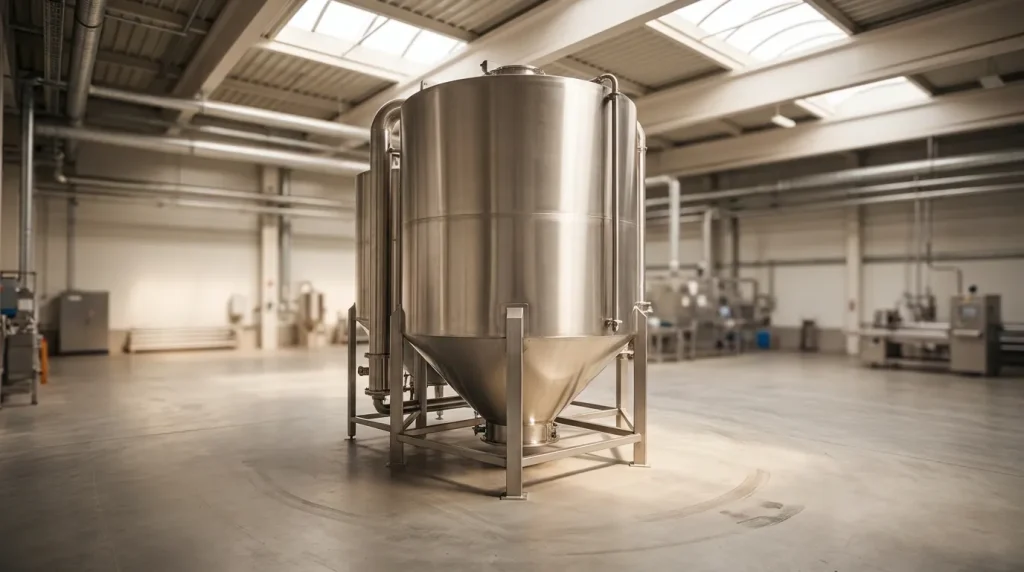
The most common dryer technologies for powder processing are spray dryers and fluid bed dryers. Spray dryers convert liquid feeds into free-flowing powders at high throughput. A 2014 industrial study of a GEA MSD-1250 spray dryer reported output of approximately 7,500 kg/hr (16,535 lbs/hr) of enriched milk powder. Fluid bed dryers suspend particles in heated air to remove residual moisture from granular solids.
Although technical literature cites over 400 dryer types, only about 50 types appear commonly in practice, according to Mujumdar’s classification of industrial dryers. For most powder operations, we recommend matching the dryer to the feed: spray dryers for liquid feeds, fluid bed dryers for damp granules.
What Are the Advantages and Limitations of Each Powder Dryer Type?
The advantages and limitations of each powder dryer type center on throughput, energy use, and capital cost. The key trade-offs are:
- Spray dryers: High continuous throughput and consistent particle size, but high energy demand and elevated capital cost.
- Fluid bed dryers: Strong energy efficiency and gentle handling of granules, but limited to free-flowing solids and sensitive to fines.
How Should You Choose a Dryer for Pastes?
Choosing a dryer for pastes depends on the material’s high viscosity, sticky texture, and heat sensitivity. The sections below cover the unique drying challenges pastes present and the dryer designs that handle thick, cohesive consistency most effectively.
What Unique Challenges Do Paste Materials Present During Drying?
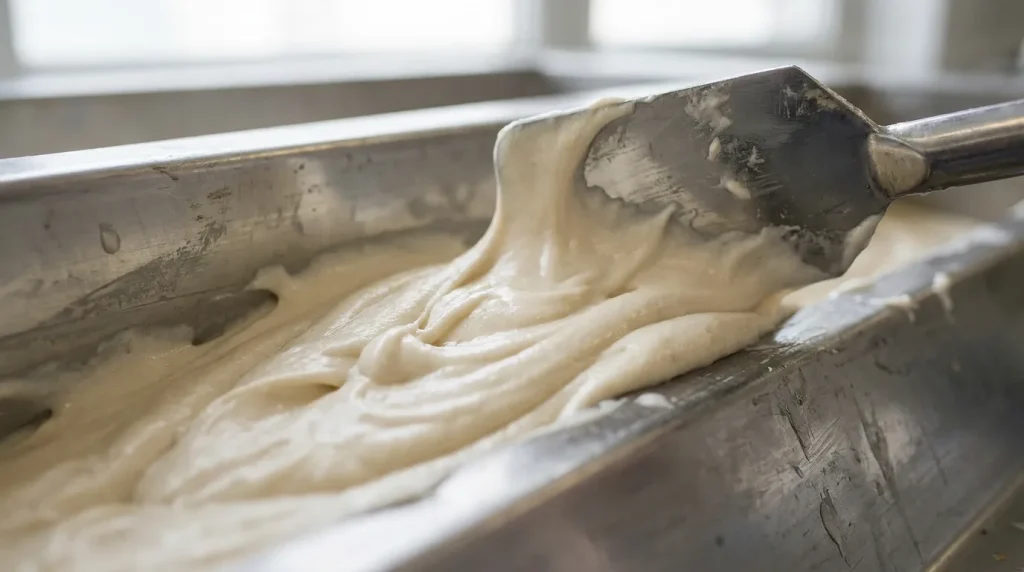
Paste materials present challenges during drying because their high viscosity, adhesive texture, and frequent heat sensitivity resist uniform moisture removal. Pastes stick to dryer surfaces, trap moisture in dense layers, and degrade when exposed to excessive heat.
The main challenges include:
- High viscosity that limits heat and moisture transfer through the material.
- Surface adhesion that causes fouling on contact dryer walls.
- Heat sensitivity that risks product degradation at elevated temperatures.
According to a study published in Food Science & Nutrition, heat-sensitive food materials are usually dried at low temperature to preserve quality. For most pastes, controlling temperature and ensuring continuous surface renewal matters more than raw drying speed.
Which Dryer Designs Are Most Effective for Paste Consistency?
The most effective dryer designs for paste consistency are vacuum paddle dryers, thin-film dryers, and drum dryers. These designs use mechanical agitation and controlled heat to handle thick, sticky materials without fouling.
Each design suits a different paste profile:
- Vacuum paddle dryers apply gentle agitation under vacuum, lowering boiling points for heat-sensitive pastes.
- Thin-film dryers spread paste into a thin layer on a heated wall, enabling fast moisture release and continuous surface renewal.
- Drum dryers coat a heated rotating drum with paste, then scrape the dried film off for collection.
Vacuum operation is the single most valuable feature for paste drying, since it removes moisture at lower temperatures and protects product integrity. We supply new surplus and quality used dryers across these designs to match specific paste viscosity and thermal limits.
What Are the Key Considerations When Drying Slurries?
The key considerations when drying slurries are solids content, feed pumpability, residence time, and dryer atomization capability. The sections below explain how solids concentration shapes dryer performance and which dryer types process slurries most efficiently.
How Does Solids Content Affect Slurry Dryer Performance?
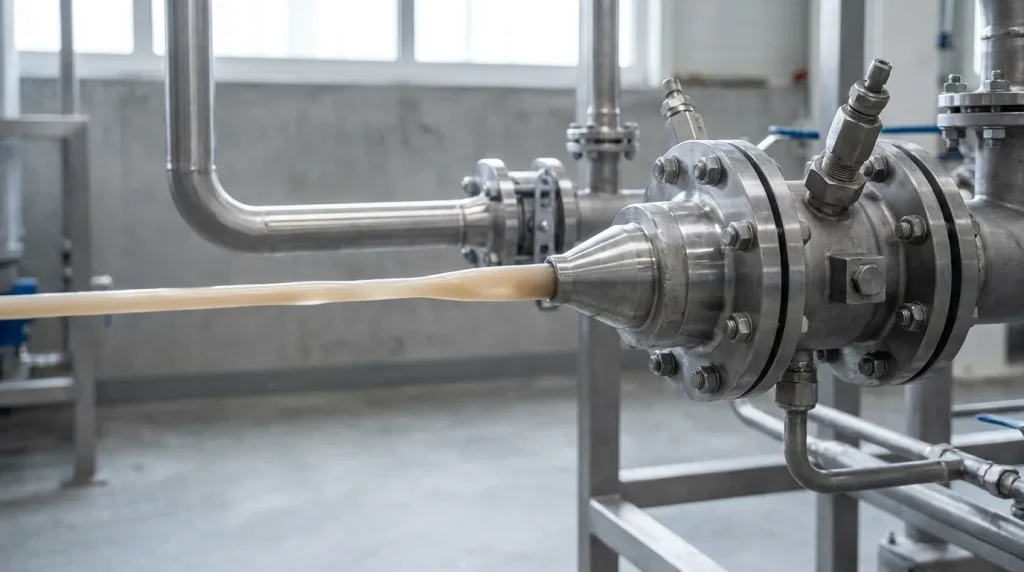
Solids content directly affects slurry dryer performance by determining the water load the dryer must evaporate and the energy required to do it. Lower-solids slurries carry more water per unit of product, raising evaporation demand and energy cost. Removing water dominates the energy budget, since the latent heat of evaporation for water is 2,501 kJ/kg at 32 F (0 C) and 2,256 kJ/kg at 212 F (100 C). Higher solids content reduces this water load, improving throughput and lowering specific energy consumption. For most slurry operations, concentrating the feed before drying yields a better return than oversizing the dryer to handle dilute material.
What Types of Dryers Are Most Efficient for Slurry Processing?
The types of dryers most efficient for slurry processing are spray dryers, fluidized bed dryers, and drum dryers, each suited to specific solids loads and viscosities. Spray dryers atomize pumpable slurries into hot gas, converting liquid feeds into free-flowing powders with short residence times. The efficient slurry dryer options include:
- Spray dryers: Atomize low-to-medium-solids slurries; short residence under 1 minute.
- Fluidized bed dryers: Suit higher-solids slurries; deliver measurable energy savings per batch.
- Drum dryers: Handle viscous, high-solids slurries by spreading them on heated rolls.
A fluidized bed dryer processing 150 kg (331 lbs) batches achieved roughly 18.5 kWh savings per batch, or over 3,700 kWh annually, according to a study published in Sensors. For high-throughput powder production, spray drying remains the most scalable route. With slurry selection clarified, crystalline materials require their own integrity-focused drying approach.
How Can Crystals Be Effectively Dried Without Damaging the Product?
Crystals can be effectively dried by matching drying kinetics and mechanical handling to the material’s sensitivity. The sections below cover the risks of improper drying and the dryer configurations that best preserve crystal integrity.
What Are the Risks of Improper Drying for Crystalline Materials?
The risks of improper drying for crystalline materials include particle attrition, polymorphic transformation, and loss of structural quality. Excessive mechanical agitation generates shear stresses inside the drying bed, which damages crystals during processing.
The main risks are:
- Particle attrition: Shear forces fracture crystals, altering particle size distribution.
- Polymorphic transformation: Stress and uneven heating shift crystals into unintended crystal forms.
- Agglomeration and recrystallization: Slow drying conditions promote phase separation and drug recrystallization.
A study published in White Rose eTheses Online found that agitation induces shear stresses within the bed, which can cause undesirable particle attrition and polymorphic transformations. For high-value pharmaceutical crystals, controlling residence time and mechanical stress matters more than raw drying speed.
Which Dryer Configurations Best Preserve Crystal Integrity?
The dryer configurations that best preserve crystal integrity are low-agitation and fast-kinetics designs that limit mechanical stress while controlling drying rate. Fast drying kinetics help preserve crystal structure, while slow conditions risk phase separation and recrystallization.
According to a study in Pharmaceutics, the drying behavior is a decisive process parameter in spray-dried dispersions; slow drying conditions can promote phase separation, drug recrystallization, and particle agglomeration, while fast drying kinetics helps preserve the amorphous structure.
Configurations that protect crystals include:
- Gentle vacuum dryers: Low temperatures and reduced agitation minimize attrition.
- Agitated filter dryers: Controlled mixing manages residual solvent with limited fracture risk.
- Fast-drying systems: Short residence times lock in the target crystal form.
For most crystalline pharmaceutical products, a configuration that controls both attrition and residual solvent delivers better, more consistent results than maximizing throughput alone. We can help match your crystal product to a suitable dryer configuration from our currently available inventory.
How Do Energy Efficiency and Environmental Impact Affect Dryer Selection?
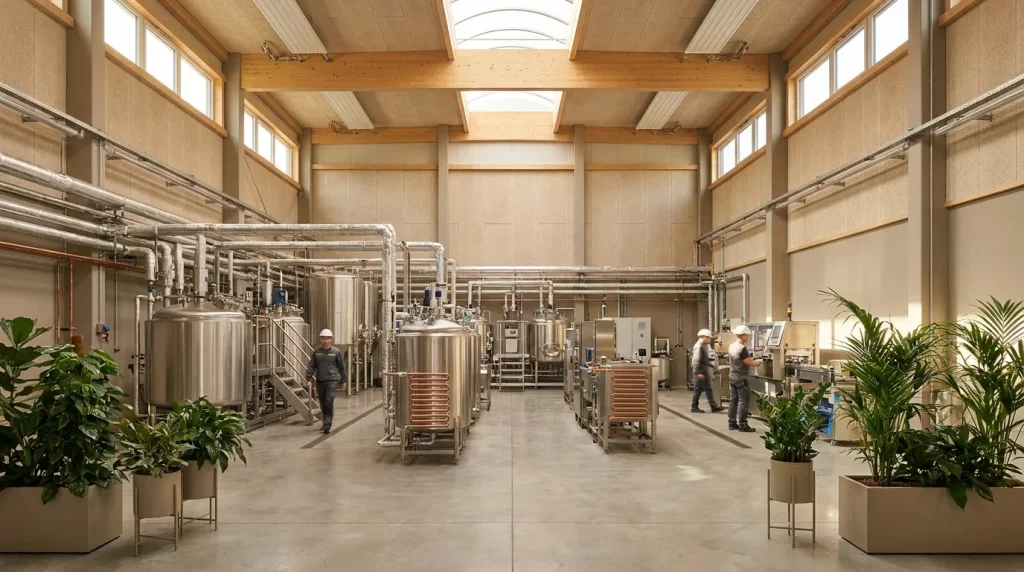
Energy efficiency and environmental impact directly affect dryer selection because drying is one of the most energy-intensive industrial processes, accounting for 10 to 20 percent of total industrial energy use in most developed countries. The following sections cover which dryer technologies deliver the best energy savings and how dryers can be optimized for sustainability and regulatory compliance.
What Dryer Technologies Offer the Best Energy Savings?
Heat pump assisted dryers offer the best energy savings by providing a controllable drying environment at low energy consumption. According to a study published in Drying Technology, heat pump assisted microwave drying is comparable to conventional convective drying in energy efficiency while preserving product quality at a comparable level. Conventional hot-air drying consumes 4,000 to 6,000 kJ per kg (1720 to 2580 BTU per lb) of water removed, so reducing this load matters. The most energy-saving dryer technologies include:
- Heat pump assisted dryers, which recover and reuse waste heat.
- Microwave-assisted systems, which shorten drying time.
- Fluidized bed dryers, which improve heat transfer per batch.
For buyers, balancing waste heat recovery with raw throughput is often an important consideration.
How Can Dryers Be Optimized for Sustainability and Regulatory Compliance?
Dryers can be optimized for sustainability and regulatory compliance by adopting structured energy management standards and tracking efficiency against recognized policy frameworks. ISO 50001 provides a framework for organizations to develop an energy policy, set targets, measure results, and continually improve energy management. Increased attention to energy efficiency reduces fossil fuel use and the resulting greenhouse gas emissions, a priority highlighted by the IEA in Energy Efficiency 2023, its primary annual analysis of global energy efficiency markets and policy. Sustainability optimization for dryers relies on:
- ISO 50001 energy management certification.
- ISO 14001 environmental management systems.
- Continuous monitoring of specific energy consumption.
With efficiency and compliance addressed, maintenance, reliability, and cost become the next decision drivers.
How Do Maintenance, Reliability, and Cost Factor into Dryer Selection?
Maintenance, reliability, and cost factor into dryer selection through total cost of ownership, which combines purchase price, energy use, and upkeep over the equipment lifespan. The following sub-sections detail long-term operating costs across dryer types and how reliability differs among drying technologies.
What Are the Long-Term Operating Costs of Different Dryer Types?
The long-term operating costs of different dryer types include initial capital investment, energy consumption, and ongoing maintenance, with initial investment often outweighing process costs. For freeze-drying, a 2020 study in Processes found that the process itself, contrary to classic belief, is not the most expensive part; the initial investment is the real limiting factor. Spray dryers and fluid bed dryers carry high capital costs, which makes maximizing useful equipment life a common priority.
How Does Equipment Reliability Vary Among Dryer Technologies?
Equipment reliability varies among dryer technologies based on mechanical complexity, the presence of moving parts, and control system sophistication. Fluid bed dryers and spray dryers represent high-value assets where operators commonly work to maximize useful service life, reflecting both reliability expectations and replacement cost. Advanced control strategies improve reliability and output: simulations at the Technical University of Denmark showed that model predictive control improved operating profit by up to 9.69% and energy efficiency by up to 6.06% while keeping powder within quality specifications. Reliable equipment sourcing closes the gap between specification and dependable long-term performance.
How Does Used, Refurbished, or New Equipment Source Affect Dryer Choice?
The equipment source affects dryer choice by shaping cost, lead time, and verification requirements. New units offer full customization, while good used dryers from the secondary market deliver proven performance at lower cost. The following sub-sections cover the benefits of good used dryers and how to evaluate vendors.
What Are the Benefits of Purchasing Used or Refurbished Dryers?
The benefits of purchasing good used dryers include lower acquisition cost, faster delivery, and access to proven equipment from a global market. The industrial dryers market reached USD 5.6 billion in 2023, according to the IMARC Group, reflecting a large installed base of available secondary equipment. Good used dryers typically cost around 50% of new, while new units serve as the 100% baseline.
Ключові переваги включають:
- Lower capital cost: Good used dryers reduce upfront investment significantly versus new builds.
- Shorter lead time: Existing units ship faster than new fabrication and commissioning cycles.
- Proven operation: Field-tested equipment carries documented performance history.
For most buyers facing tight budgets and schedules, a good used dryer remains the most practical path when specifications match the process requirement.
What Should You Consider When Evaluating an Equipment Vendor?
When evaluating equipment vendors, you should consider inventory depth, documentation quality, material verification, and global logistics capability. A credible vendor provides clear equipment identifiers and traceable records for each unit, which supports informed procurement decisions.
Evaluate vendors against these criteria:
- Inventory depth: A large stock increases the chance of matching your exact dryer specification.
- Documentation: Complete records covering capacity, materials, and operating history reduce risk.
- Material verification: Confirmed construction materials, such as 304, 304L, 316, and 316L stainless steel, ensure process compatibility.
- Global logistics: Vendors with warehouses across multiple regions simplify cross-border delivery.
We recommend developing clear evaluation procedures for each piece of equipment, since documented identifiers and verified specifications protect against costly mismatches. With sourcing criteria defined, the next step is matching a trusted supplier to your specific drying application.
How Can International Process Plants Support Your Dryer Selection Needs?
International Process Plants supports your dryer selection by supplying inventory and managing asset redeployment for drying projects. The sections below explain how we facilitate equipment acquisition and summarize the key takeaways for selecting dryers across powders, pastes, slurries, and crystals.
In What Ways Does IPP Facilitate Equipment Acquisition and Asset Redeployment for Drying Solutions?
International Process Plants facilitates equipment acquisition by supplying new surplus and quality used drying equipment from our global inventory of more than 15,000 pieces. We serve procurement and process engineers across the pharmaceutical, chemical, and industrial sectors with several services:
- Sourcing dryers from new surplus and quality used stock currently available across our warehouses in the United States, Germany, and the United Kingdom.
- Managing asset redeployment, helping plants resell, relocate, or repurpose idle drying equipment.
- Supporting acquisitions across 15 countries, simplifying cross-border plant and process transitions.
Buying quality used equipment from a global supplier shortens lead times and reduces capital outlay compared with new builds, which matters when a dryer selection decision must align with project budgets and schedules.
What Are the Key Takeaways About Selecting Dryers for Powders, Pastes, Slurries, and Crystals?
The key takeaways about selecting dryers center on matching the dryer technology to your product’s physical form, moisture profile, and thermal limits. Practical conclusions to carry forward:
- Match the dryer to particle size, feed moisture, temperature sensitivity, and throughput before comparing technologies.
- Choose gentle, controllable configurations for heat-sensitive and crystalline products to protect quality and crystal integrity.
- Weigh energy efficiency, maintenance, reliability, and total cost of ownership across the equipment lifecycle.
- Consider quality used dryers as a faster, lower-cost alternative to new builds where specifications align.
International Process Plants has 46+ years of equipment sourcing and asset redeployment experience and can help match your drying requirements to currently available inventory.

 UK
UK  EN
EN  ES
ES  FR
FR  PL
PL  DE
DE  AR
AR  UR
UR  HI
HI  NL
NL  TR
TR  IT
IT  RU
RU  JA
JA  PT
PT  ZH
ZH