 सामग्री पर जाएं
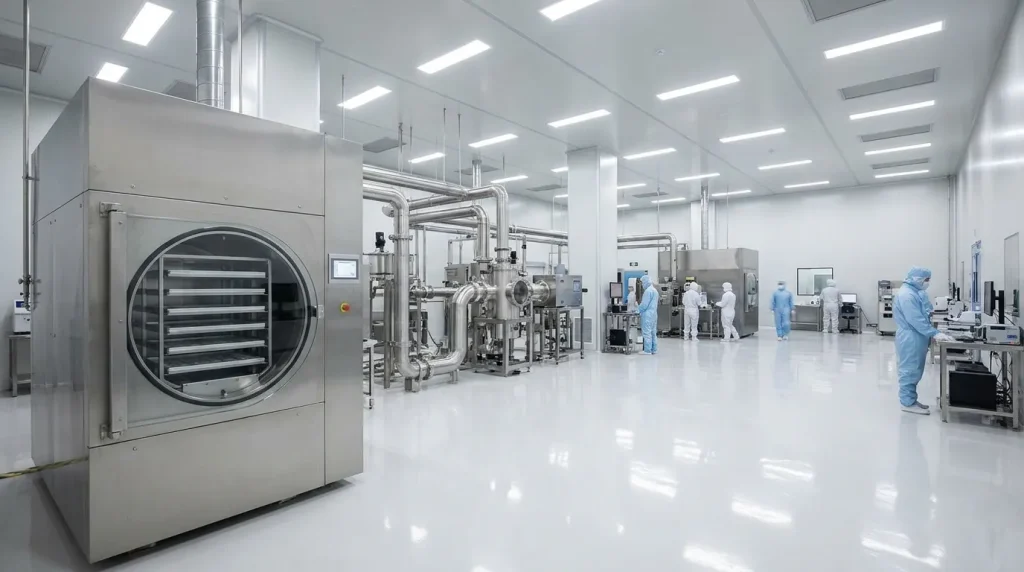
Freeze drying and vacuum drying are two reduced-pressure methods for removing moisture from materials, distinguished by how they extract water: freeze drying sublimates ice from a frozen product, while vacuum drying evaporates moisture at lower boiling points under reduced pressure.
This guide covers how each process works, their benefits and drawbacks, the scenarios that favor one method over the other, the cost and sustainability factors that separate them, and the equipment that determines results.
The process foundations are clear. Freeze drying follows five stages, that is, freezing, vacuum application, ice sublimation, vapor condensation, and product removal, and serves pharmaceutical, biotechnology, and food applications. Vacuum drying evaporates moisture under stepwise pressure reduction, protecting heat-sensitive materials at gentler temperatures across pharmaceutical, fine chemical, and food settings.
Each method carries a distinct trade-off between quality and cost. Freeze drying preserves nutrients and structure, retaining 48% of vitamin C and 54% of phenolics in tested products, but demands long cycles, high energy, and significant capital. Vacuum drying delivers faster, lower-cost moisture removal with strong quality retention, though it requires careful vacuum-system maintenance and process control.
Selection depends on the product and production goals. Freeze drying is frequently chosen for heat-sensitive biologics, vaccines, and premium foods, while vacuum drying is frequently employed for thermally stable materials.
Cost, energy, and equipment shape the final outcome. Freeze drying consumes more energy per kilogram, with drying processes ranging from 5.2 to 19.5 kWh/kg (8,048.2 to 30,180.6 Btu/lb). Equipment choice governs reproducibility, throughput, and quality, where calibrated lyophilizers, vacuum chambers, condensers, and pumps determine batch consistency. International Process Plants supplies new surplus and quality used drying equipment to support these decisions.
How Does the Process of Freeze Drying Work?
Freeze drying works by freezing a product, then removing water through sublimation under vacuum. The steps below outline the core process, followed by the industries that rely on it most.
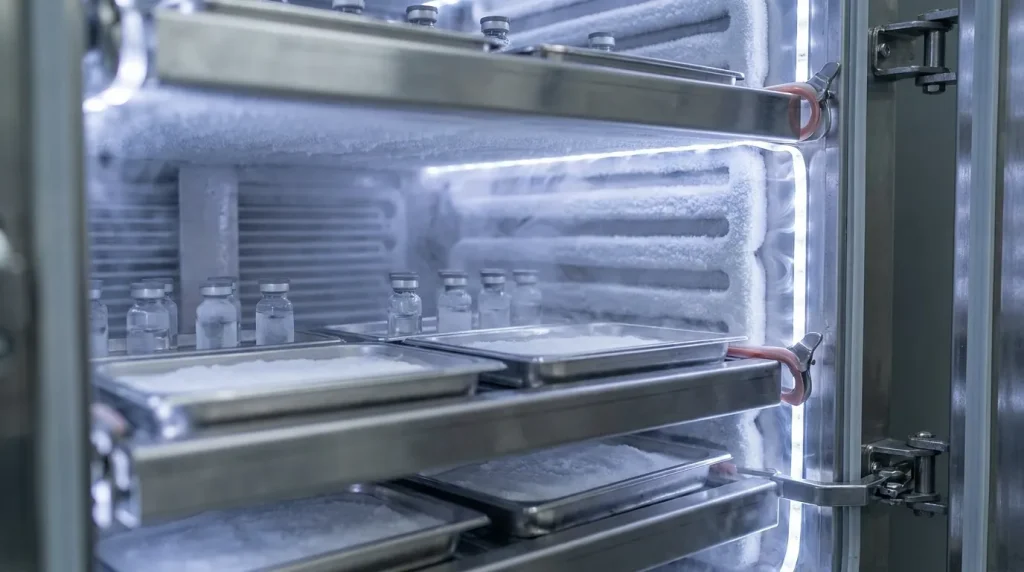
What Are the Main Steps in the Freeze Drying Process?
The main steps in the freeze drying process are freezing, vacuum application, ice sublimation, water vapor condensation, and removal of the dried product. According to the U.S. Food and Drug Administration, the lyophilization process follows these five stages:
- Freezing the product to solidify its water content.
- Applying a vacuum to lower the chamber pressure.
- Subliming the ice directly from solid to vapor.
- Condensing the released water vapor on a cold surface.
- Removing the finished dried product from the lyophilizer.
Each stage depends on tight temperature and pressure control. For most heat-sensitive products, the freezing stage sets the foundation: poor ice structure here compromises every step that follows.
What Industrial Applications Commonly Use Freeze Drying?
Industrial applications that commonly use freeze drying include pharmaceutical manufacturing, biotechnology, and food processing. Each sector relies on sublimation to preserve structure, potency, or nutrients without high heat.
Common freeze drying applications include:
- Pharmaceutical production of injectable drugs, vaccines, and biologics.
- Biotechnology preservation of proteins, enzymes, and live cultures.
- Food processing of fruits, vegetables, coffee, and ready meals.
- Diagnostic and laboratory reagents that require long-term stability.
With the core process and its applications established, vacuum drying offers a useful point of comparison.
How Does Vacuum Drying Operate Compared to Freeze Drying?
Vacuum drying operates by evaporating moisture under reduced pressure, while freeze drying removes water through sublimation of ice. The sections below explain the fundamental mechanisms behind vacuum drying and the industrial settings where it is most frequently applied.
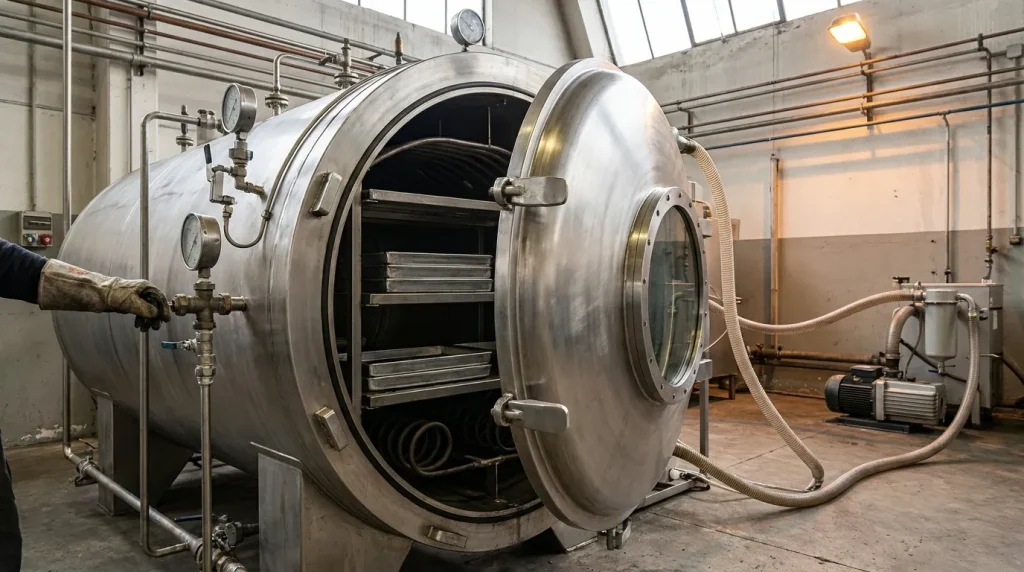
What Are the Fundamental Mechanisms Behind Vacuum Drying?
The fundamental mechanisms behind vacuum drying are moisture removal through evaporation under reduced pressure, where lowering the chamber pressure reduces the boiling point of water and allows drying at lower temperatures. Freeze drying, by contrast, removes water as ice through sublimation, not evaporation.
Vacuum drying typically follows a stepwise pressure-reduction approach. According to the U.S. Nuclear Regulatory Commission, vacuum drying is performed by gradually decreasing the pressure to hold points, at which the system is isolated to confirm stable pressure readings before continuing. This controlled descent prevents ice formation in confined spaces where water can become entrapped. For moisture-sensitive materials, this lower-temperature operation protects thermal integrity while still achieving rapid drying.
In Which Industrial Settings Is Vacuum Drying Most Frequently Used?
Vacuum drying is most frequently used in pharmaceutical, fine chemical, and food processing settings where heat-sensitive materials require gentle moisture removal. Industries select vacuum drying when product quality, thermal protection, and faster cycle times matter more than the deep dehydration that freeze drying provides.
Common industrial settings for vacuum drying include:
- Pharmaceutical manufacturing, for drying active ingredients and intermediates
- Fine and specialty chemical production, for solvent removal from compounds
- Food processing, for heat-sensitive ingredients and extracts
A study in the Journal of Food Science and Technology found that samples dried in a vacuum drier at 140 F (60 C) and 25 mmHg (33.33 mbar) showed better rehydration, lower shrinkage, and higher total phenolic content. For procurement engineers weighing options, vacuum drying offers a practical compromise between quality and economics, delivering strong product retention with typically shorter cycle times and lower investment requirements than freeze drying. To match these processes with the right vessels, equipment selection becomes the deciding factor.
What Are the Major Benefits and Drawbacks of Freeze Drying?
The major benefits and drawbacks of freeze drying center on a trade-off between product quality and process cost. The sections below cover how freeze drying preserves quality and shelf life, then examine its operational limitations and challenges.
How Does Freeze Drying Affect Product Quality and Shelf Life?
Freeze drying preserves product quality and extends shelf life by removing water through sublimation at low temperatures, protecting heat-sensitive compounds. This low-temperature operation maintains nutrient content far better than conventional methods. According to a study published in Sustainability (MDPI), freeze dried products retained 48% of vitamin C, 54% of phenolics, and 58% of antioxidant activity at 50 C (122 F).
Conventional drying methods, such as natural drying and hot air drying, may carry drawbacks in drying rates and final quality for more fragile products. The decision rests less on equipment cost alone and more on the process that the preserved product commands.
What Are the Limitations or Challenges of Freeze Drying?
The limitations or challenges of freeze drying include long cycle times, high energy demand, and elevated equipment cost. These constraints make the process slower and more capital-intensive than evaporative drying methods. A 2023 review in Frontiers in Nutrition examined recent advances in freeze-drying technologies and the use of combined drying methods to overcome these limitations.
The main challenges of freeze drying include:
- Extended primary drying cycles that reduce throughput per batch.
- High specific energy consumption per kilogram of water removed.
- Significant capital investment in vacuum systems and condensers.
- Validation and qualification burden for regulated production.
Selecting equipment matched to these constraints influences whether a drying line meets both throughput and quality targets.
What Are the Main Advantages and Disadvantages of Vacuum Drying?
The main advantages of vacuum drying are lower processing temperatures, faster moisture removal, and better quality retention, while its main disadvantages include higher equipment cost and operational complexity. The following sub-sections examine how vacuum drying affects material properties and efficiency, and what practical challenges arise during implementation.
How Does Vacuum Drying Influence Material Properties and Efficiency?
Vacuum drying influences material properties by removing moisture under reduced pressure, which lowers the boiling point of water and allows drying at gentler temperatures. According to IntechOpen’s Perspective Chapter on Pharmaceutical Drying, vacuum drying is a method of drying materials by removing moisture under reduced pressure. This reduced-pressure environment delivers several benefits for sensitive materials:
- Lower thermal exposure protects heat-sensitive compounds.
- Reduced oxidation occurs because less oxygen is present.
- Faster moisture removal improves throughput at moderate heat.
- Better retention of color, aroma, and active ingredients.
For heat-labile chemical and pharmaceutical products, this temperature advantage makes vacuum drying a practical choice when quality preservation and efficiency must work together.
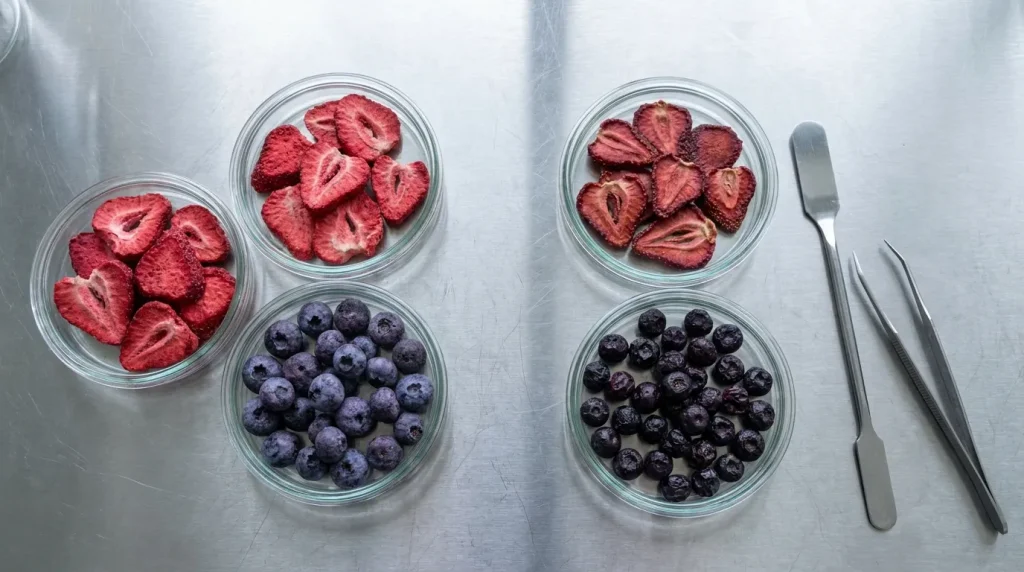
What Are the Practical Challenges of Implementing Vacuum Drying?
The practical challenges of implementing vacuum drying include equipment cost, vacuum system maintenance, and process control complexity. Reliable vacuum drying depends on tight pressure and temperature management to protect product quality and reproducibility.
The main implementation challenges are:
- Capital cost for vacuum pumps, sealed chambers, and control instrumentation.
- Maintenance of vacuum integrity, since leaks reduce performance.
- Precise pressure and temperature control to prevent uneven drying.
- Batch-oriented operation, which can limit throughput at scale.
Sourcing good used vacuum drying equipment can reduce that upfront investment while delivering the same reduced-pressure performance. With these trade-offs understood, the next step is matching the method to the specific product and production goals.
In Which Scenarios Should You Choose Freeze Drying Instead of Vacuum Drying?
Freeze drying is the preferred choice when products are heat-sensitive, require maximum structural integrity, or must achieve long-term shelf stability through sublimation. The sub-sections below identify which products benefit most from freeze drying and when vacuum drying becomes the better option.
What Types of Products Are Best Served by Freeze Drying?
The types of products best served by freeze drying are heat-sensitive, high-value materials that lose quality under thermal stress. Freeze-drying, also known as lyophilization, removes water in the form of ice under low pressure by sublimation, which protects delicate structures and bioactivity. This makes it the leading method for products where potency, structure, and reconstitution matter most.
Products best served by freeze drying include:
- Injectable pharmaceuticals and parenteral formulations requiring sterility and stability.
- Vaccines, biologics, and proteins sensitive to heat degradation.
- Probiotics and live cultures that must retain viability.
- High-value foods such as fruit, coffee, and meal components that need fast rehydration.
For high-value biologics, freeze drying remains the most reliable route to a stable, easily reconstituted product.
When Is Vacuum Drying the Preferred Method?
Vacuum drying is the preferred method when products tolerate moderate heat and the priority is faster, lower-cost moisture removal under reduced pressure. To prevent ice formation, vacuum drying is typically performed in a stepwise manner, gradually decreasing the pressure to defined hold points where the chamber is isolated from the pumping system to confirm stable pressure readings.
Vacuum drying is frequently: used when
- Throughput and shorter cycle times outweigh maximum structural preservation.
- Solvents or moisture must be removed without aggressive heat damage.
- Capital and operating budgets favor simpler, lower-cost equipment.
For thermally stable products, vacuum drying delivers acceptable quality at lower cost, which makes equipment selection the next critical decision.
How Do Cost, Energy Consumption, and Environmental Impact Compare for Freeze Drying and Vacuum Drying?
Freeze drying typically costs more and consumes more energy than vacuum drying because sublimation under deep vacuum requires longer cycles and refrigeration. The sections below cover the key cost considerations for each method and how both methods affect energy use and sustainability.
What Are the Key Cost Considerations for Each Method?
The key cost considerations for each method are energy intensity, cycle duration, and equipment requirements. Freeze drying carries higher operating costs because primary drying through ice sublimation is the longest and most energy-demanding stage. Vacuum drying reduces these costs by removing moisture under reduced pressure at higher temperatures and shorter cycles.
Buyers evaluating cost should weigh the following factors:
- Energy consumption per kilogram of dried product
- Cycle length and resulting throughput
- Equipment footprint and capital outlay
- Validation and maintenance demands
How Do Both Methods Affect Energy Use and Sustainability?
Both methods affect energy use and sustainability primarily through electricity demand, with freeze drying consuming more energy than vacuum drying. A 2021 study in Sustainability (MDPI) on drying processes found energy consumption ranged from 5.2 to 19.5 kWh/kg, while highly energy-effective convective dryers reach 0.8 kWh/kg of removed water.
Several factors and technologies improve drying sustainability:
-
- Heat pumps that recover waste heat, demonstrated in a 30 kW (40 HP) emission-free industrial dryer
- Continuous freeze drying, which offers a reduced footprint and lower energy consumption than batch freeze drying
के अनुसार CEFIC, the European chemical sector achieved a 40% reduction in specific energy consumption since 1990. For many operations, sustainability is an increasingly important factor, with prioritizing waste-heat recovery an important sustainability consideration alongside processing outcomes.
How Does Equipment Selection Affect Freeze Drying and Vacuum Drying Outcomes?
Equipment selection directly determines drying reproducibility, product quality, and throughput for both freeze drying and vacuum drying. The sections below cover the essential equipment for each process and how upgrading or replacing units influences performance.
What Types of Equipment Are Essential for Each Drying Process?
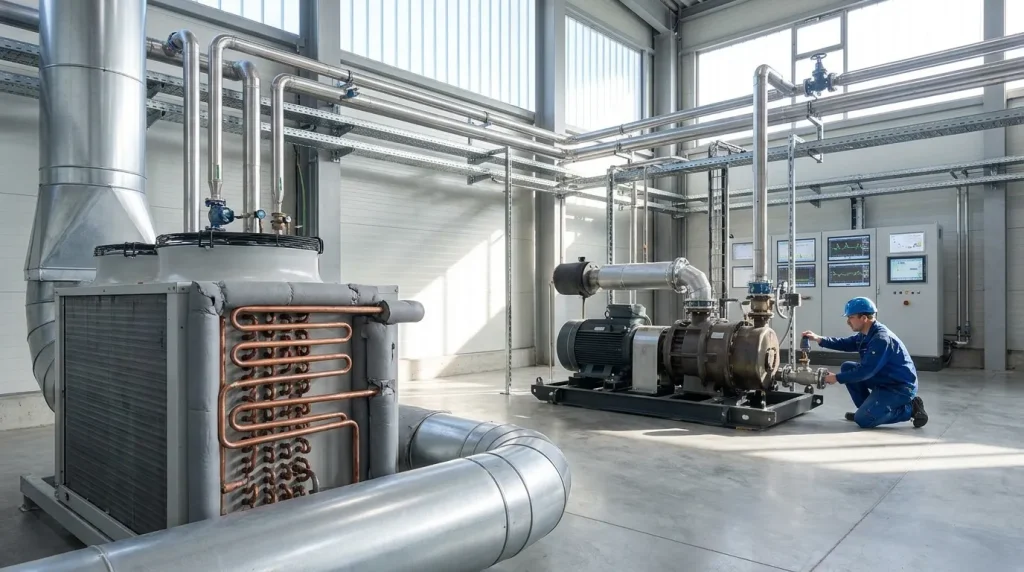
The essential equipment for each drying process includes a lyophilizer with shelves, condenser, and vacuum system for freeze drying, and a vacuum chamber with heating elements and a pump for vacuum drying. Across both processes, calibrated instruments measure temperature, pressure, and time to verify batch-to-batch reproducibility.
Core equipment for sterile freeze drying and vacuum drying covers a wide range of types:
- Lyophilizers (freeze dryers) for sterile and pharmaceutical applications
- Vacuum chambers with integrated heating elements for vacuum drying
- Condensers to capture and trap water vapor
- Vacuum pumps to maintain reduced pressure
- Calibrated temperature, pressure, and time instruments
According to the EU GMP Annex 1 draft, sterile product manufacture spans active substances, excipients, primary packaging, and finished dosage forms across automated and closed systems that include lyophilizers.
How Does Upgrading or Replacing Equipment Influence Process Performance?
Upgrading or replacing equipment influences process performance by improving control precision, condenser capacity, and energy efficiency, which directly affects product quality and cycle reliability. Better shelf temperature control and tighter pressure regulation reduce batch variability and shorten drying cycles.
Key performance gains from upgrading or replacing drying equipment include:
- Tighter temperature and pressure control for reproducible batches
- Higher condenser capacity to handle larger vapor loads
- Improved energy efficiency and lower utility costs
- Reduced cycle time through faster heat transfer
We supply new surplus and quality used lyophilizers and vacuum drying systems, which lets buyers upgrade control and capacity without full new-build lead times. Acquiring good used equipment at roughly 50% of new cost is often the most practical path for plants scaling drying capacity quickly.
How Can International Process Plants Support Freeze Drying and Vacuum Drying Needs?
International Process Plants supports freeze drying and vacuum drying needs by supplying new surplus and quality used process equipment and through asset redeployment services. The sections below explain how plant acquisitions strengthen drying operations and summarize the key takeaways from this guide.
Can Plant Acquisitions and Asset Redeployment from International Process Plants Enhance Your Drying Operations?
Yes, plant acquisitions and asset redeployment from International Process Plants can enhance your drying operations by reducing capital costs and shortening lead times. We supply new surplus and quality used process equipment from our inventory of more than 15,000 pieces, stocked across warehouses in Eastover, South Carolina; Germany; and the United Kingdom.
Acquiring quality used equipment offers practical advantages for drying projects, such as:
- Lower upfront capital compared to new builds
- Faster availability than long OEM manufacturing lead times
- Redeployment of underused assets into active production
Energy efficiency also matters for buyers planning drying systems. According to CEFIC, the chemical industry uses about 25 to 50% of the natural gas it purchases as raw material, while the rest generates steam and power for plants and processes. For most procurement teams, pairing quality used equipment with energy-aware system design delivers stronger returns than a new build alone. With these acquisition strategies in mind, the key takeaways below recap the full comparison.
What Are the Key Takeaways About Freeze Drying vs. Vacuum Drying: Differences, Benefits, and Use Cases We Covered?
The key takeaways about freeze drying and vacuum drying center on matching the method to your product, budget, and quality goals. Freeze drying preserves sensitive products through sublimation under low pressure, while vacuum drying removes moisture faster under reduced pressure at moderate heat.
The practical conclusions from this guide are:
- Freeze drying is frequently chosen for heat-sensitive pharmaceuticals, biologics, and premium foods where structure and potency matter most.
- Vacuum drying is frequently chosen for cost-sensitive batches that tolerate moderate heat and need shorter cycles.
- Weigh energy use, equipment lifecycle, and validation burden alongside product quality when comparing methods.
- Consider quality used equipment to control capital costs and reduce lead times.
For buyers ready to act, International Process Plants can help source the right drying and process equipment to match these decisions.

 HI
HI  EN
EN  ES
ES  FR
FR  PL
PL  DE
DE  AR
AR  UR
UR  NL
NL  TR
TR  IT
IT  UK
UK  RU
RU  JA
JA  PT
PT  ZH
ZH