 انتقل إلى المحتوى
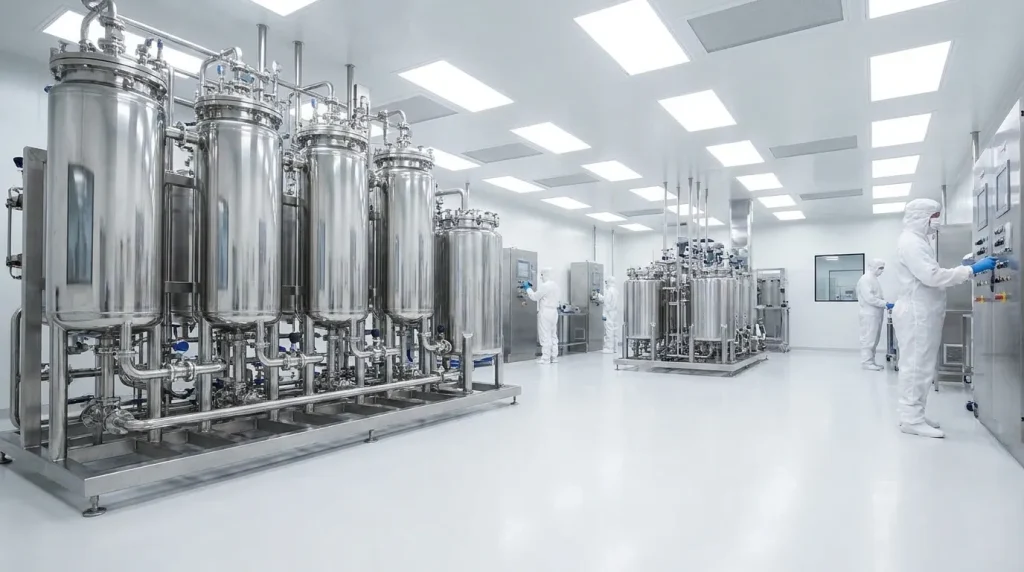
Nutsche filter cleaning and CIP (Clean-in-Place) is the process of removing product residues, contaminants, and filter cake buildup from Agitated Nutsche Filter Dryers through automated wash cycles without disassembling the equipment.
This guide covers ANFD operation and applications, cleaning challenges specific to filter geometry, CIP system design and process stages, regulatory validation requirements, and optimization strategies for efficiency and safety.
ANFDs combine filtration, washing, and drying in a single vessel, creating complex internal geometries where residue accumulates around filter plates, agitator shafts, and heated surfaces. Understanding how these structural features influence cleaning difficulty helps procurement engineers specify equipment that minimizes validation burden.
CIP systems automate cleaning through controlled spray patterns and chemical cycles, eliminating vessel entry requirements while reducing manual cleaning time by up to 70%. We examine how spray device selection, from static spray balls to rotary jet heads, matches vessel geometry and residue characteristics.
Pharmaceutical and food applications demand documented proof that cleaning procedures meet FDA 21 CFR 211.67, EU GMP, and ASME BPE standards. We detail how health-based exposure limits translate into maximum allowable carryover calculations and what documentation supports compliance audits.
Cleaning chemistry selection depends on residue type and material compatibility. Alkaline detergents target organic API residues while acidic cleaners address inorganic scale, with agent choice determined by whether your ANFD is 316L stainless steel, glass-lined, or Hastelloy C-276.
Optimized CIP cycles can cut cleaning time by 2.5 hours per cycle, translating into measurable capacity gains. We conclude with how International Process Plants’ inventory of process-ready ANFDs supports facilities seeking equipment designed for cleanability from the start.
How do Nutsche filters (ANFDs) operate and what are their main applications?
Nutsche filters, also called Agitated Nutsche Filter Dryers (ANFDs), operate by combining filtration, washing, and drying in a single enclosed vessel. The sections below cover typical industrial uses, structural features that create cleaning challenges, and the residues that remain after processing.
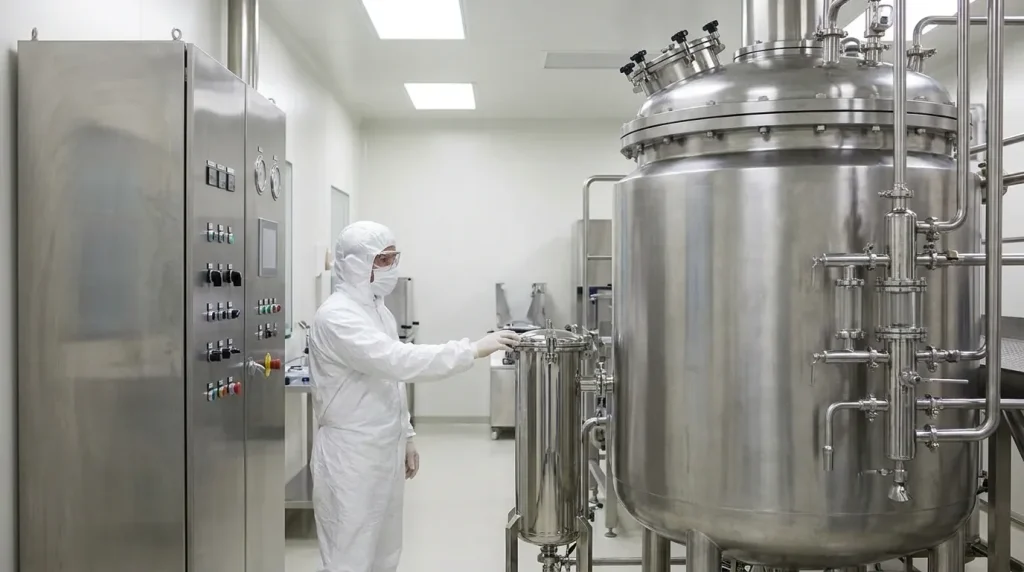
What are the typical uses of Nutsche filters in industrial settings?
The typical uses of Nutsche filters in industrial settings span pharmaceutical, biotechnology, specialty chemical, and food processing applications. According to Pope Scientific, Nutsche Filter Dryers are essential in industries requiring high-purity separation of solids from liquids, with applications including filtering and drying of high-value materials, recovery of precious metals, and processing of active pharmaceutical ingredients (APIs).
Key ANFD applications include:
- Pharmaceutical ingredient isolation (API and HPAPI compounds)
- Dyes and pigment filtration
- Energetic materials processing
- إنتاج المواد الكيميائية المتخصصة والدقيقة
- Foods, flavors, and fragrances manufacturing
ANFDs combine slurry filtration, product washing, and vacuum drying into one unit, which can reduce product transfer losses and contamination risks compared to multi-vessel systems.
How does the structure of an ANFD influence cleaning challenges?
The structure of an ANFD influences cleaning challenges through its complex geometry of jacketed vessels and agitators. Modern ANFDs typically comprise five chief components: a jacketed pressure vessel, bi-directional agitator with adjustable stroke, base filtration element, heating elements, and discharge valve. Each component creates potential residue traps.
Structural cleaning challenges include:
- Agitator shaft seals and bellow connections that can harbor product buildup
- Filter plate interfaces where product cake compresses into crevices
- Heated agitator blades with internal channels requiring thorough flushing
- Vessel-to-jacket interfaces that must remain contamination-free
GMM Pfaudler’s MAVAZWAG design addresses these issues through dead-zone free construction and boltless filter media connections, though older or standard designs require more intensive cleaning protocols.
What types of residues or contaminants commonly remain after use?
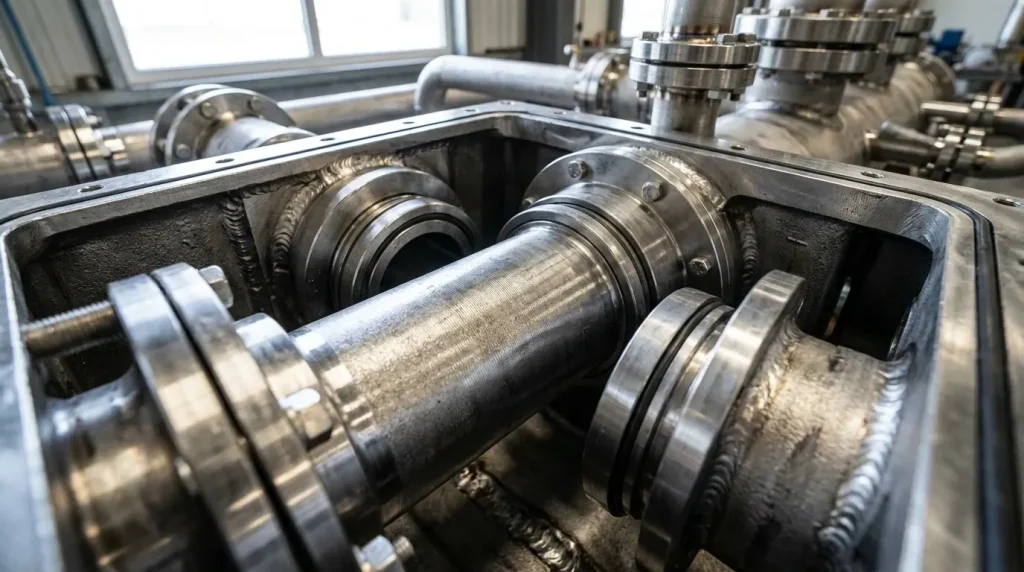
The types of residues or contaminants commonly remaining after use include mother liquors, API crystals, organic films, and inorganic scale. During ANFD operation, the agitator plows slurry into cake layers while heat transfer media contacts vessel walls, creating baked-on residues that resist simple rinsing.
Common residue categories are:
- API crystals embedded in filter media pores
- Solvent-soluble organic films on vessel walls
- Inorganic scale from process water or reagents
The filter base and agitator blade undersides are particularly prone to stubborn deposits. Maximum solids height in an ANFD should equal or fall below the agitator stroke, typically 12 to 20 in (304.8 to 508 mm), to ensure effective residue removal during cleaning cycles.
What are the common cleaning challenges associated with Nutsche filters and ANFDs?
Cleaning challenges associated with Nutsche filters and ANFDs stem from complex vessel geometry, product characteristics, and areas where residue accumulates. The following subsections examine factors that increase cleaning difficulty, how product properties affect residue removal, and which ANFD zones are most prone to buildup.
What factors increase the difficulty of cleaning ANFDs?
Factors that increase the difficulty of cleaning ANFDs include vessel geometry, dead zones, and operational parameters. Dead legs in pharmaceutical systems create stagnant flow sections where fluid movement is insufficient, producing conditions favorable to contamination and ineffective cleaning. According to Duva Sanitary, a single dead leg can require hours of additional cleaning time, extra chemicals, and risk revalidation if not addressed.
Key factors that complicate ANFD cleaning include:
- Multi-component construction with jacketed vessels, agitators, filter media, and discharge valves
- Operating temperature ranges from -60°C to +150°C (-76°F to +302°F), which can bake residues onto surfaces
- Pressure variations from full vacuum to positive pressure that affect residue adhesion
- Agitator stroke limitations of 12 to 20 in (304.8 to 508 mm), restricting access to certain zones
How do product properties affect residue removal?
Product properties affect residue removal by determining which cleaning chemistry and mechanical action will be effective. Organic residues from APIs and fine chemicals respond to alkaline detergents, while inorganic deposits require acidic cleaners. Sticky, viscous, or thermally degraded materials adhere more tenaciously to vessel walls and filter media.
High-value materials processed in ANFDs, such as active pharmaceutical ingredients and specialty chemicals, often form crystalline structures during drying. These residues resist simple rinse cycles. Filter cloth mesh sizes ranging from 8 to 115 microns can trap fine particles that resist mechanical dislodging, requiring extended soak times or re-slurry wash methods to achieve validated cleanliness levels.
Which areas of an ANFD are most prone to buildup?
The areas of an ANFD most prone to buildup are the filter plate junction, agitator shaft seals, discharge valve, and vessel wall-to-bottom transitions. These zones create geometric complexity where residue collects during filtration and drying cycles.
Critical accumulation points include:
- Agitator blade undersides and shaft bellows connections
- Heating jacket contact surfaces where thermal degradation occurs
Modern designs address these concerns through dead-zone free construction and “Clean Sweep” configurations for total heel discharge. However, older or poorly maintained equipment often lacks these features, making thorough CIP more difficult and time-consuming.
What is CIP (Clean-in-Place) and how does it apply to Nutsche filters?
CIP (Clean-in-Place) is an automated cleaning method that circulates cleaning solutions through equipment without disassembly. For Nutsche filters, CIP systems address the unique geometry of ANFDs, including filter plates, agitator assemblies, and vessel walls, through programmed spray patterns and chemical cycles. The following sections compare CIP to manual methods, outline process stages, and explain system design considerations.
How does CIP differ from manual cleaning methods for ANFDs?
CIP differs from manual cleaning methods for ANFDs by eliminating vessel entry and disassembly requirements. Manual cleaning demands that operators open the vessel, physically scrub surfaces, remove filter plates, and reassemble components. This process exposes personnel to residual solvents and APIs while extending downtime.
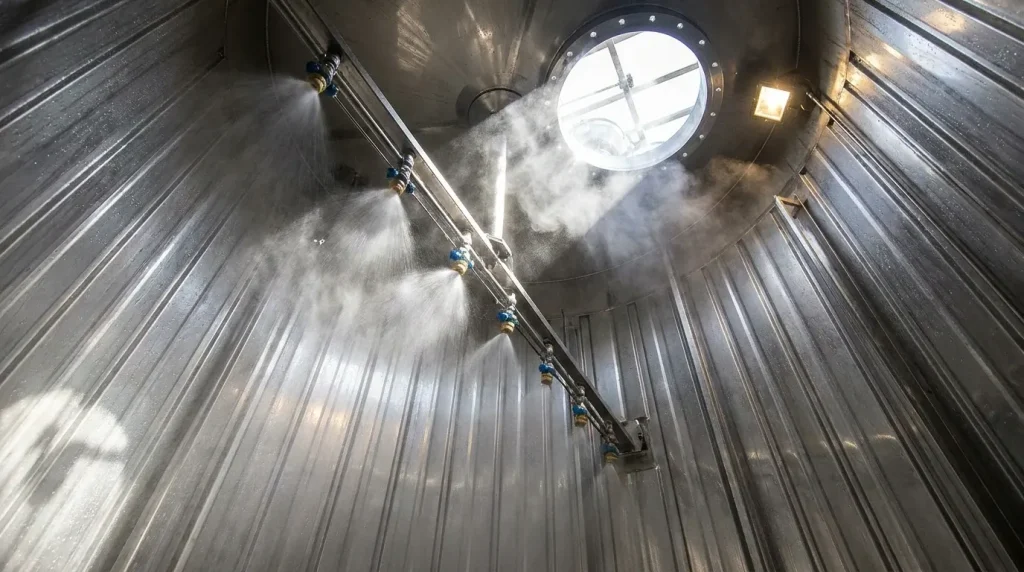
CIP systems automate the entire sequence. Spray devices distribute cleaning solutions across all internal surfaces while the vessel remains sealed. According to QUALIA, automated cleaning systems reduce manual cleaning time by up to 70% while improving cleaning consistency through advanced control systems.
Key differences include:
- Operator exposure: CIP maintains containment; manual cleaning requires direct contact
- Repeatability: CIP delivers identical parameters each cycle; manual methods vary by operator
- Documentation: CIP generates automatic records; manual cleaning relies on written logs
- Downtime: CIP runs faster with no reassembly; manual cleaning adds hours for disassembly and inspection
For pharmaceutical ANFDs processing HPAPIs, CIP’s containment advantage becomes essential for worker safety.
What are the main stages or steps involved in a CIP process for Nutsche filters?
The main stages involved in a CIP process for Nutsche filters are pre-rinse, detergent wash, intermediate rinse, final rinse, and verification. Each stage targets specific cleaning objectives while maintaining documented control.
- Pre-rinse: Warm water flushes loose solids and bulk residue from vessel walls, agitator blades, and filter media
- Detergent wash: Alkaline or acidic cleaning solution circulates at controlled temperature and concentration to dissolve adhered residues
- Intermediate rinse: Water removes detergent and suspended contaminants
- Final rinse: Purified water eliminates trace chemicals to meet validation limits
- Drying/verification: Heated gas or vacuum removes moisture; sampling confirms cleanliness
Oklahoma State University Extension identifies five critical CIP variables: temperature, maintenance, pressure, concentration, and time. Controlling these parameters ensures each stage achieves its cleaning objective. For ANFDs, the detergent wash stage must account for cake residue trapped in filter media pores and agitator shaft seals.
How is CIP system design tailored for effective ANFD cleaning?
CIP system design is tailored for effective ANFD cleaning by addressing the vessel’s unique geometry, including filter plates, agitator assemblies, and potential dead zones. Standard spray configurations require modification to reach all ANFD surfaces.
Spray device selection depends on vessel size and internal complexity. Static spray balls operate at 20 to 30 gal/min (75 to 115 L/min) and 20 to 30 PSI (1.4 to 2.1 bar), providing adequate coverage for simple geometries. ANFDs with multi-arm agitators or complex shaft seals often require rotary jet heads, which deliver higher mechanical impact at lower flow rates to dislodge stubborn residues.
Design considerations for ANFD CIP systems include:
- Spray positioning: Multiple spray devices target vessel walls, filter plate surfaces, and agitator blade undersides
- Dead-leg elimination: Piping routes avoid stagnant sections where residue accumulates
- Filter plate backflush: Reverse flow capability clears blocked media pores
- Agitator integration: Slow rotation during wash cycles exposes all blade surfaces
Modern ANFD designs incorporate cGMP principles to eliminate dead zones and facilitate CIP operations. GMM Pfaudler’s MAVAZWAG design features dead-zone free construction with boltless filter media connections, reducing cleaning complexity significantly.
With CIP system design principles established, validation and regulatory requirements ensure these cleaning processes meet documented standards.
What validation and regulatory requirements apply to cleaning Nutsche filters?
Validation and regulatory requirements for cleaning Nutsche filters center on documented proof that cleaning procedures consistently remove residues to predetermined acceptance limits. The following subsections cover governing standards, validation methods, and compliance documentation.

What industry standards govern ANFD cleaning and CIP effectiveness?
The industry standards governing ANFD cleaning and CIP effectiveness include FDA 21 CFR 211.67, EU GMP Annex 15, and ASME BPE guidelines. FDA 21 CFR 211.67 requires that equipment be cleaned, maintained, and sanitized at appropriate intervals to prevent contamination that would alter the safety, identity, strength, quality, or purity of the drug product. EU GMP Annex 15 establishes cleaning validation principles for pharmaceutical manufacturing across European markets. ASME BPE (Bioprocessing Equipment) provides design and fabrication standards for equipment cleanability. For food applications, 3-A Sanitary Standards and EHEDG (European Hygienic Engineering and Design Group) guidelines apply. These frameworks require written procedures describing cleaning methods, materials, schedules, and responsibility assignments.
How is cleaning validation performed for pharmaceutical or food applications?
Cleaning validation for pharmaceutical or food applications is performed through a documented protocol that establishes acceptance criteria, sampling methods, and analytical procedures. The process begins with defining residue limits using health-based exposure limits (HBELs), expressed as permitted daily exposure (PDE) or acceptable daily exposure (ADE). These toxicology-based thresholds convert into maximum allowable carryover (MACO) limits based on batch size, maximum daily dose, and shared surface area. According to ValGenesis, the 10 ppm criterion serves as a commonly used screening limit for product quality concerns, keeping carryover into subsequent products at very low levels. Sampling methods include swab testing of critical surfaces and rinse sampling of final wash solutions. Current protocols recommend minimum recovery rates of 50%, with higher targets preferred for enhanced confidence.
What documentation is needed for compliance?
The documentation needed for compliance includes cleaning validation protocols, standard operating procedures (SOPs), batch cleaning records, and deviation reports. Per FDA 21 CFR 211.67, written procedures must establish responsibility assignments for cleaning, maintenance and cleaning schedules, descriptions of methods and materials used, protection of clean equipment from contamination, and removal of previous batch identification. Each cleaning cycle requires recorded evidence of parameters achieved: time, temperature, chemical concentration, and pressure. Analytical results from swab or rinse samples must demonstrate residue levels below established acceptance criteria. Equipment logs should track cleaning history, any deviations from standard procedures, and corrective actions taken.
With validation frameworks established, optimizing cleaning cycles can significantly improve operational efficiency while maintaining compliance.
How can cleaning optimization improve operational efficiency and safety in ANFD use?
Cleaning optimization improves operational efficiency and safety in ANFD use by reducing downtime, lowering costs, and minimizing cross-contamination risks. The following sections cover strategies for reducing cleaning time, protecting product quality, and maintaining consistent cleaning performance.
What strategies reduce downtime and cleaning costs for Nutsche filters?
Strategies that reduce downtime and cleaning costs for Nutsche filters include cycle optimization, dead-zone elimination, and automation integration. According to BioPharm International, non-optimized CIP cycles can exceed 4 hours per piece of equipment; fine-tuning run parameters can cut 2.5 hours from each cycle, translating into eight additional production runs per year and a 5% capacity increase.
Key approaches include:
- Selecting dead-zone free vessel designs with “Clean Sweep” discharge features
- Installing automated CIP systems with PLCs for repeatable, consistent cleaning recipes
- Matching spray device selection to vessel geometry, since rotary heads achieve similar pressure at lower flow rates than static spray balls
- Eliminating dead legs in piping, which can require hours of additional cleaning and risk revalidation
Automated cleaning systems reduce manual cleaning time by up to 70% while improving consistency. Given that changeover activities consume 20–30% of facility time on average, even modest cycle improvements yield significant throughput gains.
How does proper CIP impact product quality and cross-contamination risks?
Proper CIP impacts product quality and cross-contamination risks by ensuring residue removal meets validated acceptance criteria before subsequent batches begin. Health-based exposure limits (HBEL), expressed as permitted daily exposure (PDE), establish toxicology-based thresholds for carryover, while maximum allowable carryover (MACO) converts these thresholds into surface-area-specific limits.
Effective CIP protocols protect quality through:
- Meeting the 10-ppm screening criterion for purity-related carryover concerns
- Achieving “visually clean” status as a front-line check, though this alone cannot confirm low-level chemical control
- Attaining minimum 50% recovery rates in swab sampling, with higher targets preferred for enhanced validation confidence
FDA 21 CFR 211.67 requires that equipment cleaning prevents contamination altering drug safety, identity, strength, quality, or purity. For multi-product facilities processing APIs, validated CIP cycles are the primary safeguard against batch-to-batch contamination that could compromise patient safety or trigger costly regulatory actions.
What are best practices for monitoring and maintaining cleaning performance?
Best practices for monitoring and maintaining cleaning performance include controlling critical process variables, implementing sensor-based verification, and documenting every cycle for regulatory traceability.
Five variables require continuous control and documentation:
| Variable | Function |
| Temperature | Drives cleaning chemical activity |
| Pressure | Ensures reliable spray device performance; typical static spray balls require 20–30 PSI (138–207 kPa) |
| Concentration | Maintains effective detergent or solvent levels |
| Time | Defines cycle duration for complete residue removal |
| Maintenance | Prevents equipment degradation that compromises cleaning |
Smart CIP systems with IoT sensors and real-time analytics reduce cleaning variability by providing direct visibility into chemical concentration, flow rates, and temperature. PLCs enable dynamic recipe programming, remote monitoring, and historical data logging that support both continuous improvement and regulatory audits. For pharmaceutical applications, written procedures must include cleaning schedules, method descriptions, and previous batch identification removal, as FDA 21 CFR 211.67 mandates.
With cleaning performance optimized and monitored, the next consideration is selecting appropriate technologies and cleaning agents for specific ANFD configurations.
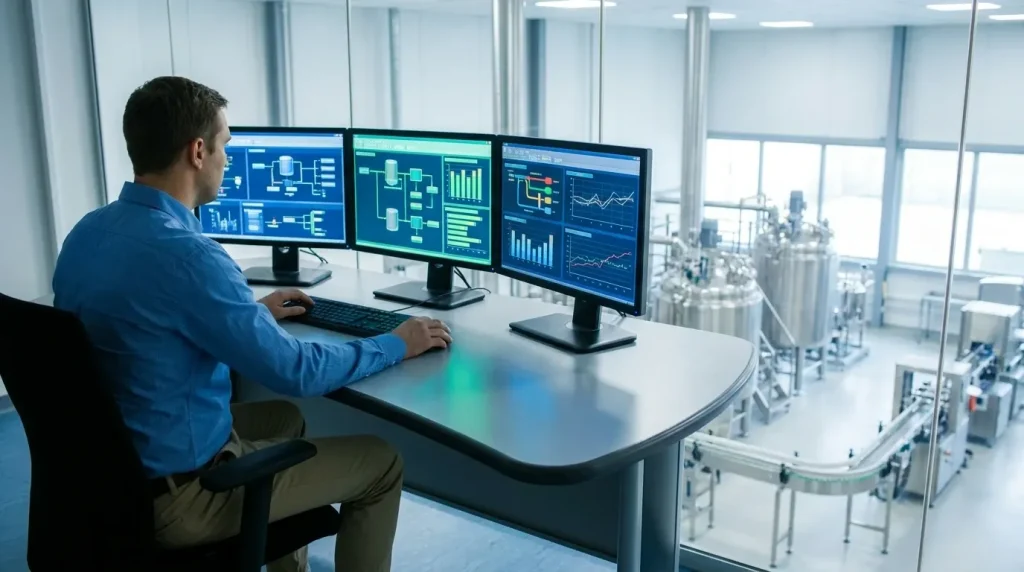
Which technologies and cleaning agents are typically used in Nutsche filter CIP?
Technologies and cleaning agents used in Nutsche filter CIP include alkaline and acidic detergents, organic solvents, static spray balls, rotary jet heads, and orbital cleaners. The following sections cover effective cleaning agents, automated spray device technologies, and how material compatibility influences CIP method selection.
What types of detergents or solvents are most effective for ANFD cleaning?
The types of detergents or solvents most effective for ANFD cleaning are alkaline cleaners, acidic cleaners, and process-compatible organic solvents. Alkaline detergents break down and remove organic materials and offer a wide range of cleaning capabilities suitable for pharmaceutical applications, according to STERIS Life Sciences. Acidic cleaners target inorganic residues such as mineral scale or metal oxide deposits. Solvent selection depends on the specific residue: oily API residues respond best to alkaline formulations, while crystalline inorganic buildup requires acidic agents. For pharmaceutical-grade stainless steel, glass, plastic, and elastomer equipment, mild alkaline or enzymatic solutions that pass FDA cleaning validation are commonly specified. Re-slurry washing with process solvents during the filtration cycle can reduce total solvent volume needed for equivalent purity levels.
How are spray balls, rotary jets, and other devices used in automated CIP?
Spray balls, rotary jets, and other devices are used in automated CIP by delivering cleaning solution at controlled pressure and flow rates to achieve complete internal surface coverage. Static spray balls operate at 20 to 30 gal/min (75 to 113 L/min) with 20 to 30 PSI (1.4 to 2.1 bar) pressure drop, according to Oklahoma State University Extension. Key device categories include:
- Static spray balls: Fixed-position spherical or tangential designs providing consistent 360-degree spray patterns; tangential versions suit applications requiring full upward spray coverage
- Rotary spray heads: Gear-driven devices achieving similar pressure requirements at lower flow rates than static balls, offering middle-ground impact between spray balls and orbital cleaners
- Orbital jet cleaners: High-impact rotating heads delivering maximum mechanical action for stubborn residues, though requiring longer cycle times
- Spray bubbles: Compact devices for space-constrained installations such as complex interiors, ductwork, or lower-side ports aimed at agitators
Automated systems integrate these devices with PLCs for dynamic recipe programming, remote monitoring, and historical data logging supporting regulatory compliance.
How do material compatibility and filter design impact CIP method selection?
Material compatibility and filter design impact CIP method selection by determining which cleaning agents, temperatures, and mechanical forces the equipment can safely tolerate. Stainless steel ANFDs (316L, 316, 304, 304L) handle most alkaline, acidic, and solvent-based cleaning chemistries, while glass-lined or Hastelloy C-276 vessels require agent selection matched to their corrosion resistance profiles. Filter media mesh size, ranging from 8 to 115 microns in standard configurations, influences both residue retention patterns and rinsability.
Dead-zone-free construction, such as GMM Pfaudler’s MAVAZWAG design featuring boltless filter plate connections and “Clean Sweep” geometry, minimizes areas where residue accumulates and resists removal. The agitator stroke, typically 12 to 20 in (304.8 to 508 mm), must accommodate solids height to ensure effective cake disruption during wash cycles. Modern ANFDs designed around cGMP principles facilitate both CIP and SIP operations. For shared equipment in pharmaceutical settings, MACO calculations based on HBEL must account for total shared surface area when setting carryover limits, making accurate vessel geometry documentation essential for validation.
How should you approach Nutsche filter cleaning and CIP with International Process Plants’ expertise and equipment solutions?
You should approach Nutsche filter cleaning and CIP by sourcing equipment designed for cleanability and partnering with suppliers who understand pharmaceutical-grade requirements. The sections below explain how International Process Plants supports these needs and summarize the key insights from this guide.
How can International Process Plants’ equipment offerings support Nutsche filter (ANFD) cleaning and CIP requirements?
International Process Plants’ equipment offerings support Nutsche filter cleaning and CIP requirements through an inventory of process-ready equipment built to pharmaceutical and chemical manufacturing standards. With over 46 years of experience and more than 15,000 pieces of equipment in stock, International Process Plants maintains an inventory of dryers in various configurations, including units with jacketed pressure vessels.
Equipment available through International Process Plants includes vessels constructed from 316L and 316 stainless steel, materials that withstand both alkaline and acidic CIP chemistries without degradation. These alloys are compatible with the mild alkaline or enzymatic cleaning solutions commonly validated under FDA good manufacturing practices for pharmaceutical applications.
For operations requiring validated cleaning protocols, International Process Plants can source units featuring dead-zone free construction and heated agitator designs. These design elements directly address the cleaning challenges discussed throughout this guide, particularly residue accumulation in stagnant flow areas. When a facility needs to expand filtration capacity quickly, procuring quality used equipment eliminates the 12 to 18 month lead times typical of new OEM orders while delivering units that meet ASME, PED, and CE marking requirements.
What are the key takeaways about Nutsche filter (ANFD) cleaning and CIP we covered?
The key takeaways about Nutsche filter cleaning and CIP are:
- ANFD geometry creates inherent cleaning challenges, particularly around filter plates, agitator shafts, and vessel walls where product residue accumulates
- CIP systems require control of five critical variables: temperature, pressure, concentration, time, and maintenance
- Spray device selection matters: static spray balls operate at 20 to 30 gal/min (75 to 113 L/min) and 20 to 30 PSI (1.4 to 2.1 bar), while rotary heads achieve similar coverage at lower flow rates
- FDA 21 CFR 211.67 mandates written cleaning procedures, assigned responsibilities, and documented methods for pharmaceutical equipment
- Cleaning validation requires HBEL-based carryover limits, with 10 ppm serving as a common screening threshold and minimum 50% swab recovery rates
- Optimized CIP cycles can reduce cleaning time by 2.5 hours per cycle, potentially adding eight production runs annually
- Dead-zone free construction and boltless filter plate designs significantly reduce cleaning difficulty
For procurement engineers evaluating ANFD acquisitions, cleanability should rank alongside process specifications. Equipment featuring accessible internals, CIP-compatible nozzle configurations, and materials validated for your cleaning chemistry will reduce validation burden and changeover time throughout the unit’s operational life.

 AR
AR  EN
EN  ES
ES  FR
FR  PL
PL  DE
DE  UR
UR  HI
HI  NL
NL  TR
TR  IT
IT  UK
UK  RU
RU  JA
JA  PT
PT  ZH
ZH