 انتقل إلى المحتوى
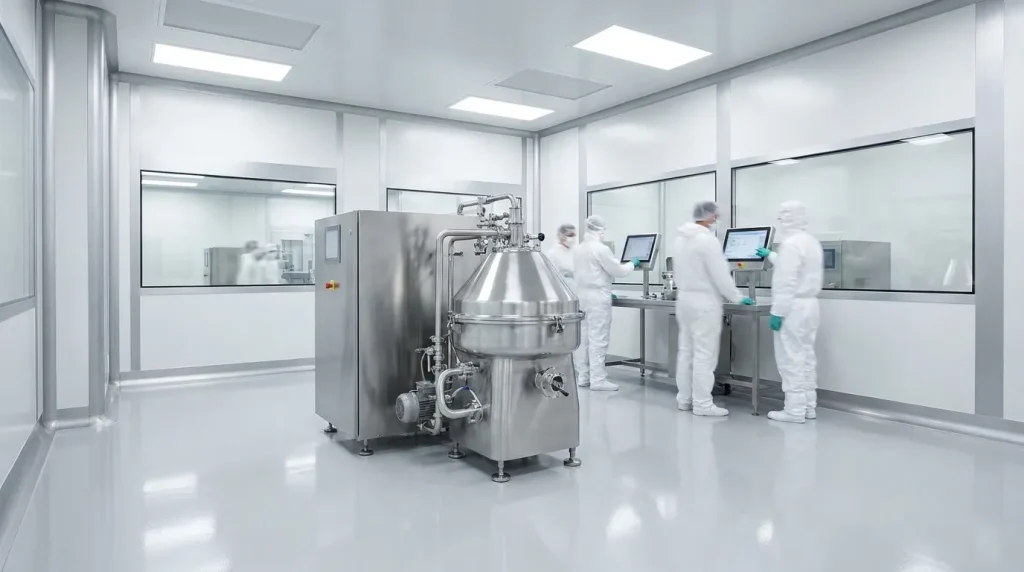
cGMP requirements establish expectations for equipment suitability, documentation, maintenance, cleaning, and validation to help ensure drug product safety and quality in the pharmaceutical industry.
This guide covers regulatory frameworks and material specifications, sanitary design principles and contamination prevention, validation and qualification protocols, common compliance challenges and audit strategies, and procurement considerations for used pharmaceutical equipment.
Regulatory frameworks from ICH Q7, EU GMP Annex 15, and FDA 21 CFR Part 211 establish different standards for centrifuge equipment, including that it must be appropriately designed, correctly sized, and suitably located for cleaning, maintenance, and calibration. These requirements apply equally to new and pre-owned equipment entering pharmaceutical service.
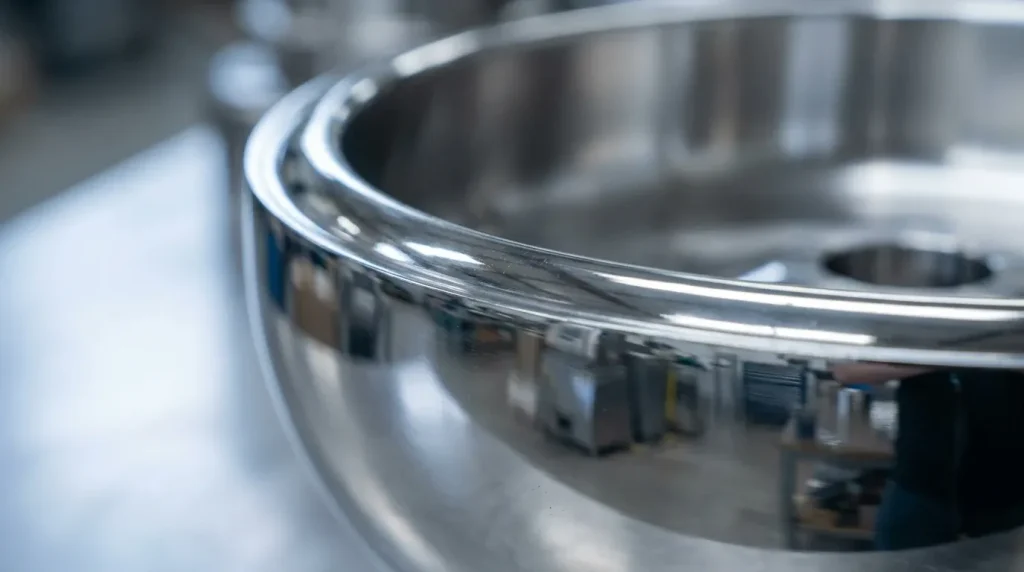
Material specifications for pharmaceutical processing applications commonly see product-contact materials specified as 316L stainless steel due to its corrosion resistance, cleanability, and compatibility with validated cleaning processes. For corrosive API applications, Hastelloy C-276 provides superior chemical resistance while maintaining compliance with non-reactive surface requirements. As described by Astro Pak, biopharmaceutical applications such as injectable and otic solution processing often specify highly polished product-contact surfaces: Ra ≤ 15 µin (0.38 µm) is the typical specification, set by the ASME BPE Surface Designation SF4 standard.
Sanitary design per ASME BPE, EHEDG Guideline 42, and 3-A Sanitary Standards ensures all product contact surfaces remain accessible to CIP and SIP fluids. Crevice-free welds, self-draining configurations, and hermetic sealing prevent microbial harborage and cross-contamination.
Validation follows the IQ-OQ-PQ sequence: Installation Qualification verifies correct component installation against engineering drawings, Operational Qualification tests parameters across design ranges without product, and Performance Qualification demonstrates consistent separation under actual production conditions.
Common compliance challenges can include surface finish deficiencies, documentation gaps, and, where equipment is used in potentially explosive atmospheres, missing ATEX certifications. Proactive change control, scheduled requalification, and continuous monitoring keep operations inspection-ready.
How Do cGMP Guidelines Influence the Selection of Pharmaceutical Centrifuges?
cGMP guidelines influence the selection of pharmaceutical centrifuges by establishing requirements for equipment design, material construction, and documentation. The following sections cover the core regulatory elements, material specifications, and procurement documentation needed for compliance.
What Are the Core Elements of cGMP Relevant to Centrifuge Equipment?
The core elements of cGMP relevant to centrifuge equipment are design suitability, cleanability, and documented qualification. According to ICH Q7 guidelines, equipment used in the manufacture of intermediates and APIs should be of appropriate design and adequate size, and suitably located for its intended use, cleaning, maintenance, and, where applicable, calibration.
Key cGMP requirements for centrifuge equipment include:
- Design appropriate for intended pharmaceutical processes
- Accessibility for thorough cleaning and inspection
- Construction that prevents product contamination
- Calibration capabilities for critical parameters
- Maintenance accessibility without compromising sterility
Equipment cleanability validation remains a frequent concern in regulated settings. Centrifuges must demonstrate they can be cleaned to validated standards between batches to prevent cross-contamination.
How Does cGMP Affect Material and Construction Choices for Centrifuges?
cGMP affects material and construction choices for centrifuges by mandating non-reactive, non-absorptive surfaces that maintain product purity. Product contact surfaces must not alter the safety, identity, strength, quality, or purity of drug products.
316L stainless steel is one of the most common materials used for pharmaceutical processing equipment including centrifuges. The material offers corrosion resistance and meets surface finish requirements. For centrifuges handling corrosive APIs, Hastelloy C-276 provides superior chemical resistance, though at higher cost.
Construction standards include:
- Smooth, crevice-free welds to eliminate bacterial harborage
- Polished surfaces meeting specified roughness averages
- Gaskets and seals made from FDA-compliant elastomers
- Bowl designs enabling complete product discharge
What Are the Essential Design Considerations for Pharma Centrifuges to Ensure cGMP Compliance?
The essential design considerations for pharma centrifuges to ensure cGMP compliance are sanitary construction, cleanability features, and automated control systems. The following subsections cover hygienic design principles, contamination prevention features, and automation options that support regulatory requirements.
How Do Sanitary Design Principles Apply to Pharmaceutical Centrifuges?
Sanitary design principles apply to pharmaceutical centrifuges through surface finish requirements, accessibility for cleaning validation, and material specifications that prevent microbial harborage. ASME BPE-2009 standards require that centrifuges designed for CIP (Clean-in-Place) and SIP (Sterilize-in-Place) have all product contact surfaces accessible to cleaning and sterilization fluids and available for examination.
EHEDG Guideline 42 specifically addresses hygienic design and cleanability of disc stack centrifuges, supporting safety through validated CIP procedures. For harmonized global compliance, EHEDG and 3-A Sanitary Standards collaborate on requirements for surface finish, tensile stresses, and oxygen concentration to prevent microbial growth.
Key sanitary design elements include:
- Electropolished 316L stainless steel with Ra ≤ 0.5 µm (20 µin)
- Crevice-free welds with full penetration
- Self-draining configurations that eliminate pooling
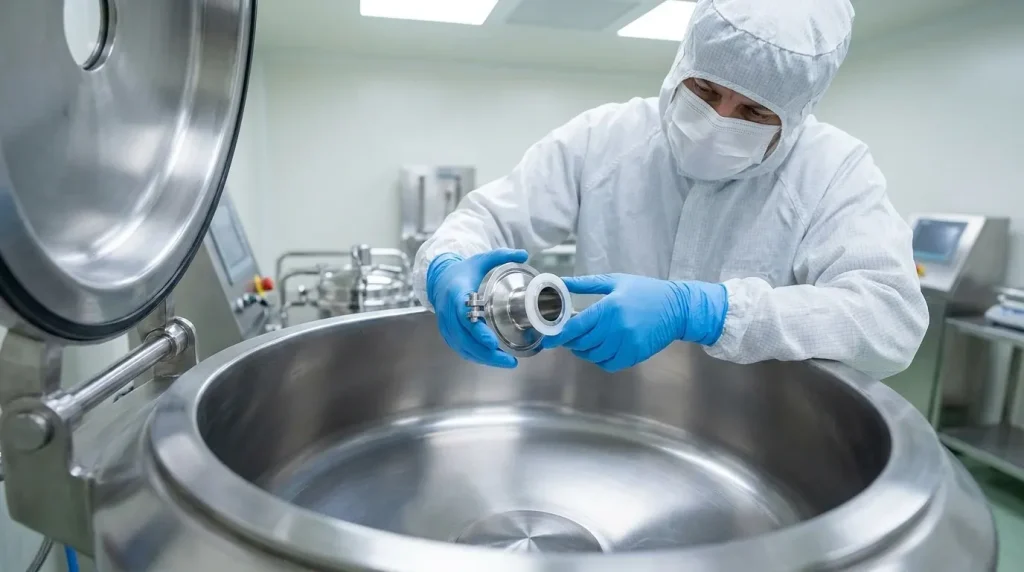
- Sanitary connections (tri-clamp fittings) rather than threaded joints
Which Features Facilitate Cleaning and Prevent Contamination in Pharma Centrifuges?
The features that facilitate cleaning and prevent contamination in pharma centrifuges include smooth internal surfaces, automated wash cycles, and sealed bearing assemblies.
According to WHO TRS 986 Annex 2, which establishes good manufacturing practices for pharmaceutical products, equipment layout and design must minimize error risk and permit effective cleaning to avoid cross-contamination, dust build-up, and adverse effects on product quality. US FDA 21 CFR 211.63 requires equipment to be of appropriate design, adequate size, and suitably located to facilitate cleaning and maintenance operations.
Contamination prevention specifications include hermetic sealing, contained discharge systems, and nitrogen-blanketed bowls for oxygen-sensitive products.
What Automation and Control Options Support cGMP Compliance in Centrifuges?
Automation and control options that support cGMP compliance in centrifuges include programmable logic controllers (PLCs), recipe-driven operations, and, where electronic records are used for GMP-regulated activities, 21 CFR Part 11-compliant data logging. According to Industrial Applications for Bioprocessing and Biomanufacturing, Madan et al. (2026), automation and better process control are necessary for modern, competitive biomanufacturing; these will undoubtedly play a significant role in enabling continued growth toward the projected USD 600 billion biomanufacturing market by 2030.
Critical automation features can include electronic batch records, alarm management systems, and validated software that generates time-stamped audit trails.
What Validation and Qualification Steps Are Required for cGMP-Compliant Centrifuge Installation?
The validation and qualification steps for cGMP-compliant centrifuge installation typically follow the IQ/OQ/PQ qualification model, which includes Installation Qualification (IQ), Operational Qualification (OQ), and Performance Qualification (PQ). These three stages verify that equipment is correctly installed, operates within specifications, and performs reliably under actual production conditions.
What Is Involved in the Installation Qualification (IQ) of a Pharmaceutical Centrifuge?
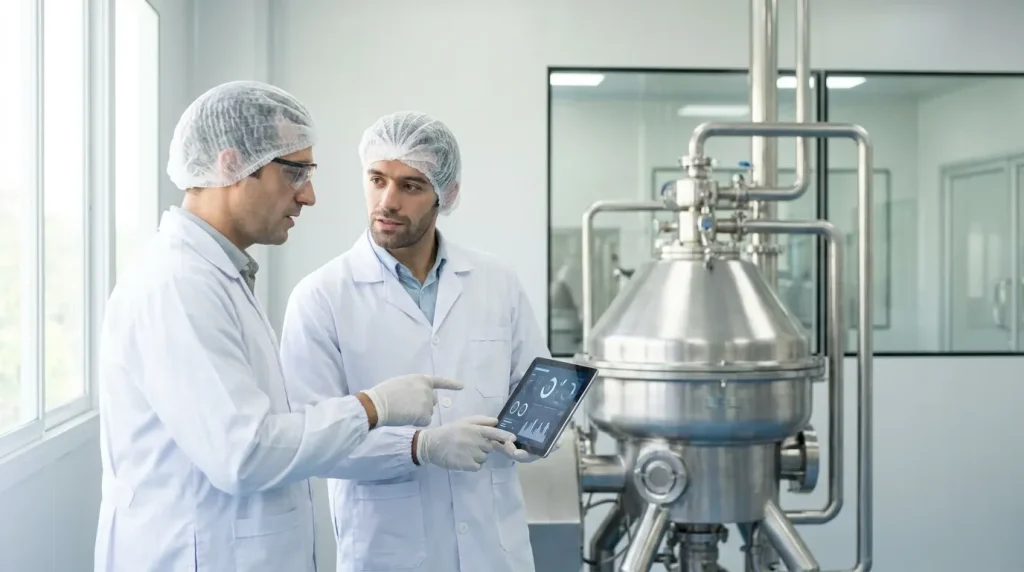
Installation Qualification (IQ) of a pharmaceutical centrifuge involves verifying that all components are correctly installed according to engineering drawings and specifications. According to GMP SOP guidelines, IQ should include verification of components, instrumentation, equipment, pipe work, and services against approved documentation.
Key IQ verification activities include:
- Confirming model numbers, serial numbers, and manufacturer specifications match purchase orders
- Verifying utility connections (electrical, compressed air, process water) meet design requirements
- Checking that all safety interlocks and guards are properly installed
- Reviewing calibration certificates for sensors and instrumentation
- Documenting environmental conditions in the installation area
- Confirming software versions match validated configurations
IQ documentation creates the baseline record that supports all subsequent qualification stages.
How Is Operational Qualification (OQ) Conducted for Pharma Centrifuges?
Operational Qualification (OQ) for pharma centrifuges is conducted by testing all operational parameters across their full design ranges without product. OQ confirms that the centrifuge functions correctly under worst-case conditions.
Critical OQ test parameters include:
- Speed range verification from minimum to maximum RPM
- Operating temperature monitoring and temperature control accuracy
- Timer accuracy across all programmed cycle durations
- Alarm and interlock functionality testing
- Emergency stop response verification
- Vibration levels at maximum operational speed
Each test requires documented acceptance criteria, actual results, and deviation handling procedures. OQ protocols should challenge the equipment at operational extremes to identify potential failure modes before production use.
What Does Performance Qualification (PQ) Entail for Centrifuge Operation Under cGMP?
Performance Qualification (PQ) for centrifuge operation under cGMP entails demonstrating that the equipment consistently performs as intended under actual production conditions with representative materials. As defined in the FDA Process Validation Guidance, qualification activities for pharmaceutical manufacturing demonstrate that utilities and equipment are suitable for their intended use and perform properly.
PQ requirements include:
- Running multiple production cycles with actual or simulated product
- Measuring separation efficiency against predetermined specifications
- Verifying batch-to-batch consistency across at least three consecutive runs
- Confirming cleaning validation effectiveness post-production
- Documenting yield recovery rates and product quality attributes
PQ completion establishes the validated state that permits routine production use. Ongoing monitoring then maintains this qualified status throughout the equipment lifecycle.
With qualification protocols established, procurement teams can better identify compliance challenges before they impact production timelines.
How Can Common Compliance Challenges with Pharma Centrifuges Be Identified and Overcome?
Common compliance challenges with pharma centrifuges can be identified through systematic audits and overcome with proactive validation strategies. The sections below address frequent non-compliance issues and best practices for maintaining GMP standards.
Which cGMP Non-Compliance Issues Arise Most Frequently with Centrifuge Equipment?
The cGMP non-compliance issues that arise most frequently with centrifuge equipment include surface finish deficiencies, inadequate documentation, and missing hazardous area certifications. Surface finish requirements for pharmaceutical product-contact equipment are typically specified based on process needs and applicable standards. For many bioprocess applications, 316L stainless steel surfaces are specified with a roughness average of Ra ≤ 0.5 µm (20 µin) or better, often achieved through mechanical polishing and/or electropolishing.
Documentation gaps represent another common finding. Missing or incomplete IQ/OQ/PQ protocols trigger audit observations. Calibration records that lack traceability also appear frequently in regulatory citations.
For centrifuges handling flammable solvents in potentially explosive atmospheres, applicable explosion protection requirements (such as ATEX in the European Union or IECEx internationally) require the “Ex” label to confirm certification for explosive atmospheres. Operating without proper ATEX or IECEx certification in hazardous environments constitutes a serious compliance violation that can halt production.
What Are Best Practices for Auditing and Maintaining GMP Compliance in Centrifuge Operations?
Best practices for auditing and maintaining GMP compliance in centrifuge operations center on continuous monitoring, thorough documentation, and proactive change control. According to a Kneat’s 2025 State of Validation report, the top three challenges reported by validation teams were audit readiness, compliance burden, and data integrity. Also notable was the rise in adoption of digital validation tools.
Effective compliance maintenance requires:
- Scheduled requalification at defined intervals based on risk assessment
- Documented preventive maintenance with calibration verification
- Audit trail systems that capture all parameter changes with timestamps
- Change control procedures that assess GMP impact before modifications
- Training records demonstrating operator competency on current SOPs
Regular internal audits using regulatory checklists help identify gaps before external inspections. Treating compliance as an ongoing process rather than a one-time qualification event keeps operations inspection-ready and reduces costly remediation efforts.
How Should You Approach cGMP and Pharma Centrifuge Compliance When Buying from International Process Plants?
You should approach cGMP and pharma centrifuge compliance when buying from International Process Plants by verifying compatibility with your processing application and planning for requalification. The sections below explain how used equipment can meet regulatory standards and summarize the key compliance considerations we covered.
Can Used and Refurbished Equipment from IPP Meet cGMP and Pharma Centrifuge Standards?
Yes, used and refurbished equipment from IPP can absolutely meet cGMP and pharma centrifuge standards. ICH Q7 guidelines state that equipment used in API manufacturing should be of appropriate design, adequate size, and suitably located for its intended use, cleaning, maintenance, and calibration. This requirement applies equally to new and pre-owned equipment.
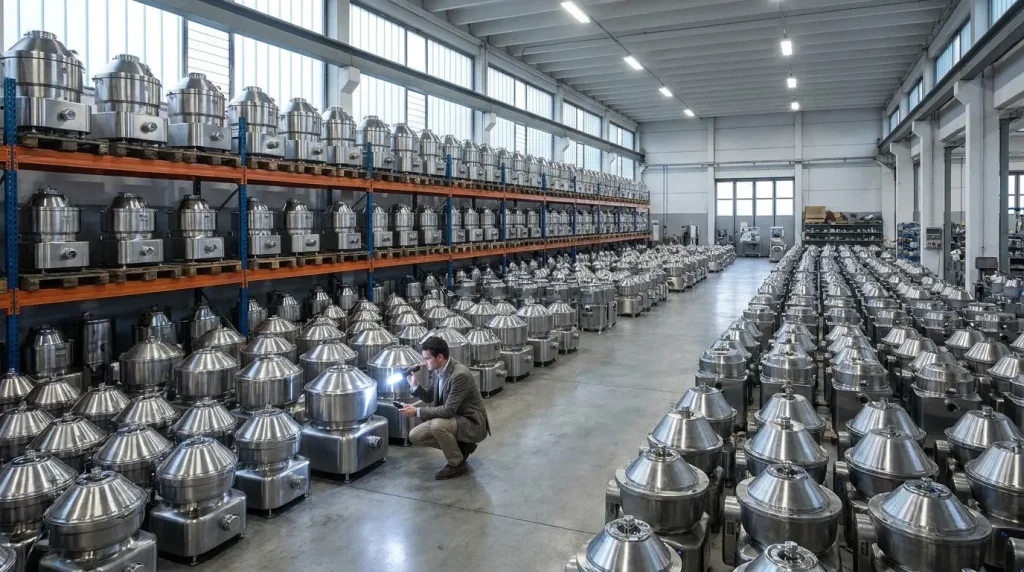
International Process Plants maintains equipment histories from our inventory of 15,000+ pieces across warehouses in Eastover, South Carolina, Germany, and the United Kingdom. This documentation supports your requalification efforts.
What Are the Key Takeaways About cGMP and Pharma Centrifuges: Design Considerations and Compliance Guide We Covered?
The key takeaways about cGMP and pharma centrifuges center on treating compliance as an integrated design and procurement strategy rather than a post-purchase checkbox.
Core lessons from this guide include:
- Material selection (e.g. 316L, Hastelloy C-276) and surface finish directly affect cleanability validation outcomes
- Sanitary design per EHEDG and 3-A standards enables validated CIP and SIP procedures
- IQ, OQ, and PQ form a sequential qualification chain; skipping steps creates audit vulnerabilities
- Automation with 21 CFR Part 11 and EU GMP Annex 11 compliant controls supports data integrity requirements
- Used equipment requires formal assessment but can achieve full cGMP compliance with proper documentation
International Process Plants can support your pharmaceutical centrifuge procurement with equipment backed by traceable histories and material certifications. Contact us to discuss currently available centrifuges that match your cGMP requirements.

 AR
AR  EN
EN  ES
ES  FR
FR  PL
PL  DE
DE  UR
UR  HI
HI  NL
NL  TR
TR  IT
IT  UK
UK  RU
RU  JA
JA  PT
PT  ZH
ZH