 مواد پر جائیں۔
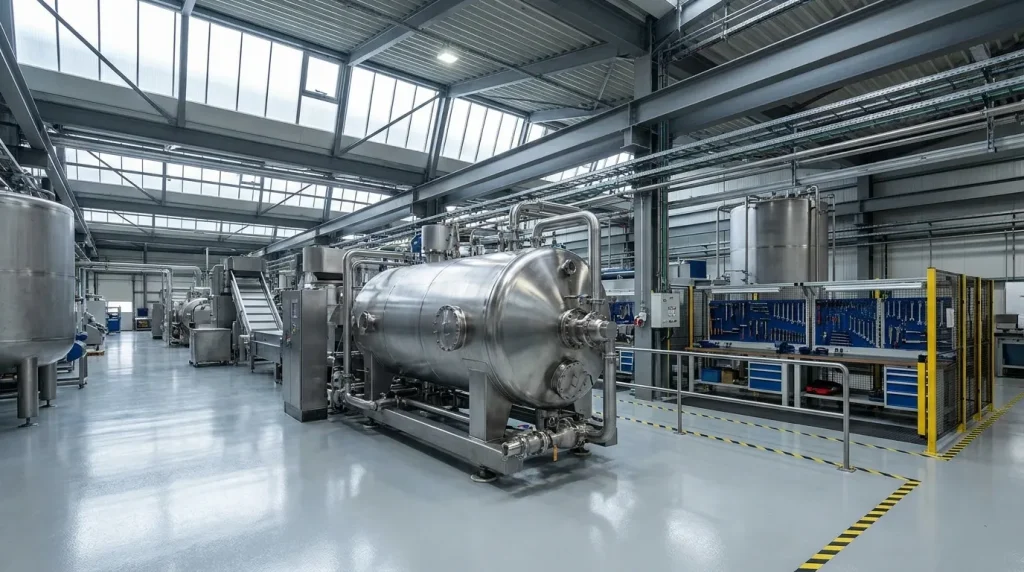
Centrifuge vibration problems are mechanical disturbances that can be caused by rotor imbalance, shaft misalignment, bearing wear, and structural resonance that disrupt smooth rotation and degrade separation performance. ISO 10816-3 establishes that acceptable vibration levels remain below 0.16 in/sec peak (2.8 mm/sec RMS) on rigid foundations, with levels above 0.25 in/sec peak (4.5 mm/sec RMS) risking component damage.
This guide covers root causes and design vulnerabilities, diagnostic methods and monitoring practices, correction techniques and maintenance strategies, operational and safety impacts, and used equipment considerations.
Rotor unbalance occurs when the center of mass shifts away from the center of rotation, creating centrifugal forces that amplify with speed. Solid bowl decanters, disc stack separators, and peeler centrifuges each present distinct vulnerability patterns based on their mechanical configurations and typical operating conditions.
Vibration sensor-based condition monitoring identifies 90% of machine faults before failure occurs, making systematic detection essential for process reliability. FFT spectrum analysis helps identify characteristic vibration frequencies associated with imbalance, misalignment, mechanical looseness, and bearing defects, enabling earlier fault detection and corrective maintenance.
Predictive maintenance programs can reduce unplanned downtime by around 30–50% اور cut maintenance costs by 18–25% compared to reactive strategies according to McKinsey & Company. Dynamic balancing to ISO 1940-1 grade G2.5, laser shaft alignment, and timely bearing replacement address the mechanical root causes that generate excessive vibration.
Unresolved vibration accelerates bearing wear, compromises seal integrity, and creates safety hazards including potential rotor failure at high speeds. Industrial centrifuge safety is governed by applicable machinery safety regulations, hazardous-area requirements where relevant, and industry standards covering equipment design, operation, and risk reduction. In the European market, CE marking demonstrates conformity with applicable EU requirements, while ATEX and other standards may apply depending on the centrifuge’s operating environment.
Why Do Centrifuge Vibrations Occur in Industrial Settings?
Centrifuge vibrations occur in industrial settings due to mechanical imbalances, component misalignment, and resonance effects that disrupt smooth rotation. The following subsections explain the root causes, contributing factors, and design vulnerabilities that make certain centrifuge types more prone to vibration problems.
What Are the Main Physical and Mechanical Causes of Centrifuge Vibrations?
The main physical and mechanical causes of centrifuge vibrations are rotor unbalance, mechanical looseness, worn bearings, and structural defects. Rotor unbalance occurs when the center of mass of a rotating assembly is not coincident with the center of rotation, creating centrifugal forces that translate into vibration. Mechanical looseness in the frequency spectrum typically produces harmonic peaks at multiples of the machine’s running speed (2x, 3x, 4x RPM), according to Fluke Corporation’s predictive maintenance research.
Additional mechanical causes include:
- Worn or damaged bearings that allow shaft movement
- Foundation settling or inadequate mounting
- Coupling wear between motor and centrifuge
- Internal component erosion from process materials
The European Standard EN 12547:2014 establishes requirements for minimizing risks caused by mechanical hazards common to all centrifuge types, providing a framework for identifying these root causes during equipment evaluation.
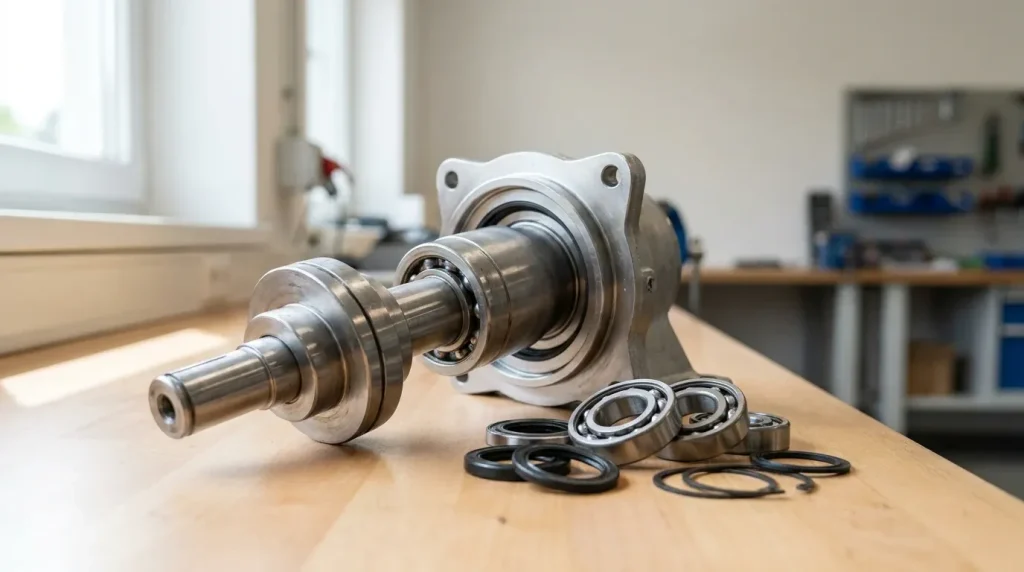
How Do Imbalance, Misalignment, and Resonance Contribute to Vibration Issues?
Imbalance, misalignment, and resonance contribute to vibration issues by creating cyclical forces that amplify with rotational speed. Angular misalignment occurs when shafts are not parallel but remain in the same plane, while parallel misalignment exists when shaft centerlines are displaced despite being parallel. Both conditions generate radial and axial forces that manifest as vibration.
Resonance amplifies vibration when operating speed approaches the natural frequency of structural components. This phenomenon becomes critical because:
- Vibration amplitude increases exponentially near resonance points
- Standard operating speeds may coincide with natural frequencies
- Structural modifications can shift resonance away from operating ranges
The ISO 1940-1:2003 standard specifies balance quality grades where G 6.3 is the standard grade for centrifuge drums and pump impellers. Under ISO 10816-3, acceptable vibration levels below 0.16 in/sec peak (2.8 mm/sec RMS) indicate proper balance, while higher levels (such as above 0.25 in/sec peak or approximately 4.5 mm/sec RMS) may indicate developing issues such as imbalance, misalignment, looseness, or bearing-related problems requiring investigation.
What Types of Centrifuge Designs Are Most Vulnerable to Vibration Problems?
The types of centrifuge designs most vulnerable to vibration problems are those with high rotational speeds, large rotating masses, flexible rotor assemblies, or operating conditions that can create imbalance. These can include solid bowl decanters, high-speed disc stack separators, tubular bowl centrifuges, scroll-screen and pusher centrifuges, and batch-operated peeler centrifuges. Some design-specific vulnerabilities include:
| سینٹرفیوج کی قسم | Primary Vulnerability | Typical Application |
| Decanter | Conveyor resonance, differential speed vibration | High solids concentrations, larger particles |
| Disc Stack | Disc pack imbalance, high-speed sensitivity | Smaller particles, lower concentrations |
| Peeler | Batch load variations, cake buildup asymmetry | Filtration with density separation |
| Solid Bowl | Bowl eccentricity, feed distribution imbalance | Solids recovery, liquid clarification |
Different centrifuge designs face different challenges, for example decanter and disc stack centrifuges: decanters handle greater solids concentrations with larger particle sizes, while disc stack centrifuges process smaller particles at lower concentrations. Each design requires tailored vibration monitoring approaches based on its operational characteristics.
Understanding these design vulnerabilities helps inform equipment selection decisions, particularly when evaluating used centrifuges where wear patterns may have developed over years of operation.
How Can You Identify and Diagnose Centrifuge Vibration Problems?
You can identify and diagnose centrifuge vibration problems through systematic observation of warning signs, application of diagnostic tools, and establishing appropriate monitoring intervals. FFT (Fast Fourier Transform) analysis of vibration signal spectra provides relevant features for identifying rotor unbalance signatures and other fault patterns. The following sections cover warning symptoms, diagnostic methods, and monitoring frequency.
What Are the Warning Signs and Symptoms of Excessive Centrifuge Vibration?
The warning signs and symptoms of excessive centrifuge vibration include unusual noise, visible movement, increased operating temperatures, and degraded separation performance. Abnormal vibrations in a decanter centrifuge indicate that components such as the bowl or auger may have imbalances, potentially leading to significant mechanical issues.
Additional symptoms to monitor:
- Audible changes in pitch or grinding sounds during operation
- Visible oscillation of the centrifuge housing or connected piping
- Bearing temperature increases exceeding around 10°C (18°F) above baseline
- Premature wear patterns on seals, gaskets, or coupling elements
- Product quality degradation or inconsistent separation results
Process engineers should document baseline readings during commissioning, including vibration. Any vibration deviation greater than 25% from baseline warrants immediate investigation to prevent cascading component failures.
Which Diagnostic Tools and Methods Are Best for Detecting Vibration Issues?
The best diagnostic tools and methods for detecting vibration issues combine portable analyzers, permanently mounted sensors, and standardized evaluation procedures. ISO 13373-1 provides general procedures for vibration condition monitoring and diagnostics of rotating equipment such as industrial centrifuges, including guidance on measurement methods, data collection, and analysis techniques used to identify developing mechanical issues in rotating equipment.
Effective diagnostic approaches include:
- Portable vibration analyzers with FFT capability for detailed spectral analysis
- Accelerometers measuring velocity in mm/sec (in/sec) across multiple axes
- Laser alignment tools for shaft and coupling verification
- Infrared thermography to identify bearing hot spots
- Phase analysis equipment to pinpoint imbalance locations

How Frequently Should Centrifuge Vibration Monitoring Be Conducted?
Centrifuge vibration monitoring should be conducted continuously for critical applications, or at scheduled intervals ranging from daily checks to comprehensive quarterly assessments for standard operations. Many systems can now utilize permanently mounted vibration sensors for continuous monitoring, while manual vibration analysis with handheld equipment provides in-depth interrogation during scheduled maintenance windows.
Common monitoring intervals:
| Monitoring Type | Frequency | Application |
| Continuous automated | 24/7 | Critical process centrifuges |
| Route-based portable | Weekly to monthly | Standard production units |
| Comprehensive analysis | Quarterly | All centrifuge types |
| Post-maintenance verification | After each service | Following repairs or rebuilds |
Routine decanter centrifuge balancing should be performed after major repairs or rebuilds and after 15,000 to 20,000 hours of operation according to some manufacturer documentations.
What Are the Most Effective Solutions for Fixing Centrifuge Vibration Problems?
The most effective solutions for fixing centrifuge vibration problems include dynamic balancing, precision alignment, structural reinforcement, regular maintenance programs, and timely component replacement. Below, we cover correction techniques, maintenance strategies, and upgrade considerations.
How Can You Correct Imbalance, Misalignment, and Structural Defects?
You can correct imbalance, misalignment, and structural defects through targeted mechanical interventions that address each root cause systematically.
Dynamic balancing restores mass symmetry to rotating assemblies. Balance to quality grades according to applicable rotor balance standards to meet final vibration limits for process centrifuges. G2.5 per ISO 1940/1 is a common target for many industrial rotors, including some centrifuge components, though some centrifuge rotors may require tighter balance grades.
Alignment correction methods:
- Laser alignment for shaft-to-motor centerline accuracy (annual service recommended for direct-drive units)
- Shim adjustments to correct parallel offset between shafts
- Coupling replacement when angular misalignment exceeds manufacturer specifications
Structural reinforcement options:
- Base plate grouting to eliminate foundation flex
- Anchor bolt retorquing to published specifications
- Support frame stiffening to shift natural frequency away from operating speed
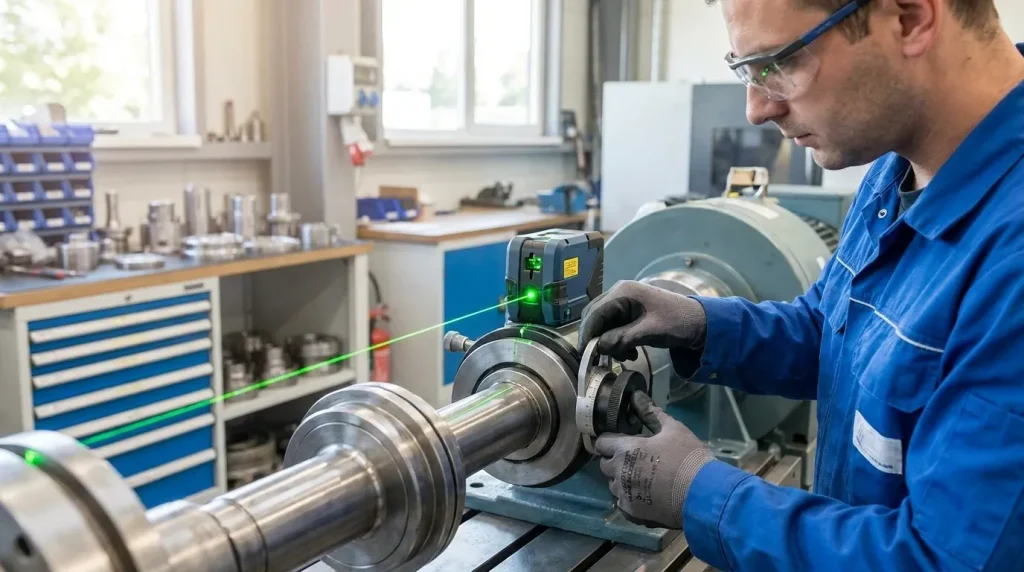
What Role Does Regular Maintenance Play in Preventing Vibration Issues?
Regular maintenance plays a critical role in preventing vibration issues by detecting wear patterns before they escalate into mechanical failures. Predictive maintenance programs deliver documented maintenance cost reductions of 18–25% اور unplanned downtime reductions of 30–50% versus reactive strategies, according to McKinsey & Company.
Common maintenance intervals:
- Vibration analysis: quarterly for critical service, semi-annually for standard duty
- Dynamic rebalancing: after major repairs and around every 15,000–20,000 hours of operation
- Bearing inspection: per manufacturer schedule or when vibration amplitude exceeds 0.16 in/sec (4.1 mm/sec) peak
Condition monitoring approaches:
- Permanently mounted sensors for continuous automated alerts
- Portable analyzers for periodic in-depth FFT spectrum analysis
- Trend tracking against ISO 10816-3 thresholds
For facilities operating used centrifuges, establishing baseline vibration signatures immediately after commissioning creates a reference point for detecting future degradation.
When Should You Consider Component Replacement or System Upgrades?
You should consider component replacement or system upgrades when repair costs approach replacement value, when vibration levels consistently exceed ISO limits despite corrective action, or when operating requirements change beyond original equipment specifications.
Component replacement triggers:
- Elevated vibration levels, with readings above 0.25 in/sec peak (about 6.4 mm/sec peak, or 4.5 mm/sec RMS for sinusoidal vibration) indicating a condition such as bearing wear
- Bowl or scroll erosion exceeding manufacturer tolerances
- Coupling fatigue from repeated misalignment stress
- Seal degradation from sustained high-amplitude vibration
System upgrade considerations:
- Adding variable frequency drives to avoid resonance at fixed speeds
- Installing isolation mounts to decouple machine vibration from building structure
- Upgrading to modern condition monitoring systems with automated alerting
Manufacturing plants using AI-based predictive maintenance can achieve a 47% reduction in unplanned downtime events, per Artesis. With effective solutions identified, understanding the operational and safety impacts of unresolved vibration helps prioritize corrective action.
How Do Centrifuge Vibration Problems Impact Industrial Operations and Safety?
Centrifuge vibration problems impact industrial operations and safety by causing equipment failures, unplanned downtime, and hazardous conditions for personnel. The following subsections examine consequences of unresolved vibration, downtime costs, and specific safety risks.
What Are the Potential Consequences of Unresolved Vibration Issues?
The potential consequences of unresolved vibration issues include progressive mechanical degradation, reduced separation efficiency, and premature component failure. Bearings wear faster under sustained vibration stress, while seals lose integrity and can allow process fluid leakage. Product quality suffers when vibration disrupts the separation zone, causing incomplete solids removal or contaminated clarified streams. Equipment lifespan shortens considerably; units designed for 20+ years of service may require major overhauls within 5 to 7 years when vibration problems persist. Possible secondary damage extends beyond the centrifuge itself, affecting foundations, piping connections, and adjacent equipment through transmitted forces.
How Can Vibration Problems Lead to Costly Downtime or Equipment Failure?
Vibration problems lead to costly downtime or equipment failure through cascading mechanical breakdowns that force unplanned production stops. When a bearing seizes during operation, the entire production line halts until repairs complete. Emergency maintenance costs typically run 3 to 5 times higher than scheduled service due to expedited parts shipping and overtime labor. Process industries operating continuous separation circuits face revenue losses measured in often thousands of dollars per hour of unplanned downtime.
What Safety Risks Are Associated with Centrifuge Vibrations?
The safety risks associated with centrifuge vibrations include:
- Catastrophic rotor failure and bowl rupture at high speeds
- Personnel injury from ejected fragments or containment breaches
- Chemical exposure when seals fail on hazardous material applications
- Fire or explosion hazards in volatile solvent processing
- Structural damage to surrounding equipment and facilities
CE marking is mandatory for marketing laboratory and industrial centrifuges in Europe, indicating compliance with European safety standards that address these hazards. Additionally, EHEDG published Guideline 42 specifically for the hygienic design and cleaning of disc stack centrifuges to support food safety applications. Facilities processing pharmaceutical or food-grade materials face regulatory consequences when contamination compromises product integrity, making equipment condition monitoring, including vibration monitoring, an important part of a broader reliability and preventive maintenance strategy.
With operational and safety impacts clearly defined, understanding how these concerns apply to used equipment helps procurement teams make informed sourcing decisions.
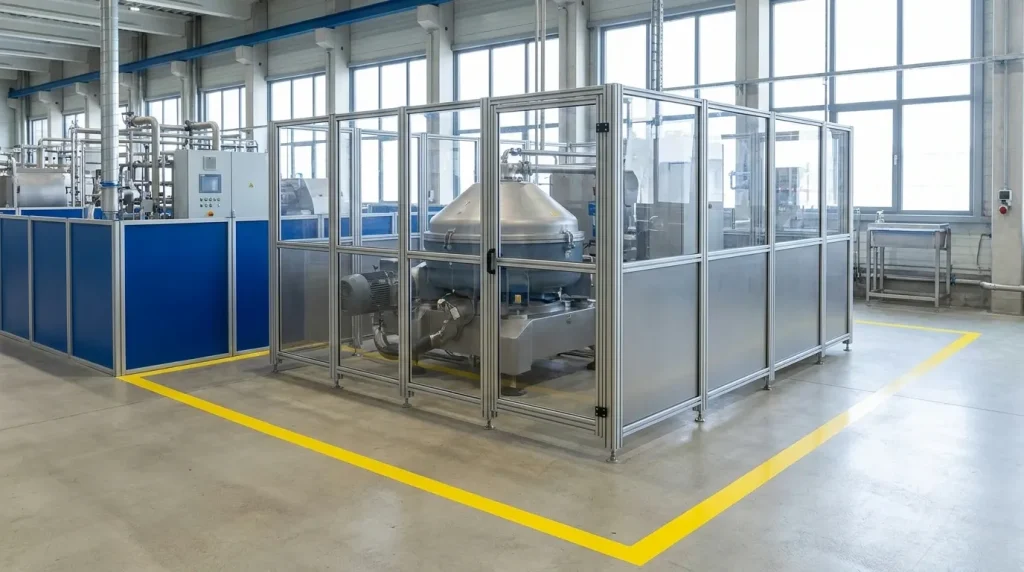
How Should You Address Centrifuge Vibration Problems When Considering Used or Refurbished Equipment?
You should address centrifuge vibration problems when considering used or refurbished equipment by conducting thorough pre-purchase inspections, understanding the unique vibration risks of previously operated units, and requiring specific certifications indicating previous performance. The following sections cover inspection procedures, vibration risk differences, and essential certifications.
What Inspection Procedures Should You Follow for Pre-Owned Centrifuges?
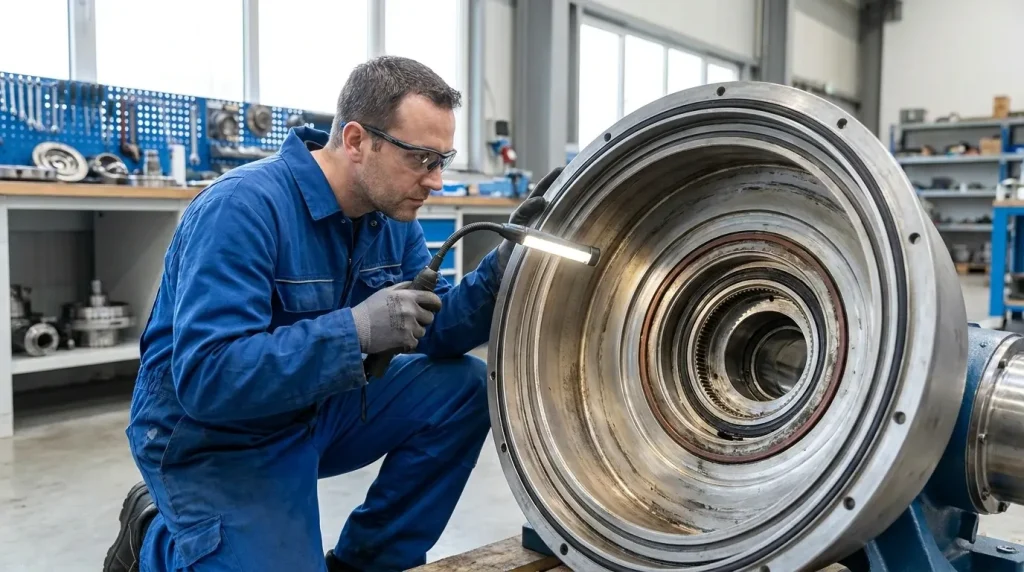
The inspection procedures you should follow for pre-owned centrifuges include comprehensive mechanical assessments, operational testing, and documentation review. Start with a visual inspection of the bowl, basket, or rotor for wear patterns, corrosion, or damage that could cause imbalance. Request any available records from the previous operator to identify operational history.
How Do Refurbished Centrifuges Achieve Reliable Vibration Performance?
A properly refurbished centrifuge from a qualified facility can perform comparably to new equipment and have significant cost savings. Refurbishment achieves reliable vibration performance through including inspection of critical components, replacement of wear items, and mechanical verification to restore equipment reliability and operating capability.
How Can International Process Plants Help You Solve Centrifuge Vibration Problems When Sourcing Used and Refurbished Equipment?
International Process Plants helps you solve centrifuge vibration problems by providing thoroughly inspected used and new surplus equipment backed by 46 years of global sourcing expertise. The following subsections explain our equipment selection support and summarize the key takeaways from this guide.
Can International Process Plants Help with Equipment Selection and Ensuring Reliable Centrifuge Performance?
Yes, International Process Plants can help with equipment selection and ensuring reliable centrifuge performance. We maintain an inventory of over 15,000 pieces of process equipment across warehouses in the United States, Germany, and the United Kingdom, giving procurement teams access to centrifuges that have undergone operational verification before sale.
Our equipment specialists evaluate vibration-related factors during sourcing:
- Rotor balance condition and service history documentation
- Bearing wear patterns and replacement records
- Shaft alignment verification using laser measurement
- Bowl and auger integrity for decanter units
- Compliance with regional safety standards and regulations
When you source through International Process Plants, you receive technical documentation that supports your vibration monitoring baseline. We work with buyers to match centrifuge specifications to application requirements, whether you need disc stack separators for fine particle separation or solid bowl decanters for high-solids processing. This selection guidance helps prevent the mismatch problems that often cause vibration issues in newly installed used equipment.
What Are the Key Takeaways About Common Centrifuge Vibration Problems and How to Fix Them We Covered?
The key takeaways about common centrifuge vibration problems and how to fix them are that early detection, proper diagnosis, and systematic maintenance prevent costly failures.
Core causes: Rotor imbalance, shaft misalignment, bearing wear, and structural resonance account for many vibration problems. ISO 10816-3 establishes that acceptable vibration stays below 0.16 in/sec peak (2.8 mm/sec RMS) on rigid foundations.
Detection matters: Vibration sensor-based condition monitoring helps monitor faults before failure occurs. FFT spectrum analysis reveals specific signatures for imbalance, looseness, and misalignment.
Maintenance delivers ROI: Predictive maintenance can reduce unplanned downtime by around 30–50% and cut maintenance costs by around 18–25% compared to reactive approaches.
International Process Plants combines global inventory access with technical expertise to help you source centrifuges that meet applicable vibration limits and mechanical performance requirements from day one.

 UR
UR  EN
EN  ES
ES  FR
FR  PL
PL  DE
DE  AR
AR  HI
HI  NL
NL  TR
TR  IT
IT  UK
UK  RU
RU  JA
JA  PT
PT  ZH
ZH