 Перейти до вмісту
A continuous stirred tank reactor (CSTR) is a vessel that carries out chemical reactions under constant flow conditions, using mechanical agitation to maintain uniform composition throughout the tank so that the outlet stream matches the well-mixed interior at all times.
This guide covers CSTR design and construction, continuous operation and reaction kinetics, advantages and limitations in practice, industrial applications across sectors, and equipment sourcing considerations.
Design and construction principles determine how the reactor vessel, impeller type, material selection (304, 316L stainless steel, Hastelloy C-276, glass-lined steel as an example), and heat transfer systems work together to sustain uniform mixing and precise thermal control.
Continuous operation establishes steady-state conditions where concentration, temperature, and volume remain constant over time. Residence time (τ = V/Q) directly governs conversion; under optimized conditions, processes like biodiesel transesterification can reach 99.8% conversion at a 60-minute residence time.
Advantages include consistent product quality, simplified automation, and suitability for exothermic reactions and fluctuating feed compositions. Limitations center on lower per-volume conversion compared to plug flow reactors and scalability constraints that often require cascade configurations.
Industrial applications span pharmaceutical fermentation, polymer production, biodiesel synthesis, and fine chemical manufacturing. Regulatory compliance involves ASME Section VIII, PED 2014/68/EU, CE/UKCA marking, and ISO 45001 safety standards across operating jurisdictions.
Equipment sourcing through International Process Plants provides access to over 10,000 pieces of pre-inspected process equipment, supported by warehouses in the US, Germany, and the United Kingdom.
What are the main components and design principles of a CSTR?
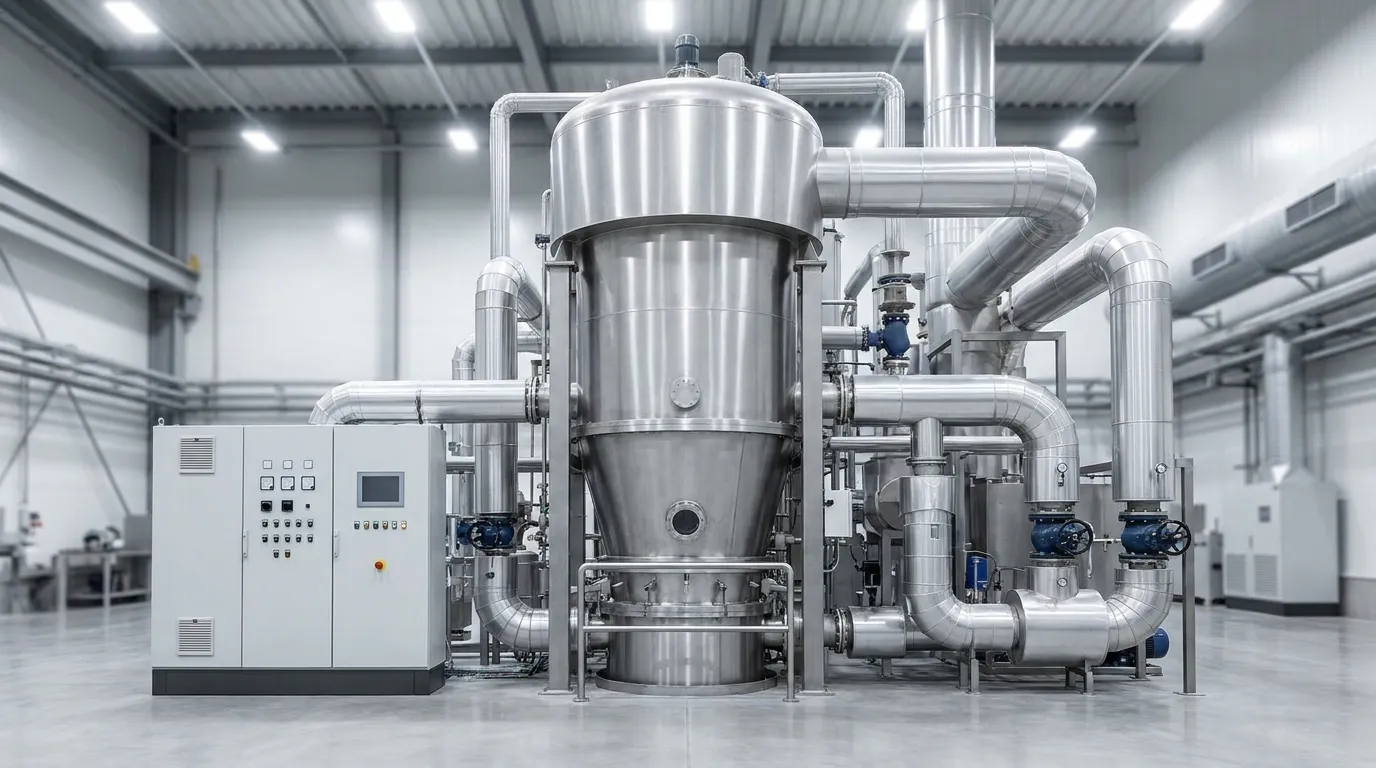
The main components of a CSTR are the reactor vessel, mixing mechanism, heat transfer system, inlet and outlet nozzles, and baffles. Design principles center on achieving uniform composition through continuous agitation.
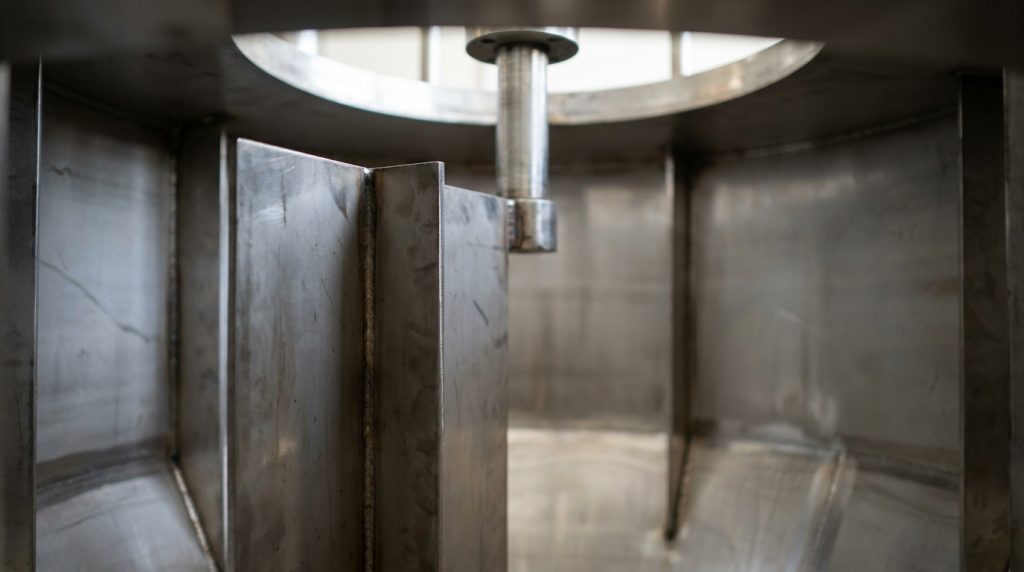
How does the mixing mechanism in a CSTR operate?
The mixing mechanism in a CSTR operates by using a motor-driven impeller mounted on a central shaft to generate continuous fluid circulation throughout the vessel. Baffles welded to the interior wall prevent vortex formation and promote turbulent flow patterns.
A pitched-blade impeller produces nearly three to four times the flow of a Rushton turbine for the same power input, according to BioProcess International, making it effective for axial and radial mixing in large-scale reactors. In baffled configurations, the power number for most impellers remains relatively constant within turbulent mixing regimes, ensuring predictable energy consumption at scale.
What materials are commonly used in CSTR construction?
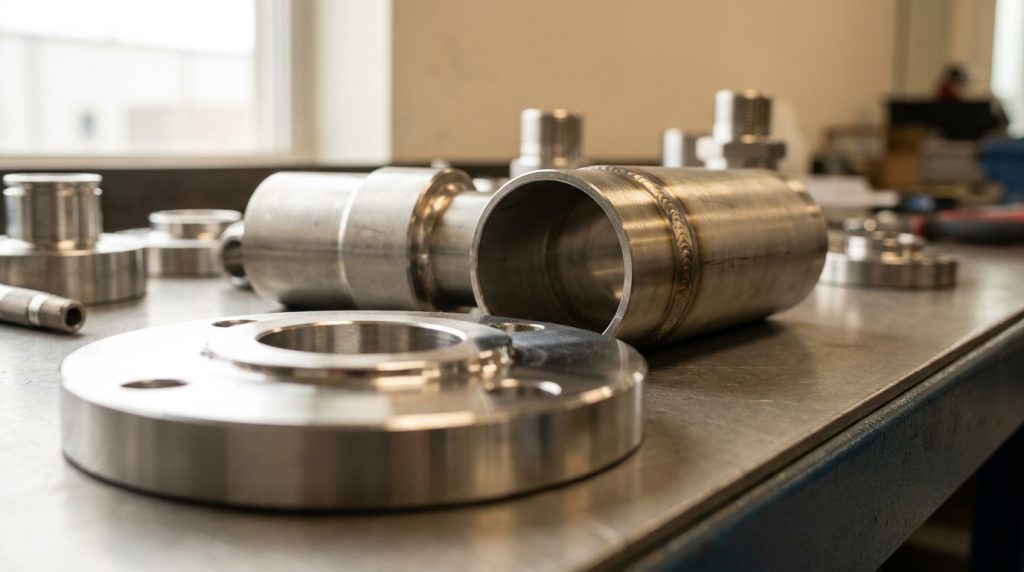
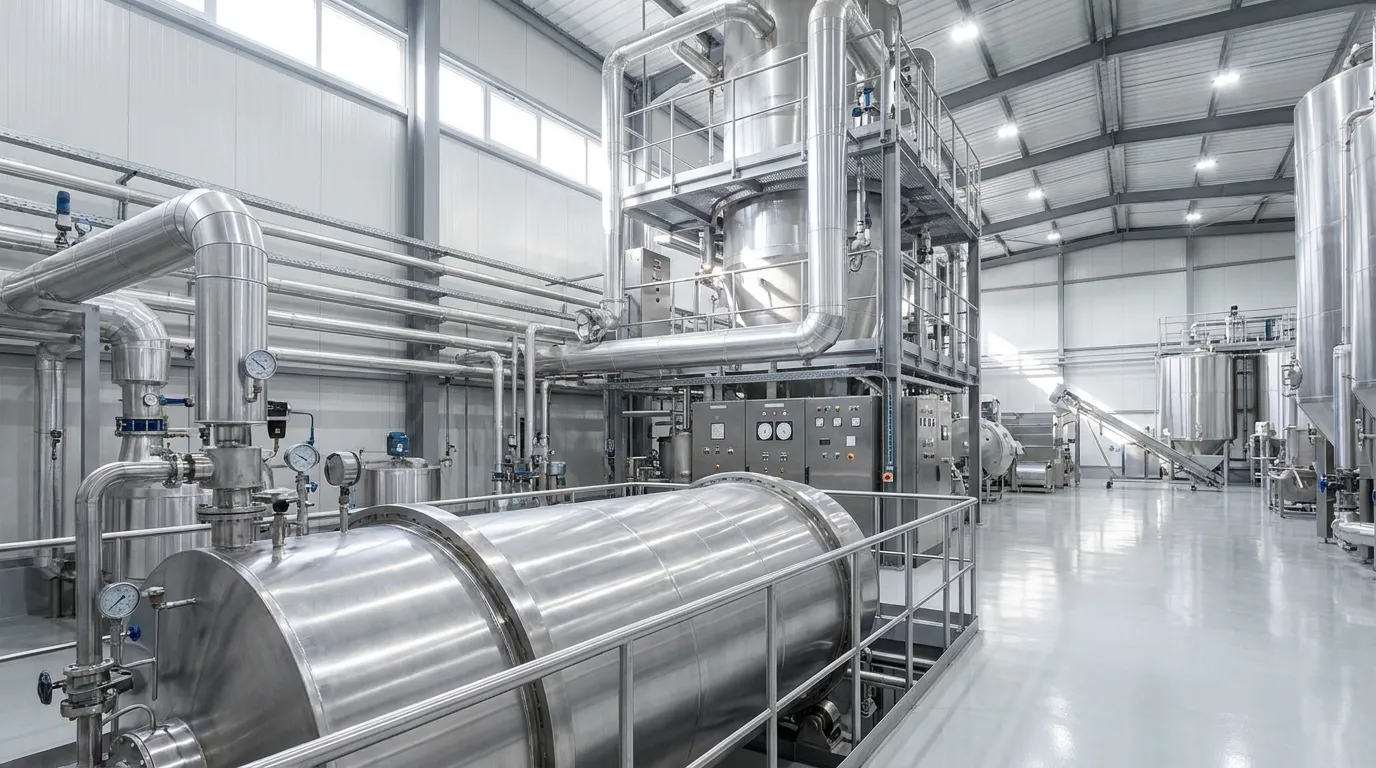
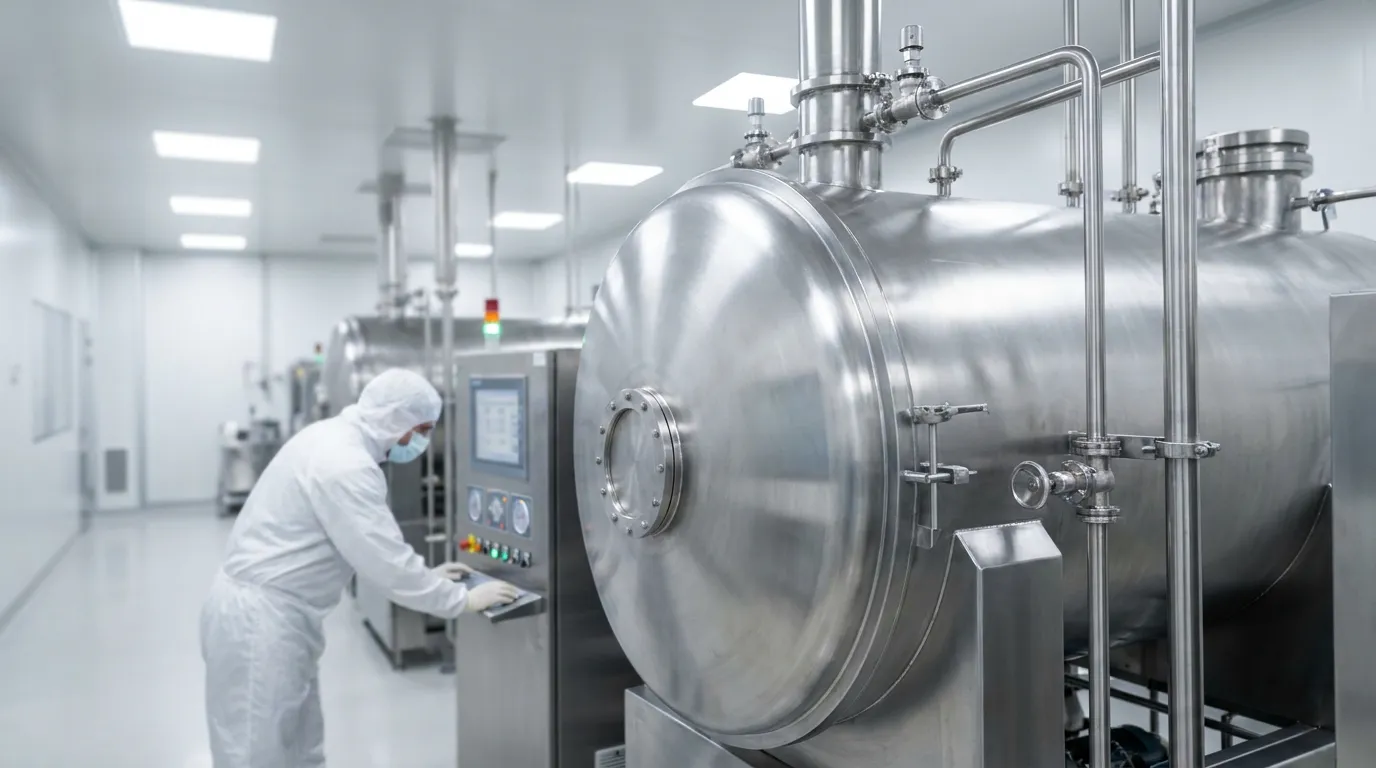
The materials commonly used in CSTR construction include stainless steel alloys, glass-lined steel, and polymer-lined vessels. Selection depends on process chemistry, operating temperature, and pressure requirements.
Common CSTR construction materials and their service limits:
- Нержавіюча сталь 316L contains molybdenum for superior corrosion resistance and handles temperatures up to 1,600 °F (871 °C).
- Хастеллой C-276 provides excellent resistance to oxidizing and reducing environments in aggressive chemical service.
- Сталь зі склопластиком protects against highly corrosive acids without metallic contamination.
- PTFE-lined vessels suit processes involving strong solvents or ultra-pure product requirements.
According to Chemical Engineering Magazine, corrosion-resistant alloys such as 316L stainless steel, Alloy 20, or Hastelloy, along with glass-lined or PTFE-lined vessels, are standard materials for corrosive service classifications. For most procurement decisions, matching the alloy grade to the specific corrosive agent matters more than selecting the highest-rated material available.
Why is temperature control important in CSTR operation?
Temperature control is important in CSTR operation because reaction rates, product selectivity, and process safety all depend directly on maintaining precise thermal conditions within the vessel. Exothermic reactions can experience thermal runaway without adequate heat removal, while endothermic reactions stall if heat input is insufficient.
Heat transfers from a jacket wall to the agitated liquid batch through convection, with the rate determined by dividing the temperature driving force by the sum of individual thermal resistances, as described by PDH Online. Jacket systems, internal coils, and external heat exchangers each address different heat load requirements. Vessels designed under ASME Section VIII or the Pressure Equipment Directive (PED 2014/68/EU) must account for thermal cycling and differential expansion between the jacket and shell.
Understanding these core components establishes the foundation for how continuous flow and reaction kinetics interact inside the vessel.
How does the continuous operation in a CSTR affect chemical reactions?
Continuous operation in a CSTR affects chemical reactions by maintaining constant inlet and outlet flows that establish predictable, time-invariant conditions inside the vessel. The subsections below cover steady-state behavior, residence time effects on yield, and how flow rates influence reactor performance.
What is meant by steady-state in the context of a CSTR?
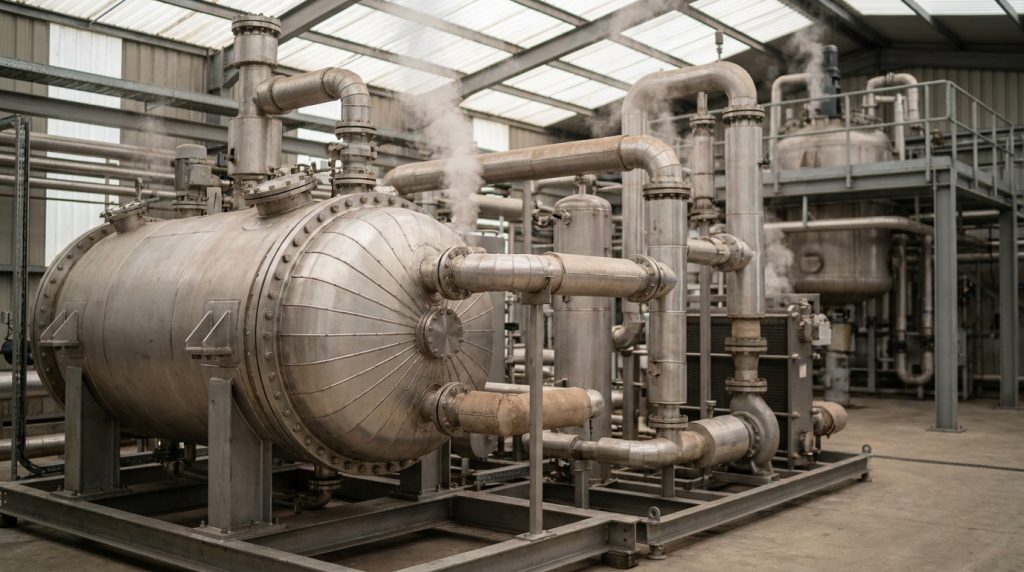
Steady-state in the context of a CSTR means that all process variables, including concentration, temperature, and volume, remain constant over time despite continuous material flow through the vessel. Fresh reactants enter at the same rate that products exit, so the reactor composition does not change from one moment to the next. A cascade of miniature CSTRs is used for reactions involving solids to prevent reactor clogging while maintaining the benefits of continuous flow processing. This time-invariant condition simplifies reactor design calculations because accumulation terms drop to zero in the material balance equation. For procurement engineers evaluating used CSTR equipment, steady-state capability means the vessel can deliver consistent product quality around the clock without batch-to-batch variability.
How does residence time impact product yield in a CSTR?
Residence time impacts product yield in a CSTR by determining how long reactant molecules remain inside the vessel to undergo conversion. For an ideal CSTR, the theoretical residence time (τ) equals the reactor volume (V) divided by the fluid flow rate (Q), and the outlet composition matches the tank composition at all times.
Longer residence times generally increase conversion until the reaction reaches its maximum potential. According to a study published by IOPscience on biodiesel production from waste cooking oil transesterification, CSTR yield increases with residence time and mixing rate until the reaction rate reaches its maximum potential; under optimized conditions, a 60-minute residence time can achieve approximately 99.8% conversion. Balancing residence time against throughput is critical when sizing a reactor for a specific production target.
How do input and output flow rates influence reactor performance?
Input and output flow rates influence reactor performance by directly controlling space time and conversion efficiency. The CSTR is frequently referred to in industrial literature as a back-mix reactor, mixed flow reactor (MFR), or vat reactor.
Higher volumetric flow rates reduce space time, which lowers per-pass conversion. Even well-designed CSTRs produce lower conversion per unit reactor volume compared to Plug Flow Reactors, according to the University of Michigan’s reactor engineering resources. Impeller selection also matters: a pitched-blade impeller produces nearly three to four times the flow of a Rushton turbine for the same power input, directly affecting internal mixing uniformity relative to feed rate.
With continuous operation fundamentals established, the next section examines where these characteristics create advantages or limitations in practice.
What are the advantages and limitations of using a CSTR?
The advantages of using a CSTR include consistent product quality, simplified automation, and cost-effective continuous production. The limitations include lower per-volume conversion compared to plug flow reactors and operational challenges with certain feed types. The following subsections cover preferred scenarios, operational challenges, and scalability considerations.
In what scenarios is a CSTR preferred over other reactor types?
A CSTR is preferred over other reactor types in scenarios requiring continuous, high-volume output with uniform product composition. Liquid-phase reactions, polymerization processes, and operations demanding tight temperature control all benefit from the CSTR’s back-mixed environment.
Pharmaceutical and fine chemical synthesis often favor CSTR cascades. According to a 2023 study published by the Royal Society of Chemistry, CSTR cascades in pharmaceutical and fine chemical synthesis can lead to a 35% cost reduction compared to traditional batch reactor setups. This makes the CSTR particularly attractive where production continuity and labor efficiency outweigh the need for maximum single-pass conversion.
For procurement engineers evaluating reactor types, the CSTR also suits processes where feed composition fluctuates, since back-mixing dampens the effect of inlet disturbances on outlet quality.
What operational challenges can arise with CSTR usage?
Operational challenges that can arise with CSTR usage include:
- Lower conversion per unit reactor volume compared to a Plug Flow Reactor (PFR), requiring larger vessels or reactor cascades to achieve equivalent output.
- Dead zones forming in poorly mixed regions, reducing effective reactor volume.
- Difficulty handling highly viscous feeds or slurries containing solids, which can cause settling or clogging.
- Short-circuiting, where portions of fresh feed exit before reaching the mean residence time.
- Energy-intensive agitation requirements that scale with vessel diameter and fluid viscosity.
These challenges demand careful impeller selection, baffle configuration, and feed-point placement during the design phase. Overlooking any one factor can erode the steady-state uniformity that defines ideal CSTR behavior.
How does scalability affect CSTR implementation?
Scalability affects CSTR implementation by introducing geometric and mixing constraints that do not exist at laboratory scale. As vessel diameter increases, maintaining uniform composition becomes more difficult because mixing time grows faster than residence time. Heat removal also becomes harder; the ratio of jacket surface area to reactor volume decreases with scale, limiting temperature control capacity for exothermic reactions.
Cascade configurations, where multiple smaller CSTRs operate in series, address these limitations by approximating plug flow behavior while preserving the operational simplicity of each individual stage. This approach prevents reactor clogging when processing solids and improves overall conversion without requiring a single oversized vessel.
Understanding these trade-offs helps engineers select the right CSTR configuration before committing capital to equipment procurement.
How do process industries typically utilize CSTRs in manufacturing?
Process industries utilize CSTRs in manufacturing for continuous production of chemicals, pharmaceuticals, polymers, and biofuels. The following subsections cover common applications, industry-specific demands, and safety requirements.
What common processes or products rely on CSTR technology?
Common processes that rely on CSTR technology include polymerization, biodiesel transesterification, pharmaceutical fermentation, wastewater neutralization, and fine chemical synthesis. These reactions benefit from the uniform composition and steady output that continuous stirred tank reactors provide.
According to Precedence Research, the global CSTR market size is expected to grow from USD 3.70 billion in 2024 to USD 5.81 billion by 2034, reflecting expanding adoption across multiple sectors.
Products manufactured using CSTRs include:
- Biodiesel from waste cooking oil transesterification.
- Monoclonal antibodies and biologics via continuous fermentation.
- Commodity polymers such as polyethylene and polystyrene.
- Specialty chemicals requiring precise residence time control.
For procurement teams evaluating reactor investments, this broad applicability makes CSTRs among the most versatile continuous reactor platforms available on the secondary equipment market.
How do CSTRs meet the demands of different industries like pharmaceuticals or chemicals?
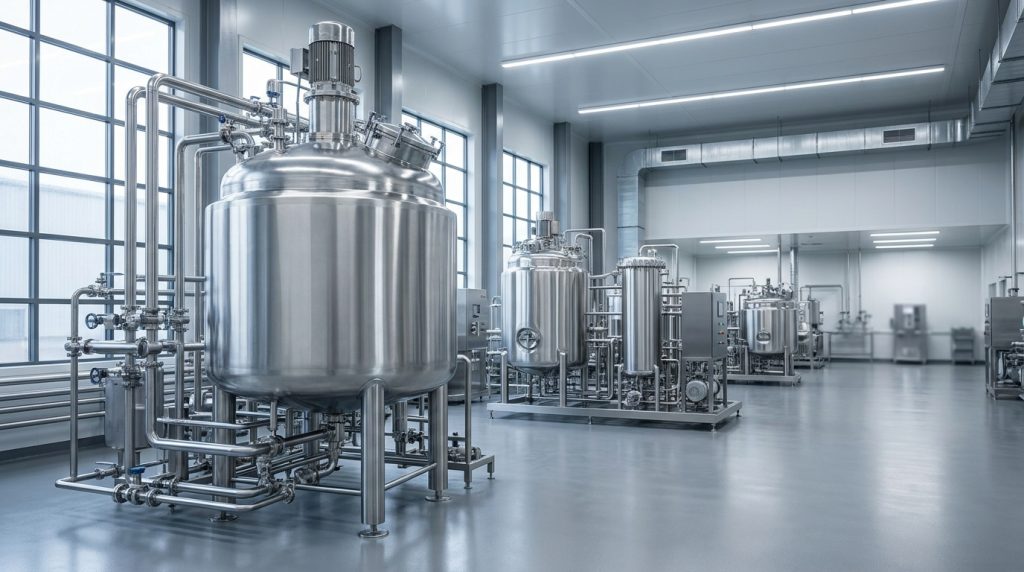
CSTRs meet the demands of different industries like pharmaceuticals or chemicals by offering scalable, continuous operation with precise control over temperature, mixing, and residence time.
In pharmaceuticals, the biopharmaceutical fermentation market is projected to reach USD 25.02 billion in 2025 (Mordor Intelligence), driven partly by continuous bioprocessing where CSTRs maintain sterile, uniform conditions for cell culture.
In chemicals, CSTR cascades handle high-throughput bulk reactions. For fine chemical and pharmaceutical synthesis, cascaded CSTRs can achieve a 35% cost reduction compared to traditional batch setups, according to a 2023 Royal Society of Chemistry study. This cost advantage comes from reduced labor, smaller reactor footprints, and consistent product quality that minimizes off-spec batches.
What safety and regulatory considerations apply to CSTR operations?
The safety and regulatory considerations that apply to CSTR operations span pressure vessel codes, environmental compliance, and occupational health standards across multiple jurisdictions.
Key regulatory frameworks include:
- ASME Section VIII, Division 1 governs construction, inspection, and testing for pressure vessels operating above 15 psig (1.03 bar).
- The Pressure Equipment Directive (PED) 2014/68/EU regulates pressurized assemblies, valves, and vessels within the European Union.
- CE marking certifies conformity with EU safety requirements; UKCA marking applies in the United Kingdom.
- ISO 45001 provides an internationally recognized standard for occupational health and safety management.
Operators must also address hazard assessments for exothermic runaway, containment of toxic intermediates, and relief valve sizing. When sourcing used CSTR equipment, verifying that vessels carry current ASME stamps, PED certification, or equivalent documentation protects buyers from costly re-certification delays.
With industrial applications and compliance requirements established, the next step is understanding how to source or optimize CSTR equipment effectively.
How should you approach CSTR acquisition or optimization with International Process Plants?
You should approach CSTR acquisition or optimization with International Process Plants by leveraging our global inventory of new surplus and quality used process equipment, combined with over 46 years of sourcing expertise across chemical, pharmaceutical, and industrial applications.
Can International Process Plants help with sourcing or upgrading CSTR equipment?
Yes, International Process Plants can help with sourcing or upgrading CSTR equipment. We maintain an inventory of over 10,000 pieces of process equipment, including reactor vessels currently available in corrosion-resistant materials such as 316L and 304 stainless steel. Our global warehouse network in South Carolina (US), Germany, and the United Kingdom enables efficient delivery across multiple jurisdictions.
Equipment we supply meets recognized construction and inspection standards:
- ASME Section VIII for pressure vessels operating above 15 psig (1.03 bar)
- Pressure Equipment Directive (PED) 2014/68/EU for European installations
- CE marking and UKCA marking for EU and UK compliance
According to BioProcess International, ISO 45001 is an internationally recognized standard for occupational health and safety management, compatible with the ISO 14001 environmental management system. We factor these safety and environmental frameworks into our equipment documentation and sourcing processes.
Whether you need a complete CSTR system for continuous processing or components for upgrading an existing reactor, International Process Plants simplifies procurement by offering pre-inspected, specification-verified equipment ready for integration.

What are the key takeaways about how a CSTR works (continuous stirred tank reactor) we covered?
The key takeaways about how a CSTR works are:
- A CSTR achieves uniform composition through continuous mechanical agitation, where outlet composition equals the well-mixed tank composition at steady state.
- Residence time, defined as reactor volume divided by volumetric flow rate (τ = V/Q), directly controls conversion and product yield.
- Temperature control via jacketed vessels or internal coils maintains reaction selectivity and prevents thermal runaway.
- Material selection (316L stainless steel, Hastelloy C-276, glass-lined steel) determines chemical compatibility and service life.
- CSTRs offer lower per-unit-volume conversion than plug flow reactors, but excel in handling exothermic reactions, slurries, and processes requiring consistent product quality.
For procurement engineers evaluating CSTR equipment, matching vessel specifications to process requirements remains the most critical decision point. International Process Plants provides the sourcing infrastructure to align reactor materials, pressure ratings, and capacity with your operational needs.

 UK
UK  EN
EN  ES
ES  FR
FR  PL
PL  DE
DE  AR
AR  UR
UR  HI
HI  NL
NL  TR
TR  IT
IT  RU
RU  JA
JA  PT
PT  ZH
ZH