 Перейти до вмісту
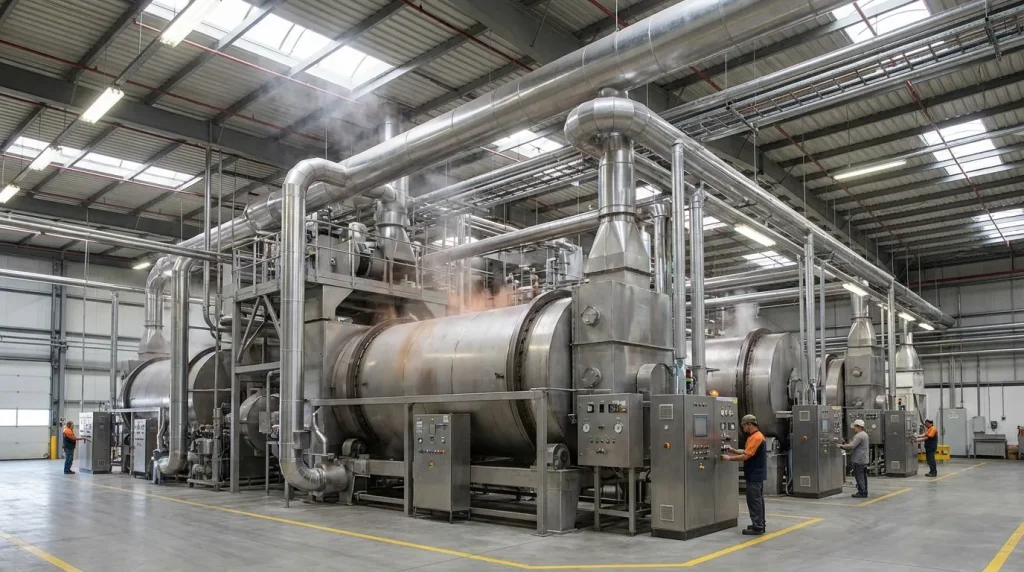
Dryer temperature and humidity control troubleshooting is the systematic process of diagnosing and correcting faults in industrial drying systems that prevent accurate thermal and moisture regulation.
This guide covers root causes of temperature control failures, humidity regulation malfunctions, diagnostic procedures and safety protocols, preventive maintenance strategies, environmental and operational parameter management, and equipment replacement decision criteria.
Temperature control problems stem from heating element degradation, sensor drift, airflow restrictions, and control panel faults. Resistance heating elements can fail through open circuits, hot spots, or ground faults, while over 80% of uncalibrated temperature sensors drift out of tolerance within a single year according to NIST studies mentioned in Techmaster Electronics.
Humidity control failures manifest through malfunctioning sensors, blocked or leaking ductwork, inadequate ventilation capacity, and PLC errors. Exhaust systems for industrial vacuum drying equipment should be designed to provide adequate capture and removal of process vapors, with airflow velocity and volumetric flow determined by the process load, exhaust duct design, and applicable ventilation requirements for standard industrial capacities.
Systematic diagnostics require isolating temperature faults from humidity faults through independent loop testing, using calibrated instruments including RTDs, anemometers, and portable humidity meters. Preventive maintenance schedules emphasizing annual sensor calibration and monthly cleaning of air handling components reduce unplanned failures.
Environmental factors including ambient conditions, raw material moisture variations, and load fluctuations introduce disturbances that control systems must continuously compensate for. When repair costs exceed around 50% of replacement value or control systems cannot maintain required tolerances, upgrading or sourcing quality used equipment becomes a more economical path forward.
What Are the Most Common Causes of Dryer Temperature Control Problems?
The most common causes of dryer temperature control problems are ambient air temperature variations, ambient air humidity fluctuations, and feed moisture content inconsistencies. These disturbances directly affect instrument measurement stability and control system performance. The subsections below examine specific failure modes, including heating elements, sensors, airflow restrictions, and control panel faults.
How Do Faulty Heating Elements Affect Dryer Temperature?
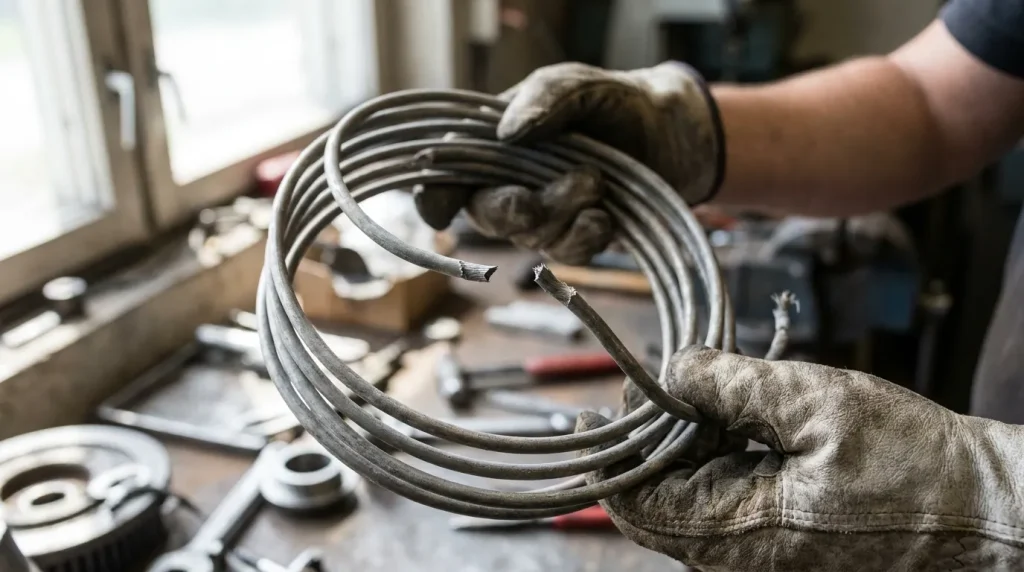
Faulty heating elements affect dryer temperature by reducing or eliminating heat output, causing inconsistent drying cycles and product quality defects. A common specification in industrial dryers using electric resistance heating elements is operation between around 5,000 and 6,000 watts (5 kW to 6 kW, or 17,060 BTU/hr to 20,472 BTU/hr) according to Goodson Engineering research on fractured resistance heating elements, though exact specifications vary according to manufacturer, model, and process application.
Common heating element failures include:
- Open circuits from fractured nichrome wire
- Hot spots caused by uneven resistance distribution
- Ground faults from degraded insulation
- Reduced output from oxidation buildup
When elements fail partially, they deliver inconsistent heat that standard thermostats may not detect. A clamp meter measuring amperage draw against rated specifications quickly identifies underperforming elements before complete failure occurs.
What Role Do Thermostats and Temperature Sensors Play in Malfunctions?
Thermostats and temperature sensors play a critical role in malfunctions because they provide the feedback signals that control heating cycles. When these instruments drift out of calibration, the control system receives inaccurate data and responds incorrectly. According to Techmaster Electronics, over 80% of uncalibrated instruments, including temperature and humidity sensors, drift out of tolerance within a single year of use.
Sensor-related failure modes include:
- RTD probe contamination reducing accuracy
- Thermocouple junction oxidation
- Loose terminal connections causing intermittent readings
- Incorrect sensor placement relative to process zones
Annual calibration verification against traceable standards when a dryer uses thermocouples (per IEC 60584 or ASTM E230) helps prevent sensor-induced control problems. For critical applications, Class A RTDs offer ±0.15°C (±0.27°F) accuracy compared to standard thermocouples at ±1–2°C (±1.8–3.6°F).
Can Airflow Restrictions Lead to Temperature Issues in Dryers?
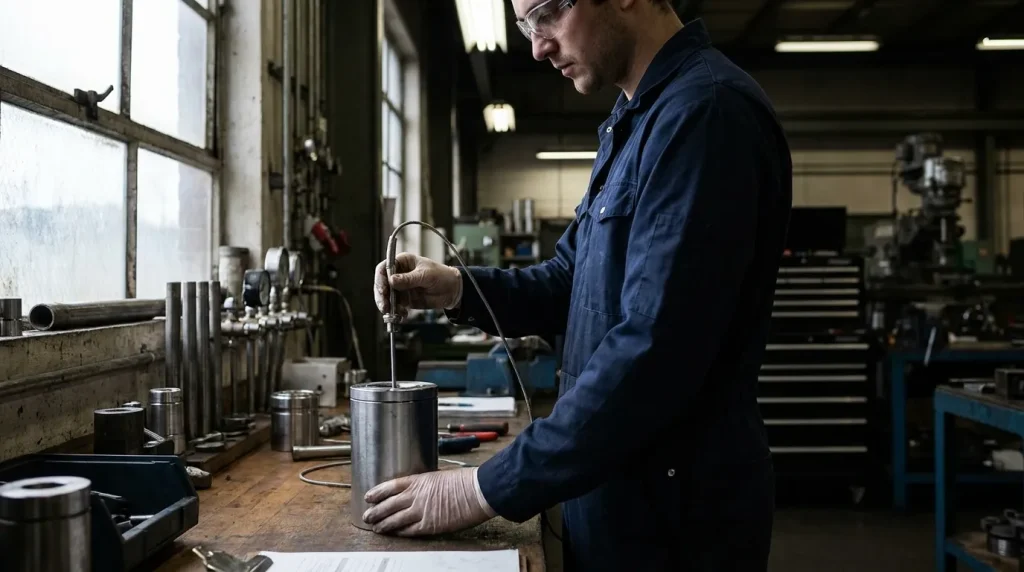
Yes, airflow restrictions can lead to temperature issues in dryers by disrupting heat transfer and exhaust gas removal. Restricted airflow can cause heat to accumulate in unintended zones while starving other areas, creating temperature gradients that exceed control system compensation limits.
Common restriction sources include:
- Clogged lint screens and filters
- Collapsed or kinked flexible ductwork
- Buildup in exhaust transitions
- Damper actuator failures
Dryer exhaust system airflow requirements should be established based on the equipment design, process load, and applicable ventilation requirements. For certain industrial dryer configurations, exhaust duct velocities may be around 1,500 ft/min (approximately 8 m/s), with airflow capacities in the range of 950–1,200 m³/h (approximately 559–706 CFM) reported for some 24–35 kg (53 lb to 77 lb) capacity units. Measuring actual airflow against benchmarks identifies restrictions before they can cascade into control failures.
How Can Electrical or Control Panel Faults Disrupt Heating Performance?
Electrical or control panel faults can disrupt heating performance by interrupting power delivery, corrupting control signals, or causing erratic relay switching. According to an Oxmaint Control Panel Failures & Troubleshooting Guide for Manufacturing Plants, approximately 42% of electrical failures originate from control panel components including contactors, relays, and PLCs, with an average diagnosis and repair time of 4.2 hours without systematic troubleshooting protocols.
Panel-related failure points include:
- Worn contactor contacts causing voltage drops
- Relay coil degradation from thermal cycling
- PLC input/output module failures
- Loose power terminal connections
The financial stakes justify proactive attention: unplanned downtime from electrical failures costs manufacturing facilities an estimated $260,000 per hour on average according to the same Oxmaint guide. Thermal imaging of panel components during operation reveals hot spots from failing connections before complete failure occurs, allowing for scheduled repairs rather than reactive emergency shutdowns.
How Do Humidity Control Failures Manifest in Industrial Dryers?
Humidity control failures manifest in industrial dryers through sensor drift, ductwork deficiencies, ventilation inadequacies, and control system errors. The following subsections address each failure mode and its operational symptoms.
What Symptoms Indicate Malfunctioning Humidity Sensors?
Symptoms of malfunctioning humidity sensors include erratic moisture readings, unexplained product quality variations, and control loops that cycle excessively without reaching setpoints. Sensor drift is a primary culprit. According to NIST calibration field studies, relative humidity sensors subjected to monthly calibrations over seven months demonstrated drift patterns that follow a rectangular distribution for uncertainty estimation during calibration intervals. This drift causes gradual deviation from true humidity values, often going unnoticed until product defects appear.
Common warning signs include:
- Humidity readings that differ significantly between adjacent sensors in the same zone
- Control outputs at maximum or minimum without corresponding environmental changes
- Batch-to-batch inconsistency in final product moisture content
- Alarm conditions that clear without operator intervention
Routine calibration verification against certified references catches drift before it impacts production.
How Can Blocked or Leaking Ductwork Impact Humidity Regulation?
Blocked or leaking ductwork impacts humidity regulation by disrupting the designed airflow balance that removes moisture-laden air from the drying chamber. Blockages from accumulated particulates, collapsed flex sections, or damper failures create backpressure that reduces exhaust capacity. Leaks allow humid exhaust air to recirculate or draw in uncontrolled ambient air. For industrial dryers operating at high exhaust airflow rates, even minor leakage percentages translate to substantial moisture removal losses.
Thermal imaging during operation reveals temperature differentials at leak points. Regular inspection of joints, flexible connectors, and access panels prevents progressive deterioration that compounds humidity control problems.
What Effect Do Inadequate Ventilation Systems Have on Humidity Control?
Inadequate ventilation systems have the effect of allowing moisture saturation within the drying chamber, which stalls the evaporation process regardless of heat input. When exhaust capacity falls below the moisture generation rate, relative humidity climbs toward equilibrium, and drying effectively stops.
Industrial dryers typically require adequate exhaust flows. Exhaust duct velocities may be around 1,500 ft/min (approximately 8 m/s), with airflow capacities in the range of around 950–1,200 m³/h (approximately 559–706 CFM) reported for some 24–35 kg (53 lb to 77 lb) capacity units. Undersized fans, restricted intake dampers, or degraded motor performance all reduce airflow below design specifications. Modern fault detection methods using statistical process control, such as Hotelling’s T² analysis against F-distribution control limits, can help identify abnormal ventilation conditions before they cause batch failures.
Ventilation adequacy should be verified quarterly using calibrated anemometers at exhaust discharge points.
Are Software or PLC Errors Common in Humidity Regulation Failures?
Yes, software or PLC errors are common contributors to humidity regulation failures in industrial dryers. Approximately 42% of electrical failures in manufacturing facilities originate from control panel components, including PLCs, according to an Oxmaint industry analysis. Humidity control loops depend on properly configured PID parameters, accurate sensor scaling, and correct interlock logic.
Typical software-related failure modes include:
- Incorrect humidity sensor scaling factors after calibration or sensor replacement
- PID tuning parameters mismatched to system dynamics, causing oscillation or sluggish response
- Communication timeouts between distributed sensors and the main controller
- Firmware bugs introduced during updates without proper validation
Systematic troubleshooting protocols reduce the average diagnosis time of 4.2 hours reported for control panel issues. Maintaining version-controlled backups of PLC programs and documenting all parameter changes supports faster fault isolation.
With humidity control failure modes identified, the next step is establishing systematic diagnostic procedures to isolate root causes efficiently.
Which Diagnostic Steps Should You Take When Troubleshooting Dryer Issues?
The diagnostic steps you should take when troubleshooting dryer issues include verifying airflow rates, testing sensor accuracy, and isolating temperature from humidity faults systematically. The following subsections cover essential tools, fault isolation methods, and safety protocols.
What Tools and Instruments Are Essential for Diagnosing Dryer Problems?
The tools and instruments essential for diagnosing dryer problems include:
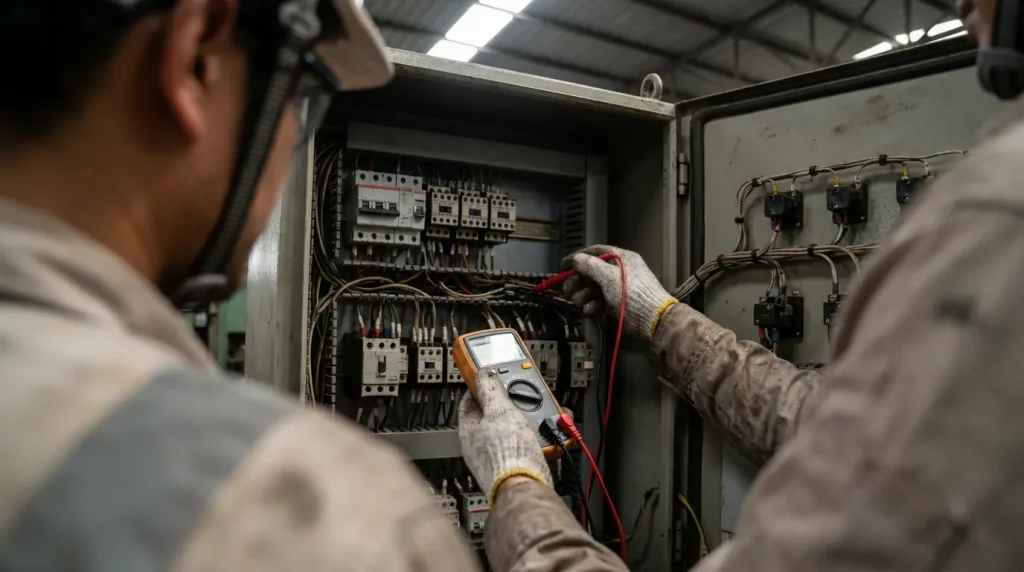
- Digital multimeter: Measures voltage, current, and resistance across heating elements and control circuits
- Anemometer: Verifies exhaust airflow velocity; a properly functioning dryer exhaust system should push air at specified rates
- Calibrated RTD or thermocouple probes: Class A RTDs provide ±0.15°C (±0.27°F) accuracy at 0°C (32°F), while Class B RTDs offer ±0.30°C (±0.54°F)
- Portable humidity meter: Confirms sensor readings against a known reference
- Infrared thermometer: Identifies hot spots or temperature gradients across duct surfaces
- Manometer: Measures static pressure differentials to detect airflow restrictions
Investing in calibrated instruments pays dividends when isolating intermittent faults.
How Can You Systematically Isolate Temperature Versus Humidity Faults?
You can systematically isolate temperature versus humidity faults by testing each control loop independently before examining interactions between them.
Temperature fault isolation steps:
- Measure heating element resistance with the system de-energized
- Verify thermostat or RTD output against a calibrated reference probe
- Check control signal continuity from the PLC to the contactor
Humidity fault isolation steps:
- Compare humidity sensor readings to a portable reference meter
- Inspect ductwork for leaks that introduce uncontrolled ambient moisture
- Verify damper actuator positions match controller commands
According to Techmaster Electronics, over 80% of uncalibrated instruments drift out of tolerance within a single year, making annual calibration at minimum essential for accurate fault isolation. Document each measurement and compare against baseline values from commissioning records. This structured approach prevents chasing phantom faults caused by sensor drift rather than actual equipment failures.
What Safety Precautions Should You Follow During Troubleshooting?
The safety precautions you should follow during troubleshooting include:
- Lockout/tagout (LOTO): De-energize and isolate all power sources before inspecting heating elements or electrical panels
- Verify zero energy: Use a multimeter to confirm absence of voltage after LOTO procedures
- Personal protective equipment: Wear heat-resistant gloves when testing components near hot surfaces; use arc-flash rated PPE near high-voltage panels
- Confined space protocols: Follow permit procedures if entering dryer drums or large enclosures
- Hot surface awareness: Industrial heating elements may operate at around 5 kW to 6 kW (17,060 BTU/hr to 20,472 BTU/hr), creating severe burn hazards
Never bypass safety interlocks to expedite troubleshooting. Document all safety steps taken during each diagnostic session to maintain compliance with regulatory requirements under agencies like OSHA and equivalent regulations under directives like the EU Machinery Directive. With proper safety protocols established, preventive maintenance becomes the next line of defense against recurring control issues.
What Preventive Maintenance Helps Avoid Temperature and Humidity Problems?
Preventive maintenance helps avoid temperature and humidity problems through regular sensor calibration, systematic cleaning, and routine inspection of airflow components. The subsections below cover calibration intervals, cleaning procedures, and ductwork inspection priorities.
How Often Should You Inspect and Calibrate Sensors in Dryers?
You should inspect and calibrate sensors in dryers at least annually, with more frequent checks for critical applications. Common inspection and calibration intervals based on application risk may include:
- High-criticality processes (pharmaceutical, food): quarterly calibration, monthly visual inspection
- Standard industrial applications: semi-annual calibration, quarterly inspection
- Low-risk operations: annual calibration with monthly function checks
RTD sensors require verification against certified reference standards. Thermocouple, for dryers that use them, need EMF relationship checks per IEC 60584 or ASTM E230 tolerances. Humidity sensors benefit from controlled-environment chamber validation. Maintaining calibration records supports compliance with quality management systems and provides baseline data for detecting gradual drift patterns.
What Cleaning Procedures Promote Optimal Dryer Performance?
Cleaning procedures that promote optimal dryer performance include scheduled removal of buildup from air handling components, heat transfer surfaces, and exhaust pathways. According to osapiens, a structured industrial dryer maintenance checklist recommends monthly deep cleaning of air handling components and quarterly thermal inspections to ensure control stability.
Essential cleaning tasks by potential frequency:
- Weekly: clear lint screens, wipe accessible sensor housings, inspect exhaust outlets
- Monthly: deep clean blower assemblies, vacuum heat exchanger fins, flush condensate drains
- Quarterly: degrease heating element surroundings, clean damper mechanisms, purge instrumentation tubing
Accumulated particulates on heating elements reduce heat transfer efficiency and create hot spots. Dirty sensor housings can cause measurement lag and false readings. Process engineers should document cleaning completion dates and note any abnormal residue patterns that may indicate upstream process issues.
Why Is Routine Inspection of Ductwork and Filters Important?
Routine inspection of ductwork and filters is important because restrictions in these components directly compromise both temperature stability and humidity evacuation. Leaking or blocked ducts prevent adequate airflow, causing moisture to accumulate and heat distribution to become uneven.
Key inspection points include:
- Duct joints and seams: check for separation, corrosion, or condensation staining
- Filter media: verify differential pressure remains within specified limits
- Damper actuators: confirm full travel and proper sealing in closed position
- Exhaust terminations: ensure no bird nests, debris, or weather damage restricts flow
Facilities operating dryers should verify exhaust flows remain in the specified range. Degraded ductwork often develops gradually, making scheduled inspections essential for catching problems before they can cause process deviations.
With maintenance fundamentals established, understanding how environmental and operational parameters influence dryer controls helps operators anticipate additional challenges.
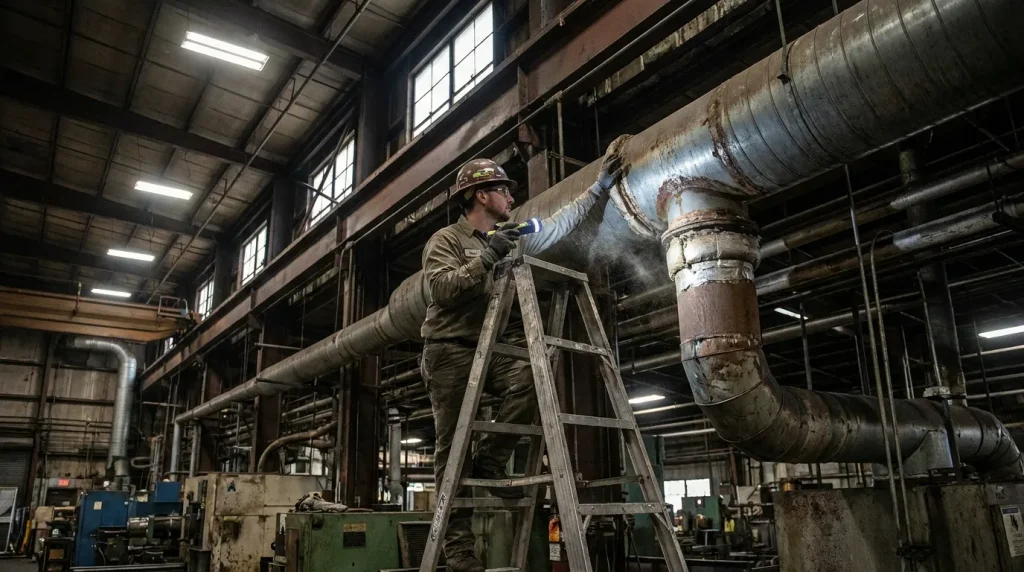
How Do Environmental and Operational Parameters Affect Dryer Controls?
Environmental and operational parameters affect dryer controls by introducing disturbances that force control systems to compensate continuously. Raw material variability, ambient conditions, and load fluctuations all demand real-time adjustments to maintain stable temperature and humidity. The following subsections address each parameter category.
How Can Changes in Raw Material Properties Trigger Control Issues?
Changes in raw material properties trigger control issues by altering the moisture load that dryer systems must remove. Feedstock with inconsistent moisture content forces temperature and humidity controls to recalibrate mid-cycle, often causing overshooting or undershooting of setpoints.
Відповідно до Hydronix Ltd, variation in raw material moisture content leads to weighing discrepancies and directly impacts drying efficiency, often requiring adjustments to drying times or temperatures to maintain product stability. Common raw material variables that affect control stability include:
- Initial moisture content variations between batches
- Particle size distribution changes affecting surface area
- Bulk density shifts altering heat transfer rates
- Chemical composition variations influencing drying kinetics
Pre-conditioning incoming materials and implementing inline moisture analyzers help control systems anticipate load changes rather than react to them.
What Role Do Ambient Temperature and Humidity Play in Dryer Operation?
Ambient temperature and humidity play a critical role in dryer operation because they directly influence the thermal gradient between the dryer interior and surrounding environment. High ambient humidity reduces the air’s moisture-carrying capacity, while ambient temperature swings alter heat loss rates through dryer walls and ductwork.
Research from process control literature confirms that ambient air temperature, ambient air humidity, and feed moisture content are the most common disturbances in industrial drying processes, directly affecting the stability of instrument measurement and control systems. Seasonal variations can shift dryer efficiency without control compensation.
Facilities in humid climates or those experiencing wide seasonal temperature swings benefit from inlet air pre-conditioning systems that stabilize supply air conditions before the dryer intake.
How Should Operational Load Variances Be Managed for Stable Control?
Operational load variances should be managed for stable control through a combination of batch sizing standardization, ramp rate programming, and adaptive control algorithms. Sudden load changes overwhelm PID controllers tuned for steady-state operation, causing temperature oscillations and humidity spikes.
Effective load variance management strategies include:
- Establishing maximum and minimum batch size limits within 15% of nominal capacity
- Programming graduated ramp rates for temperature setpoint changes (typically around 2 to 5°C per minute, or 3.6 to 9°F per minute)
- Implementing feedforward control that adjusts parameters based on incoming batch weight
- Scheduling production to minimize rapid transitions between full-load and partial-load operation
With environmental and operational parameters understood, plant managers can evaluate whether existing equipment can accommodate these demands or whether upgrades offer better long-term value.
When Should Process Plants Consider Upgrading or Replacing Dryer Equipment?
Process plants should consider upgrading or replacing dryer equipment when control systems cannot maintain required tolerances or when energy efficiency falls significantly below modern standards, and especially when repair costs exceed around 50% of replacement value. The following sections examine cost-effectiveness thresholds, modern control system benefits, and the advantages of sourcing quality used equipment.
What Are the Signs That Repair Is No Longer Cost-Effective?
The signs that repair is no longer cost-effective include recurring failures of the same component, repair frequency exceeding quarterly intervals, and cumulative annual repair costs approaching replacement value. When sensor drift requires much more frequent recalibration rather than annual, or when heating elements fail repeatedly due to thermal cycling fatigue, the underlying system has likely degraded beyond economical repair.
Additional indicators include:
- Parts obsolescence forcing custom fabrication at premium costs
- Control system components no longer supported by manufacturers
- Energy consumption around 20% or more above rated efficiency
- Inability to meet current production tolerances despite repairs
- Safety interlocks requiring frequent bypass or override
From a practical standpoint, if your maintenance team spends more time troubleshooting a dryer than operating it, replacement delivers better long-term value than continued repair cycles.
What Advantages Do Refurbished or Used Dryers Offer for Process Industries?
The advantages of refurbished or used dryers for process industries include significant capital cost reduction, faster deployment timelines, and access to proven equipment designs. Quality used dryers typically cost around 40% to 60% less than new OEM equipment while often able to deliver near equivalent performance.
Process industries benefit from used equipment in several ways:
- Immediate availability versus long lead times, sometimes around 6 to 12 months, for new builds
- Proven operational history demonstrating reliability
- Established spare parts availability from original manufacturers
- Lower depreciation impact on capital budgets
- Opportunity to acquire higher-capacity units within budget constraints
For facilities facing urgent replacement needs or budget constraints, sourcing quality used dryers from established suppliers offers a practical path to restoring production capability without the full capital expenditure of new equipment. With modern control system upgrades available for older mechanical platforms, used dryers can achieve reliability comparable to new units at substantially lower total cost.
How Can International Process Plants Support Dryer Temperature and Humidity Control Needs?
International Process Plants supports dryer temperature and humidity control needs by supplying quality used and new surplus process equipment with verified specifications. The following sections cover equipment sourcing options and key troubleshooting takeaways.
Can Sourcing Used or Refurbished Dryer Equipment from IPP Help Resolve Temperature and Humidity Issues?
Yes, sourcing good used dryer equipment from International Process Plants can help resolve temperature and humidity issues. We maintain an inventory of 15,000+ pieces of process equipment across warehouses in Eastover, South Carolina (US), Germany, and the United Kingdom.
Good used equipment from IPP offers several advantages for facilities experiencing control problems:
- Verified operating specifications for temperature ranges in both °C and °F
- Documented pressure ratings in PSI and bar for heating systems
- Faster deployment than new OEM lead times, reducing unplanned downtime costs
- Approximately 50% cost savings compared to new equipment pricing
When existing dryer controls fail due to aging sensors, degraded heating elements, or outdated PLCs, replacing the entire unit with quality used equipment often proves more cost-effective than repeated repairs. We can provide equipment documentation including original design parameters, which helps ensure compatibility with your process requirements.
What Are the Key Takeaways About Dryer Temperature and Humidity Control Troubleshooting?
The key takeaways about dryer temperature and humidity control troubleshooting center on systematic diagnostics, preventive maintenance, and knowing when to replace versus repair.
Maintaining precise temperature and humidity is essential for product quality across industrial drying applications. Given that even a small amount of evaporation can saturate the air spaces, and reduce drying efficiency, adequate ventilation and airflow control is critical.
Core troubleshooting principles include:
- Calibrate temperature and humidity sensors annually at minimum to prevent drift
- Verify exhaust airflow reaches specified operating range for proper moisture removal
- Inspect control panel components, which cause approximately 42% of electrical failures in manufacturing according to Oxmaint
- Document ambient conditions, as temperature, humidity, and feed moisture content directly affect control stability
- Establish cost thresholds where replacement becomes more economical than ongoing repairs
When troubleshooting reveals fundamental equipment limitations, International Process Plants offers a practical path forward. Our global inventory and 46+ years of process industry experience help facilities source replacement dryers with verified specifications, minimizing downtime while maintaining the precise environmental control your process demands.

 UK
UK  EN
EN  ES
ES  FR
FR  PL
PL  DE
DE  AR
AR  UR
UR  HI
HI  NL
NL  TR
TR  IT
IT  RU
RU  JA
JA  PT
PT  ZH
ZH