 Перейти до вмісту
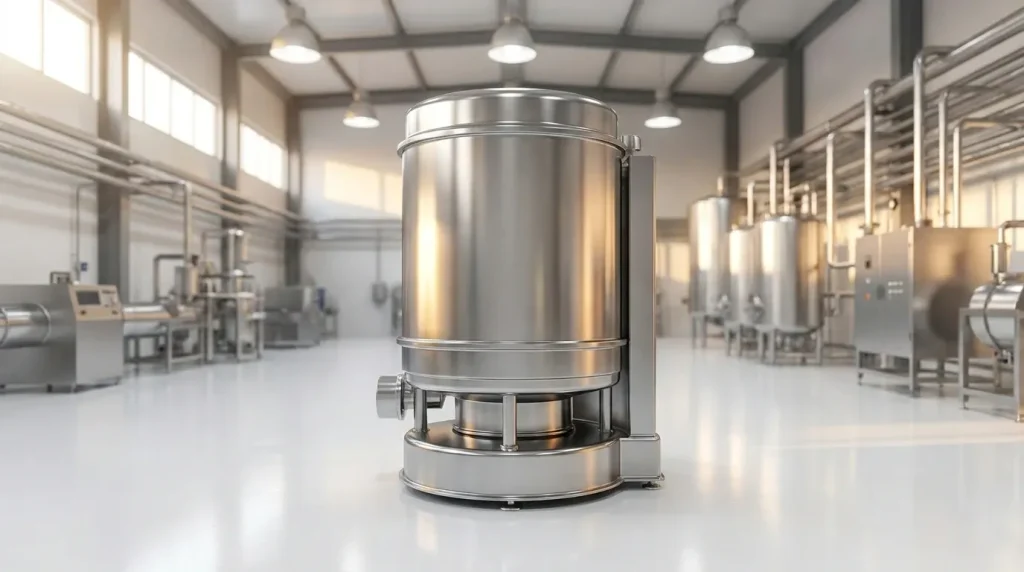
A basket centrifuge is a rotating separation device that uses centrifugal force to separate solids from liquids by spinning a perforated or solid cylindrical basket at speeds between around 1,000 and 3,000 rpm. The equipment can generate forces up to around 1,000 times gravitational acceleration, driving slurry against filter media where solids collect as cake while liquid passes through.
This guide covers basket centrifuge engineering principles, separation process mechanics, equipment classification systems, industrial applications, operational considerations, and sourcing strategies.
Basket centrifuge engineering begins with understanding the core components: a rotating basket, outer shell, AC motor drive system, and discharge mechanism. The separation process operates through a four-step batch cycle of loading, spinning, washing, and discharge. Equipment classification divides into perforated baskets that use filtration and imperforate baskets that rely on sedimentation, with vertical or horizontal orientations suited to different production environments.
Industrial applications span pharmaceutical API isolation, chemical intermediate recovery, food processing dewatering, and power generation sludge handling. Vertical designs dominate pharmaceutical and chemical manufacturing where GMP compliance matters, while horizontal configurations serve high-throughput continuous operations in sectors such as food and mining.
Operational reliability depends on proper feed control, scheduled balancing, and strict lockout/tagout procedures during maintenance. Safety management requires attention to rotor fatigue, vibration monitoring, and ATEX/IECEx compliance for hazardous, potentially explosive atmospheres. Sourcing strategies include considering the benefits of new surplus and quality used equipment, where used or refurbished units can deliver comparable performance at reduced acquisition costs.
What is a basket centrifuge and how does it differ from other centrifuges?
A basket centrifuge is a rotating separation device that uses a perforated or solid cylindrical basket to separate solids from liquids through centrifugal force. Unlike decanter centrifuges that operate continuously with a horizontal screw conveyor, basket centrifuges process material in batches and retain solids within the basket for washing and dewatering. The following subsections cover the essential components and industrial design features that distinguish this equipment.
What are the key components of a basket centrifuge?
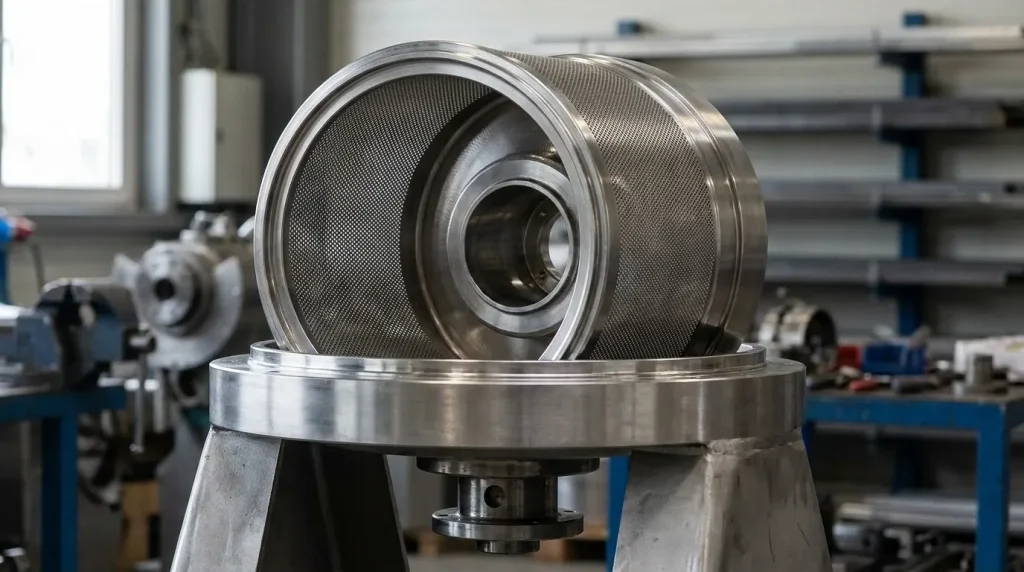
The key components of a basket centrifuge are the rotating basket, outer shell, drive system, and discharge mechanism. The rotating basket, either perforated or solid, spins between 1,000 and 3,000 rpm to generate centrifugal force for separation. A perforated basket holds a filter cloth that retains solids while liquid passes through; an imperforate basket relies on density-based sedimentation.
The outer shell contains the basket and collects separated liquid. Drive systems in industrial centrifuges typically include an AC motor, coupling or drive assembly, and bearing-supported rotating components. Vibration isolation and damping systems may be incorporated to reduce transmitted forces, noise, and mechanical stress during operation.
Core basket centrifuge components include:
- Rotating basket (perforated or imperforate)
- Filter cloth or screen media
- Outer shell and housing
- AC motor and drive shaft assembly
- Vibration damping system
- Discharge mechanism (bottom or peripheral)
How is a basket centrifuge designed for industrial use?
A basket centrifuge is designed for industrial use through heavy-duty construction, scalable basket dimensions, and materials suited to process conditions. Vertical basket centrifuges for applications such as chemical and pharmaceutical are available in basket diameters ranging from around 800 mm to 1,850 mm or more (31.5 in to 72.8 in), with maximum load ratings that can exceed 1,000 kg (2,200 lb).
Industrial designs incorporate materials like corrosion-resistant alloys such as 316L stainless steel or Hastelloy C-276 for aggressive chemical environments. Bottom-discharge configurations allow efficient cake removal in batch operations, while enclosed housings support containment requirements for hazardous atmospheres. Matching basket volume to expected batch size prevents both underutilization and overloading issues.
With these fundamentals established, understanding the separation process itself reveals how basket centrifuges achieve efficient solid-liquid separation.
How does the separation process in a basket centrifuge operate?
The separation process in a basket centrifuge operates by using centrifugal force to drive slurry against a basket lined with filter media, retaining solids while liquid passes through. The following subsections explain the operation cycle and the physics of centrifugal separation.
What steps are involved in the typical operation cycle of a basket centrifuge?
The typical operation cycle of a basket centrifuge involves four sequential steps: loading, spinning, washing (optional), and discharge.
- Loading: Slurry feeds into the rotating basket through a central inlet while the basket spins at controlled speed.
- Spinning: Centrifugal force drives liquid through the filter cloth and perforated basket wall, while solids accumulate as a cake layer.
- прання: Wash liquid may be introduced to purify the retained solids, removing residual mother liquor from the cake.
- Discharge: The basket decelerates, and the solid cake is removed through bottom or manual discharge depending on design.
ATEX and IECEx certifications provide standardized equipment markings that identify suitability for safe operation in potentially explosive environments. Cycle times vary based on feed characteristics, cake thickness targets, and required dryness levels.
How does centrifugal force enable solid-liquid separation in this equipment?
Centrifugal force enables solid-liquid separation by creating an artificial gravity field many times stronger than Earth’s gravity. The force applied to a sample is expressed as a multiple of gravitational acceleration (g-force), where 1,000 × g means the force is 1,000 times normal gravity.
As slurry enters the spinning basket, centrifugal force propels the mixture outward toward the wall. Denser solid particles migrate to the basket’s filter cloth surface, forming a compacted cake. Lighter liquid components pass through the filter media and drain through the basket perforations (when applicable).
This mechanism achieves rapid, efficient separation because the enhanced g-force compresses solids more effectively than gravity-based settling. Operators adjust rotational speed to optimize cake dryness while preventing filter blinding.
What are the main types of basket centrifuges and how are they classified?
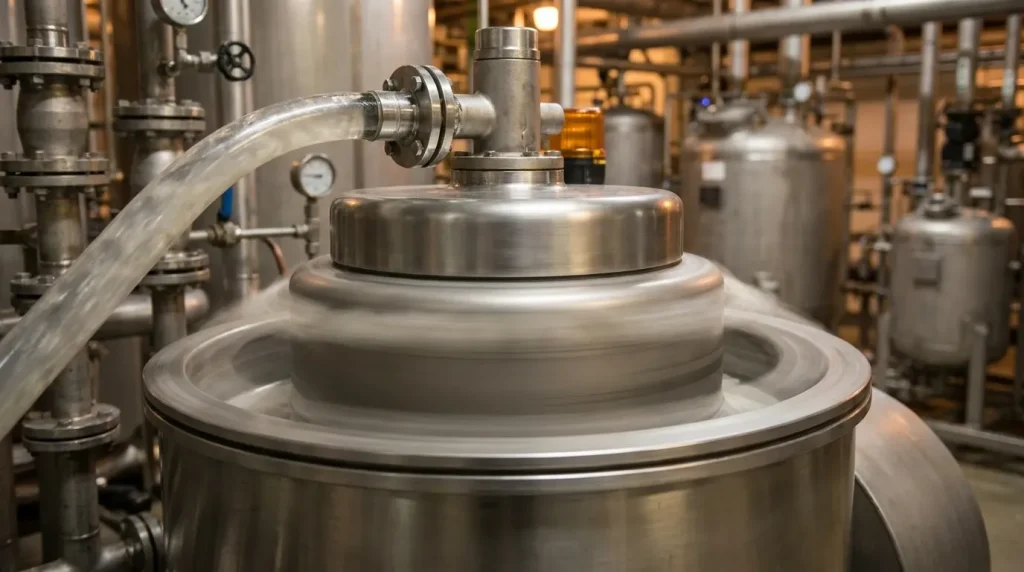
The main types of basket centrifuges are classified by basket construction (perforated or imperforate) and orientation (vertical or horizontal). These distinctions determine the separation mechanism and application suitability. The following sections explain how each classification affects performance across industries.
In what ways do perforated and imperforate basket centrifuges differ?
Perforated and imperforate basket centrifuges differ primarily in their separation mechanism. Perforated baskets use filtration, where liquid passes through holes in the basket wall while solids collect on a filter cloth. Imperforate baskets use sedimentation, separating materials by density without filtration.
| Feature | Perforated Basket | Imperforate Basket |
| Separation method | Filtration through basket holes | Sedimentation by density |
| Best for | Free-draining crystalline solids | Fine particles, difficult-to-filter slurries |
| Liquid removal | Through perforations and filter media | Decanted from top or skimmed |
| Typical industries | Pharmaceutical, chemical, food | Mining, mineral processing |
Imperforate designs excel when filtration proves difficult: when particles are too small to form an effective filter cake or would easily pass through the openings of a perforated basket, an imperforated basket can effectively separate or clarify. For procurement engineers choosing between perforate or imperforate basket centrifuges, the choice depends entirely on your product’s drainage characteristics and particle size distribution.
Which industries prefer vertical or horizontal basket centrifuge designs and why?
Industries prefer vertical or horizontal basket centrifuge designs based on space constraints, discharge requirements, and process integration needs.
Vertical basket centrifuges dominate in many pharmaceutical and fine chemical manufacturing settings, especially where batch processing or frequent product changeovers are standard. Vertical basket centrifuges are available in basket diameters often ranging from around 800 mm to 1850 mm (31.5 in to 72.8 in), with maximum load ratings that can exceed 1000 kg (2205 lb). Their bottom-discharge configuration allows gravity-assisted cake removal and cleaner operation in environments requiring GMP compliance.
Horizontal designs suit high-throughput applications where continuous or semi-continuous operation is required:
- Food processing typically favors horizontal units for uses such as continuous starch and sugar separation
- Mining operations may use horizontal centrifuges for coal dewatering at high volumes
- Wastewater treatment benefits from horizontal configurations for sludge processing
The vertical orientation typically requires less floor space but more headroom, while horizontal units need wider footprints but may integrate more easily into inline processing systems.
What are the common applications of basket centrifuges in different industries?
Basket centrifuges serve critical separation functions across multiple sectors, including pharmaceutical, chemical, food and beverage processing, and mining and mineral processing. They also have secondary applications in processes such as power generation. The following subsections detail how each industry leverages this technology.
How are basket centrifuges used in pharmaceutical manufacturing?
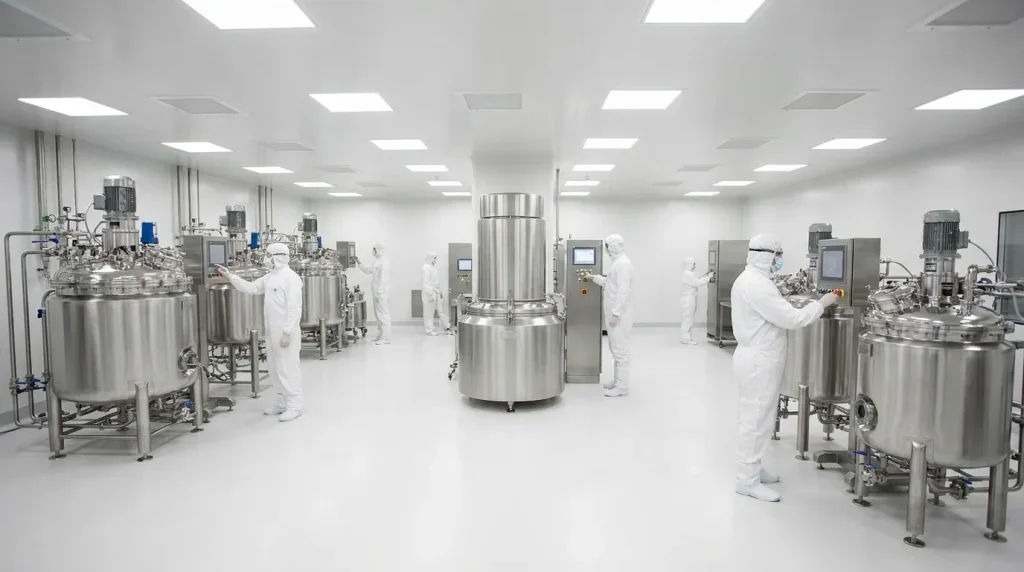
Basket centrifuges are used in pharmaceutical and chemical manufacturing to isolate active pharmaceutical ingredients (APIs), purify biological samples, and separate crystallized products from mother liquors. Vertical basket centrifuges for these applications are available in basket diameters ranging from around 800 mm to 1850 mm (31.5 in to 72.8 in), with cake volumes up to several hundred liters and maximum load ratings that can exceed 1,000 kg (2,205 lb), according to some manufacturer specifications. Batch-operated basket centrifuges especially suit pharmaceutical production where product changeovers are frequent and cross-contamination must be prevented.
How are basket centrifuges used in chemical manufacturing?
Chemical manufacturers rely on basket centrifuges for:
- Recovering fine chemicals and specialty intermediates
- Dewatering pigments and dyes
- Separating catalysts from reaction mixtures
- Processing corrosive slurries using stronger material construction such as Hastelloy C-276
Why is basket centrifuge technology important in food and beverage processing?
Basket centrifuge technology is important in food and beverage processing and power generation because it enables high-volume dewatering of temperature-sensitive and abrasive materials that require gentle handling.
Food processing applications include:
- Sugar crystal separation from syrup
- Starch dewatering and washing
- Salt and MSG crystallization
- Fruit and vegetable juice clarification
Why is basket centrifuge technology important in power generation?
While typically more common in pharmaceutical, chemical, food, and mineral-processing industries, basket centrifuges are used in some power-generation applications, particularly for fluid purification, fuel and lubricant treatment, fly ash processing, and selected solids dewatering operations such as coal fines dewatering and scrubber sludge handling.
For procurement teams evaluating separation equipment, basket centrifuges can offer versatility across multiple process streams within the same facility.
What advantages and limitations do basket centrifuges have compared to other separation technologies?
Basket centrifuges offer distinct benefits for solid-liquid separation but also present operational constraints. The sections below examine common challenges and practical mitigation strategies.
What operational challenges can arise with basket centrifuges?
Operational challenges with basket centrifuges include batch processing constraints, structural support requirements, and potential vibration from uneven solids distribution, as with other high-speed rotating centrifuges. According to Vibromera, centrifuge vibration can be caused by uneven feed or overloading, and regular balancing is required to prevent costly breakdowns and downtime.
Key challenges include:
- Vibration and imbalance: Uneven slurry distribution creates dynamic forces that stress bearings, seals, and drive components
- Batch operation limits: Unlike continuous centrifuges, basket designs may require more manual intervention and handling
- Structural demands: Bottom-discharge configurations need reinforced mounting and floor support to handle cyclic loads
- Feed consistency sensitivity: Variable slurry concentrations can produce inconsistent cake quality and filtrate clarity
How can these challenges be mitigated or minimized?
These challenges can be mitigated through proper feed control, preventive maintenance, and equipment specification. Consistent slurry delivery using calibrated feed systems prevents the uneven loading that causes most vibration issues.
Effective mitigation strategies include:
- Scheduled balancing: Routine dynamic balancing every certain number of operating hours as specified by manufacturer guidelines catches rotor wear before it can cause failures
- Feed rate monitoring: Automated controls that match feed volume to basket capacity prevent overloading
- Vibration sensors: Real-time monitoring triggers automatic shutdown before damage occurs
- Proper foundation design: Isolation mounts and reinforced pads absorb cyclic forces from bottom-discharge units
For operations requiring higher throughput, pairing multiple basket centrifuges in parallel or selecting continuous alternatives proves safer and more cost-effective than pushing a single unit beyond its design envelope. IPP’s engineering team can help match centrifuge specifications to your actual process demands, ensuring the equipment you source performs reliably from day one.
How do maintenance requirements and safety considerations impact basket centrifuge operation?
Maintenance requirements and safety considerations directly impact basket centrifuge uptime, separation efficiency, and operator protection. Proper protocols prevent mechanical failures while ensuring compliance with regional, operating-environment, and industry-specific equipment standards.
What best practices improve reliability and extend equipment lifespan?
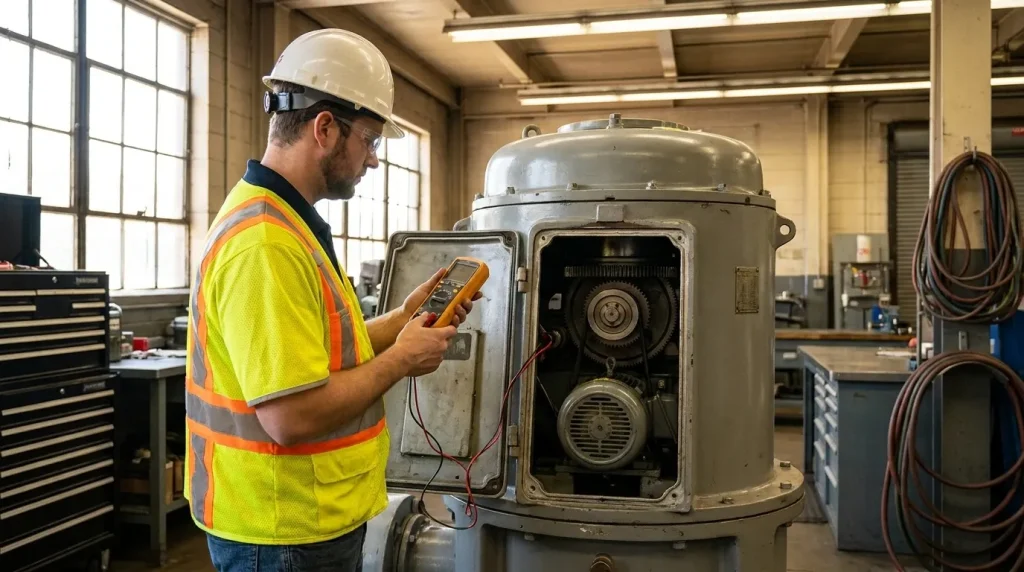
Best practices that improve reliability and extend equipment lifespan center on scheduled inspections, balanced loading, and rigorous lockout/tagout procedures. According to Separators Inc., industrial centrifuge safety protocols include a non-negotiable lockout/tagout (LOTO) sequence that involves locking out primary power, water supply, and pneumatic/hydraulic sources before maintenance.
Key reliability practices include:
- Performing regular rotor balancing to counteract uneven feed distribution
- Inspecting filter cloths and baskets for wear or clogging
- Lubricating drive shafts and bearings per manufacturer intervals
- Documenting operating parameters (RPM, g-force, cycle times) for trend analysis
- Verifying damping units reduce vibration within acceptable limits
The IChemE Safety Centre (ISC) framework emphasizes that leadership in knowledge and competence in process safety is fundamental, and underpins inherently safer engineering and design and robust safety systems. Facilities that invest in operator training and preventive maintenance schedules typically see fewer unplanned shutdowns and longer intervals between major overhauls.
What safety risks must be managed during operation and maintenance?
Safety risks that must be managed during operation and maintenance include mechanical failure, hazardous atmospheres, and rotating equipment contact. Mechanical failure in centrifuges can result from mechanical stress, metal fatigue, and corrosion of the rotor over time, presenting physical hazards.
Critical risks and mitigation measures include:
| Risk Category | Hazard | Mitigation |
| Mechanical failure | Rotor fatigue, corrosion | Regular NDE inspection, replacement schedules |
| Imbalance/vibration | Uneven loading, worn components | Load monitoring, dynamic balancing |
| Hazardous atmospheres | Solvent vapors, combustible dusts | ATEX/IECEx-certified equipment, proper ventilation |
| Electrical contact | Energized components during service | LOTO procedures before any maintenance |
ATEX and IECEx standards provide certifications and equipment markings for safe operation of machinery in potentially explosive environments. Facilities processing flammable solvents or combustible powders should verify equipment carries appropriate zone ratings before installation.
With safety protocols established, sourcing reliable equipment becomes the next consideration for operations teams.
How can businesses source reliable basket centrifuges for industrial applications?
Businesses can benefit from sourcing basket centrifuges through equipment dealers specializing in new surplus and quality used process equipment, often at around 50% of new equipment cost. Buying quality used process equipment offers distinct advantages for budget, lead time, and equipment condition. The following sections outline key acquisition factors and refurbishment considerations.
What factors should buyers consider when choosing a centrifuge type?
Buyers should consider several critical factors when acquiring new or used basket centrifuges, including:
- Application requirements: Match basket diameter, operating speed, and cake capacity to your process. Vertical basket centrifuges typically range from around 800 mm to 1850 mm (31.5 in to 72.8 in) in diameter, with maximum load ratings that can exceed 1,000 kg (2,205 lbs).
- Сумісність матеріалів: Verify that wetted parts are compatible with your process chemistry. Common options include 316L stainless steel and Hastelloy C-276.
Quality used equipment from reputable suppliers typically costs approximately 50% of new OEM pricing while delivering comparable performance.
How does equipment refurbishment affect performance and cost?
Equipment refurbishment affects performance by restoring basket centrifuges to original operating specifications while reducing acquisition costs. Refurbishment may include bearing replacement, drive system, basket rebalancing, and seal renewal.
How does International Process Plants support basket centrifuge needs for process industries?
International Process Plants provides comprehensive sourcing and deployment services for basket centrifuges across chemical, pharmaceutical, food processing, and other industrial applications. The following sections detail IPP’s specific offerings and summarize the key operational principles covered in this guide.
What services does IPP provide for sourcing and deploying basket centrifuges?
IPP provides sourcing, evaluation, and deployment services for basket centrifuges through its global network with offices spanning 15 countries. With over 46 years of experience and more than 15,000 pieces of equipment in inventory, IPP offers both new surplus and quality used basket centrifuges for process industries.
IPP’s basket centrifuge services include:
- Equipment sourcing from decommissioned plants and surplus inventories worldwide
- Technical evaluation to verify basket condition, drive systems, and compliance with regulatory requirements
- Global logistics coordination from warehouses in the United States, Germany, and the United Kingdom
- Documentation support for pressure ratings, material certifications, and safety compliance
IPP’s inventory currently includes vertical and horizontal basket configurations suitable for applications such as pharmaceutical API isolation, chemical intermediate recovery, and fine solid dewatering.
What are the key takeaways about how basket centrifuges work and their process applications?
The key takeaways about how basket centrifuges work center on three principles: centrifugal force generation, solid-liquid separation mechanics, and application-specific configuration.
Basket centrifuges operate by spinning a perforated or imperforate basket at around 1,000 to 3,000 rpm, generating forces that can be up to 1,000 times gravitational acceleration. Perforated designs filter liquid through the basket wall while retaining solids as cake; imperforate designs separate by density through sedimentation.
For process industries seeking reliable basket centrifuges without new equipment lead times, IPP’s global inventory offers immediate access to quality used and new surplus units. Contact International Process Plants to discuss your separation requirements and currently available basket centrifuge configurations.

 UK
UK  EN
EN  ES
ES  FR
FR  PL
PL  DE
DE  AR
AR  UR
UR  HI
HI  NL
NL  TR
TR  IT
IT  RU
RU  JA
JA  PT
PT  ZH
ZH