 İçeriğe geç
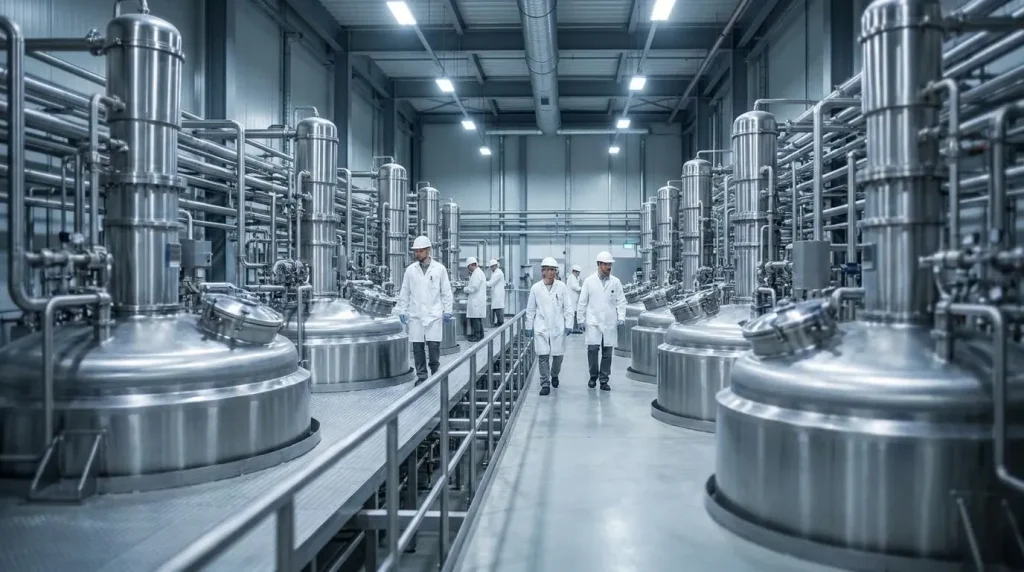
Glass-lined equipment is process equipment featuring a carbon-steel body bonded with a chemically resistant glass coating that protects against corrosive acids, bases, and solvents in chemical, pharmaceutical, and food processing operations.
This guide covers glass-lined equipment manufacturing and materials, corrosion resistance advantages and material limitations, maintenance requirements and failure indicators, cost comparisons with alloy alternatives, and sourcing considerations for used equipment.
Glass-lined manufacturing involves applying multiple layers of borosilicate-based glass to a carbon-steel substrate, with the ground coat creating a chemical bond and subsequent coats building thickness to 40 to 90 mils (1.0 to 2.3 mm). The resulting lining resists attack from most oxidizing and reducing environments while costing significantly less than tantalum, titanium, or zirconium vessels.
Corrosion prevention works because the non-porous glass surface creates an inert barrier that aggressive chemicals cannot penetrate. However, the lining remains vulnerable to mechanical impact, thermal shock, and specific chemicals including fluorides and highly alkaline media at elevated temperatures.
Maintenance protocols center on regular visual inspections, spark testing at approximately 6,000 V, and thickness monitoring. When glass thins below 0.03 in. (0.08 cm), factory reglassing becomes necessary.
Material selection depends on chemical compatibility, operating conditions, and budget. Glass-lined equipment typically costs 50 to 70% less than exotic alloy alternatives, while good used equipment runs approximately 50% of new pricing.
Sourcing used glass-lined equipment requires verification through spark testing, thickness measurement, and certification review. International Process Plants and Universal Glasteel Equipment provide access to inspected inventory with documented service history.
What is glass-lined equipment and how is it manufactured?
Glass-lined equipment is process equipment featuring a carbon-steel body bonded with a chemically resistant glass coating. Manufacturing involves applying multiple layers of specially formulated glass, fired at high temperatures to create a durable, corrosion-resistant surface. The sections below cover which processes rely on these components and what materials make them effective.
Which industrial processes commonly use glass-lined equipment?
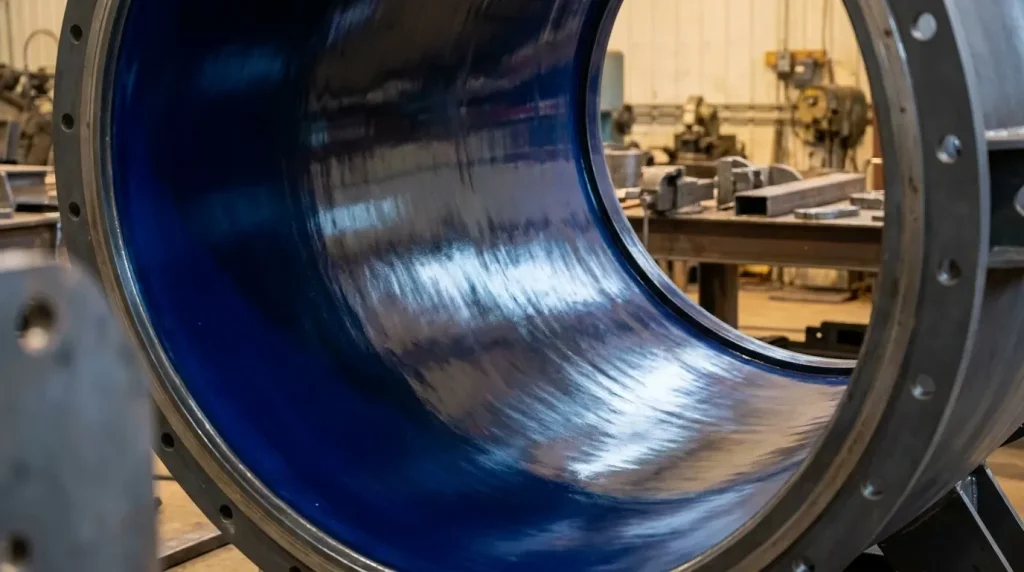
The industrial processes that commonly use glass-lined parts include chemical manufacturing, pharmaceutical production, and food processing. These sectors require equipment that resists aggressive acids, bases, and solvents without contaminating the product.
According to Grand View Research’s 2025 market analysis, the chemicals segment held 45.6% of the global glass-lined equipment market share, with reactors representing 40.3% of product demand. Pharmaceutical manufacturers rely on glass-lined reactors for synthesis reactions involving corrosive intermediates. Fine chemical producers use glass-lined vessels for specialty compounds requiring ultra-high purity. Food processors specify glass-lined tanks where acidic ingredients would attack unprotected steel.
The non-reactive glass surface prevents metal ions from leaching into products, which is critical for applications where contamination affects drug efficacy or food safety.
What materials and coatings are involved in glass lining?
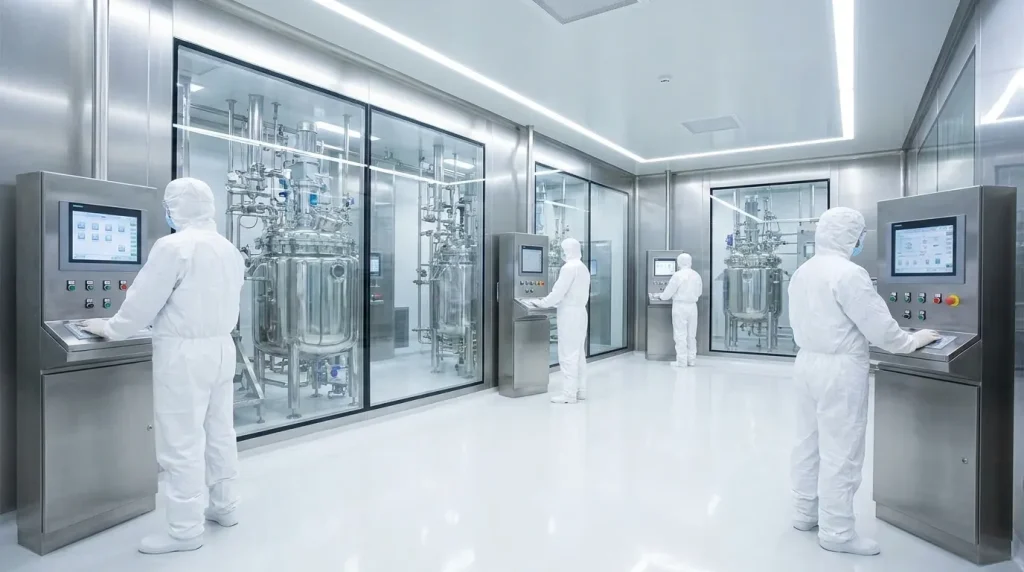
The materials involved in glass lining are a carbon-steel substrate and multiple layers of borosilicate-based glass coating. The glass composition includes several oxides and silicates blended and heated to melting point, then rapidly cooled into particles called frit.
According to Chemical Engineering, the first coat applied is the ground coat, which has limited corrosion resistance but creates a chemical bond with the base metal. Subsequent layers of chemically resistant glass are applied and fired repeatedly until reaching a total thickness of 40 to 90 mils (1.0 to 2.3 mm).
Borosilicate glass provides low thermal expansion coefficients of approximately 5 × 10⁻⁶/°C at 20°C (68°F), making it resistant to thermal shock. This multi-layer approach combines the structural strength of carbon steel with the chemical inertness of glass, creating vessels that handle corrosive media.
Why is glass-lined equipment used instead of other materials?
Glass-lined equipment is used instead of other materials because they deliver exceptional corrosion resistance at a fraction of the cost of exotic alloys. The sub-sections below explain how the glass barrier prevents chemical attack and outline the key advantages alongside inherent limitations.
How does glass lining prevent corrosion and chemical reactions?
Glass lining prevents corrosion and chemical reactions by creating an inert barrier between the carbon-steel vessel and the process media. The lining consists of specially formulated glass composed of oxides and silicates, which manufacturers heat to melting point, then rapidly cool into particles called frit. According to Chemical Engineering, the first coat applied is a ground coat that bonds chemically to the base metal; subsequent coats of chemically resistant glass build thickness to 40–90 mils (1.0–2.3 mm).
This multi-layer structure resists attack from most acids and alkalis in both oxidizing and reducing environments. The glass surface is non-porous, so aggressive chemicals cannot penetrate to corrode the underlying steel. Competing metals such as tantalum, titanium, and zirconium offer similar corrosion resistance but cost several times more than glass-lined steel.
For process engineers evaluating corrosion barriers, glass lining represents the most cost-effective solution for the broadest range of chemical exposures.
What are the advantages and limitations of glass-lined equipment?
The advantages of glass-lined equipment include:
- Exceptional corrosion resistance across most acid and alkaline media
- Lower capital cost compared to tantalum, titanium, or zirconium vessels
- Non-contaminating surface that preserves product purity in pharmaceutical, chemical, and food processing applications
- Long service life when properly maintained
The limitations of glass-lined equipment include:
- Susceptibility to mechanical damage from impact
- Vulnerability to thermal shock if heated or cooled too rapidly
- Chemical restrictions: fluorides at any concentration, hot concentrated phosphoric acid, and highly alkaline chemicals at elevated temperatures attack the glass
- Repair complexity: small holes up to 4 in. (10 cm) diameter can be patched with tantalum, but severe damage requires factory reglassing
From a practical standpoint, glass-lined equipment excels in batch reactor applications where corrosion resistance outweighs impact risk, but operators must commit to regular inspection programs to catch damage early.
How does glass-lined equipment impact longevity and maintenance?
Glass-lined equipment impacts longevity and maintenance by providing decades of corrosion-free service when properly cared for, but requiring specific handling protocols to prevent mechanical damage and thermal shock. The sections below cover essential maintenance practices and warning signs of wear or failure.
What maintenance practices are essential for glass-lined equipment?
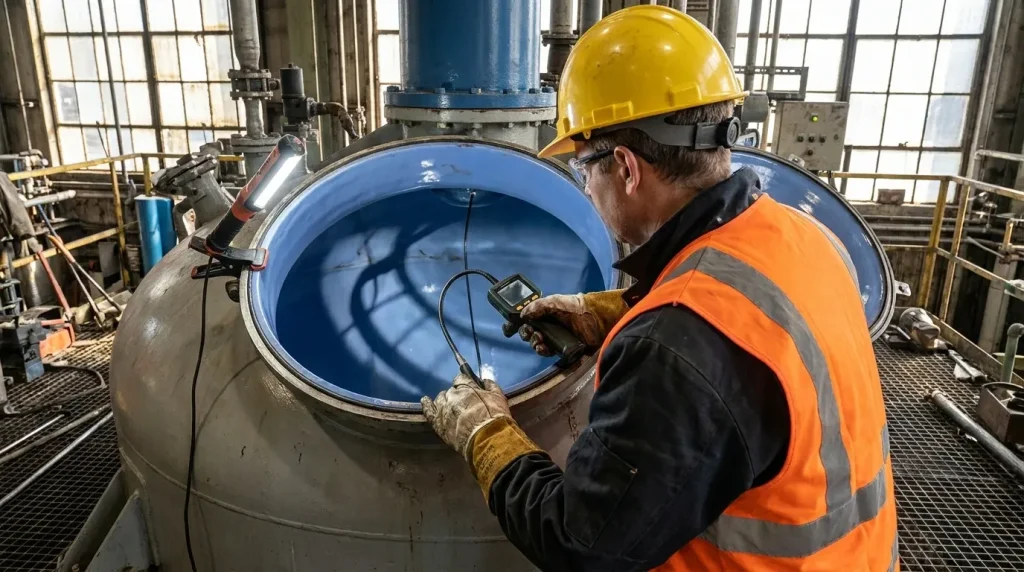
Essential maintenance practices for glass-lined equipment include regular visual inspections, spark testing, and thickness monitoring. According to Chemical Engineering, a typical maintenance checklist should cover visual inspection of the lining, spark testing for signs of failure, glass-thickness readings, inspection of tantalum repair plugs and patches if installed, vessel nozzle connections, and vessel jacket connections.
Spark testing uses either DC or AC testers that apply approximately 6,000 V at very low amperage to detect pinholes invisible to the eye. When glass thickness thins to about 0.03 in. (0.08 cm), contact the equipment manufacturer to evaluate whether the vessel requires factory reglassing.
Consistent inspection intervals catch small chips before they expose the steel substrate to corrosive attack.
What are common signs of wear or failure in glass-lined equipment?
Common signs of wear or failure in glass-lined equipment include visible chips, pinholes, and areas where the glass appears thin or discolored. Mechanical impact causes the most problems in glass-lined equipment operation, followed by thermal shock from heating or cooling a vessel too quickly.
Key warning signs to monitor:
- Spark test failures indicating compromised lining integrity
- Glass thickness below 0.03 in. (0.08 cm)
- Visible cracks near nozzle connections or agitator seals
- Corrosion staining on the steel substrate visible through damaged areas
- Process contamination suggesting product contact with exposed metal
Small holes up to 4 in. (10 cm) diameter can be repaired economically with tantalum plugs or patches. Larger damage typically requires factory reglassing, which should remain a last resort reserved for linings worn thin after years of service or severely damaged.
Understanding these failure modes and inspection requirements becomes essential when evaluating good used glass-lined equipment.
How does glass-lined equipment compare to alloy or stainless steel alternatives?
Glass-lined equipment compares to alloy or stainless steel alternatives by offering superior corrosion resistance at lower cost, but with greater vulnerability to mechanical impact. The choice depends on chemical compatibility, operating conditions, and budget constraints.
When should a plant choose glass-lined over alloy equipment?
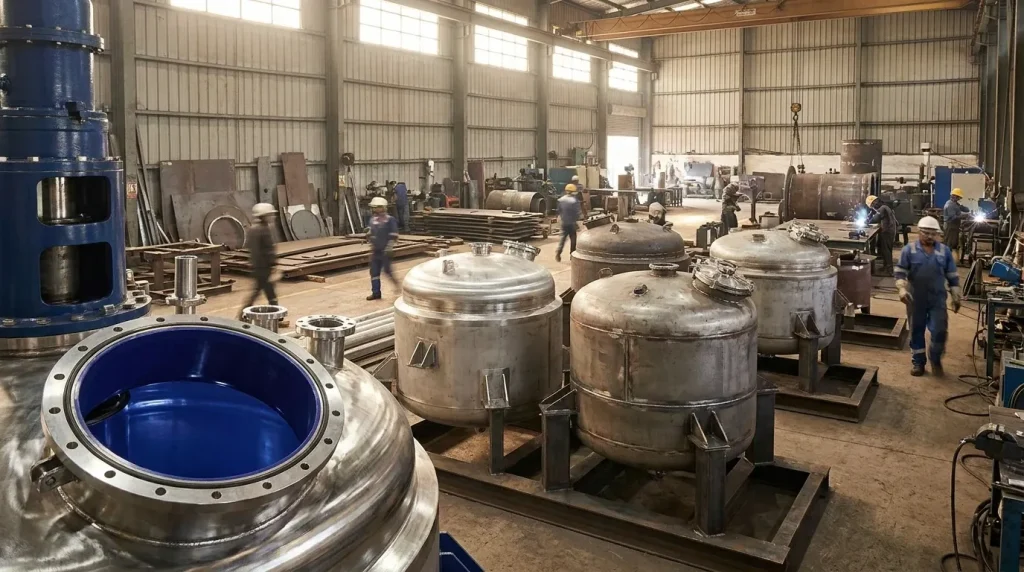
A plant should choose glass-lined over alloy equipment when processing corrosive acids or alkalis that would attack stainless steel. Glass-lined vessels handle most oxidizing and reducing environments that 316L or 304 stainless cannot withstand economically.
According to Chemical Engineering, the metals that compete with glass for corrosion resistance are tantalum, titanium, and zirconium, all of which are several times more expensive than glass-lined steel.
Glass-lined components excel in these applications:
- Strong mineral acids (hydrochloric, sulfuric, nitric) below 500°F (260°C)
- Organic acids and solvents requiring product purity
- Pharmaceutical synthesis where metal contamination affects API quality
- Batch reactions with frequent product changeovers
However, stainless steel becomes the better choice when processes involve fluorides, hot concentrated phosphoric acid, or highly alkaline chemicals at elevated temperatures. Mechanical impact risk also favors alloy construction in high-agitation or abrasive-slurry applications.
What are the cost considerations between glass-lined and other materials?
The cost considerations between glass-lined and other materials include initial purchase price, maintenance expenses, and total lifecycle value. Glass-lined equipment typically costs 50-70% less than equivalent tantalum, titanium, or zirconium vessels while delivering comparable corrosion resistance.
Good used glass-lined equipment from secondary markets typically runs approximately 50% of new pricing. This cost advantage becomes significant for plants needing multiple reactor vessels or facing budget constraints on capital projects.
Understanding these trade-offs helps procurement teams match material selection to actual process requirements rather than defaulting to either option.
What certifications or industry standards apply to glass-lined equipment?
Certifications and industry standards for glass-lined equipment include ASME Section VIII for pressure vessel construction, the Pressure Equipment Directive (PED) with CE marking for European markets, UKCA marking for the United Kingdom, and ASME BPE certification for bioprocessing applications. The following section covers how operators can verify compliance and maintain quality assurance for glass-lined equipment.
How can operators ensure compliance and quality for glass-lined equipment?
Operators can ensure compliance and quality for glass-lined equipment by verifying certifications, maintaining inspection records, and following manufacturer testing protocols. According to ASME, the BPE Certification Program is the leading standard on how to design and build equipment used in bioprocessing, pharmaceutical, and personal-care-industry production, incorporating current best practices for enhancing product purity and safety.
Key compliance verification steps include:
- Confirming ASME Section VIII U-stamps for pressure-rated vessels
- Verifying CE marking and PED compliance for equipment operating in the European Union
- Checking UKCA marking for United Kingdom installations
- Requesting ASME BPE certification marks for pharmaceutical and biotech applications
- Reviewing spark test records and glass thickness measurements from previous inspections
- Obtaining manufacturer data reports documenting original construction standards
Equipment bearing the ASME BPE Certification Mark with a BPE Designator confirm manufacture by an authorized Certificate Holder. For process engineers evaluating compliance across multiple jurisdictions, requesting documentation that covers both regional requirements and application-specific certifications prevents costly installation delays.
What should you consider when sourcing used or refurbished glass-lined equipment?
You should consider equipment condition verification, certification status, and the balance between cost savings and potential risks when sourcing used or refurbished glass-lined equipment. The sections below cover how to verify pre-owned equipment and weigh the benefits against the risks.
How can buyers verify the condition and reliability of pre-owned glass-lined equipment?
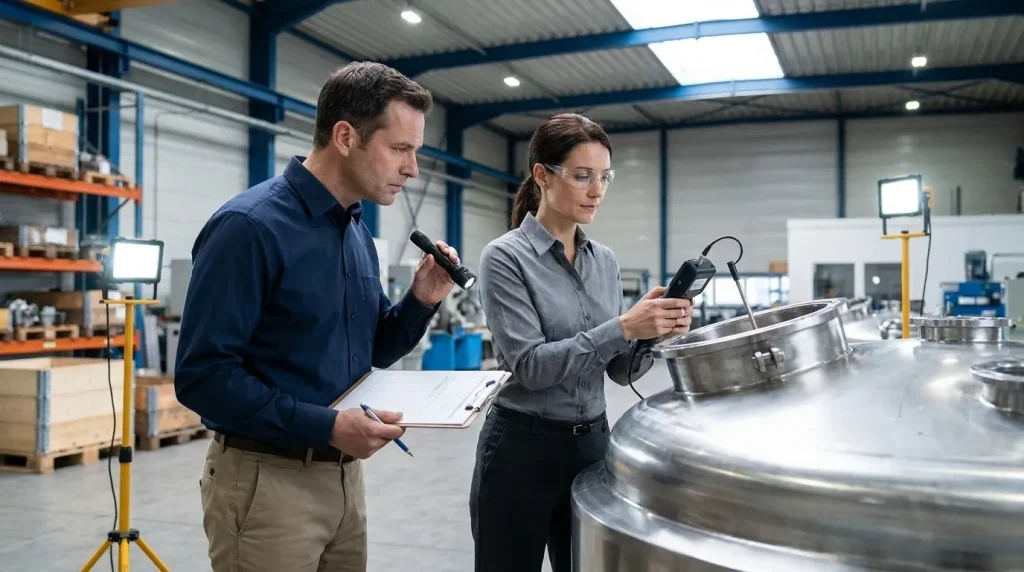
Buyers can verify the condition and reliability of pre-owned glass-lined equipment through systematic inspection protocols and testing. A thorough evaluation should include:
- Visual inspection of the glass lining for chips, cracks, or surface irregularities
- Spark testing using DC or AC testers at approximately 6,000 V to detect pinholes or breaches
- Glass thickness measurements to confirm adequate lining remains
- Review of maintenance records and prior service history
- Inspection of nozzle connections and jacket integrity
According to Chemical Engineering, spark testing at low amperage reliably identifies glass-lining failures that visual inspection alone might miss. Requesting documentation of ASME certifications or CE marking provides additional assurance that the equipment meets recognized design and fabrication standards. For pharmaceutical applications, verify whether the equipment carries ASME BPE certification, which indicates compliance with bioprocessing purity requirements.
What are the benefits and risks of purchasing refurbished glass-lined equipment?
The benefits of purchasing refurbished glass-lined equipment include significant cost reduction compared to new equipment. Industry baselines indicate good used glass-lined equipment typically costs approximately 50% of new, while reglassed equipment runs approximately 70% of new. Shorter lead times and immediate availability from suppliers with existing inventory also accelerate project schedules.
The risks include:
- Unknown service history that may conceal prior damage or chemical exposure
- Compromised glass thickness from years of wear
- Hidden corrosion of the underlying carbon steel substrate
- Incompatibility with current process requirements
For glass-lined equipment specifically, reglassing is more expensive than purchasing good used equipment because the process requires multiple firings at 750 to 900°C (1,382 to 1,652°F) plus non-destructive examination and recertification. Buyers should weigh whether the savings justify potential rework costs. Thorough pre-purchase inspection mitigates these risks and protects the investment.
With sourcing strategies established, International Process Plants offers direct access to verified glass-lined equipment inventory.
How do International Process Plants and subsidiaries support glass-lined equipment needs?
International Process Plants supports glass-lined equipment needs through specialized sourcing, inspection, and service capabilities. The following subsections explain how Universal Glasteel Equipment addresses parts and servicing, plus key takeaways from this guide.
Can Universal Glasteel Equipment (UGE) help with sourcing and servicing glass-lined equipment?
Yes, Universal Glasteel Equipment (UGE) can help with sourcing and servicing glass-lined equipment. UGE specializes in glass and glass-lined equipment, offering access to reactors, vessels, and replacement components for chemical and pharmaceutical applications.
Glass-lined vessels typically operate at temperatures up to 500°F (260°C) and pressures of 130 to 150 psig (9 to 10.3 bar), according to Chemical Engineering. UGE sources equipment meeting these specifications.
Key services UGE currently provides include:
- Sourcing good used glass-lined reactors and vessels
- Locating replacement parts such as baffles, agitators, and covers
- Arranging spark testing using DC or AC testers at approximately 6,000 V
- Coordinating thickness inspections before purchase
- Connecting buyers with reglassing services when linings thin below 0.03 in. (0.08 cm)
For buyers requiring ASME BPE certified components for bioprocessing applications, UGE can identify equipment bearing the BPE Certification Mark. This mark indicates manufacture by an ASME BPE Certificate Holder, meeting current standards for product purity and safety.
What are the key takeaways about what are glass-lined parts (and why they matter) we covered?
The key takeaways about glass-lined parts are that they provide exceptional corrosion resistance at lower cost than exotic alloys, require specific maintenance protocols, and offer reliable performance when properly sourced.
Glass-lined equipment protects against most acids and alkalis while avoiding the expense of tantalum, titanium, or zirconium alternatives. Standard operating limits of 500°F (260°C) and 150 psig (10.3 bar) suit most chemical and pharmaceutical processes.
Successful procurement requires:
- Verifying glass thickness remains above 0.03 in. (0.76 mm)
- Confirming spark test results before purchase
- Understanding that mechanical impact and thermal shock cause most failures
- Recognizing that good used equipment typically costs approximately 50% of new pricing
International Process Plants, with over 46 years of experience and warehouses in the US, Germany, and the UK, offers global access to glass-lined equipment. Contact us to discuss your specific glass-lined reactor or vessel requirements.

 TR
TR  EN
EN  ES
ES  FR
FR  PL
PL  DE
DE  AR
AR  UR
UR  HI
HI  NL
NL  IT
IT  UK
UK  RU
RU  JA
JA  PT
PT  ZH
ZH