
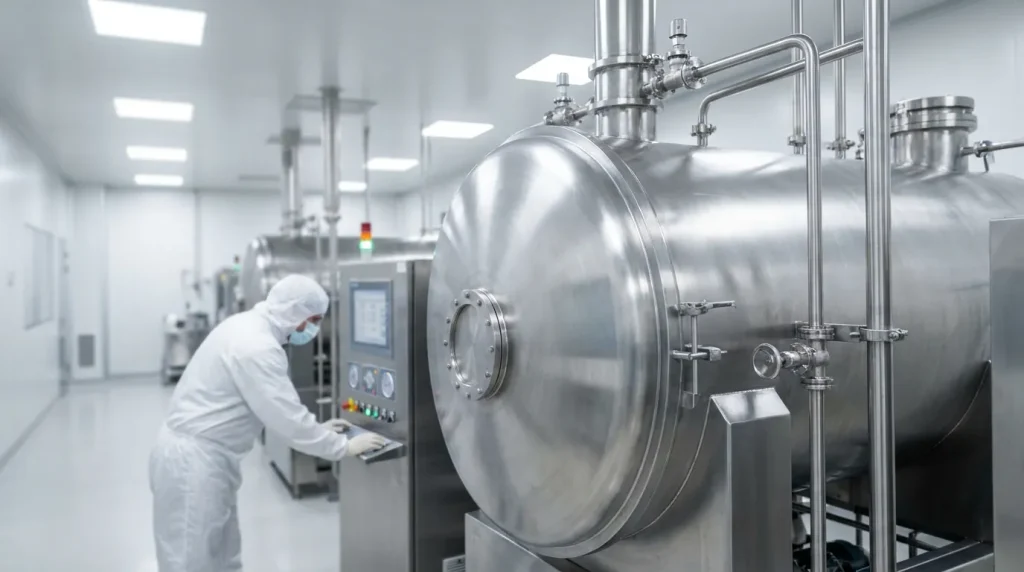
A freeze dryer removes water from a frozen product under vacuum, allowing ice to sublimate directly from solid to vapor without passing through a liquid phase. This process, called lyophilization, operates in three interdependent stages: freezing, primary drying, and secondary drying.
This guide covers the core process stages, the internal components that make sublimation possible, the industries that depend on freeze drying, the advantages and limitations against other drying methods, and how to approach equipment sourcing.
The process stages explain how freezing converts product water into ice below the eutectic point, how primary drying sublimates that ice under controlled vacuum and shelf heat, and how secondary drying removes residual bound water down to target moisture. Cooling rate and ice crystal size shape every downstream drying behavior.
The component coverage shows how the vacuum system, condenser, refrigeration, shelves, and control instrumentation operate together. The condenser captures released vapor as ice while temperature and pressure act as the principal critical process parameters, monitored through thermocouples, capacitance manometers, Pirani gauges, and SCADA software.
The industry section examines why pharmaceuticals, biotechnology, and food processing dominate demand, with food processing holding a 35.9% application share in 2025 and biopharmaceuticals driving equipment growth.
The comparison and selection discussion weighs superior nutrient and structure retention against high energy demand, long cycle times, and difficult scale-up from laboratory to production. We explain how International Process Plants supports lyophilizer sourcing by matching verified process parameters to new surplus and quality used inventory drawn from more than 46 years of equipment supply.
What are the main stages of freeze drying or lyophilization?
The main stages of freeze drying or lyophilization are freezing, primary drying (sublimation), and secondary drying (desorption). These three stages are separate, unique, and interdependent. The sections below explain how each stage prepares, dries, and finishes the product.
How does the freezing stage in a lyophilizer prepare materials for drying?
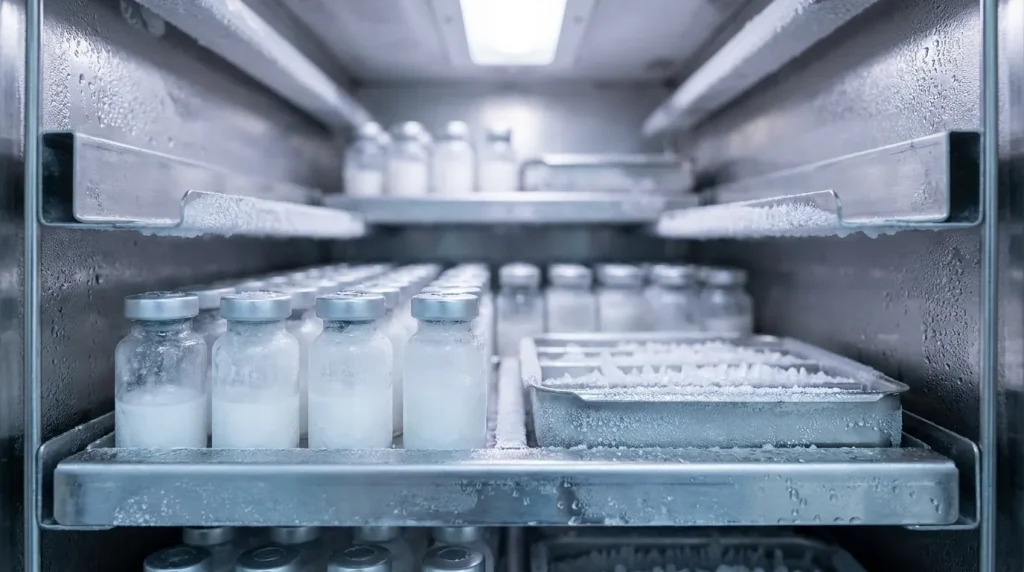
The freezing stage prepares materials for drying by converting most of the product water into ice below its eutectic point. The shelf temperature drops to between -30 C (-22 F) and -50 C (-58 F), often in staged profiles rather than a single ramp. Cooling rate controls ice crystal size, which directly affects drying speed. According to the U.S. Food and Drug Administration, slow freezing produces larger ice crystals, creating large voids that aid water vapor escape during sublimation. Getting the freezing profile right is the single most underestimated factor in cycle success, because every downstream drying behavior depends on the ice structure formed here.
What happens during the primary drying (sublimation) phase?
During the primary drying (sublimation) phase, frozen ice changes directly from solid to vapor under vacuum, without passing through a liquid state. Vacuum and controlled shelf heat drive sublimation. The product temperature is held at least 4 to 5 C (7 to 9 F) below the eutectic point to prevent collapse. According to ISPE Pharmaceutical Engineering, chamber pressures during primary and secondary drying range from a few microns or microbars up to 10,000 µm Hg (13,000 µbar), equal to 0.001 to 10 Torr. Operators identify the end of primary drying by comparing Pirani gauge and capacitance manometer readings, which diverge as gas composition shifts from water vapor toward nitrogen.
What is the purpose of the secondary drying (desorption) phase?
The purpose of the secondary drying (desorption) phase is to remove residual bound water from the dried product down to the required final moisture level. After sublimation removes free ice, desorption extracts water molecules adsorbed within the product structure. Process analytical technology tools support endpoint determination across stages, including comparative pressure monitoring, manometric temperature monitoring, dew-point analysis, residual gas analysis, and gravimetric or weight loss techniques. According to AAPS Open, the sublimation endpoint is typically monitored through product temperature and pressure changes during the cycle. With all three stages defined, the next section examines how a freeze dryer’s components operate together.
How do the key components of a freeze dryer operate together?
The key components of a freeze dryer operate together by coordinating the vacuum system, condenser, shelves, refrigeration, and control instrumentation to drive sublimation and desorption. The following subsections explain the vacuum and condenser roles, temperature control, and the safety and monitoring systems that keep these parts synchronized.

What role do the vacuum system and condenser play in freeze drying?
The vacuum system and condenser play complementary roles in freeze drying: the vacuum system lowers chamber pressure to enable sublimation, while the condenser captures the released water vapor as ice. The vacuum system maintains low pressure across the chamber, allowing ice to transition directly to vapor. The condenser, held far below product temperature, traps that vapor and prevents it from returning to the chamber.
W one freeze-drying study published in PLOS ONE (2023), mulberries were processed for 48 hours at a vacuum degree of 20 Pa with a temperature of -50 C (-58 F). This pairing of deep vacuum and cold condenser is what separates freeze drying from spray drying and hot-air drying, where no vapor-trapping condenser operates under vacuum.
How does temperature control affect freeze dryer efficiency?
Temperature control affects freeze dryer efficiency by governing the critical process parameters that determine sublimation speed, product integrity, and cycle endpoint. Temperature, pressure control, and time are the principal critical process parameters (CPPs) for lyophilization. The chamber, shelves, heating oil, and condenser temperatures all form part of these monitored variables.
A lyophilizer records key parameters to maintain control, including:
- Shelf temperature
- Product temperature
- Condenser temperature
- Chamber pressure
- Condenser pressure
According to the U.S. Food and Drug Administration, the sublimation endpoint is monitored through product temperature and pressure changes during the cycle. Modern SCADA platforms, such as the LPCplus system, unify control of all these functions through a single interface. Tight shelf-temperature regulation matters most, since uneven heat input either stalls the cycle or risks melt back.
What safety and monitoring systems are used in modern lyophilizers?
The safety and monitoring systems used in modern lyophilizers include thermocouples, capacitance manometers, Pirani gauges, process analytical technology (PAT) tools, and SCADA software. These systems track temperature, pressure, and process integrity throughout the cycle.
Common monitoring and safety tools include:
- Thermocouples for product and shelf temperature measurement
- Capacitance manometers for gas-independent absolute pressure readings
- Pirani gauges for thermal-conductivity pressure monitoring
- PAT tools such as comparative pressure monitoring and heat flux sensors
- SCADA software for continuous documentation and process control
According to OPTIMA pharma, the first task of a SCADA system is the continuous safeguarding and documentation of the fill-and-finish processes, including the freeze dryer, in the interest of patient safety. Comparing Pirani and capacitance manometer readings remains one of the most reliable ways to confirm process transitions. With these monitoring systems in place, selecting equipment that matches process demands becomes the next priority.
What types of products or industries commonly use freeze dryers?
The industries that commonly use freeze dryers are pharmaceuticals, biotechnology, and food processing, with additional applications across many other sectors. The sections below cover why each leading industry depends on lyophilization and which other industries benefit.
Why is freeze drying preferred in pharmaceuticals and biotechnology?
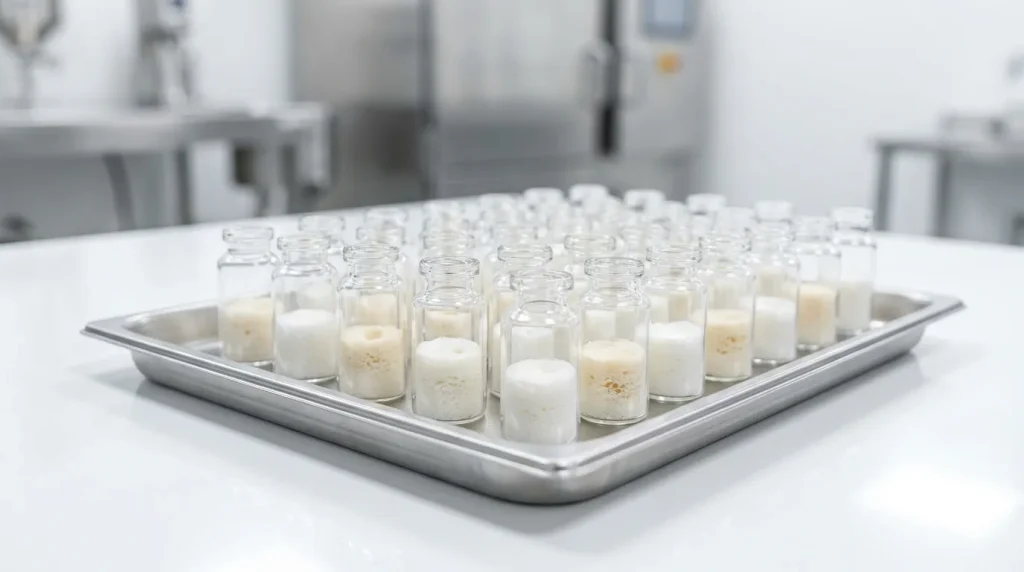
Freeze drying is preferred in pharmaceuticals and biotechnology because it stabilizes sensitive products without exposing them to damaging heat. Lyophilization removes water at low temperatures, preserving the molecular integrity of biologics, vaccines, and injectable drugs that would degrade under conventional drying.
According to the IMARC Group, the rapid growth of biopharmaceuticals, including biologics, mRNA vaccines, and monoclonal antibodies, is driving demand for freeze-drying equipment. Pharmaceutical and biotechnology applications capture a 33.4% share of freeze-drying use in 2025.
For manufacturers handling high-value injectables, lyophilization remains the most reliable method to extend stability while protecting therapeutic activity.
How is lyophilization used in food processing applications?
Lyophilization is used in food processing applications to preserve convenience foods, snacks, and ingredients while retaining flavor, structure, and nutritional value. The process commands the largest market segment in this industry.
According to the IMARC Group, food processing and packaging holds a 35.9% application share in 2025, driven by rising consumer demand for freeze-dried products. Regional demand concentrates in three areas:
- Asia-Pacific leads at 35.4%, supported by expanding food processing capacity in China, India, Japan, and South Korea.
- North America follows at 29.1%.
- Europe accounts for 24.8%.
Lyophilization is an energy-intensive process requiring sustained low temperatures and vacuum conditions over extended cycles, which explains why emerging alternatives such as spray drying, foam drying, and supercritical fluid drying compete in select segments. Even so, no alternative matches freeze drying for preserving delicate food structures, making it the standard for premium products.
What are examples of other industries benefiting from freeze drying?
Examples of other industries benefiting from freeze drying include aerospace, emergency preparedness, nutraceuticals, and diagnostics. Freeze-drying is a process in which water is sublimated by the direct transition of water from solid (ice) to vapor, omitting the liquid state, then desorbing water from the dry layer.
The low residual moisture explains the appeal across these sectors. The water activity for most properly freeze-dried food products ranges from 0.08 to 0.330, a level that inhibits microbial growth and supports long-term storage without refrigeration. This stability makes lyophilized products suited to lightweight rations, shelf-stable supplements, and diagnostic reagents that must remain viable for extended periods. With diverse industries depending on this technology, sourcing reliable lyophilization equipment becomes the next priority.
What are the advantages and disadvantages of freeze drying compared to other drying methods?
Freeze drying offers superior product quality but carries higher energy costs and longer cycle times than alternative drying methods. The main trade-offs are quality retention versus energy intensity, cost, and processing speed. The following subsections detail how lyophilization affects product stability and shelf life, along with its core limitations.
The advantages and disadvantages of freeze drying compared to other drying methods are:
- Advantage: Superior retention of nutrients, structure, and bioactive compounds versus hot-air drying.
- Advantage: Long shelf life and excellent rehydration through a porous dry structure.
- Disadvantage: High energy demand, since the heat of sublimation reaches 2,885 kJ/kg (about 0.801 kWh/kg).
- Disadvantage: Slow processing and high capital cost compared with spray drying, foam drying, and supercritical fluid drying.
According to the IMARC Group, emerging techniques such as spray drying, foam drying, and supercritical fluid drying offer faster processing times and lower energy costs, creating competitive pressure in select segments. For most heat-sensitive pharmaceuticals and high-value foods, this quality advantage justifies the higher energy expense.
How does freeze drying impact product stability and shelf life?
Freeze drying extends product stability and shelf life by removing water through sublimation and desorption, leaving a dry, porous structure that resists chemical and microbial degradation. Lyophilization removes water in three stages: freezing, primary drying (ice sublimation), and secondary drying (desorption to the required final humidity).
The stability benefits include:
- Extended shelf life: Commercially prepared freeze-dried foods can have a shelf life of up to 25 years.
- Nutrient retention: A PLOS ONE study found freeze-dried mulberry outperformed hot-air-dried mulberry in nutrients, functional compounds, and antioxidant activity, with better color protection.
- Controlled stability validation: Per ICH Q1A(R2), shelf life is established by testing a minimum of three batches under similar manufacturing conditions.
Ice crystal size directly affects this outcome, because larger crystals create voids that speed water vapor escape and shape the final porous structure.
Are there any limitations or challenges in using lyophilizers?
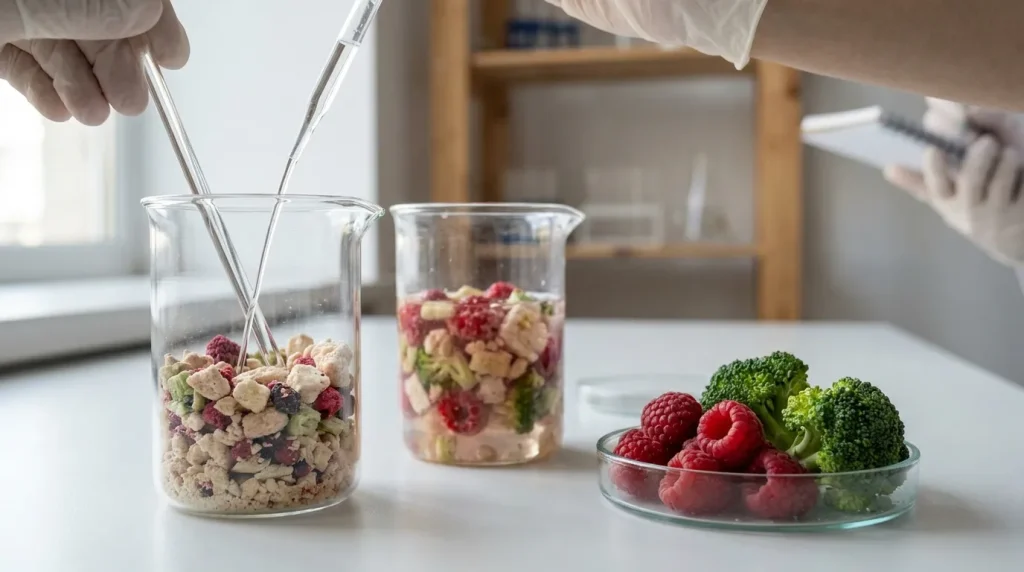
Yes, there are several limitations and challenges in using lyophilizers, including high energy consumption, long cycle times, elevated capital cost, and difficult scale-up from laboratory to production. Lyophilization is an energy-intensive process that requires sustained low temperatures and vacuum conditions over extended cycles.
The main challenges are:
- Difficult scale-up: A lab recipe cannot be copied directly to production because freezing rate, shelf geometry, and heat transfer differ at larger scale. Per AAPS Open, NDAs (33.3%) and ANDAs (22.9%) pursued commercial manufacturing with a scale-up factor of 1.5 to 10.
- Complex process monitoring: Endpoint detection requires combined gauges, since the capacitance manometer measures absolute pressure independent of gas composition while the Pirani gauge reading depends on it.
- Market cost pressure: The global freeze-drying equipment market reached USD 2.59 billion in 2025, reflecting high equipment investment.
How should you approach freeze dryer sourcing and equipment selection with International Process Plants?
Freeze dryer sourcing with International Process Plants centers on matching verified process parameters to available inventory in the secondary market. The following sections explain how we support lyophilizer acquisition and recap core lyophilization principles for selecting equipment.
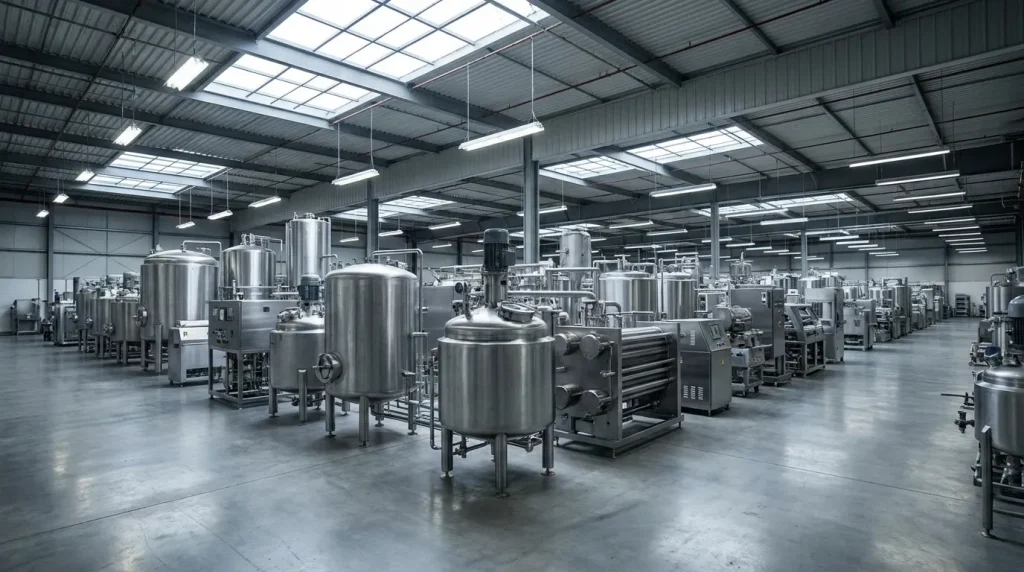
Can International Process Plants help with acquiring used or refurbished lyophilizers for industrial applications?
Yes, International Process Plants can help with acquiring good used lyophilizers for industrial applications across pharmaceutical, biotechnology, and food processing sectors. We supply new surplus and quality used process equipment from our global inventory, drawing on more than 46 years of experience serving 15 countries. We help buyers identify currently available units that match your technical requirements and particular process.
What are the key takeaways about how freeze dryers work and the lyophilization process explained?
The key takeaways about how freeze dryers work are that lyophilization removes water from a frozen product under vacuum, allowing ice to sublimate directly from solid to vapor without passing through a liquid phase. The lyophilization process operates in three interdependent stages: freezing, primary drying (sublimation), and secondary drying (desorption).
For procurement engineers and plant managers, the practical lessons are clear:
- Process parameters drive equipment fit. Temperature, pressure, and time control define whether a unit suits your product.
- The three stages are interdependent. Freezing quality affects sublimation, and sublimation affects final moisture.
Matching these principles to verified inventory helps procurement managers choose equipment aligned with their processing application. International Process Plants helps buyers connect these technical requirements to currently available lyophilizers and other process equipment worldwide.

 PL
PL  EN
EN  ES
ES  FR
FR  DE
DE  AR
AR  UR
UR  HI
HI  NL
NL  TR
TR  IT
IT  UK
UK  RU
RU  JA
JA  PT
PT  ZH
ZH