 Vai al contenuto
A plate and frame filter press works by clamping alternating plates and frames together under hydraulic pressure, then forcing slurry into the sealed chambers so filter cloths capture solids while liquid filtrate passes through.
We cover the core components and assembly of the press, the step-by-step filtration cycle, key industry applications, comparisons with alternative filtration equipment, and best practices for operation, maintenance, and sourcing.
The press relies on filter plates, frames, filter cloths or membranes, a hydraulic closing system, and a center feed pipe assembly. Plates provide rigid support and direct filtrate toward drainage ports, while frames create the chamber volume where filter cake builds. Cloth material and weave pattern determine particle capture size and chemical compatibility.
The filtration cycle follows four phases: setup and slurry loading, progressive pressure application at standard ratings of 7 bar (100 PSI) or 15 bar (225 PSI), cake formation as solids deposit layer by layer on the cloth, and finally discharge of dry, rigid cakes by gravity. Cycle times typically range from 2 to 8 hours depending on slurry characteristics and target cake dryness.
Pharmaceuticals, chemicals, mining, food processing, and wastewater treatment all rely on plate and frame presses for high-purity separation. Batch flexibility allows facilities to run multiple product campaigns on shared infrastructure while meeting Good Manufacturing Practices (GMP) and environmental standards like ISO 14001.
Compared to belt presses and centrifuges, plate and frame presses typically achieve superior cake dryness in batch mode, though continuous-throughput applications may favor alternatives.
Routine cloth cleaning, hydraulic system checks, and cycle monitoring prevent unplanned downtime and extend equipment life. International Process Plants maintains a global inventory of new surplus and quality used filter presses for procurement teams seeking faster alternatives to OEM lead times.
What are the main components of a plate and frame filter press?
The main components of a plate and frame filter press are filter plates, frames, filter cloths or membranes, a hydraulic closing system, a center feed pipe assembly, and a supporting frame structure. Each component performs a specific role in achieving solid-liquid separation.
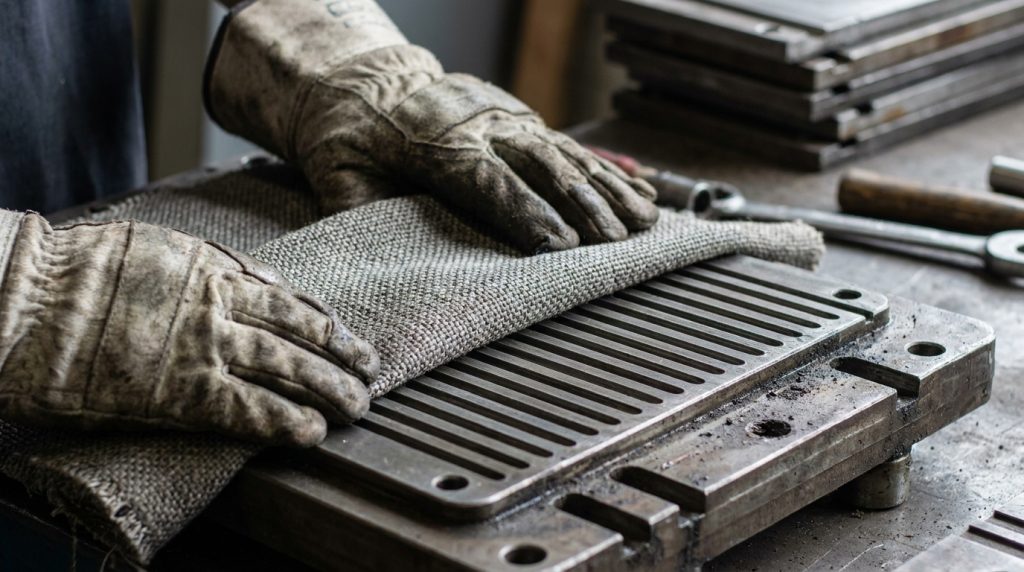
How do filter plates and frames function together in the press?
Filter plates and frames function together by creating sealed chambers where slurry is pressurized and solids are captured. The hydraulic system closes plates and frames into a tight stack. According to the PKF 100 NG-2 operating instructions, membrane filter press cycles include a high-pressure closing phase, typically reaching 40 bar (580 PSI) of hydraulic pressure, before filling and expression stages begin.
Plates provide rigid surfaces that support filter media and direct filtrate toward drainage ports. Frames sit between plates, forming the open volume where filter cake accumulates. This alternating arrangement maximizes filtration area within a compact footprint. For procurement engineers evaluating equipment, understanding this plate-frame interaction is essential because chamber volume directly determines batch capacity and cycle throughput.
What role do filter cloths and membranes play in the process?
Filter cloths and membranes play the role of the active separation barrier, retaining solids while allowing liquid filtrate to pass through. The cloth drapes over each plate surface, and its weave pattern determines particle capture size and flow rate.
According to Zonel Filtech, polypropylene filter cloths are characterized by high heat resistance and exceptional chemical resistance, making them suitable for a wide range of industrial dewatering applications. Membrane plates add a secondary function: after initial cake formation, inflatable membranes squeeze the cake to expel additional moisture. Proper cloth selection based on slurry chemistry and particle distribution is often the single largest factor in filtration efficiency.
How is the overall assembly structured for optimal operation?
The overall assembly is structured around a rigid main frame consisting of two end plates (a fixed head and a movable tail), connected by horizontal side rails. Filter plates hang from these rails for easy opening and cake discharge.
Key structural elements include:
- A hydraulic cylinder mounted on the fixed head, generating the closing force that seals all chambers.
- A center feed pipe assembly connecting the press to the slurry source.
- Filtrate collection manifolds that channel separated liquid away from each plate.
- Drip trays beneath the plate stack to capture residual liquid during cake discharge.
Cake formation initiates when slurry concentration remains low enough to prevent premature filter media blocking by pore bridging. This structural arrangement allows operators to access individual plates for inspection and cloth replacement without disassembling the entire unit.
With the main components defined, understanding the step-by-step filtration cycle reveals how these parts work in sequence.
How does the filtration process occur step by step in a plate and frame filter press?
The filtration process in a plate and frame filter press occurs step by step through four sequential phases: setup and slurry loading, pressure application, cake formation, and filtrate removal.

What are the initial setup and slurry loading procedures?
The initial setup and slurry loading procedures begin with closing the filter press and preparing the feed system. Operators hydraulically compress the plates and frames together to form sealed filtration chambers. The center feed pipe assembly, which consists of five distinct parts according to Met-Chem, connects the press to the slurry product intended for filtration.
Once sealed, a feed pump introduces the slurry into the chambers through the center feed ports. Standard filter plate sizes range from 470 mm to 2,000 mm (18.5 in. to 78.7 in.), and the selected plate size determines the total filtration area and batch capacity. Proper slurry concentration must be verified before loading to prevent premature cloth blinding.
How is pressure applied and controlled during filtration?
Pressure is applied and controlled during filtration by progressively increasing pump output to force slurry against the filter cloths. The feed pump delivers slurry at an initial low pressure, then ramps gradually as chambers fill and resistance builds.
Filter presses typically operate at one of two standard pressure ratings:
- 7 bar (100 PSI) for lighter-duty applications
- 15 bar (225 PSI) for higher solids concentration or finer particles
Operators monitor pressure gauges throughout the cycle. When pressure reaches the target setpoint and flow rate drops significantly, the chambers are full and cake formation is complete. Automated systems can modulate pump speed to maintain consistent pressure without overloading the filter cloths.
What happens during the cake formation and separation phases?
Cake formation and separation happen as pressurized slurry deposits solids onto the filter cloth while liquid passes through. Solid particles accumulate layer by layer on each cloth surface, building a progressively thicker filter cake within the chamber void.
As the cake thickens, hydraulic resistance increases and filtrate flow decreases. According to M.W. Watermark, the total filtration cycle time for presses with a capacity of 125 ft³ (3.5 m³) or less equals the fill cycle time plus approximately 45 minutes for cake consolidation and handling. The separation phase concludes when filtrate flow drops to near zero, indicating the chambers are packed with compacted solids.
How are the filtrate and solids removed after filtration?
The filtrate and solids are removed after filtration through sequential discharge steps. Clear filtrate exits through drainage channels molded into the plates and flows to a collection manifold throughout the pressing cycle.
Once the cycle ends, the hydraulic system retracts and the plate stack opens. Cake discharge follows this sequence:
- The hydraulic ram releases clamping pressure.
- Plates separate individually or in groups, exposing the formed cakes.
- Solid cakes drop by gravity into a hopper or conveyor below.
- Operators inspect cloths for residual buildup or damage.
Residual moisture in the discharged cake is consistently low, producing rigid solids suitable for disposal or further processing. Understanding each phase helps engineers optimize cycle times and throughput when selecting or upgrading filtration equipment.
What industries commonly use plate and frame filter presses, and why?
The industries that commonly use plate and frame filter presses include pharmaceuticals, chemicals, mining, food processing, and wastewater treatment. These sectors rely on plate and frame presses because the equipment delivers high-purity solid-liquid separation across a wide range of slurry types. The subsections below detail specific sector benefits and the filtration tasks best suited for this equipment.
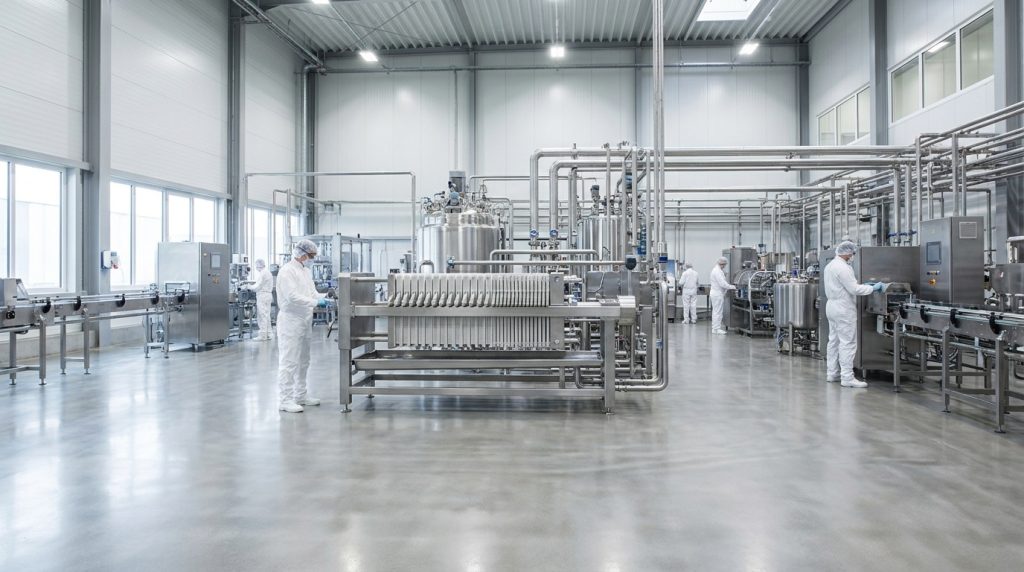
How do specific sectors like pharmaceuticals and chemicals benefit from this equipment?
Specific sectors like pharmaceuticals and chemicals benefit from this equipment through precise solid-liquid separation that meets strict purity and regulatory standards.
In pharmaceutical manufacturing, plate and frame filter presses support Active Pharmaceutical Ingredient (API) recovery by performing solvent clarification that prevents product contamination and improves material reuse efficiency. According to YW Wellfilter, pharmaceutical-grade filter presses comply with Good Manufacturing Practices (GMP) and often feature automatic cloth washing and leak-detection systems to ensure product purity.
Chemical processors benefit from equally important capabilities:
- Acid and alkali slurries are separated cleanly using chemically resistant polypropylene filter cloths.
- Catalyst recovery operations reclaim valuable materials from reaction byproducts.
- Pigment and dye production achieves consistent cake quality across batches.
For procurement engineers evaluating separation equipment, the batch flexibility of plate and frame presses makes them especially practical for facilities running multiple product campaigns on shared infrastructure.
What types of filtration tasks are best suited for plate and frame presses?
The types of filtration tasks best suited for plate and frame presses are batch-based solid-liquid separations where high cake dryness, product purity, or regulatory compliance matter most. Filter presses produce cakes that are consistently drier and more rigid than those produced by centrifuges, making them ideal when dry solids handling is a priority.
Tasks well matched to plate and frame press capabilities include:
- Dewatering mineral concentrates and tailings in mining operations.
- Clarifying process water and solvents for reuse in chemical plants.
- Recovering valuable solids such as APIs, catalysts, or specialty pigments.
- Treating industrial wastewater to meet discharge limits aligned with environmental framework-based standards such as ISO 14001.
Filter presses also handle variable feed compositions effectively, since operators can adjust cycle times and pressures without modifying the core equipment. With industry applications clearly defined, comparing plate and frame presses against alternative filtration equipment highlights when this design is the strongest choice.
How does a plate and frame filter press compare to other types of industrial filtration equipment?
A plate and frame filter press compares to other filtration equipment by producing drier cakes in a batch process, whereas centrifuges and belt presses operate continuously with different cost and moisture trade-offs.
What are the pros and cons of plate and frame presses versus alternatives?
The pros and cons of plate and frame presses versus alternatives center on cake dryness, operational mode, and capital cost. According to the Micronics Engineered Filtration Group, filter presses produce cakes that are consistently drier and more rigid than those produced by centrifuges, though centrifuges function as continuous rather than batch dewatering machines.
Key advantages of plate and frame filter presses:
- They achieve superior cake dryness compared to belt presses which typically reach only 16% to 22% solids content, and centrifuges which reach between 18% to 26.
- They handle a wide range of slurry concentrations and particle sizes.
- They accommodate high operating pressures up to 15 bar (225 PSI).
Key disadvantages:
- They operate in batch mode, requiring downtime between cycles for cake discharge.
- They demand more labor for plate shifting and cloth maintenance than continuous systems.
- They carry higher upfront capital costs compared to belt filter presses.
For procurement engineers evaluating dewatering options, the batch nature of plate and frame presses is often the deciding factor; continuous processes favor centrifuges, while maximum cake dryness at moderate throughput favors the filter press.
In which scenarios is a plate and frame filter press the preferred choice?
A plate and frame filter press is the preferred choice in scenarios requiring high cake dryness, variable feed conditions, or strict filtrate clarity. Applications in mining, wastewater treatment, and chemical processing frequently demand these characteristics.
Preferred scenarios include:
- Bulk mining dewatering, where equipment such as Metso Outotec’s FPS filter press handles demanding solid-liquid separation at scale.
- Pharmaceutical and chemical batch processing, where product purity and compliance with standards require precise filtration performance evaluation.
- Operations with variable slurry compositions that change between production runs.
According to Research and Markets, the recessed plate filter press segment is expected to reach US$641.5 million by 2030, growing at a CAGR of 1.9%, reflecting sustained industrial demand for batch pressure filtration.
When throughput demands exceed what batch cycling can deliver, continuous alternatives become more practical for the application.
What are the best practices for operating and maintaining a plate and frame filter press?
The best practices for operating and maintaining a plate and frame filter press center on consistent cycle management, routine inspections, and proactive troubleshooting. A typical filter press cycle lasts between 2 and 8 hours, depending on material characteristics and target cake dryness.
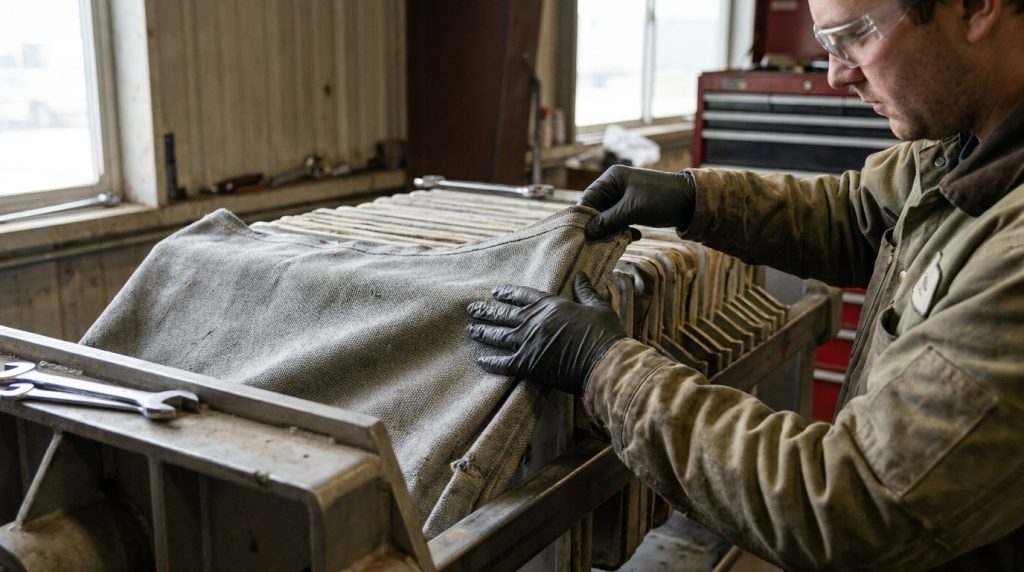
What routine maintenance ensures efficient and safe operation?
Routine maintenance ensures efficient and safe operation through regular filter cloth care, hydraulic system checks, and scheduled component inspections. Key maintenance tasks include:
- Cleaning filter cloths with high-pressure washers at 800 to 900 PSI (55 to 62 bar) using a fan-tip nozzle to prevent fabric damage.
- Inspecting cloths for signs of chemical attack, abrasion, or blinding that reduce filtration throughput.
- Checking hydraulic cylinders, seals, and closing mechanisms for leaks before each cycle.
- Verifying plate alignment and gasket condition to prevent slurry bypass.
- Lubricating guide rails and shifter mechanisms on the prescribed schedule.
According to the Micronics Engineered Filtration Group, filter cloth life can be extended by avoiding mechanical damage from chemical attack or abrasion and by preventing cloth blinding through regular cleaning. In pharmaceutical applications, GMP-compliant presses often feature automatic cloth washing and leak-detection systems that reduce manual intervention while ensuring product purity.
How can operational issues or common problems be identified and resolved?
Operational issues or common problems can be identified and resolved by monitoring cycle times, pressure curves, and filtrate clarity during each batch. Common problems and their solutions include:
- Uneven cake thickness: indicates blocked feed ports or uneven slurry distribution; flush the center feed assembly and check for obstructions.
- Leaking between plates: caused by worn gaskets, misaligned plates, or insufficient closing pressure; re-seat plates and replace damaged seals.
- Extended cycle times: suggest cloth blinding or inadequate feed pressure; clean cloths and verify pump output.
- Wet or sticky cake: points to premature cycle termination or low feed solids concentration; extend the pressing phase or adjust slurry conditioning upstream.
Tracking these indicators over consecutive cycles reveals degradation trends before they cause unplanned downtime. For most operations, maintaining a logbook of cycle duration, feed pressure, and cake moisture creates a reliable baseline that simplifies root-cause analysis when deviations occur. When replacement components or upgraded equipment become necessary, International Process Plants serves industries across pharmaceutical, chemical, and industrial processing sectors with used and new surplus filtration systems sourced from their operations in 15 countries.
With maintenance protocols established, sourcing the right replacement components or upgraded equipment keeps your filter press performing at its design capacity.
How can you source or upgrade a plate and frame filter press through International Process Plants?
You can source or upgrade a plate and frame filter press through International Process Plants by accessing our global inventory of new surplus and quality used process equipment. The subsections below cover our equipment solutions and key takeaways from this guide.
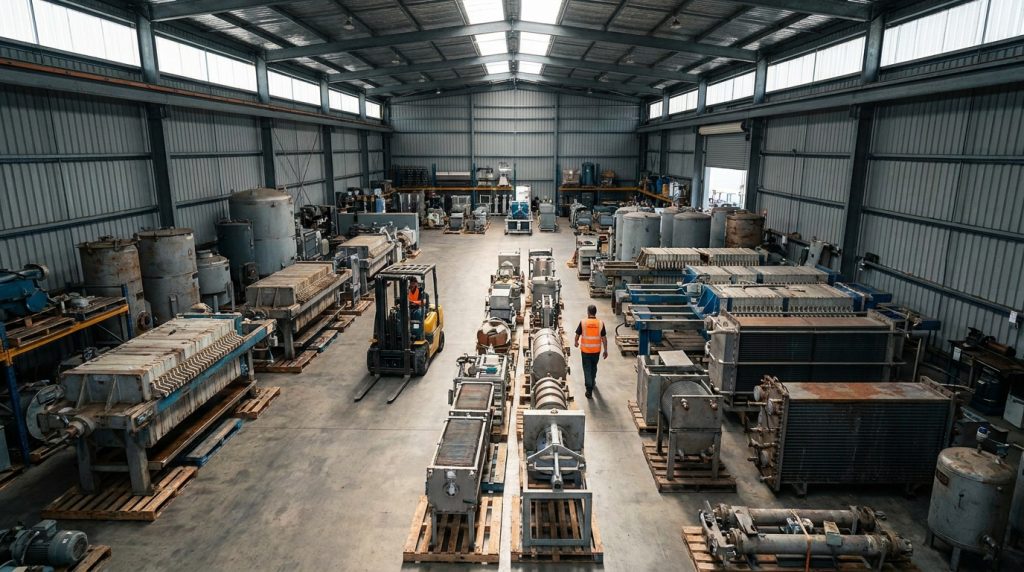
What equipment solutions does International Process Plants offer for plate and frame filter presses?
International Process Plants offers new surplus and quality used plate and frame filter presses suitable for chemical, pharmaceutical, and industrial solid-liquid separation applications. Our inventory of 15,000+ pieces of equipment, stored across warehouses in Eastover, South Carolina (US), Germany, and the United Kingdom, includes filtration systems built to support processes such as Active Pharmaceutical Ingredient (API) recovery, where filter presses perform solvent clarification to prevent product contamination and improve material reuse efficiency (N.M. Patel & Co.). With over 46 years of experience, International Process Plants provides procurement engineers a faster alternative to new OEM lead times. Contact us to confirm what is currently available for your specifications.
What are the key takeaways about how a plate and frame filter press works?
The key takeaways about how a plate and frame filter press works are:
- Filter plates and frames clamp together under hydraulic pressure to form sealed chambers where solid-liquid separation occurs.
- Slurry enters through the center feed assembly, and pressure forces liquid through filter cloths while solids accumulate as a filter cake.
- Cycle times can typically range from 2 to 8 hours depending on material characteristics and target cake dryness.
- Filter cloth selection, routine cleaning, and proper pressure control are the primary factors that determine operational efficiency and equipment longevity.
- Filter presses can support environmental management goals such as waste reduction within ISO 14001-compliant systems, according to Circular Group.
For procurement engineers evaluating plate and frame filter presses, International Process Plants simplifies sourcing by maintaining a global inventory of quality used and new surplus units ready for inspection and rapid deployment.

 IT
IT  EN
EN  ES
ES  FR
FR  PL
PL  DE
DE  AR
AR  UR
UR  HI
HI  NL
NL  TR
TR  UK
UK  RU
RU  JA
JA  PT
PT  ZH
ZH