
A process reactor is a vessel where controlled chemical transformations convert raw materials into valuable products, with designs ranging from compact laboratory-scale units to structures over 25 meters (82 feet) high holding hundreds of metric tons of material.
This guide covers reactor fundamentals and design principles, the main reactor categories and how each operates, selection criteria for matching reactors to processes, sustainability and efficiency implications, emerging technologies reshaping reactor design, and how used and refurbished equipment supports plant transitions.
Reactor fundamentals begin with four core principles: reaction kinetics, heat transfer, mass transfer, and safety. Engineers integrate HAZOP methodology early in design to ensure vessel geometry, materials of construction, and control systems reflect the specific hazards of the intended chemistry.
The main reactor categories split into batch and continuous operation. Batch reactors process materials in discrete loads and suit facilities producing multiple products with varying conditions. Continuous designs, including plug flow reactors, CSTRs, packed bed reactors, fluidized bed reactors, and tubular reactors, maintain uninterrupted flow and deliver more consistent product quality through tighter control of residence time, temperature, and pressure.
Selection depends on feedstock phase, production scale, product sensitivity to mixing, regulatory frameworks like ASME codes and the Pressure Equipment Directive, and total lifecycle cost. Sourcing new surplus and quality used reactors can reduce capital expenditure by 50% compared to new fabrication.
Modern reactor technology reduces environmental impact through intensified processing and smaller footprints; the global microreactor market alone is projected to grow from USD 597.9 million in 2024 to USD 1,408.4 million by 2033. Automation and Industry 4.0 integration further improve uptime and process control across both new and existing reactor installations.
What Is an Industrial Reactor and Why Is It Important in Process Industries?
A process reactor is a vessel where controlled chemical transformations convert raw materials into valuable products. The sub-sections below explain how reactors contribute to chemical processes and what core principles guide their design.
How Do Industrial Reactors Contribute to Chemical Processes?
Process reactors contribute to chemical processes by providing the controlled environment necessary for reactions to occur at specific temperatures, pressures, and residence times. These vessels enable raw materials to transform into finished products at commercially viable rates and yields.
According to The Essential Chemical Industry, reactors used in industry vary in size from a few cm³ to vast structures; kilns that produce lime from limestone, for example, may be over 25 meters (82 feet) high and hold over 400 tons (882,000 pounds) of materials at any one time. This size range reflects how different chemical processes demand different reactor configurations, from compact batch vessels for specialty compounds to large continuous systems for commodity chemicals.
What Are the Core Principles Behind Reactor Design?
The core principles behind reactor design are reaction kinetics, heat transfer, mass transfer, and safety. Engineers balance these factors to achieve target conversion rates while maintaining safe operating conditions.
According to the American Institute of Chemical Engineers (AIChE), a Hazard and Operability Study (HAZOP) is a systematic qualitative technique that uses guide words to identify process hazards and potential operating problems by studying deviations from design intent. HAZOP analysis questions every part of a process to discover what deviations can occur, along with their causes and consequences. Integrating safety methodology this early in the design phase ensures that reactor geometry, materials of construction, and control systems all reflect the specific hazards of the intended chemistry.
Understanding these foundational principles helps engineers evaluate which reactor type best fits a given application.
What Are the Main Categories of Industrial Reactors?
The main categories of industrial reactors are batch reactors and continuous reactors, with continuous designs further divided into plug flow reactors, continuous stirred-tank reactors (CSTRs), packed bed reactors, fluidized bed reactors, and tubular reactors.
What Distinguishes Batch Reactors from Continuous Reactors?
Batch reactors are distinguished from continuous reactors by their operational mode: batch reactors process materials in discrete loads, while continuous reactors maintain an uninterrupted flow of reactants and products.
According to The Essential Chemical Industry (University of York), batch reactors are usually used when a company wants to produce a range of products involving different reactants and reactor conditions, using the same equipment for multiple reactions. Examples include the manufacture of colorants and margarine.
Continuous reactors deliver more consistent product quality because reaction parameters such as residence time, temperature, and pressure are better controlled than in batch operations. They also produce less waste and require lower storage of raw materials and products.
Why Are Plug Flow Reactors Used in Certain Industries?
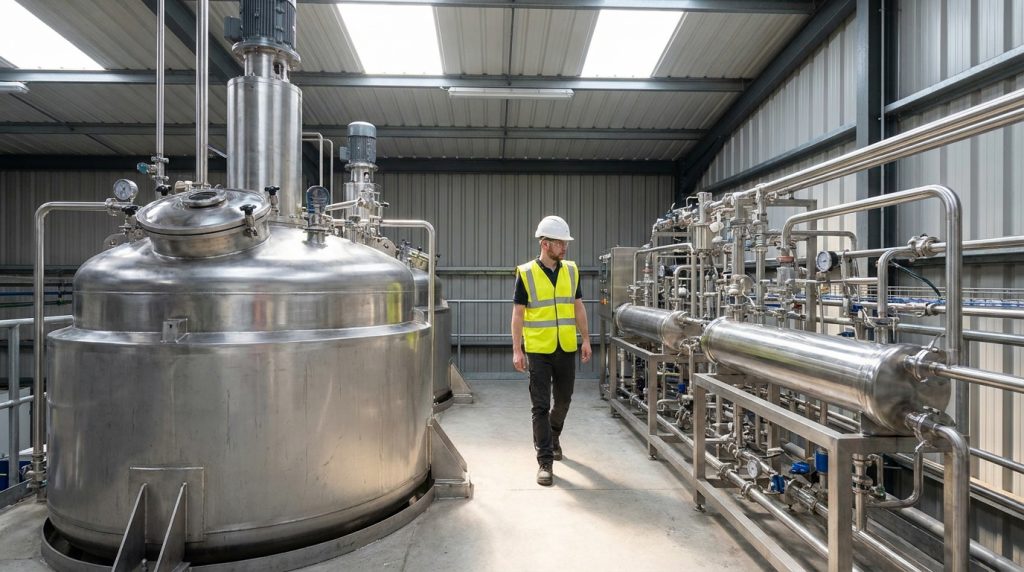
Plug flow reactors are used in certain industries because they provide uniform residence time and support heterogeneous catalysis at scale. In a plug flow configuration, reactants move through the vessel without back-mixing, ensuring predictable conversion rates.
According to The Essential Chemical Industry, a heterogeneous catalyst is used frequently in industry where gases flow through a solid catalyst, often in the form of small pellets to increase surface area. This arrangement is described as a fixed bed of catalyst. Examples include sulfuric acid production via the Contact Process (vanadium(V) oxide catalyst), nitric acid manufacture, and ammonia synthesis via the Haber Process (iron catalyst).
How Do Continuous Stirred-Tank Reactors Operate?
Continuous stirred-tank reactors operate by introducing one or more reactants into a vessel equipped with an impeller while removing products continuously. The impeller stirs reagents vigorously to ensure good mixing and uniform composition throughout the reactor volume. This design suits liquid-phase reactions requiring consistent concentration and temperature profiles. CSTRs are common in polymerization, wastewater treatment, and pharmaceutical intermediate production.
What Are Packed Bed Reactors and Where Are They Applied?
Packed bed reactors are fixed-bed vessels filled with solid catalyst pellets through which gaseous or liquid reactants flow. They are applied in large-scale catalytic processes such as ammonia synthesis, methanol production, and hydrocarbon reforming. The stationary catalyst bed provides high surface area for gas-solid contact. Because catalyst pellets remain in place, packed bed reactors offer straightforward catalyst management and predictable pressure-drop characteristics across the bed length.

What Is Unique About Fluidized Bed Reactors?
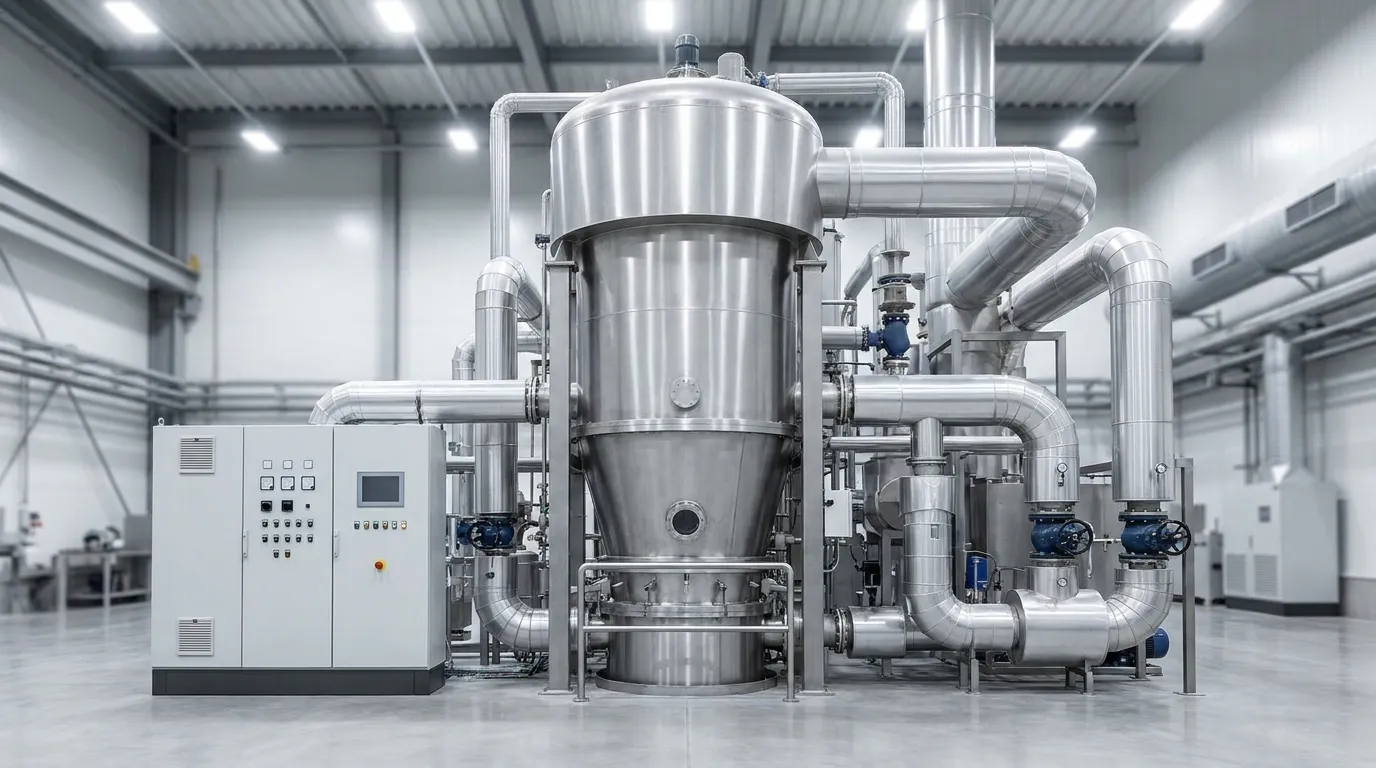
The unique feature of fluidized bed reactors is that fine catalyst particles are suspended by upward-flowing gas, forming a fluid-like mixture. According to The Essential Chemical Industry, when gaseous reactants pass through a distributor plate, catalyst particles are carried with the gases, ensuring very good mixing, high contact between gaseous molecules and catalyst, and excellent heat transfer. This design eliminates hot spots common in fixed beds, making fluidized bed reactors well suited for highly exothermic reactions.
How Do Tubular Reactors Function in Industrial Settings?
Tubular reactors function in industrial settings by passing fluids (gases or liquids) through a tube or pipe at high velocities. As reactants flow along a heated section, they convert to products. At these high velocities, products cannot diffuse backward, resulting in little or no back-mixing. This characteristic gives tubular reactors behavior similar to plug flow reactors, making them effective for high-temperature gas-phase reactions such as ethylene production through steam cracking.
Understanding these reactor categories clarifies how each design serves specific process requirements and production scales.
What Factors Should Be Considered When Selecting an Industrial Reactor Type?
The factors that should be considered when selecting a reactor type include feedstock characteristics, production scale, product requirements, safety regulations, and cost of ownership. Each factor narrows the field toward the optimal reactor configuration.
How Do Feedstock, Scale, and Product Influence Reactor Choice?
Feedstock, scale, and product influence reactor choice by determining which mixing regime, residence time, and throughput capacity the process demands. A liquid slurry requiring uniform composition throughout calls for a CSTR equipped with an impeller that stirs reagents vigorously. According to The Essential Chemical Industry, in a tubular reactor, fluids flow at high velocities so that products cannot diffuse back, producing little or no back mixing.
Key selection criteria include:
- Feedstock phase (gas, liquid, slurry, or multiphase) dictates whether a fixed bed, fluid bed, or stirred tank is appropriate.
- Production scale determines batch versus continuous operation; high-volume commodity chemicals favor continuous flow.
- Product sensitivity to mixing affects whether uniform composition (CSTR) or plug flow (tubular) delivers better selectivity.
- Heat transfer needs may favor fluid bed reactors, where fine catalyst particles carried by gaseous reactants ensure very high contact and efficient thermal exchange.
What Safety and Regulatory Concerns Affect Reactor Selection?
Safety and regulatory concerns affect reactor selection by imposing design constraints, inspection requirements, and operational limits that influence which reactor type is viable. A Hazard and Operability Study (HAZOP), as defined by AIChE, is a systematic qualitative technique that uses guide words to identify process deviations, their causes, and consequences across every part of a reactor system.
Regulatory frameworks that shape reactor procurement include ASME pressure vessel codes, CE marking under the Pressure Equipment Directive (PED), and Canadian Registration Numbers (CRN). Exothermic reactions in enclosed vessels require pressure relief systems rated in both PSI and bar. For most procurement decisions, selecting a reactor with established code stamps and documented inspection histories reduces compliance risk.
How Do Cost and Maintenance Considerations Play a Role?
Cost and maintenance considerations play a role by defining total lifecycle expenditure, from capital acquisition through operational upkeep, cleaning turnaround time, and eventual replacement. Batch reactors carry lower initial capital cost but require more frequent cleaning between product campaigns. Continuous reactors demand higher upfront investment yet reduce per-unit production cost through uninterrupted operation and lower raw material storage needs.
Maintenance factors to evaluate include:
- Vessel material compatibility (316L stainless steel, Hastelloy C-276) and its resistance to process corrosion.
- Agitator seal type, which affects both maintenance frequency and leak prevention.
- Jacket or coil condition, since heat transfer degradation increases energy costs over time.
Sourcing new surplus and quality used reactors can reduce capital expenditure by 50% compared to new-build procurement, making reactor upgrades financially accessible for mid-scale operations.
With selection criteria established, the next step is evaluating how reactors impact efficiency and sustainability.
How Do Industrial Reactors Impact Production Efficiency and Sustainability?
Process reactors impact production efficiency and sustainability by determining energy consumption, waste output, and product consistency. The following subsections examine how reactor selection influences resource use and how modern technology reduces environmental footprint.
In What Ways Can Reactor Selection Affect Energy Use and Waste Generation?
Reactor selection affects energy use and waste generation by determining heat transfer efficiency, residence time control, and raw material conversion rates. Continuous reactors produce less waste and require much lower storage of both raw materials and products, resulting in more efficient operations compared to batch configurations.
Poorly matched reactors force operators to compensate with excess heating, extended cycle times, or additional purification steps. Each of these workarounds increases energy demand per unit of output. Choosing the correct reactor type for a given chemistry minimizes these inefficiencies at the source, rather than addressing them downstream. For most process engineers, this single decision carries more sustainability impact than any retrofit.
How Can Modern Reactor Technology Reduce Environmental Impact?
Modern reactor technology reduces environmental impact through intensified processing, smaller equipment footprints, tighter thermal control, and higher conversion rates that minimize byproduct formation. Microreactors exemplify this shift. According to Grand View Research, the global microreactor technology market size was estimated at USD 597.9 million in 2024 and is projected to reach USD 1,408.4 million by 2033, reflecting accelerating adoption across pharmaceutical and specialty chemical sectors.
These compact systems use channels measured in millimeters rather than meters, enabling precise temperature regulation and near-complete reactant conversion. Reduced solvent volumes, lower energy input per kilogram of product, and minimized hazardous waste streams make flow-based reactor platforms a practical path toward greener manufacturing.
With efficiency and sustainability strategies established, emerging technologies are pushing reactor design even further.
How Are Advancements in Reactor Design Shaping the Future of Industry?
Advancements in reactor design are shaping the future of industry through emerging technologies like microreactors and modular systems, combined with automation that enables real-time process optimization.
What Emerging Technologies Are Influencing Reactor Development?
Emerging technologies influencing reactor development include microreactors, flow chemistry systems, and modular reactor platforms. Microreactor technology enables precise control of reaction parameters within channels measuring fractions of an inch, often under 1 millimeter (0.04 inches) in diameter, improving heat transfer and selectivity. According to IMARC Group, the global flow chemistry market was valued at USD 2.2 billion in 2025 and is expected to reach USD 4.6 billion by 2034, exhibiting a CAGR of 8.5% during 2026 to 2034. Modular and small-scale reactor designs also allow faster deployment and scalability, particularly for specialty chemical production. For procurement teams evaluating capital equipment, these trends signal a shift toward smaller, more flexible reactor platforms alongside traditional batch and continuous systems.
How Is Automation Transforming Reactor Operation and Monitoring?
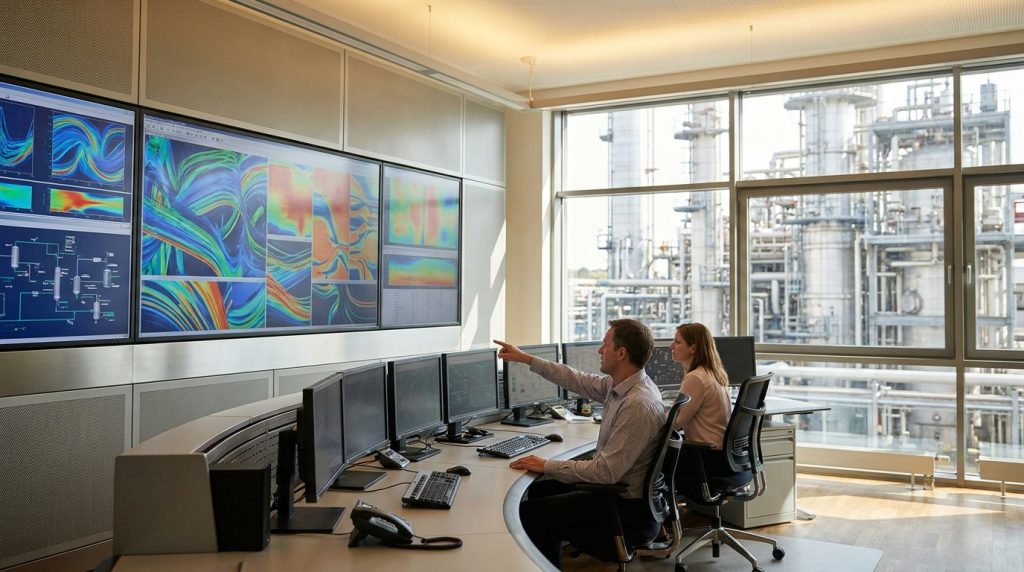
Automation is transforming reactor operation and monitoring by integrating sensors, digital controls, and predictive analytics into chemical process equipment. Real-time monitoring of temperature, pressure, and composition allows operators to adjust parameters without manual intervention, reducing variability and improving product consistency. According to Grand View Research, the global chemical industry 4.0 market was estimated at USD 17.42 billion in 2024 and is projected to reach USD 71.01 billion by 2033, growing at a CAGR of 16.9%. Automated systems also support predictive maintenance, identifying wear patterns in agitators, seals, and jacket systems before failures occur. Whether upgrading legacy equipment or deploying new reactor capacity, International Process Plants serves pharmaceutical, petrochemical, and specialty chemical industries across it’s 15 locations worldwide with process equipment solutions that accommodate both traditional and automated control platforms.
With these innovations accelerating, sourcing the right reactor equipment becomes a strategic advantage.
How Can Used and Refurbished Reactors Support Industrial Plant Transitions?
Used and refurbished reactors support industrial plant transitions by reducing capital expenditure, shortening lead times, and providing proven equipment for rapid deployment. The following sections explain how International Process Plants facilitates this process and summarize the key reactor types explored in this article.
How Does International Process Plants Facilitate Cost-Effective Reactor Acquisition?
International Process Plants facilitates cost-effective reactor acquisition by maintaining a large inventory of pieces of new surplus and quality used process equipment across warehouses in Eastover, South Carolina (US), Germany, and the United Kingdom. With 46+ years of experience, IPP specializes in simplifying plant and process transitions for industries including pharmaceutical, petrochemical, fine/specialty chemical, and food processing.
Procurement engineers benefit from several advantages when sourcing reactors through IPP:
- Reduced lead times compared to new fabrication.
- Lower capital costs through access to quality used and new surplus batch reactors, CSTRs, and other vessel types.
- Global logistics support through offices in 15 countries.
- Equipment currently available in verified materials such as 316L, 316, 304, and 304L stainless steel, plus alloy materials.
For plant managers navigating capacity expansions or process changes, sourcing from existing inventory eliminates the uncertainty of extended fabrication schedules. This approach is particularly valuable when project timelines demand equipment deployment in weeks rather than months.

What Are the Key Takeaways About Types of Industrial Reactors Explored Here?
The key takeaways about types of industrial reactors explored here center on matching reactor design to process requirements. Each reactor type serves distinct operational needs:
- Batch reactors offer flexibility to produce multiple products using different reactants and conditions within the same vessel.
- Continuous reactors deliver consistent product quality through precise control of residence time, temperature, and pressure.
- Tubular reactors enable high-velocity flow with minimal back mixing for gas-phase and liquid-phase reactions.
- CSTRs maintain uniform composition throughout the vessel via impeller-driven mixing.
- Fixed bed and fluidized bed reactors provide high catalyst contact for heterogeneous reactions.
Selecting the right reactor depends on feedstock characteristics, production scale, safety requirements, and maintenance considerations. For process engineers evaluating equipment options, International Process Plants offers a practical path to acquire these reactor types with shorter timelines and lower costs than new fabrication.

 FR
FR  EN
EN  ES
ES  PL
PL  DE
DE  AR
AR  UR
UR  HI
HI  NL
NL  TR
TR  IT
IT  UK
UK  RU
RU  JA
JA  PT
PT  ZH
ZH