 Passer au contenu
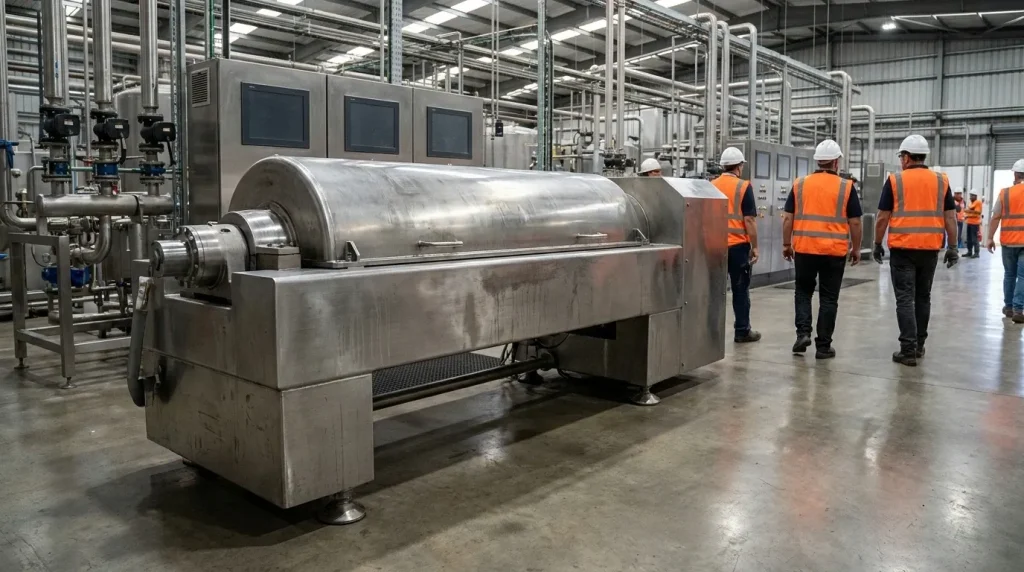
A decanter centrifuge scroll is the helical conveyor inside the rotating bowl that transports separated solids toward discharge, and its wear directly reduces separation efficiency, increases energy consumption, and leads to costly unplanned downtime.
This guide covers scroll function and materials, wear recognition and root causes, inspection and maintenance protocols, advanced detection techniques, and refurbishment versus replacement decisions.
Scroll function depends on differential rotation that conveys settled solids under G-forces exceeding 3,000 times gravity, with tungsten carbide tile specifications providing hardness values of 68 to 93 HRa for applications with continuous abrasive contact. Material selection between sintered carbide tiles, Stellite alloys, chromium carbide overlays, and duplex stainless steels contributes to service life based on your specific feed characteristics and process chemistry.
Wear recognition combines visual inspection of flight edges, tile condition, and beach section erosion patterns with performance monitoring of solids dryness, centrate clarity, vibration levels, and power consumption. Abrasive solids, corrosive fluids, and improper differential speed settings are the primary degradation drivers.
Inspection and maintenance protocols establish baseline schedules around every 500 to 1,000 operating hours depending on feed abrasivity. Some operators track measured scroll wear over operating hours for trend analysis, to forecast refurbishment or replacement intervals, although the metrics and inspection frequency vary by manufacturer and application. Predictive maintenance strategies can reduce costs by around 8% to 12% compared to preventive approaches and up to 40% compared to reactive methods.
Advanced detection techniques include ultrasonic thickness testing, 3D laser scanning with sub-millimeter accuracy, and continuous vibration monitoring against ISO 10816-3 thresholds. Refurbishment may suit scrolls with surface wear under 3 mm (0.12 in.) where base metal remains sound, while full replacement often becomes necessary when wear penetrates through hardfacing or cumulative repair costs exceed around 60% of replacement value.
What Is a Decanter Centrifuge Scroll and Why Is Its Wear Significant?
A decanter centrifuge scroll is the helical conveyor inside the rotating bowl that transports separated solids toward the discharge end. Its wear is significant because scroll degradation directly contributes to reduced separation efficiency, increases energy consumption, and can lead to costly unplanned downtime.
How Does the Scroll Function Within a Decanter Centrifuge?
The scroll functions within a decanter centrifuge by rotating at a slightly different speed than the bowl, creating differential motion that continuously conveys settled solids along the bowl’s tapered section toward the solids discharge. This differential speed controls solids retention time under G-forces often exceeding 3,000 times gravity, accelerating separation from hours to seconds.
The scroll’s helical flights scrape against accumulated solids while the centrifugal force compacts them. High-speed centrifuges can achieve fine separation of particles within the 2 to 5 micron range, making precise scroll-to-bowl clearance essential. Tungsten carbide tiles, commonly used on scroll flights, possess hardness values of around 68 to 93 HRa and shear strength between around 20,000 to 50,000 psi (138 to 345 MPa), enabling them to withstand continuous abrasive contact.
Key scroll functions include:
- Conveying separated solids at controlled differential speeds
- Helps maintain consistent cake dryness through retention time control
- Providing wear-resistant surfaces for abrasive slurry contact
- Supporting continuous operation without batch interruptions
For procurement engineers evaluating used equipment, understanding scroll condition is critical because it determines remaining service life and maintenance costs.
What Materials and Designs Impact Scroll Durability?
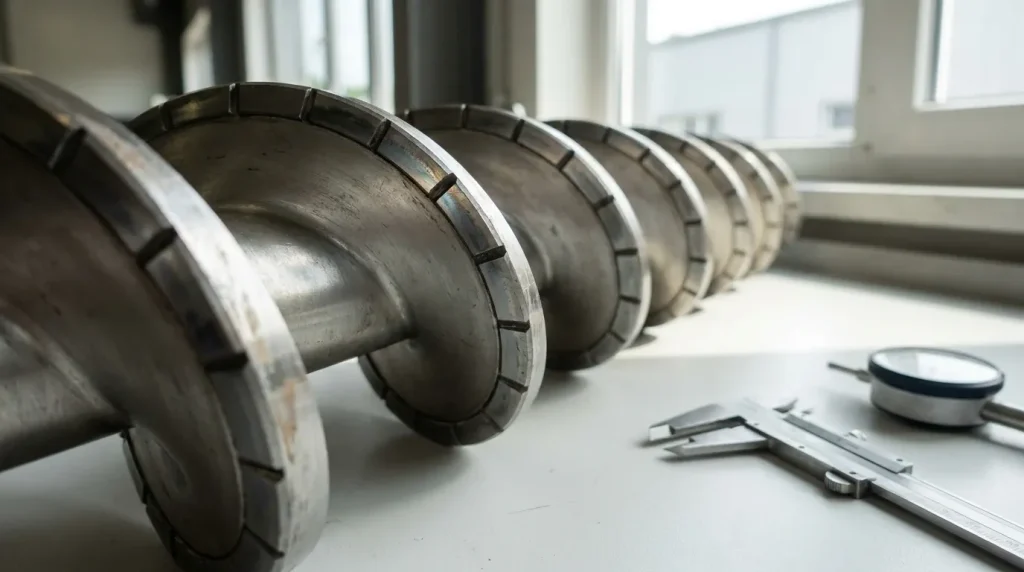
Material options and design choices impact scroll durability. Common choices can include but are not limited to wear-protection methods such as hardfacing alloys, sintered carbide wear tiles, and optimized flight geometry configurations. Sintered tungsten carbide tiles offer around 40 to 50 times greater wear resistance than flame-applied hardfacing materials, making tile selection one of the most consequential durability decisions.
Common scroll protection materials include:
- Tungsten carbide tiles (around 68 to 93 HRa hardness)
- Stellite 6 cobalt-based alloy (around 36 to 45 HRC)
- Chromium carbide overlays for weld-applied protection
- Duplex stainless steels for corrosive environments
Flight pitch, helix angle, and tile attachment method also affect durability. Mechanically interchangeable wear inserts simplify replacement compared to welded protection systems. With the global decanter centrifuge market projected to reach USD 3.44 billion by 2034 according to Precedence Research, manufacturers continue developing enhanced wear solutions.
What Are the Typical Signs of Scroll Wear in Decanter Centrifuges?
The typical signs of scroll wear in decanter centrifuges include visible surface erosion, declining separation efficiency, and unusual operational patterns. Early detection through visual inspection and performance monitoring prevents costly failures.
How Can Visual Inspection Reveal Early Signs of Wear?
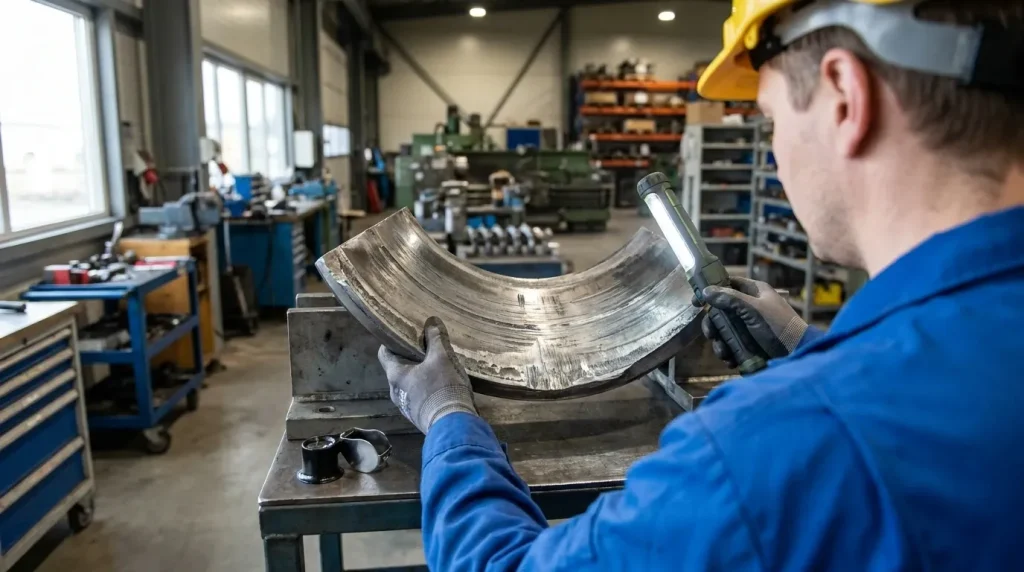
Visual inspection reveals early signs of wear through surface changes on scroll flights and conveyor edges.
Inspectors should examine discharge nozzles and the beach section closely, as these areas experience the highest abrasive contact. Documenting wear depth at consistent measurement points creates a baseline for tracking progression. For operations processing highly abrasive feeds, scheduling inspections before the 15,000 operating hour bearing replacement interval and utilizing predictive analytics helps catch scroll degradation early.
Which Performance Issues Indicate Potential Scroll Damage?
Performance issues indicating potential scroll damage include reduced solids dryness, increased solids content in the centrate, and higher power consumption. When the scroll cannot efficiently convey separated solids toward the discharge, solids residence time increases and dewatering suffers.
Other warning signs are:
- Elevated vibration levels during operation
- Unusual noise from the rotating assembly
- Reduced throughput capacity at normal settings
- Inconsistent cake discharge patterns
- Need for frequent differential speed adjustments
A sudden change in any of these parameters warrants immediate inspection. Vibration analysis against ISO 10816-3 standards helps distinguish scroll wear from bearing or balance issues. Operators who notice declining performance should correlate observations with recent feed characteristics before assuming mechanical failure.
Understanding these wear indicators prepares operators to investigate the underlying causes driving scroll degradation.
What Are the Main Causes of Decanter Centrifuge Scroll Wear?
The main causes of decanter centrifuge scroll wear are abrasive solids in the feed stream, improper operation and maintenance practices, and chemical corrosion from aggressive process fluids. The following subsections examine how each factor accelerates degradation.
How Do Abrasive Solids and Feed Characteristics Contribute to Wear?
Abrasive solids and feed characteristics contribute to wear by creating direct mechanical contact between hard particles and scroll surfaces during solids conveyance. Sharp-edged particles such as sand, calcium carbite, and mineral fines gouge the scroll flights with each rotation. Particle hardness, concentration, and angularity determine abrasion severity.
Feed slurries with high solids loading accelerate wear exponentially. Chromium carbide overlays (CCOs) are frequently employed in hardfacing rods and electrodes for weld-applied protection against this abrasive damage. Particle size also matters: coarse solids above 100 mesh (149 microns) cause more rapid erosion than finer particles, such as those below 200 mesh (74 microns).
Can Improper Operation or Maintenance Accelerate Scroll Degradation?
Yes, improper operation or maintenance can accelerate scroll degradation significantly. Running the centrifuge at incorrect differential speeds increases solids contact time and mechanical stress on scroll flights. Operating above rated bowl speeds amplifies erosive forces.
Common operational errors that shorten scroll life include:
- Excessive differential speed settings that overload the conveyor
- Inconsistent feed rates causing surge loading
- Running dry without feed slurry present
- Ignoring vibration alarms that signal imbalance
Skipped inspections can allow minor wear to progress into major damage. Delayed lubrication of bearings can contribute to misalignment that transfers abnormal loads to the scroll assembly.
What Role Do Chemical Corrosives Play in Scroll Wear?
Chemical corrosives play a significant role in scroll wear by attacking base metals and undermining protective surface treatments. Acidic, alkaline, and chloride-rich process streams degrade stainless steel and hardfacing materials through pitting, crevice corrosion, and general surface dissolution.
Corrosion and abrasion often act synergistically. Chemical attack weakens the scroll surface, and mechanical abrasion removes the corroded layer, exposing fresh metal to further chemical degradation. This cycle accelerates wear rates beyond what either mechanism would cause alone.
Material selection must match process chemistry. Duplex stainless steels and specialized alloys resist corrosive environments better than standard grades, making them essential for applications involving acids, caustics, or high-chloride feeds.
What Steps Should Be Taken for Effective Decanter Centrifuge Scroll Wear Inspection and Maintenance?
The steps for effective decanter centrifuge scroll wear inspection and maintenance include establishing consistent inspection frequencies, documenting findings systematically, and implementing proactive maintenance actions. The following sections detail recommended practices for each phase.
What Are the Recommended Inspection Frequencies and Best Practices?
The recommended inspection frequencies and best practices for decanter centrifuge scroll wear depend on operating conditions and feed characteristics. Establish a minimum baseline schedule with visual inspections around every 500 operating hours or less for abrasive applications and around every 1,000 hours for less demanding processes.
Best practices for scroll inspection include:
- Measure flight edge thickness at multiple points along the scroll length using calibrated gauges
- Inspect tungsten carbide tiles or hardfacing for cracks, chips, and debonding
- Check clearance between scroll flights and bowl wall, documenting any increase from original specifications
- Examine beach section wear patterns, where solids discharge creates concentrated abrasion
- Review differential speed settings and torque readings before physical inspection
Always perform inspections during scheduled shutdowns with proper lockout/tagout procedures. For facilities processing highly abrasive slurries, such as mining tailings or drilling mud, reduce intervals by 25% to 50%.
How Should You Record and Evaluate Inspection Findings?
You should record and evaluate inspection findings using standardized documentation that tracks wear progression over time. Create inspection logs that capture measurement data, photographs, and operating parameters from each assessment.
Essential documentation elements include:
- Date, operating hours, and inspector identification
- Dimensional measurements at predetermined reference points along the scroll
- Photographic evidence of wear patterns, tile condition, and surface defects
- Calculate measured wear rates over operating hours for trend analysis and predictive maintenance
- Feed characteristics during the inspection period, including solids concentration and particle size
Evaluate findings against manufacturer specifications and historical baseline data. Trend analysis reveals whether wear is progressing linearly or accelerating, which indicates whether current maintenance intervals remain appropriate. When measured wear rates at flight edges indicate accelerated material loss relative to application-specific baselines, inspection intervals may need to be shortened and operating parameters reviewed.
What Maintenance Actions Can Prevent Extensive Scroll Damage?
Maintenance actions that can prevent extensive scroll damage focus on early intervention and optimized operating practices. According to Advanced Technology Services, predictive maintenance strategies can reduce costs by 8% to 12% compared to preventive maintenance and up to 40% compared to reactive approaches.
Preventive maintenance actions include:
- Replace individual tungsten carbide tiles before adjacent tiles become exposed to direct abrasion
- Reapply hardfacing overlays when original thickness decreases by around 50%
- Optimize differential speed to reduce unnecessary scroll-to-cake friction
- Adjust feed rate and solids concentration to stay within design parameters
- Flush the centrifuge thoroughly after processing highly corrosive or abrasive materials
Addressing minor wear before it propagates protects surrounding scroll components and extends overall service life. A disciplined maintenance approach transforms unpredictable failures into planned interventions, keeping your separation process running efficiently.
With inspection and maintenance protocols established, the next section examines advanced techniques and tools that improve scroll wear detection accuracy.
What Techniques and Tools Improve the Detection of Scroll Wear?
Advanced detection techniques and monitoring tools improve scroll wear identification by revealing damage before it causes operational failures. The following subsections cover non-destructive testing methods and condition monitoring systems that track scroll health over time.
Are There Advanced Non-Destructive Testing Methods for Scroll Inspection?
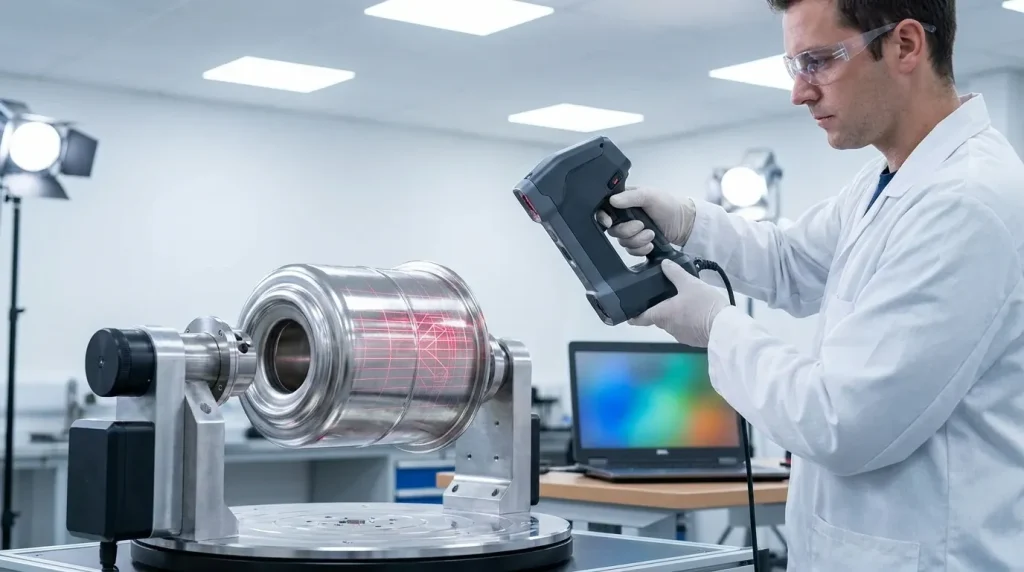
Yes, there are advanced non-destructive testing (NDT) methods for scroll inspection that detect wear without disassembling the centrifuge. Modern 3D scanning systems achieve sub-millimeter accuracy, with some ISO 17025 certified systems such as the SHINING 3D FreeScan series providing precision up to 0.02 mm (0.0008 in.) for detailed dimensional inspections. Key NDT methods for scroll evaluation include:
- Ultrasonic thickness testing measures remaining wall thickness on scroll flights and identifies subsurface erosion patterns
- Dye penetrant inspection reveals surface cracks in hardfacing and base metal that visual inspection misses
- 3D laser scanning creates digital models that compare current geometry against baseline measurements
- Eddy current testing detects coating disbondment and near-surface defects in conductive materials
How Do Monitoring Systems Help Track Scroll Condition Over Time?
Monitoring systems help track scroll condition over time by collecting continuous operational data that reveals wear progression patterns. ISO 10816-3 establishes vibration limits for industrial machinery, providing critical thresholds for vibration that encourage identification of root cause issues such as misalignment, imbalance, or bearing faults. Effective monitoring approaches include:
- Vibration sensors detect changes in frequency signatures that indicate scroll imbalance or flight degradation
- Differential speed trending identifies gradual torque increases caused by solids accumulation from worn flights
- Amperage monitoring tracks motor load variations that can correlate with scroll efficiency losses
- Temperature sensors flag bearing heat buildup that often accompanies scroll-related mechanical stress
Integrating these data streams into predictive maintenance programs allows operators to schedule inspections based on actual equipment condition rather than just fixed intervals, helping extend scroll service life while reducing unplanned downtime.
When Is Scroll Refurbishment or Replacement Necessary?
Scroll refurbishment or replacement becomes necessary when wear exceeds acceptable tolerances or when repair costs approach replacement value. The following subsections outline the criteria for choosing between refurbishment and full replacement, plus guidance on selecting parts and services.
What Criteria Indicate the Need for Refurbishing Versus Full Replacement?
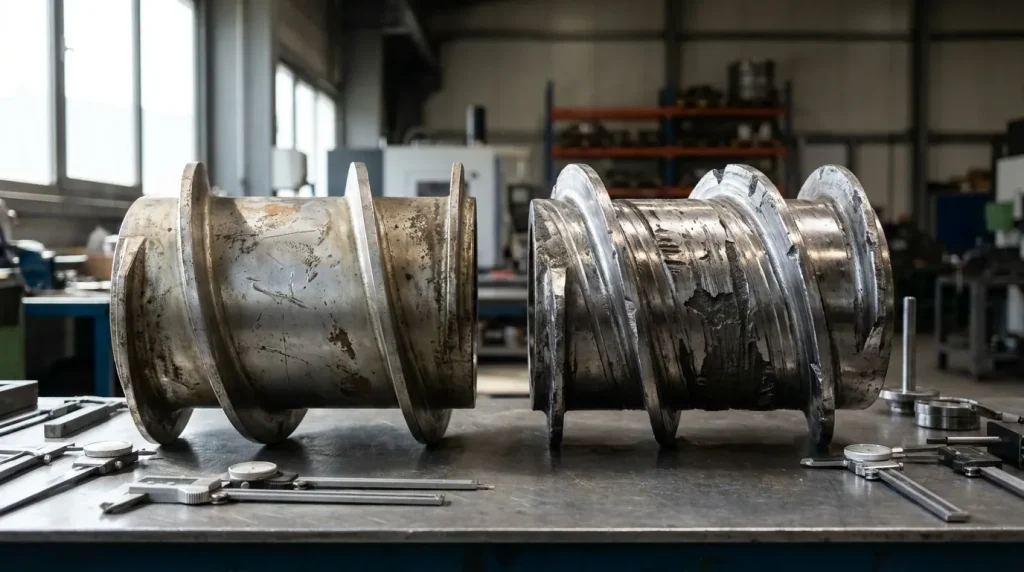
The criteria indicating the need for refurbishing versus full replacement include wear depth, structural integrity, and cost-effectiveness thresholds. Refurbishment often suits scrolls with surface wear under 3 mm (0.12 in) where the base metal remains sound. Full replacement is usually warranted when:
- Wear penetrates through hardfacing into base metal
- Cracks extend beyond weld-repairable limits
- Cumulative repairs exceed 60% of replacement cost
- Dynamic balance cannot be restored to specification
The Decanter Centrifuge Handbook indicates that “mechanically interchangeable wear inserts are more economical to replace than welded or bonded wear protection” for decanter centrifuge scrolls. This highlights how the type of wear protection used on a scroll can influence maintenance strategy: replaceable inserts may simplify localized repairs, while integrated wear protection may require different refurbishment approaches when significant wear occurs.
How Should You Select Replacement Parts or Services for Scroll Wear?
You should select replacement parts or services for scroll wear based on material compatibility, OEM equivalency, and supplier technical capability. Key selection factors include:
- Material grade verification: Verify tile grade, hardness, and mechanical properties against manufacturer specifications and application requirements, considering application requirements such as feed abrasivity, corrosion conditions, and expected wear performance.
- Dimensional accuracy: Ensure parts meet sub-millimeter tolerances for proper fit and balance
Service providers should demonstrate experience with your specific centrifuge model and process application. Generic approaches are never optimal–centrifuge maintenance strategies vary for differing applications and also depend on OEM specifications.
With refurbishment and replacement criteria established, partnering with a knowledgeable equipment supplier streamlines sourcing and ensures proper technical support.
How Does Partnering With a Trusted Equipment Supplier Impact Scroll Wear Management?
Partnering with a trusted equipment supplier impacts scroll wear management by providing access to quality replacement components, technical expertise, and application-specific guidance that generic suppliers cannot match. The following subsections explain how International Process Plants supports decanter centrifuge operations and summarize the key takeaways from this guide.
Can International Process Plants Assist With Decanter Centrifuge Scroll Wear Solutions?
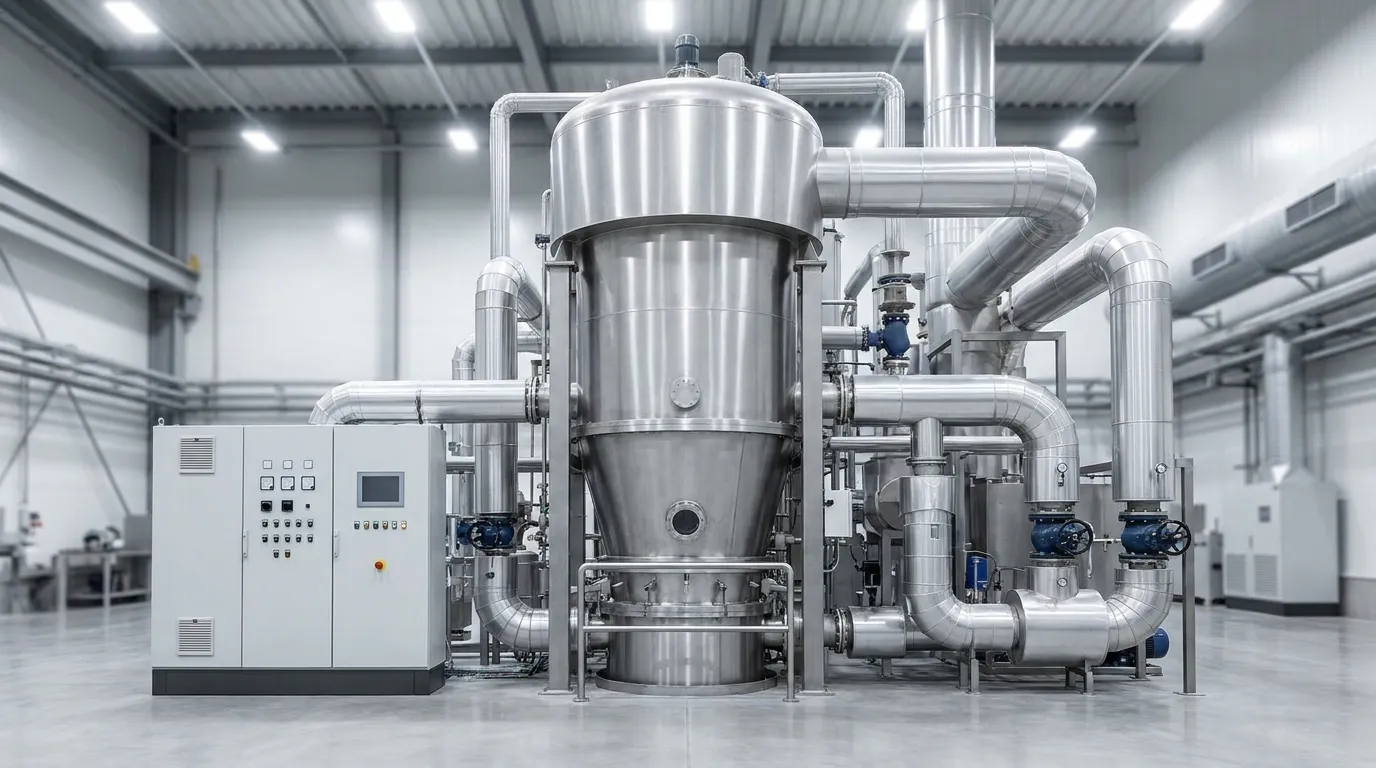
Yes, International Process Plants can assist with decanter centrifuge scroll wear solutions through our extensive inventory of new surplus and quality used separation equipment. With over 46 years of experience serving pharmaceutical, chemical, and industrial processing facilities with offices across 15 countries, we understand that centrifuge maintenance strategies must be customized for each application.
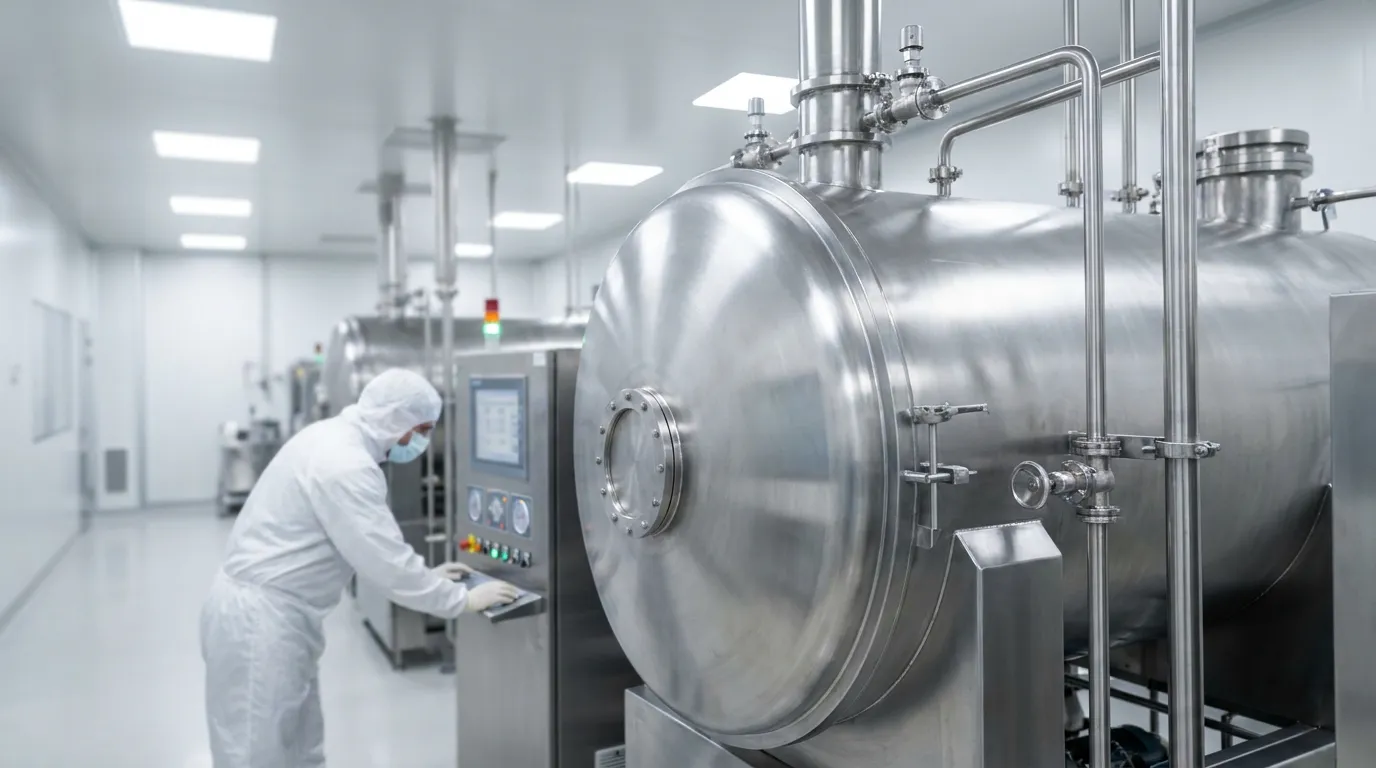
Our inventory includes decanter centrifuges constructed from duplex stainless steels, which are widely used in corrosive environments such as biodiesel production. We stock a range of solid-bowl decanter centrifuges designed for many different industrial separation applications.
Because specific data regarding wear mechanisms and lifecycle costs is not always available for used equipment, working with an experienced supplier helps bridge information gaps. International Process Plants provides technical documentation and can source scrolls with specifications such as mechanically interchangeable wear inserts.
What Are the Key Takeaways About Decanter Centrifuge Scroll Wear Inspection, Its Signs, Causes, and Maintenance Steps?
The key takeaways about decanter centrifuge scroll wear inspection, its signs, causes, and maintenance steps are:
- Scroll wear directly contributes to separation efficiency, solids dryness, and equipment lifespan
- Visual inspections of discharge nozzles and flight edges should occur at scheduled intervals to catch degradation early
- Abrasive solids, corrosive process fluids, and improper differential speed settings accelerate wear
- Tungsten carbide tiles and hardfacing overlays provide superior abrasion resistance compared to unprotected surfaces
- Predictive maintenance and vibration monitoring reduce unplanned downtime and repair costs
- Replacement becomes necessary when wear exceeds manufacturer tolerances or when refurbishment costs approach new component pricing
- Sourcing quality used or new surplus equipment from a trusted supplier like International Process Plants offers cost-effective alternatives to OEM purchasing
Optimizing differential speed remains essential because it directly controls solids retention time under G-forces exceeding 3,000 times gravity. Proper inspection programs combined with access to reliable replacement components keep decanter centrifuges operating efficiently across their full service life.


 FR
FR  EN
EN  ES
ES  PL
PL  DE
DE  AR
AR  UR
UR  HI
HI  NL
NL  TR
TR  IT
IT  UK
UK  RU
RU  JA
JA  PT
PT  ZH
ZH