 Zum Inhalt springen
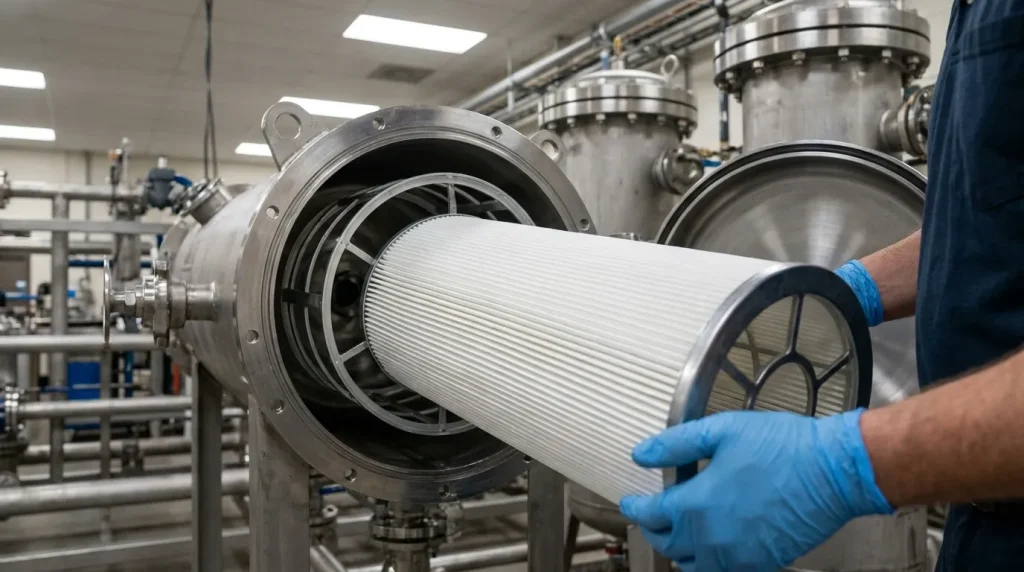
Industrial filtration is the process of forcing a fluid through a physical or chemical barrier to separate solid particles, impurities, or contaminants from the stream. This separation technology serves as the foundation for product purity, equipment protection, and regulatory compliance across manufacturing sectors worldwide.
This guide covers filtration system types and their operating principles, sector-specific applications from pharmaceuticals to power generation, the benefits and challenges that affect operational decisions, equipment selection criteria and regulatory standards, and recent technological advances reshaping the industry.
We explain how mechanical, depth, surface, membrane, and specialty filters each operate through distinct separation mechanisms suited to specific particle sizes and process requirements. Pore sizes range from 10 micrometers (0.0004 in) for microfiltration down to 0.0005 micrometers (0.00000002 in) for reverse osmosis, with each technology targeting different contaminant removal objectives.
The guide examines how chemical, pharmaceutical, food and beverage, power generation, and water treatment facilities rely on filtration to meet their specific purity and compliance requirements. EU GMP Annex 1 mandates, ISO protocols, and environmental standards all influence equipment decisions.
We address the operational realities of filter fouling, pressure differential monitoring, and chemical compatibility that affect long-term performance and lifecycle costs. Understanding these factors helps procurement engineers balance filtration effectiveness against operational budgets.
The final sections cover IoT-enabled monitoring systems, advanced nanofiber media, and sustainable designs that are improving capture efficiency while reducing energy consumption and waste generation.
What Are the Main Types of Industrial Filtration Systems?
Industrial filtration systems are commonly categorized by mechanism into surface, depth, and membrane filtration, with additional specialty separation technologies such as magnetic and electrostatic systems. Each category operates through distinct separation mechanisms suited to specific particle sizes, fluid types, and process requirements. The following subsections explain how each type functions and when to apply it.
How Does Mechanical Filtration Operate in Industrial Settings?
Mechanical filtration works in industrial settings by physically blocking particles larger than the filter media’s openings. Particles unable to pass through the filter structure are captured via sieving, where size exclusion prevents contaminants from moving downstream. These filters handle bulk solids removal in applications ranging from process water treatment to lubricant purification. Common configurations include cartridge filters, bag filters, and strainer baskets, typically operating as surface or depth filtration systems depending on the media and particle size. Operating pressures typically range from around 15 PSI to 150 PSI (1 bar to 10.3 bar), depending on media density and flow requirements, and regular monitoring of pressure differential indicates when media replacement is needed. Common types of mechanical filters are discussed in further depth in the following sections.
What Are Depth Filters and When Are They Used?
Depth filters are filtration media that capture particles throughout their entire thickness rather than only at the surface. They are used when process streams contain a wide distribution of particle sizes or when extended service life matters more than absolute retention ratings. The filter’s fibrous or porous matrix traps contaminants at multiple points as fluid passes through. Applications include prefiltration before membrane systems, edible oil polishing, and pharmaceutical intermediate clarification. Depth filters excel at handling high particle loads without rapid blinding. Their gradient density structure allows larger particles to lodge in outer layers while finer particles penetrate deeper before capture.
How Do Surface Filters Differ from Depth Filters?
Surface filters differ from depth filters by capturing particles primarily on the outer face of the media rather than throughout its structure. Key differences:
- Capture location: Surface filters collect on the outer layer; depth filters trap throughout the matrix
- Cake formation: Surface filters build filtrate cake that can be cleaned or backwashed
- Particle size targeting: Surface filters provide sharper cutoff points for specific micron ratings
- Maintenance approach: Surface media often allow cleaning cycles; depth media typically require replacement
Fouling remains a concern for both types, as unwanted material accumulation on solid surfaces can plug filters and reduce efficiency.
What Are Membrane Filters and What Applications Do They Serve?
Membrane filters are thin, semi-permeable barriers that separate contaminants based on pore size at the molecular or micron level. The applications they serve include pharmaceutical sterile filtration, ultrapure water production, and food and beverage clarification. Membrane technologies span four primary categories:
| Type | Pore Size Range | Typical Applications |
| Microfiltration (MF) | 0.1–10 µm (0.000004–0.0004 in) | Bacteria removal, prefiltration |
| Ultrafiltration (UF) | 0.002–0.1 µm (0.00000008–0.000004 in) | Protein concentration, virus removal |
| Nanofiltration (NF) | 0.0015–0.003 µm (0.00000006–0.00000012 in) | Softening, divalent ion removal |
| Reverse Osmosis (RO) | 0.0005–0.0015 µm (0.00000002–0.00000006 in) | Desalination, dissolved salt removal |
Membrane selection depends on target contaminant size, required purity levels, and operating pressure capabilities.
In What Situations Are Specialty Filters Like Magnetic or Electrostatic Used?
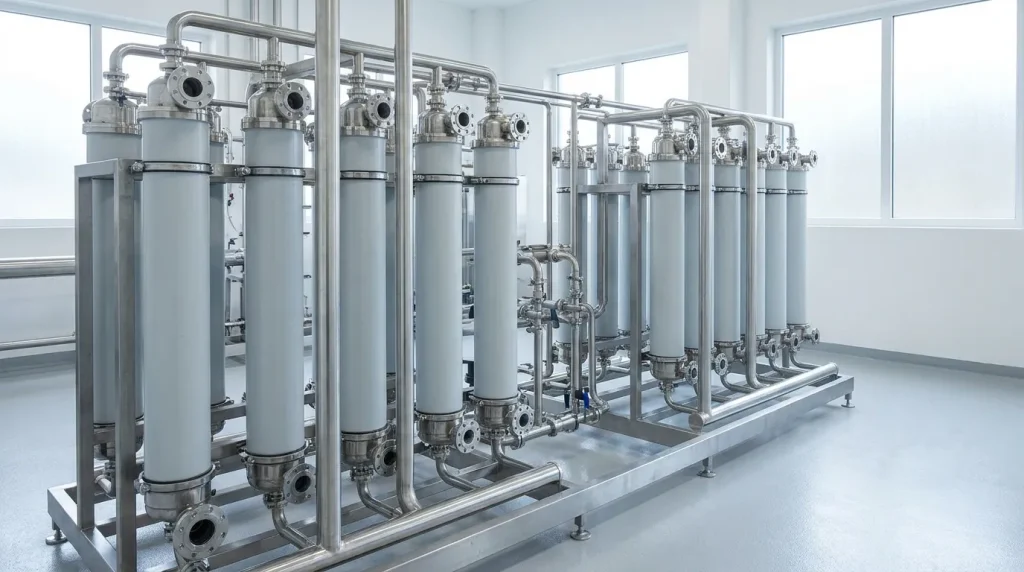
Specialty filters like magnetic or electrostatic are used in situations where conventional mechanical filtration cannot efficiently capture target contaminants. Magnetic filtration, particularly high-gradient magnetic separation, utilizes strong magnetic field gradients to capture iron-bearing or magnetically seeded particulates, with removal efficiency dependent on particle properties, flow conditions, and system design. Electrostatic precipitators achieve removal efficiencies exceeding 99.99% for charged particles in the 30–400 nm range. Typical applications include:
- Power plant cooling water systems where ferrous particle removal may be required in side-stream treatment
- Metalworking fluid purification where ferrous fines contaminate coolant streams
- Industrial emission control systems for fine particulate removal in flue gas applications
These specialty systems often complement conventional filtration rather than replace it entirely.
With filtration system types established, understanding their specific industrial applications reveals how each technology serves different sectors.
What Are Common Industrial Filtration Applications Across Different Sectors?
Common industrial filtration applications span chemical processing, pharmaceuticals, food and beverage, power generation, and water treatment. Each sector relies on filtration to remove contaminants, protect equipment, and meet regulatory standards.
How Is Filtration Used in the Chemical and Petrochemical Industries?
Filtration in the chemical and petrochemical industries removes catalysts, particulates, and process contaminants from liquid and gas streams. These sectors use filtration at multiple stages:
- Catalyst recovery from reactor effluent
- Solvent purification before recycling
- Final product polishing to meet purity specifications
- Feedstock protection for downstream equipment
The global market for nanomaterials, including those used in advanced filtration media, is projected to exceed USD 27.4 billion by 2030 according to Persistence Market Research. For chemical processors, proper filtration directly impacts yield, product consistency, and equipment longevity.
What Role Does Filtration Play in Pharmaceutical Manufacturing?
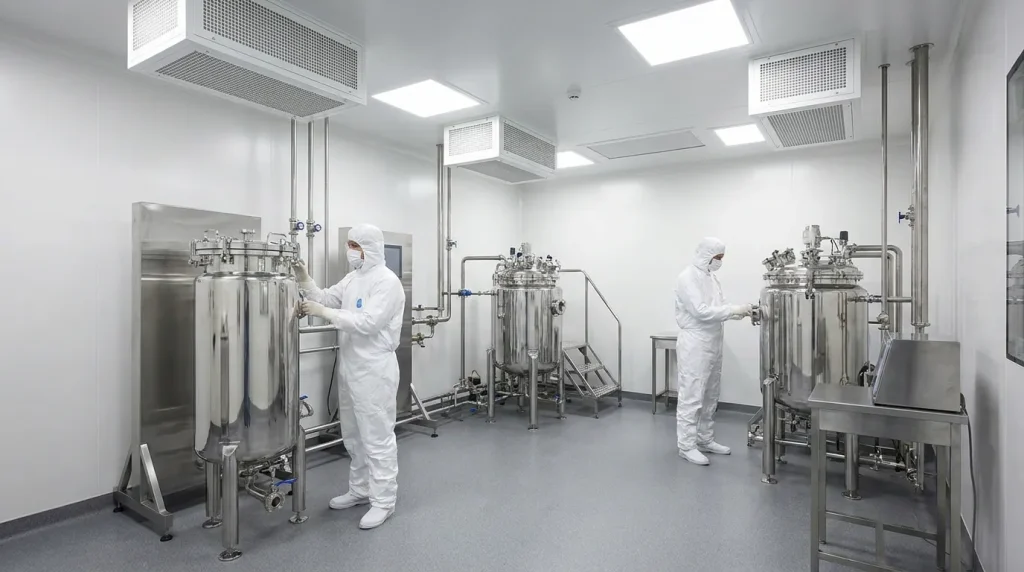
Filtration in pharmaceutical manufacturing ensures product sterility, removes particulates, and separates active pharmaceutical ingredients during processing. According to ICH Q7 (Good Manufacturing Practice for APIs) guidelines, API manufacturing involves physical separation steps such as filtration, chromatography, and milling that must be performed under GMP as the process proceeds to final steps.
Critical pharmaceutical filtration applications include:
- Sterile filtration of injectable products
- Clarification of fermentation broths
- Air filtration in cleanroom environments
- Water purification for process use
For stringent applications such as pharmaceutical filtration, validated systems with documented inspection and maintenance logs are crucial.
How Does Filtration Support Food and Beverage Processing?
Filtration in food and beverage processing clarifies liquids, removes microorganisms, and ensures product consistency. The Codex Alimentarius Commission, the international food standards-setting body, defines clarifying and filtering agents as approved substances used in accordance with good manufacturing practices for the clarification of beverages and food products.
Common applications include:
- Beer and wine clarification
- Juice and soft drink polishing
- Edible oil purification
- Process water treatment
Food-grade filtration requires materials that meet sanitary standards and withstand cleaning protocols without degrading.
Why Is Filtration Critical in Power Generation and Energy Production?
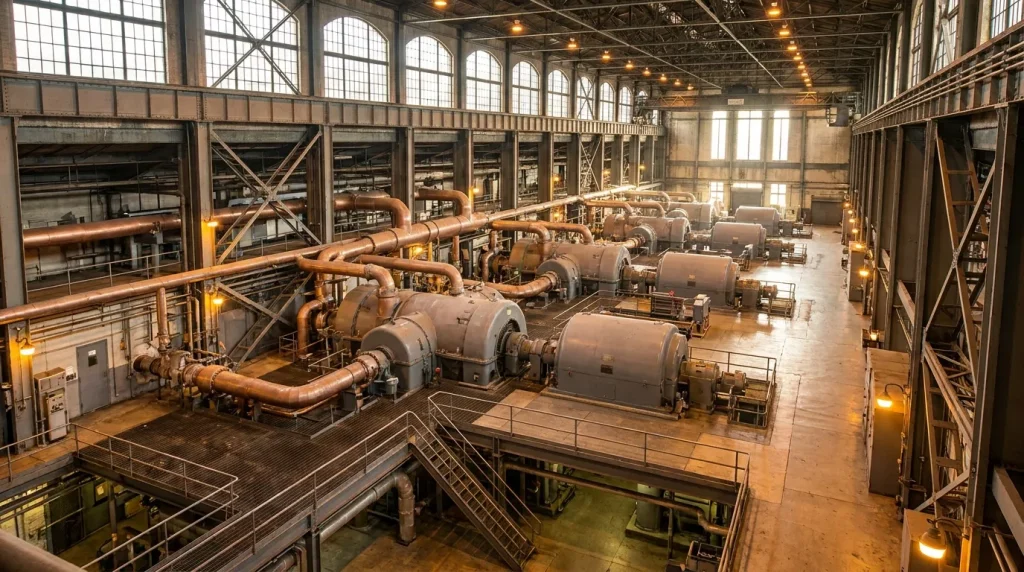
Filtration is critical in power generation because contaminants in water, lubricants, and fuel systems cause equipment degradation and unplanned downtime. According to a U.S. Department of Energy report, magnetic filtration is receiving increasing attention as a means for reducing the levels of particulate corrosion products in primary and secondary water systems in power plants.
Key power generation filtration applications include:
- Boiler feedwater treatment
- Turbine lubricant filtration
- Cooling water systems
- Fuel polishing for combustion turbines
ISO 16889:2022 describes standardized multi-pass testing methods for evaluating hydraulic filter element performance, helping plants specify and verify filtration equipment.
How Is Filtration Applied in Water and Wastewater Treatment?
Filtration in water and wastewater treatment removes suspended solids, pathogens, and dissolved contaminants to meet discharge and potable water standards. Membrane technologies including microfiltration, ultrafiltration, and reverse osmosis provide progressively finer separation for different treatment objectives.
ISO 14001 standards drive the adoption of efficient air, liquid, and dust filtration systems in municipal and industrial wastewater treatment to ensure environmental compliance. Treatment facilities rely on:
- Primary screening and sedimentation
- Secondary biological treatment with filtration
- Tertiary membrane polishing
- Sludge dewatering
As environmental regulations tighten globally, filtration capacity and efficiency become increasingly central to treatment plant design and operation.
What Are the Key Benefits and Challenges of Industrial Filtration?
The key benefits of industrial filtration include improved process efficiency, enhanced product quality, and regulatory compliance. The key challenges involve filter fouling, chemical compatibility limitations, and maintenance demands. The following sections examine how filtration improves process efficiency and product quality, common operational issues, and the factors affecting filter selection.
How Does Industrial Filtration Improve Process Efficiency and Product Quality?
Industrial filtration improves process efficiency and product quality by removing contaminants that compromise production outcomes. Clean process streams reduce equipment wear, minimize batch rejections, and ensure consistent end-product specifications.
Magnetic filtration can achieve high contaminant collection efficiency for iron-bearing particulates under practical operating conditions, preventing abrasive particles from damaging downstream equipment.
Key efficiency and quality improvements include:
- Continuous sterile filtration maintains product sterility during pharmaceutical bulk processing and filling operations
- Reduced rework rates from fewer contamination-related batch failures
- Extended equipment service life through cleaner process fluids
For procurement engineers evaluating filtration systems, the quality impact often justifies the investment. Consistent filtration performance translates directly to predictable production schedules and reduced quality control interventions.
What Operational Challenges or Maintenance Issues Can Occur with Filtration Equipment?
Operational challenges with filtration equipment include filter blinding, fouling accumulation, and increasing pressure differential across loaded media. These issues reduce throughput and require scheduled maintenance interventions.
Direct interception captures particles when they follow fluid streamlines and come within one particle radius of filter fibers or pore edges. While this mechanism enables effective filtration, it also contributes to gradual media loading that can restricts flow over time.
Common maintenance challenges include:
- Filter blinding from particle penetration into substrate bodies
- Biofouling from living organisms accumulating on membrane surfaces
- Rising pressure drop (delta P) requiring more frequent media replacement
- Energy consumption increases as filters become loaded
Lifecycle costs encompass media replacement, energy use, and labor for change-outs. Predictive monitoring systems help optimize replacement intervals, balancing filtration effectiveness against operational costs.
How Do Chemical Compatibility and Operating Conditions Affect Filter Selection?
Chemical compatibility and operating conditions affect filter selection by determining which media materials and construction types will perform reliably. Incompatible materials degrade rapidly, causing premature failure and potential process contamination.
Critical selection factors include:
| Parameter | Consideration | Impact on Selection |
| Process temperature | Range in °F (°C) | Limits polymer media options |
| Operating pressure | PSI (bar) rating | Determines housing requirements |
| pH level | Acidic or alkaline | Dictates material compatibility |
| Solvent exposure | Chemical family | Restricts membrane choices |
Filter pore sizes must match target particle removal: microfiltration covers 0.1–10 µm (0.000004–0.0004 in), while nanofiltration addresses 0.0015–0.003 µm (0.00000006–0.00000012 in) separations. Selecting the wrong pore size either allows contaminants through or creates excessive pressure drop.
Operating conditions also influence whether batch or continuous filtration makes sense. Understanding these variables before equipment selection prevents costly retrofits and performance shortfalls.
How Do You Select the Right Industrial Filtration System for Your Application?
Selecting the right industrial filtration system requires evaluating process requirements, regulatory obligations, and total cost of ownership. The following sections examine the criteria that drive equipment decisions, how compliance standards shape choices, and which maintenance and cost factors affect long-term value.
What Criteria Should You Consider When Choosing Filtration Equipment?
The criteria you should consider when choosing filtration equipment include particle size, flow rate, fluid characteristics, operating conditions, and material compatibility. Particle size determines whether microfiltration (0.1–10 µm / 0.000004–0.0004 in), ultrafiltration (0.002–0.1 µm), or finer membrane separation is required. Flow rate dictates filter surface area and housing dimensions.
Key selection factors include:
- Contaminant type and concentration: Solid particles, dissolved salts, or biological matter each demand different filtration mechanisms
- Operating pressure: Higher pressures suit membrane systems; lower pressures favor depth or surface filters
- Temperature range: Process temperatures in °C and °F must fall within the filter media’s rated limits
- Chemical compatibility: Acidic, caustic, or solvent-laden streams require corrosion-resistant materials such as 316L stainless steel, Hastelloy, or PTFE
- Viscosity: High-viscosity fluids need larger pore sizes or increased pressure differential
Matching these parameters to available filter technologies prevents premature failure and ensures consistent separation performance.
How Do Regulatory Standards Impact Industrial Filtration Choices?
Regulatory standards impact industrial filtration choices by defining minimum performance requirements, testing protocols, and documentation obligations. Regulatory standards usually fall within five categories, including filtration performance and contamination control standards, pharmaceutical manufacturing and GMP compliance, pressure equipment mechanical integrity, environmental and personnel safety management, and industry-specific process standards. Critical standards for each category are discussed in further depth in the following sections.
Filtration Performance and Contamination Control Standards
Critical standards include:
| Standard | Application | Key Requirement |
| ISO 4406:1999 | Hydraulic fluids | Cleanliness codes based on particle counts at >4 µm, >6 µm, >14 µm |
| ISO 16889 | Multi-pass filter element performance testing | Determine filter efficiency (Beta ratio) and dirt-holding capacity using standardized multi-pass testing. |
| ISO 11171 | Particle counting calibration | Calibrate automatic particle counters using traceable procedures to ensure accurate contamination measurements. |
| ISO 2942 / ISO 2943 | Filter element integrity / material compatibility | Verify filter element structural integrity and manufacturing quality and verify compatibility of filter materials |
| ISO 4021 | Sampling procedures for hydraulic fluids | Establish standardized procedures for obtaining representative fluid samples for contamination analysis |
Pharmaceutical Manufacturing and GMP Compliance
Critical standards include:
| Standard | Application | Key Requirement |
| EU GMP Annex 1 | Pharmaceutical sterile filtration | 0.22 µm nominal pore size for aseptic processing |
| EU GMP Part I & II | Finished product + APIs | Pharmaceutical quality system, documentation, validation, production controls for finished products. Requirements for API manufacturing, facilities, equipment, documentation, and change control. |
| ICH Q7 | API GMP baseline | Requirements covering equipment, cleaning, validation, documentation, and quality systems. |
| ICH Q9 | Quality risk management | Formal risk assessment and risk-control processes throughout product lifecycle. |
| ICH Q10 | Pharmaceutical quality system | Lifecycle quality management, CAPA, change management, and continual improvement |
| USP <788> | Particulate matter in injectables | Limits and testing requirements for particulate contamination in injectable products. |
| USP <797>/<800> | Sterile compounding / hazardous drugs | Sterile compounding controls, environmental monitoring, personnel qualification. Containment, handling, and worker protection requirements for hazardous drugs. |
Pressure Equipment Mechanical Integrity
Critical standards include:
| Standard | Application | Key Requirement |
| ASME Boiler & Pressure Vessel Code (Section VIII) | Filtration systems that include a pressure vessel | Design, fabrication, inspection, testing, and pressure relief requirements for pressure vessels. |
| PED 2014/68/EU | EU Pressure Equipment Directive | Hazard categorization, conformity assessment, technical documentation, and safety compliance for pressure equipment sold in the EU. |
| CE marking | EU compliance route under PED | Demonstrate compliance with applicable EU directives before market placement. |
| EN 13445 | Unfired pressure vessels in EU context | European design, fabrication, inspection, and testing requirements for unfired pressure vessels. |
Environmental and Personnel Safety Management Systems
Critical standards include:
| Standard | Application | Key Requirement |
| ISO 14001 | Environmental impact control | Environmental management system, compliance obligations, environmental objectives, continual improvement. |
| ISO 45001 | Occupational health & safety | Hazard identification, worker protection, incident prevention, and OH&S management processes. |
| ATEX 2014/34/EU | Explosive atmospheres equipment | Equipment classification, ignition-risk control, and certification for explosive atmospheres. |
| IECEx | Global explosive atmosphere certification scheme | International certification framework for equipment used in hazardous explosive environments. |
Industry-specific process standards
In addition to general standards, many industrial filtration systems must comply with industry-specific requirements based on their application. In the oil and gas and power sectors, standards such as API 614 and ISO 10438 govern lubrication and control-oil systems used with critical rotating equipment. Water and wastewater facilities may follow AWWA and EN 12255 standards for treatment system design and performance. In food and beverage processing, regulations such as FDA 21 CFR, EHEDG guidelines, and 3-A Sanitary Standards help ensure hygienic design, cleanability, and product safety. Identifying applicable industry-specific standards is essential for regulatory compliance, operational reliability, and long-term equipment performance.
What Maintenance and Cost Factors Influence Selection?
Maintenance and cost factors that influence selection include media replacement frequency, energy consumption, labor requirements, and lifecycle costs. Filter blinding occurs when particles accumulate on or within the media, restricting flow and increasing pressure drop. This forces more frequent changeouts and higher operating costs.
Operations and maintenance costs for filtration systems include media replacement, energy consumption, and labor as major line items contributing to overall lifecycle cost.
Total cost of ownership considerations:
- Initial capital cost: Membrane systems cost more upfront than depth filters but may offer lower per-unit operating costs at scale
- Energy consumption: Pressure differential (delta P) rises as filters load, increasing pump energy demand
- Replacement intervals: HEPA filters capturing 99.97% of 0.3 µm particles may require less frequent replacement than lower-efficiency alternatives
- Downtime costs: Self-cleaning or backwashable systems reduce production interruptions
Procurement engineers should model five-year lifecycle costs rather than focusing solely on purchase price. Understanding these cost drivers helps organizations balance filtration performance against operational budgets.
How Can International Process Plants Help You Source Industrial Filtration Equipment and Solutions?
International Process Plants provides global sourcing solutions for new surplus and quality used industrial filtration equipment. The following sections cover our comprehensive approach and key takeaways from this guide.
What Comprehensive Sourcing Solutions Does International Process Plants Provide for Industrial Filtration Needs?
International Process Plants provides comprehensive sourcing solutions that include new surplus and quality used filtration equipment from our inventory of 15,000+ pieces across warehouses in the United States, Germany, and the United Kingdom. Our 46+ years of experience serving pharmaceutical, petrochemical, and chemical processing industries means we understand the requirements that govern filtration equipment selection.
We help procurement engineers and plant managers locate:
- Membrane filtration systems for pharmaceutical and food processing applications
- Pressure filtration equipment meeting ASME Section VIII and PED compliance
- Complete filtration skids with vessels, pumps, and instrumentation
- Specialty filtration components for chemical and water treatment processes
Our global presence across 15 countries enables us to source equipment that meets regional standards, whether you need CE-marked systems for European operations or ASME-coded vessels for North American facilities. Contact International Process Plants to discuss your specific filtration equipment requirements.
What Are the Key Takeaways About Industrial Filtration, Its Types, Applications, and Operation?
The key takeaways about industrial filtration center on matching the right system to your specific process requirements. Industrial filtration forces fluids through filter media to separate contaminants, with pore sizes ranging from 10 micrometers (0.0004 in) for microfiltration down to 0.0005 micrometers (0.00000002 in) for reverse osmosis.
Critical selection factors include:
- Filter type: Depth filters for high-particulate loads; surface and membrane filters for fine separation
- Pore size: Matched to target contaminant size and product purity requirements
- Material compatibility: Chemical resistance to process fluids and cleaning agents
- Operating conditions: Pressure, temperature, and flow rate specifications
Lifecycle costs extend beyond purchase price to include media replacement, energy consumption, and maintenance labor. For facilities seeking cost-effective filtration solutions without compromising quality, new surplus and quality used equipment offers a practical path to meeting both budget and performance targets.

 DE
DE  EN
EN  ES
ES  FR
FR  PL
PL  AR
AR  UR
UR  HI
HI  NL
NL  TR
TR  IT
IT  UK
UK  RU
RU  JA
JA  PT
PT  ZH
ZH