 انتقل إلى المحتوى
A chemical reactor is a vessel or device in which controlled chemical reactions transform feed materials into desired products with specific yields and selectivity. These vessels serve as the central units in chemical, pharmaceutical, and industrial processing operations worldwide.
This guide covers reactor function and design, reactor types and their applications, selection factors, operation and maintenance, industrial advantages and challenges, and equipment sourcing strategies.
Reactor function depends on core components: the vessel itself, agitators, baffles, drive systems, and ancillary equipment such as vents and sealing assemblies. Material selection ranges from 316L stainless steel to Hastelloy C-276, with cost differences reaching 5 to 8 times that of standard stainless steel for exotic alloys.
The three primary reactor types (batch, continuous, and semi-batch) differ in how materials enter, react, and exit the vessel. Batch reactors dominate specialty chemical and pharmaceutical operations for their flexibility, while continuous systems such as CSTRs and PFRs suit high-volume petrochemical production.
Temperature, pressure, and construction materials drive reactor selection alongside safety requirements. Compliance with ASME Section VIII, the Pressure Equipment Directive (PED), and ATEX directives ensures safe operation across global jurisdictions, while HAZOP studies identify process hazards before commissioning.
Preventive maintenance programs, including annual vent inspections and scheduled seal replacements, protect against equipment failures that cause unplanned downtime. Process intensification strategies further improve efficiency and sustainability in modern chemical manufacturing.
Sourcing new surplus and quality used reactor vessels from established suppliers offers 40% to 60% cost savings compared to new fabrication, reducing both capital expenditure and project lead times for plant upgrades.
How does a chemical reactor function within industrial processes?
A chemical reactor functions within industrial processes by providing a controlled environment where raw materials undergo chemical transformations to produce desired products. The subsections below cover a reactor’s main components and how reactions are controlled.
What are the main components and design features of a chemical reactor?
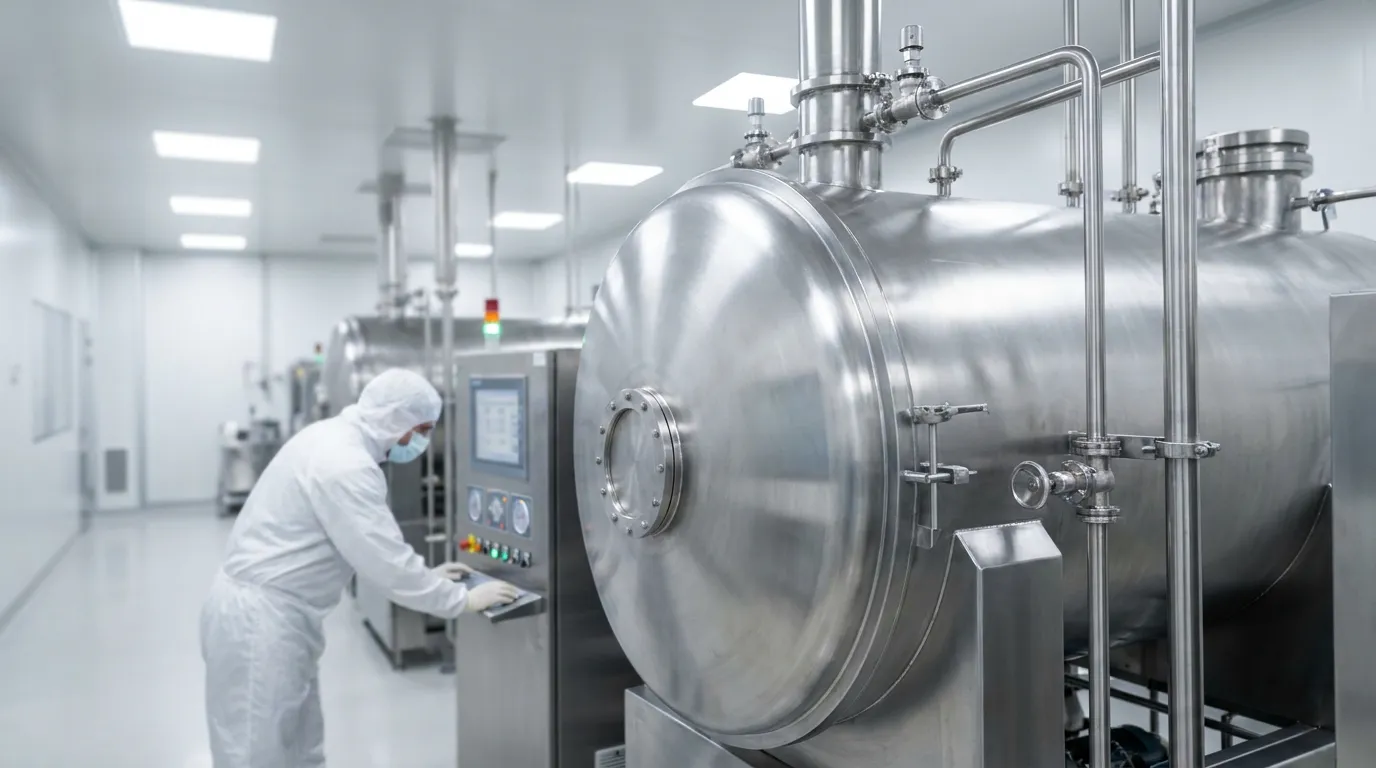
The main components and design features of a chemical reactor include the reactor vessel, agitator, baffles, drive system (gearbox and mechanical seal), and ancillary equipment such as vents and sealing assemblies. Each subassembly handles specific operating conditions of temperature, pressure, and corrosion.
Material selection significantly impacts cost and durability. Glass-lined vessels cost 2 to 3 times more than stainless steel, while Hastelloy construction costs 5 to 8 times more than stainless steel. Common materials in process reactors include 316L and 304 stainless steel, chosen for corrosion resistance across pressure ranges.
Reactor vessels must comply with construction standards such as ASME Section VIII, the Pressure Equipment Directive (PED), and CE marking to ensure safe operation across global jurisdictions.

How are chemical reactions controlled inside a reactor?
Chemical reactions are controlled inside a reactor through precise management of temperature, pressure, agitation, and residence time. In the pharmaceutical and petrochemical industries, a reactor vessel is considered a critical unit for performing chemical synthesis under these controlled conditions.
Temperature control relies on external jackets or internal coils that circulate heating or cooling fluids independently of the process contents. Agitators maintain uniform mixing, preventing localized hot spots or concentration gradients. Pressure regulation ensures reactants remain in the correct phase, whether liquid or gas.
In complex applications, a process reactor manages multiple simultaneous reactions while sensors and control systems continuously adjust parameters to maintain target yield and selectivity.
With the core function of chemical reactors established, the next consideration is how different reactor types suit different applications.
What are the different types of chemical reactors?
The different types of chemical reactors fall into three primary categories: batch, continuous, and semi-batch. Each type handles material flow differently, which determines suitability for specific production scales and chemistries.
How do batch, continuous, and semi-batch reactors differ?
Batch, continuous, and semi-batch reactors differ in how materials enter, react within, and exit the vessel.
- Batch reactors charge all reactants at once, run the reaction to completion, then discharge the product. No material flows in or out during the reaction cycle.
- Continuous reactors maintain a steady flow of reactants entering and products exiting the system simultaneously. According to AIChE’s Center for Chemical Process Safety, continuous reactors are characterized by a continuous flow of reactants into, and products from, the reaction system, with the Plug Flow Reactor (PFR) and Continuous Stirred Tank Reactor (CSTR) as primary examples.
- Semi-batch reactors combine both approaches: one reactant is charged initially while a second is fed gradually during the reaction. This allows precise control of addition rate for highly exothermic or sensitive chemistries.
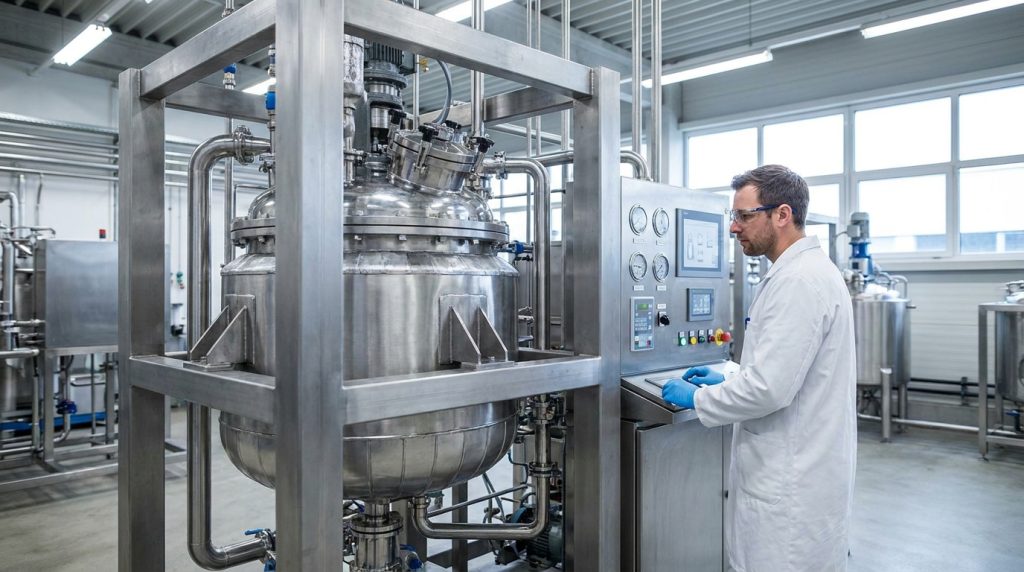
For most specialty chemical and pharmaceutical operations, batch reactors remain the dominant choice because of their flexibility to handle multiple products within a single vessel.
What are common applications for each reactor type?
Common applications for each reactor type depend on production volume, reaction kinetics, and product requirements:
- Batch reactors serve pharmaceutical synthesis, specialty chemicals, polymers, and any process requiring frequent product changeovers.
- Continuous reactors (CSTR and PFR) suit large-volume petrochemical production, bulk commodity chemicals, and processes where steady-state operation maximizes throughput.
- Semi-batch reactors handle exothermic polymerizations, controlled nitrations, and reactions where gradual reagent addition improves selectivity.
- Microreactors address high-value fine chemicals and flow chemistry applications. According to Grand View Research, the global microreactor technology market was estimated at USD 597.9 million in 2024 and is projected to reach USD 1,408.4 million by 2033.
Selecting the correct reactor type determines capital efficiency, product quality, and operational safety for the life of the installation. With reactor types clarified, the next consideration is which factors guide the final selection decision.
What factors influence the choice of a chemical reactor?
The choice of a chemical reactor depends on operating conditions, construction materials, and safety requirements. The following subsections cover how temperature, pressure, and materials drive selection, alongside critical safety considerations.
How do temperature, pressure, and materials affect reactor selection?
Temperature, pressure, and materials affect reactor selection by determining which vessel construction can safely contain the intended process chemistry. Higher operating temperatures require alloys with greater thermal stability, while elevated pressures demand thicker walls or specialized designs rated to standards such as ASME Section VIII or the Pressure Equipment Directive (PED).
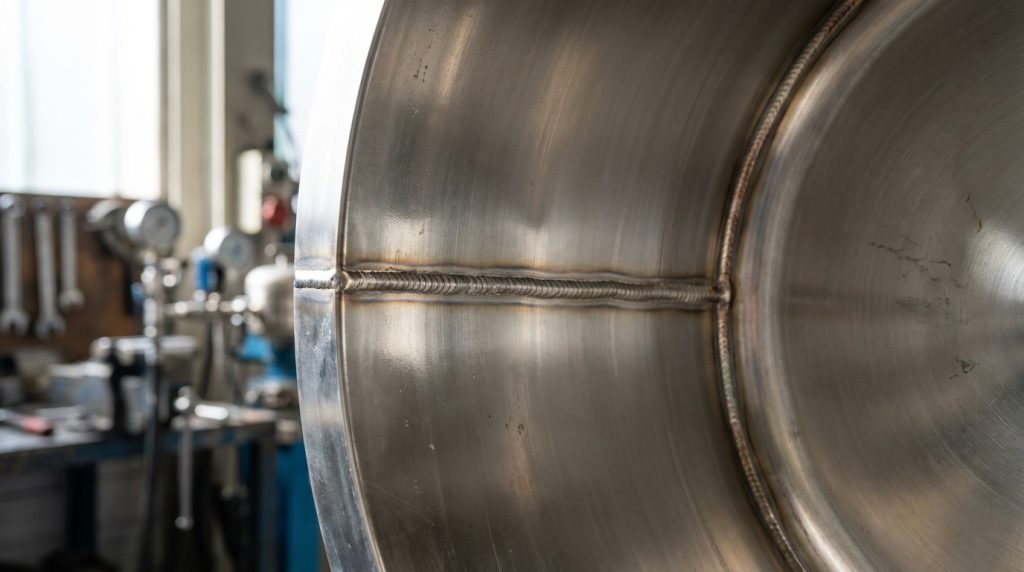
Material costs vary significantly. According to IDA Equipment, glass-lined vessels are typically 2-3 times more expensive than stainless steel, while Hastelloy construction is 5-8 times more expensive than stainless steel. Common materials include:
- 316L and 304L stainless steel for general corrosion resistance
- Hastelloy C-276 for highly corrosive acids and chloride environments
- Glass-lined carbon steel for pharmaceutical and fine chemical purity requirements
For most applications, matching the material grade to the specific corrosive media matters more than simply choosing the most expensive alloy.
What safety considerations are important when choosing a reactor?
The safety considerations important when choosing a reactor include pressure containment integrity, explosion protection compliance, and systematic hazard identification during design. Reactors operating in explosive atmospheres must comply with the ATEX directives 2014/34/EU and 99/92/EC, which establish uniform guidelines for equipment certification and risk reduction at the source.
Key safety factors in reactor selection include:
- Pressure rating relative to maximum allowable working pressure (MAWP) with appropriate safety margins
- CE marking, PED compliance, or UKCA marking depending on installation jurisdiction
- Compatibility between vessel metallurgy and process chemicals to prevent corrosion-induced failure
The Hazard and Operability (HAZOP) study methodology, originally developed within Imperial Chemical Industries (ICI), remains the standard approach for identifying hazards in chemical process designs before equipment is specified.
Understanding these selection factors prepares engineers for effective reactor operation and maintenance.
How is a chemical reactor operated and maintained?
A chemical reactor is operated and maintained through systematic safety protocols, process monitoring, and scheduled preventive maintenance. The subsections below cover operational best practices and maintenance procedures.
What steps ensure efficient and safe reactor operation?
The steps that ensure efficient and safe reactor operation include hazard analysis, compliance with international standards, and continuous process monitoring. The Hazard and Operability (HAZOP) study methodology, originally developed within Imperial Chemical Industries (ICI), provides a systematic framework for identifying hazards and operability problems in chemical process designs.
Key operational steps include:
- Conducting HAZOP studies before commissioning or process changes.
- Complying with ATEX directives 2014/34/EU and 99/92/EC for equipment in explosive atmospheres.
- Monitoring temperature, pressure, and flow rates against design parameters.
- Maintaining proper agitation speeds to ensure consistent mixing and heat transfer.
- Following IEC 60079-0 requirements for electrical equipment in hazardous zones.
Operators should also verify that all instrumentation is calibrated to specifications defined by ASME Section VIII, PED (Pressure Equipment Directive), or CE/UKCA marking requirements, depending on jurisdiction. For procurement engineers evaluating used equipment, confirming that reactors meet these standards before integration reduces commissioning risk significantly.
How is maintenance performed on chemical reactors?
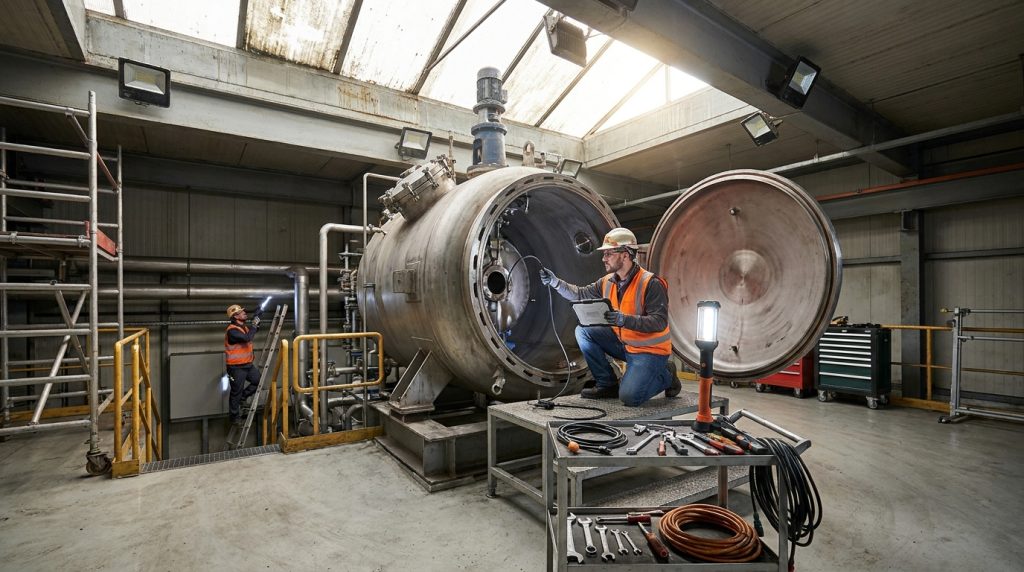
Maintenance on chemical reactors is performed through scheduled preventive inspections, cleaning routines, and component replacement programs. According to IChemE guidelines, the only sure way of keeping reactor vents free of blockage is regular preventive maintenance in the form of inspection and cleaning, which most suppliers suggest should be performed at least once a year.
A typical maintenance program includes:
- Annual vent inspection and cleaning to prevent blockage.
- Periodic seal and gasket replacement based on operating hours or pressure cycles.
- Internal vessel inspection for corrosion, erosion, or lining damage.
- Agitator and drive system lubrication and alignment checks.
- Calibration of pressure relief devices and temperature sensors.
Equipment failures in the chemical industry can result in unplanned downtime with high maintenance costs, making comprehensive asset intelligence essential for operational success. Facilities that track inspection intervals per API or EN standards, and maintain detailed maintenance logs, consistently achieve better uptime and longer vessel service life.
With operation and maintenance protocols established, the next consideration is how reactors drive broader industrial performance.
What are the advantages and challenges of using chemical reactors in various industries?
The advantages of using chemical reactors in various industries include driving process innovation, improving efficiency, and enabling cost-effective production. The challenges include equipment failures, unplanned downtime, and maintaining consistent operating conditions.
How do reactors drive innovation and efficiency in industrial settings?
Reactors drive innovation and efficiency in industrial settings by enabling process intensification, modular design, and cost-effective equipment strategies. Modern reactor systems, such as Pfaudler DIN reactors AE, comprise integrated subassemblies including the reactor vessel, agitator, baffle, and drive (gearbox, mechanical seal, and sealing liquid assembly), allowing precise control over reaction parameters.
Process intensification reduces energy consumption and waste generation while maintaining throughput. Equally significant, the secondhand equipment market offers refurbished reactor components at 40% to 60% lower cost than new equipment, according to POWER Magazine, providing a practical path for plant upgrades without full capital expenditure.
What are common challenges faced during reactor operation?
Common challenges faced during reactor operation include:
- Equipment failures causing unplanned downtime and high maintenance costs.
- Corrosion and material degradation under aggressive chemical environments.
- Thermal management difficulties when scaling reactions from laboratory to production volumes.
- Vent blockages requiring regular inspection and cleaning, typically at least once per year.
- Compliance with multiple standards across jurisdictions, such as ASME Section VIII, the Pressure Equipment Directive (PED), and CE marking.
These challenges demand comprehensive preventive maintenance programs and careful material selection during reactor procurement. For most facilities, investing in proven reactor designs with accessible replacement parts reduces long-term operational risk more effectively than specifying custom builds with limited aftermarket support.
With these advantages and challenges understood, sourcing the right reactor from a trusted supplier becomes the next critical decision.
How does International Process Plants support businesses with chemical reactors and process equipment?
International Process Plants supports businesses with chemical reactors and process equipment by supplying new surplus and quality used reactor vessels, providing refurbishment services, and offering comprehensive asset intelligence for chemical, pharmaceutical, and industrial operations.
How can equipment acquisition and refurbishment from IPP help optimize chemical reactor operations?
Equipment acquisition and refurbishment from International Process Plants can help optimize chemical reactor operations by reducing capital expenditure while maintaining process-ready quality. With 46+ years in the global equipment market and a broad inventory of pieces, International Process Plants provides batch reactors, process reactors, and ancillary equipment constructed from verified materials including 316L, 304 stainless steel, and Hastelloy C-276.
Sourcing refurbished reactor vessels significantly lowers project timelines compared to new fabrication. Equipment is currently available in capacities specified in both gallons and liters, with pressure ratings documented in PSI (bar) and temperature tolerances in both Fahrenheit and Celsius. All vessels comply with applicable standards such as ASME Section VIII, PED, and CE marking.
For procurement engineers seeking to minimize unplanned downtime, this approach delivers process-validated equipment without the lead times or premium costs associated with new fabrication.
What are the key takeaways about what a chemical reactor is and how does it work?
The key takeaways about what is a chemical reactor and how does it work are:
- A chemical reactor is a vessel that transforms feed materials into products through controlled reaction conditions.
- Reactor types include batch, continuous (CSTR, PFR), and semi-batch configurations, each suited to specific production requirements.
- Temperature, pressure, and material selection directly determine reactor performance, safety, and total cost of ownership.
- Preventive maintenance and adherence to international standards (ASME, PED, ATEX) protect against unplanned downtime.
- Process intensification strategies improve efficiency and sustainability in chemical manufacturing.
International Process Plants supplies new surplus and quality used batch reactors and process equipment from warehouses in South Carolina (US), Germany, and the United Kingdom. Contact International Process Plants to discuss currently available reactor vessels for your next project.

 AR
AR  EN
EN  ES
ES  FR
FR  PL
PL  DE
DE  UR
UR  HI
HI  NL
NL  TR
TR  IT
IT  UK
UK  RU
RU  JA
JA  PT
PT  ZH
ZH