 انتقل إلى المحتوى
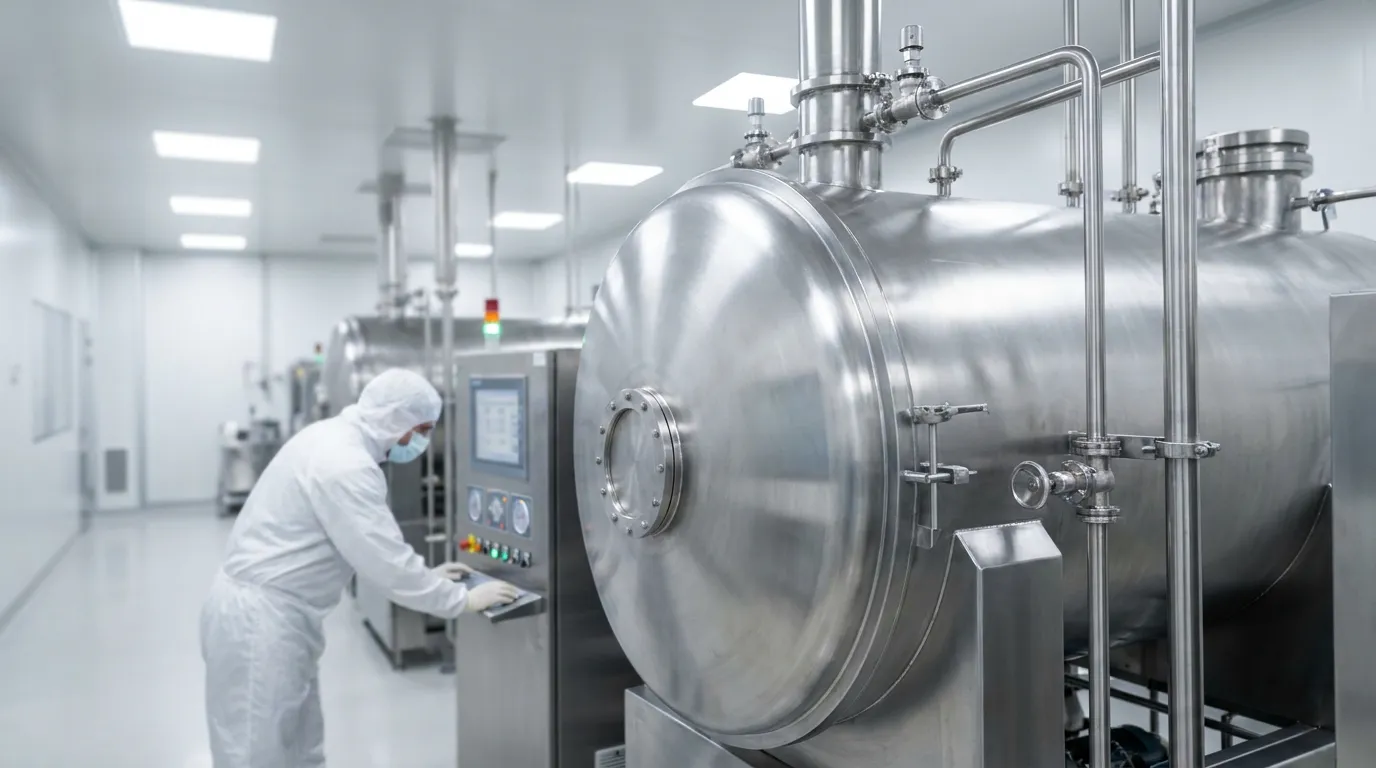
Materials of construction for reactors are the specific metals, alloys, and protective linings that form a reactor vessel’s wetted surfaces and pressure boundary. The correct material determines whether a reactor withstands its operating chemistry, temperature, and pressure over a full service life.
This guide covers reactor type requirements, common construction materials and their properties, process condition effects on alloy selection, regulatory and compliance standards, failure prevention through inspection and testing, life cycle cost considerations, emerging material technologies, and sourcing support.
Batch, continuous, and high-pressure reactors each impose distinct material demands; batch vessels face thermal cycling fatigue from repeated heating and cooling, while continuous reactors require sustained creep resistance at constant elevated temperatures. Stainless steels such as 316L and 304 serve moderate-corrosion applications up to 538°C (1,000°F), glass linings protect against aggressive acids without metal contamination, and nickel alloys like Hastelloy C-276 handle chloride-bearing and mixed-acid environments where standard stainless steels fail.
Temperature, pressure, and chemical exposure interact to determine minimum alloy grade; corrosive media often govern selection more decisively than mechanical loads alone. ASME Section VIII, PED 2014/68/EU, CE marking, and ISO 15156 each impose jurisdiction-specific material qualification and documentation requirements that procurement teams must verify before acquisition.
Non-destructive testing methods including ultrasonic and radiographic inspection detect degradation before it reaches critical thresholds, while life-cycle cost analysis reveals that corrosion-resistant alloys often deliver lower total ownership expense than cheaper metals requiring frequent replacement. Emerging coatings, composite construction, and sustainable material strategies are expanding options for engineers seeking longer service life with reduced environmental impact.
Which Types of Reactors Require Different Materials of Construction?
Different reactor types require different materials of construction based on their operating mode, thermal range, and pressure demands. Batch reactors, continuous reactors, and high-pressure or high-temperature reactors each impose distinct material requirements.

How Do Batch Reactors Influence Material Selection?
Batch reactors influence material selection by exposing vessel walls to variable process conditions across each production cycle. Because batch operations involve repeated heating, cooling, charging, and discharging, materials must resist thermal cycling fatigue and chemical attack from multiple reagents processed in the same vessel.
According to research published by the American Chemical Society, high-pressure batch reactors engineered for organics destruction in aqueous environments function at pressures reaching 2,901 PSI (20 MPa) and temperatures of 662°F (350°C). These extreme conditions demand nickel alloys or high-grade stainless steels such as 316L that maintain yield strength under sustained thermal stress.
ISO 15156 further governs material qualification for reactors handling H₂S-containing streams, requiring metals resistant to sulfide stress cracking. For most batch applications, the flexibility to switch between products makes corrosion-resistant alloys a practical default choice.
What Are the Material Needs for Continuous Reactors?
The material needs for continuous reactors center on sustained resistance to a single, unchanging set of process conditions over extended operating campaigns. Unlike batch vessels, continuous-flow reactors face constant thermal and chemical exposure without relief cycles.
According to ACS research on supercritical water oxidation processes, continuous-flow reactors incorporate furnace sections designed for service temperatures up to 1,000°F (538°C). At these sustained temperatures, materials must retain creep resistance and oxidation stability indefinitely. Alloys such as Inconel and Hastelloy C-276 are common selections where corrosive media combine with elevated thermal loads, since they maintain structural integrity without scheduled cooldown periods.
Are There Unique Considerations for Pressure or High-Temperature Reactors?
There are unique considerations for pressure or high-temperature reactors that go beyond standard material selection criteria. These reactors must satisfy both mechanical strength requirements at design pressure and metallurgical stability at operating temperature, simultaneously.
Key considerations include:
- Creep resistance becomes critical above 750°F (400°C), where carbon steel loses structural reliability.
- Hydrogen attack risk increases at elevated pressures and temperatures, requiring alloys with chromium and molybdenum content.
- Compliance with ASME Section VIII (North America) and the Pressure Equipment Directive 2014/68/EU (Europe) mandates material traceability and certified mechanical testing at design conditions.
- Thermal cycling in reactors that alternate between ambient and high-temperature operation accelerates fatigue cracking at welds and nozzle connections.
For engineers evaluating these extreme-service vessels, understanding available alloy grades is the next step toward matching materials to specific process chemistries.
What Are the Most Common Materials Used in Reactor Construction?
The most common materials used in reactor construction are stainless steel, glass-lined steel, nickel-based alloys, and carbon steel. Each material serves distinct process conditions, as detailed below.
When Should You Use Stainless Steel in Reactor Construction?
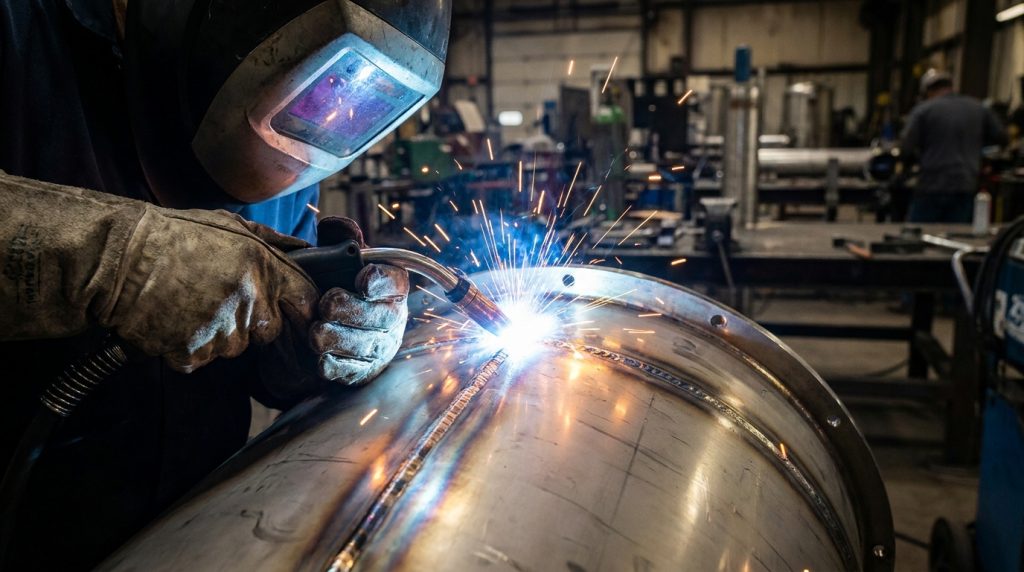
You should use stainless steel in reactor construction when processes involve moderate corrosion, elevated temperatures, or pharmaceutical-grade cleanliness requirements. Stainless steel 316L offers a maximum service temperature of 538°C (1,000°F) and a typical room temperature yield strength of approximately 355 MPa (51.5 ksi), according to Industrial Monitor Direct. Grades 304, 304L, 316, and 316L remain the most widely specified for batch reactor vessels because they balance corrosion resistance, weldability, and cost. For most chemical and pharmaceutical applications below 538°C (1,000°F) with mildly corrosive media, stainless steel delivers the best value per service year of any reactor material.
What Are the Applications for Glass-Lined Reactors?
The applications for glass-lined reactors include highly corrosive acid reactions, pharmaceutical synthesis, and specialty chemical processing where product purity is critical. Glass lining creates an inert barrier between the process fluid and the carbon steel shell, preventing metal contamination. Common applications include:
- Active pharmaceutical ingredient (API) synthesis requiring USP-grade surfaces
- Fine chemical production involving chlorinated solvents
- Food-grade processing where metallic leaching is unacceptable
Glass-lined vessels require careful handling because thermal shock or mechanical impact can damage the lining irreversibly.
How Do Alloy Materials Like Hastelloy and Inconel Perform in Reactor Environments?
Alloy materials like Hastelloy and Inconel perform exceptionally well in reactor environments involving extreme corrosion, high temperatures, or aggressive acid media. Hastelloy C-276 (UNS N10276) achieves a Pitting Resistance Equivalent Number (PREN) of 68.30, compared to 26.85 for 316 stainless steel. According to Haynes International, “HASTELLOY C-276 alloy was the first wrought, nickel-chromium-molybdenum material to alleviate concerns over welding.” In boiling 10% hydrochloric acid, Hastelloy C-276 exhibits a corrosion rate of 288 mils/year versus 642 mils/year for Inconel 625. Inconel 718 offers superior strength at elevated temperatures, making it preferred for structural reactor components. For concentrated hydrochloric and sulfuric acid service, Hastelloy C-276 remains the most reliable choice among nickel-based alloys.
What Are the Advantages and Disadvantages of Carbon Steel Reactors?
The advantages and disadvantages of carbon steel reactors relate directly to cost, availability, and corrosion limitations.
المزايا:
- Lowest material cost among common reactor construction metals
- Readily available in standard plate thicknesses and vessel configurations
- Easily fabricated, welded, and repaired using standard procedures
- Suitable for non-corrosive or mildly alkaline services
Disadvantages:
- Uniform corrosion rate of approximately 0.25 mm/year (10 mils/year) in standard industrial environments, per ASM International
- Requires internal linings or coatings for acidic or chloride-bearing services
- Higher long-term maintenance costs due to corrosion allowance depletion
- Unsuitable for pharmaceutical or food-grade applications without protective barriers
Carbon steel works best for bulk storage, utilities, and processes where corrosion allowances can accommodate gradual wall loss over the vessel’s design life. Understanding how process conditions interact with these material properties determines the optimal selection for each application.
How Do Process Conditions Affect the Choice of Reactor Materials?
Process conditions affect the choice of reactor materials by determining which alloys can withstand the specific thermal, chemical, and mechanical demands of a given application. The subsections below cover temperature and pressure influences, corrosive and abrasive chemical effects, and mechanical stress considerations.
How Do Temperature and Pressure Influence Material Selection?
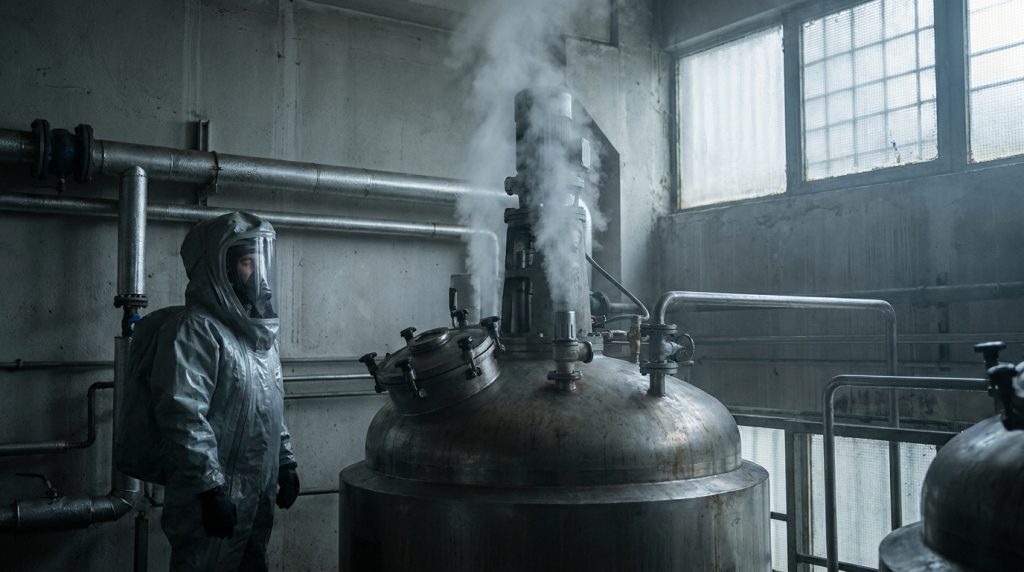
Temperature and pressure influence material selection by defining the minimum yield strength and creep resistance a reactor vessel must maintain throughout its service life. As operating temperature rises, most metals lose tensile strength; 316L stainless steel, for example, has a maximum service temperature of 538°C (1,000°F) and a room-temperature yield strength of approximately 355 MPa (51.5 ksi), according to Industrial Monitor Direct. Above that threshold, nickel-based superalloys become necessary.
High-pressure batch reactors designed for organics destruction operate at pressures reaching 20 MPa (2,900 PSI) and temperatures of 350°C (662°F). These conditions demand materials that resist both thermal degradation and pressure-induced deformation simultaneously. Engineers must evaluate creep rupture data, not just ambient-temperature ratings, when specifying alloys for sustained high-temperature, high-pressure service.
What Role Do Corrosive or Abrasive Chemicals Play in Material Choice?
Corrosive or abrasive chemicals play a decisive role in material choice by accelerating wall-thickness loss and initiating localized attack mechanisms such as pitting, crevice corrosion, and stress-corrosion cracking. The chemical environment often matters more than temperature or pressure alone when selecting reactor construction materials.
Chloride-bearing solutions illustrate this clearly. Hastelloy C-276 demonstrates a Pitting Resistance Equivalent Number (PREN) of 68.30, compared to just 26.85 for 316 stainless steel. In concentrated hydrochloric and sulfuric acid environments, Hastelloy C-276 and B-2 alloys are recognized by ASTM International for superior performance among nickel-based alloys. Plain carbon steel, by contrast, corrodes at approximately 0.25 mm/year (10 mils/year) in standard industrial environments, making it unsuitable for aggressive acid service without protective linings.
How Does Mechanical Stress Impact Reactor Material Performance?
Mechanical stress impacts reactor material performance by inducing fatigue, creep, and stress-corrosion cracking, particularly under cyclic operating conditions. Batch reactors that undergo repeated pressurization, heating, and cooling cycles experience thermal fatigue that accumulates over thousands of runs.
Inconel 718 offers superior strength compared to Hastelloy C-276 at elevated temperatures, making it a preferred material for structural reactor components subjected to combined thermal and mechanical loading. Material selection must account for not only static design pressure but also dynamic stresses from agitation, thermal expansion differentials between vessel shells and internals, and vibration from rotating equipment.
For processes involving simultaneous corrosive exposure and mechanical loading, the interaction between these factors can be synergistic; selecting materials based on corrosion resistance alone, without considering fatigue life, remains one of the most common specification errors in reactor procurement.
What Are the Major Regulatory and Compliance Standards for Reactor Materials?
The major regulatory and compliance standards for reactor materials include ASME BPVC Section VIII, the Pressure Equipment Directive (PED) 2014/68/EU, CE marking, and ISO 15156. Each standard governs design, fabrication, and material qualification across different jurisdictions.
Why Is ASME Certification Important for Reactor Construction?
ASME certification is important for reactor construction because it establishes the baseline requirements for pressure vessel design, fabrication, and inspection that protect personnel and facilities. ASME BPVC Section VIII serves as the predominant standard for pressure vessels in North America, according to Forge Pressure Equipment. This code dictates allowable stresses, material traceability, welding procedures, and post-weld heat treatment for every alloy used in reactor vessels. Without ASME certification, a reactor cannot legally operate in most North American jurisdictions. For procurement engineers sourcing new surplus or quality used batch reactors, verifying that a vessel carries a valid ASME U-stamp confirms it was built to a recognized, auditable standard.
How Do Global Standards Like PED and CE Affect Material Choices?
Global standards like PED and CE affect material choices by imposing jurisdiction-specific requirements on allowable alloys, testing protocols, and documentation. The Pressure Equipment Directive (PED) 2014/68/EU mandates specific safety requirements for all pressure equipment placed on the European Union market, as documented by the U.S. Department of Energy. PED compliance requires new materials to carry European Approval for Materials (EAM) or equivalent certification, which can limit alloy sourcing options.
Key global standards that influence material selection include:
- CE marking confirms conformity with EU health, safety, and environmental protection legislation.
- UKCA marking applies to equipment entering the United Kingdom market post-Brexit.
- CRN (Canadian Registration Number) is required for pressure vessels operating in Canadian provinces.
- ISO 15156 governs metallic material selection for H₂S-containing environments in oil and gas production.
Engineers purchasing reactors for multi-site operations should confirm that vessel documentation satisfies all applicable regional codes before acquisition.
What Are the Environmental and Safety Compliance Considerations?
The environmental and safety compliance considerations for reactor materials include chemical containment integrity, emissions control, and worker exposure limits. Regulatory bodies across jurisdictions require that reactor materials resist degradation under process conditions to prevent leaks of hazardous substances. Material certificates must document composition, mechanical properties, and corrosion allowance to satisfy environmental permit requirements.
Compliance factors that affect material specification include:
- Secondary containment requirements for corrosive or toxic process fluids.
- Fugitive emission standards that demand specific gasket and sealing materials.
- Weld inspection documentation per ASME or EN 13445 to verify structural integrity.
- Material traceability from mill certificate through final fabrication.
Selecting the correct alloy at the procurement stage prevents costly retrofits and regulatory shutdowns later. With compliance verified, the next consideration is how material failures can be detected and prevented through inspection protocols.
How Can Material Failures in Reactor Construction Be Prevented?
Material failures in reactor construction can be prevented through corrosion mitigation strategies, scheduled inspection protocols, and validated testing methods. The following subsections cover common corrosion types, maintenance approaches, and non-destructive testing techniques.
What Are the Common Types of Corrosion and How Can They Be Avoided?
The common types of corrosion in reactor vessels are uniform corrosion, pitting, crevice corrosion, stress-corrosion cracking, and intergranular attack. Each type targets materials differently depending on process chemistry and operating conditions.
Preventive strategies include:
- Selecting alloys with high Pitting Resistance Equivalent Numbers (PREN) for chloride-bearing services.
- Specifying post-weld heat treatment to relieve residual stresses that promote stress-corrosion cracking.
- Designing vessels to eliminate stagnant zones where crevice corrosion initiates.
- Maintaining process parameters within the corrosion allowance limits defined by ASME Section VIII or EN 13445.
Matching the right alloy to the specific corrosion mechanism is the single most effective preventive measure available during the design phase.
How Do Inspection and Maintenance Protocols Improve Material Longevity?
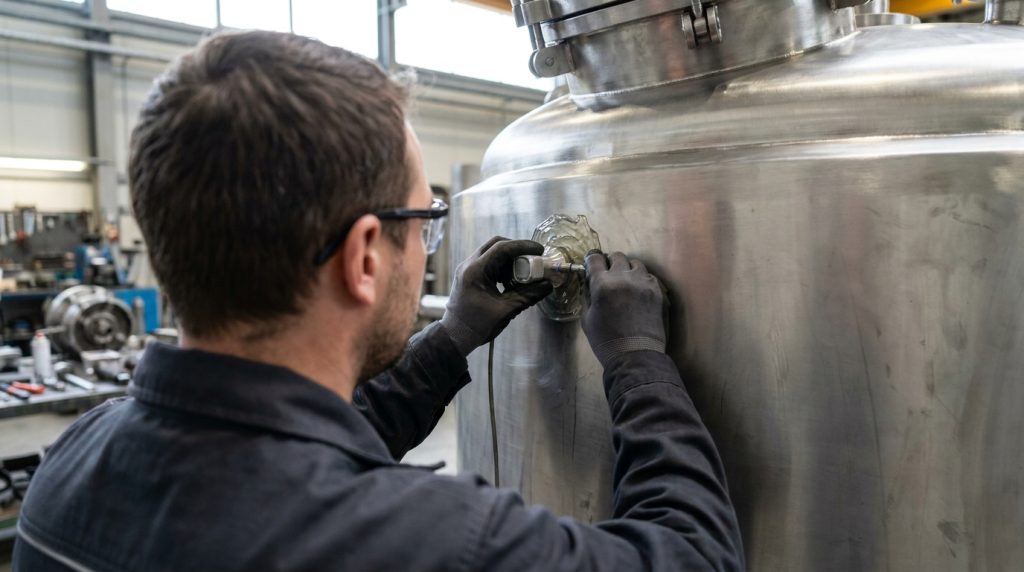
Inspection and maintenance protocols improve material longevity by identifying degradation before it reaches critical thresholds. Visual inspection remains the most frequently employed method for corrosion monitoring, often complemented by specialized non-destructive testing (NDT) techniques to detect localized damage.
Scheduled inspections aligned with API 510, PED 2014/68/EU, or ASME post-construction codes allow operators to track wall thinning rates and plan repairs proactively. According to ReliabilityX, implementing precision maintenance strategies that include regular NDT inspections can reduce overall equipment ownership costs by 10% to 40% compared to reactive maintenance approaches. For procurement teams evaluating new surplus or quality used reactors, verified inspection histories provide critical assurance of remaining service life.
What Testing Methods Ensure Material Suitability and Integrity?
The testing methods that ensure material suitability and integrity include non-destructive testing (NDT), destructive mechanical testing, and chemical composition verification. These methods apply at fabrication, commissioning, and throughout operational life.
Key NDT methods used in reactor assessment:
- Ultrasonic Testing (UT) for measuring wall thickness and detecting subsurface flaws.
- Radiographic Testing (RT) for evaluating weld quality and identifying internal voids.
- Magnetic Particle Testing (MT) for surface-breaking cracks in ferromagnetic materials.
- Dye Penetrant Testing (PT) for surface defects in non-magnetic alloys.
A 2024 comparative study published on ResearchGate confirmed that UT and RT are key NDT methods for identifying internal flaws and monitoring corrosion in high-pressure industrial equipment. Destructive tests, such as tensile, impact (Charpy), and hardness testing per ASTM or ISO standards, validate that material properties meet design specifications before a reactor enters service.
With failure prevention strategies established, understanding life cycle costs helps justify the right material investment from the start.
How Do Costs and Life Cycle Considerations Influence Reactor Material Selection?
Costs and life cycle considerations influence reactor material selection by requiring engineers to evaluate total ownership expense, not just purchase price. The subsections below address initial cost versus durability, maintenance frequency, and expected service life.

What Is the Balance Between Initial Cost and Durability?
The balance between initial cost and durability depends on whether the upfront material premium reduces long-term replacement and downtime expenses. Carbon steel costs a fraction of nickel alloys per kilogram, yet its corrosion rate of approximately 0.25 mm/year (10 mils/year) in standard industrial environments demands more frequent replacements. Hastelloy C-276, priced at approximately USD 36.80 per kilogram (FOB Shanghai) in early 2026 according to Metals Piping, carries a higher acquisition cost but resists pitting, crevice attack, and stress-corrosion cracking across aggressive chemistries. For most batch reactor applications, selecting a corrosion-resistant alloy upfront reduces cumulative spending over a 10 to 30 year operating horizon.
How Does Maintenance Frequency Relate to Material Choice?
Maintenance frequency relates directly to material choice because reactive alloys require more inspections, repairs, and unplanned shutdowns. Life-Cycle Cost Analysis (LCCA), as defined by the Whole Building Design Guide, provides a comprehensive assessment of total facility ownership costs by incorporating acquisition, operation, maintenance, and eventual disposal expenses. Materials that resist the specific process chemistry reduce inspection intervals and extend time between turnarounds. Key factors linking material to maintenance burden include:
- Corrosion allowance thickness determines how often ultrasonic wall-thickness surveys are needed.
- Susceptibility to stress-corrosion cracking dictates whether annual or multi-year inspection cycles apply.
- Surface finish stability affects cleaning frequency in pharmaceutical or food-grade reactors.
Choosing a material matched to your process conditions is one of the most effective ways to compress maintenance budgets over a reactor’s full service life.
What Is the Typical Life Span of Different Reactor Materials?
The typical life span of different reactor materials ranges from 5 to 7 years for unprotected carbon steel in corrosive service to 25 or more years for nickel-based alloys in properly matched applications.
- Carbon steel reactors last 10 to 15 years in mildly corrosive environments before wall thinning necessitates replacement.
- 316L stainless steel reactors commonly achieve 20 or more years when operating within their rated temperature limit of 538 °C (1,000 °F) and compatible chemistries.
- Hastelloy C-276 reactors can exceed 10 years because the alloy resists both general and localized corrosion in chloride-bearing and mixed-acid processes.
- Glass-lined reactors typically serve 15 to 20 years, with life span governed by lining integrity rather than vessel shell degradation.
Procuring new surplus or quality used reactors built from the correct alloy allows facilities to capture remaining service life at a lower total cost of ownership than purchasing under-specified equipment that fails prematurely.
How Are Advances in Reactor Material Technologies Changing the Industry?
Advances in reactor material technologies are changing the industry by introducing protective coatings, composite construction methods, and sustainable material alternatives that extend service life and reduce environmental impact.
What New Coatings or Linings Are Emerging for Reactors?
New coatings and linings emerging for reactors include tantalum oxide thin films, advanced ceramic linings, and multi-layer fluoropolymer systems designed to improve corrosion resistance in aggressive chemical environments. According to research published by Elsevier (ScienceDirect), tantalum oxide thin films are being studied for their potential to enhance corrosion resistance in high-speed growth applications.
These coatings allow carbon steel or standard stainless steel vessels to handle process chemistries that previously required solid exotic alloys. For procurement engineers evaluating used or new surplus equipment, reactor vessels with advanced linings can deliver Hastelloy-level chemical resistance at a fraction of solid-alloy cost, provided the lining integrity is verified through proper inspection.
How Are Composite Materials Being Used in Reactor Construction?
Composite materials are being used in reactor construction to reduce vessel weight, improve thermal management, and resist specific corrosive environments where traditional metals underperform. Fiber-reinforced polymers (FRP), carbon fiber-wrapped pressure vessels, and ceramic matrix composites represent the primary composite categories entering chemical process applications.
FRP reactor vessels suit low-pressure, highly corrosive services such as acid storage and neutralization at temperatures below 150°C (302°F). Carbon fiber overwraps reinforce metallic liners for high-pressure hydrogen service, achieving pressure ratings above 700 bar (10,153 PSI) at significantly lower weight than solid steel construction. These composites do not replace metal reactors across all applications; rather, they fill niche roles where weight savings or chemical inertness justifies the higher fabrication complexity.
What Are the Trends in Sustainable or Green Materials for Reactors?
The trends in sustainable or green materials for reactors focus on reduced ecological footprints, improved atom efficiency in manufacturing, and longer service-life designs that minimize replacement waste. The Institution of Chemical Engineers (IChemE) highlights that chemical engineers contribute to sustainability by developing alternative materials with reduced ecological footprints and enhanced atom efficiency.
Key sustainability trends in reactor materials include:
- Bio-based polymer linings for low-temperature corrosion barriers.
- Recycled stainless steel alloys with equivalent mechanical properties to virgin material.
- Extended-life coatings that double inspection intervals, reducing maintenance-related waste.
- Design-for-disassembly approaches that facilitate end-of-life material recovery.
Purchasing quality used process equipment, such as new surplus and quality used batch reactors, already represents one of the most effective sustainability strategies in the chemical industry by extending asset service life without new raw material consumption.
With material technologies evolving rapidly, sourcing decisions must balance innovation against proven reliability.
How Can International Process Plants Support Reactor Material Selection and Acquisition?
International Process Plants can support reactor material selection and acquisition by supplying new surplus and quality used batch reactors constructed from verified materials, including 316L, 316, 304, and 304L stainless steel, as well as Hastelloy C-276.
Can International Process Plants Supply New, Used, or Refurbished Reactors With Specialized Materials?
Yes, International Process Plants can supply new surplus and quality used reactors with specialized materials. Our inventory includes over 10,000 pieces of equipment, with much of our reactor inventory consisting of batch reactors. Currently available materials include 316L stainless steel, 316 stainless steel, 304 stainless steel, 304L stainless steel, and Hastelloy C-276, all suited for corrosive and high-temperature chemical processing environments.
These vessels feature specialized mixing systems and designs optimized for specific chemical plant requirements. According to Growth Market Reports, the reactor internals supply market is projected to grow at a CAGR of 4.9% from 2025 to 2033, reflecting sustained demand for quality reactor components. With warehouses in South Carolina (US), Germany, and the United Kingdom, International Process Plants serves procurement teams across global jurisdictions.
What Are the Key Takeaways About Materials of Construction for Reactors?
The key takeaways about materials of construction for reactors are:
- Material selection must match specific process conditions, including temperature, pressure, and chemical exposure.
- Stainless steels (316L, 304) offer reliable performance for moderate corrosion environments, while Hastelloy C-276 excels in aggressive chloride and acid service.
- Compliance with ASME Section VIII, PED 2014/68/EU, and CE/UKCA marking requirements ensures reactor vessels meet safety standards across global markets.
- Life-cycle cost analysis, not initial purchase price alone, determines the true value of a material choice.
- Regular NDT inspections extend reactor service life and reduce total ownership costs.
For procurement engineers seeking reactors in verified materials of construction, International Process Plants maintains a continuously updated inventory of batch reactors ready for immediate evaluation and deployment.

 AR
AR  EN
EN  ES
ES  FR
FR  PL
PL  DE
DE  UR
UR  HI
HI  NL
NL  TR
TR  IT
IT  UK
UK  RU
RU  JA
JA  PT
PT  ZH
ZH